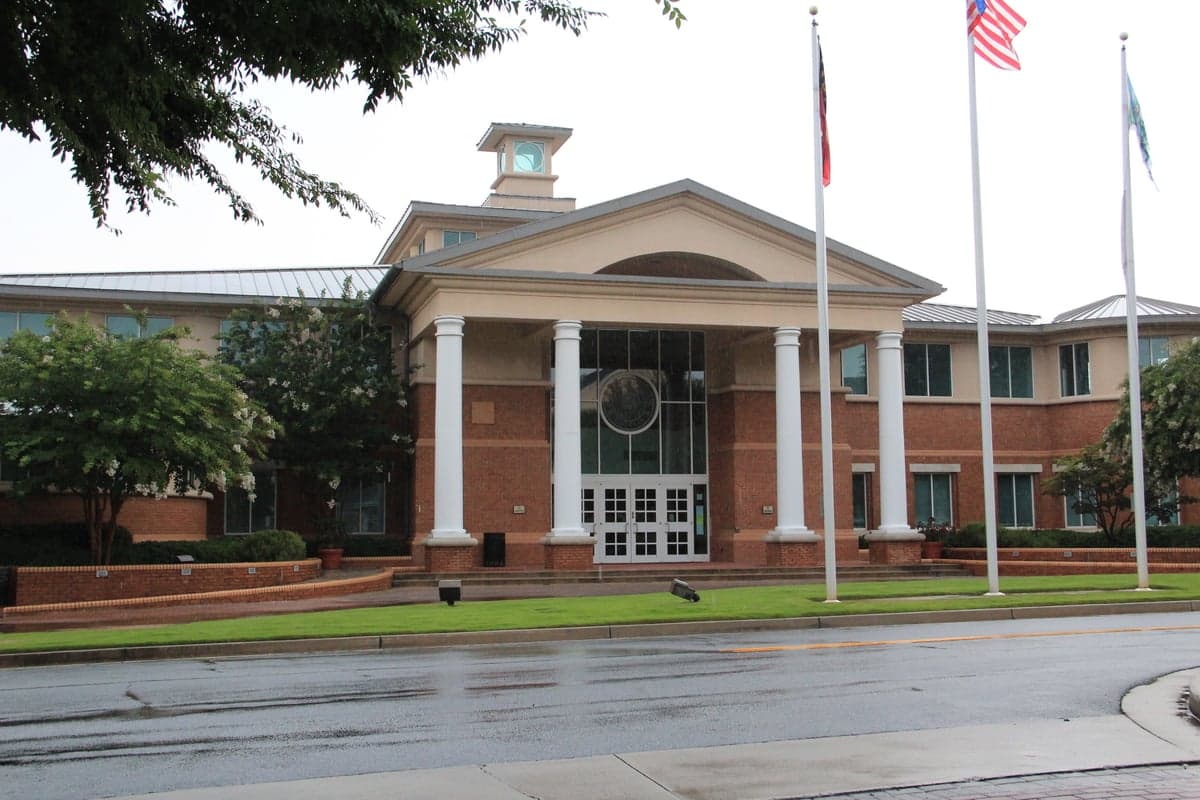
Photo: Wikipedia
Personal Sovereignty in Smyrna, GA
Viable for self-reliance. Generally workable, though some barriers may limit total independence.
What does Personal Sovereignty tell us?
Personal Sovereignty measures your capacity for self-reliance and independence with minimal government friction. Higher scores mean fewer barriers between you and the way you want to live... but it assumes you have the space you need and good neighbors.
What does this tell us?
Personal Sovereignty measures your capacity for self-reliance and independence with minimal government friction. Higher scores mean fewer barriers between you and the way you want to live... but it assumes you have the space you need and good neighbors.
State Policy
Energy independence: Importer (12% of energy produced in-state)
Personal Liberty
Homesteading

Personal Liberty Analysis
Smyrna, Georgia, offers a mixed bag for those prioritizing personal sovereignty, where the state’s generally favorable legal framework for self-defense and low taxes is tempered by a metro-Atlanta regulatory environment that can feel intrusive. For a survivalist or prepper mindset, the key is understanding that while Georgia’s constitution and state laws provide a strong baseline for autonomy—especially regarding firearms and property rights—Smyrna’s local ordinances and proximity to a major urban center introduce layers of bureaucracy that require careful navigation. The city’s zoning codes, noise regulations, and building permits are more restrictive than in rural Georgia, but the tax burden remains lighter than in many blue states, and the state’s preemption laws protect against the worst local overreach.
Tax burden and regulatory posture in Cobb County
Georgia’s tax structure is a clear win for sovereignty-minded individuals. The state’s flat income tax rate of 5.49% (as of 2026) is moderate, but there is no state tax on Social Security benefits, and the homestead exemption for property taxes is generous—up to $10,000 off assessed value for homeowners. Cobb County’s property tax millage rate hovers around 10.5 mills, which is higher than rural counties but still well below the national average for metro areas. Sales tax in Smyrna is 8.9%, driven by a 1% MARTA transit tax, which some preppers view as a forced subsidy for a system they rarely use. The regulatory posture is where friction emerges: Smyrna requires permits for fences over six feet, sheds over 120 square feet, and any structural modifications, with inspection fees that can add $200–$500 to a project. The city also enforces strict noise ordinances (quiet hours from 11 p.m. to 7 a.m.) and limits on outdoor burning, which can clash with homesteading activities like brush clearing or food preservation. For those accustomed to rural Georgia’s laissez-faire approach, these rules feel like government overreach into daily life.
Self-defense and gun law specifics in Smyrna
Georgia is a constitutional carry state, meaning no permit is required to carry a firearm openly or concealed for anyone 21 or older who can legally possess a gun. This is a bedrock of personal sovereignty. Smyrna does not have its own gun control ordinances—state preemption law (O.C.G.A. § 16-11-173) explicitly prohibits local governments from regulating firearm possession, carrying, or ownership. This means no city-level bans on magazine capacity, no "assault weapon" restrictions, and no waiting periods beyond the state’s background check system. Stand-your-ground laws are fully in effect, with no duty to retreat in any place where a person is lawfully present. The Castle Doctrine extends to vehicles and occupied structures. However, there are practical considerations: Smyrna’s police department is active, and officers may be more likely to stop and question armed individuals in public than in rural counties, though no law compels compliance beyond identification. For preppers, the key takeaway is that your right to defend yourself, your family, and your property is legally robust, but the social environment in a dense suburb may invite unwanted scrutiny. Gun ranges are limited—the closest indoor range is about 15 minutes away in Marietta—and backyard shooting is absolutely prohibited within city limits.
Self-reliance and homesteading viability in a suburban grid
Homesteading in Smyrna is constrained by lot sizes and zoning. The typical residential lot is 0.2 to 0.5 acres, with most homes on slabs or crawlspaces—basements are rare due to the water table. Zoning codes allow chickens (hens only, no roosters) on lots under one acre, but a permit is required, and coops must be 50 feet from neighbors’ dwellings. Goats, pigs, and livestock are prohibited on lots under two acres, effectively banning them in most of Smyrna. Gardening is unrestricted, but homeowners’ associations (HOAs) in many subdivisions impose rules on front-yard gardens, compost piles, and clotheslines. Off-grid feasibility is low: the city requires connection to municipal water and sewer, solar panels are allowed but must comply with building codes and HOA aesthetics, and rainwater collection is legal but limited to 500 gallons per property without a permit. For a prepper seeking true self-reliance, Smyrna is a compromise—you can grow tomatoes and keep a few hens, but you’ll remain tethered to the grid and subject to local ordinances that prioritize suburban order over individual autonomy. The silver lining is that Georgia’s right-to-farm laws protect agricultural activities from nuisance lawsuits, but these apply weakly in incorporated cities.
Personal liberties: parental rights, medical autonomy, and property
Georgia has strong parental rights protections under state law, including the Parental Bill of Rights (O.C.G.A. § 20-2-780), which affirms parents’ authority over their children’s education, healthcare, and religious upbringing. Smyrna’s school system (Cobb County) does not have mask mandates or vaccine requirements beyond state minimums, and parents can opt out of sex education or any curriculum they find objectionable. Medical autonomy is more nuanced: Georgia does not have a state-level vaccine passport mandate, but private employers and healthcare systems in the Atlanta metro may require COVID-19 or flu shots for certain roles. The state’s emergency powers were curtailed after 2020, with the legislature limiting governors’ ability to issue extended emergency orders without legislative approval. Property rights are protected by Georgia’s strict eminent domain laws, which require public use and just compensation, and Smyrna has not engaged in aggressive condemnation. However, the city’s zoning board has broad discretion over variances and special use permits, which can feel like a hurdle for those wanting to build a workshop, install a backup generator, or run a home-based business. Speech is protected under the First Amendment, and Georgia has no state-level hate speech laws that chill expression, though local ordinances on public assembly require permits for gatherings of 50 or more in parks.
Overall, Smyrna’s personal sovereignty profile is a study in trade-offs. The state-level framework—constitutional carry, low taxes, parental rights, and property protections—provides a solid foundation that many blue-state refugees find liberating. But the suburban reality of HOAs, building permits, noise ordinances, and grid dependency means that those seeking maximum autonomy will feel the squeeze of local government overreach. Compared to rural Georgia counties like Pickens or Gilmer, Smyrna is less sovereign; compared to Atlanta proper or cities in California or New York, it is a bastion of freedom. For a prepper or survivalist willing to navigate the bureaucracy and accept some constraints, Smyrna offers a defensible position with access to resources and a legal environment that respects the right to keep and bear arms. The key is knowing where the lines are drawn and being prepared to push back—through public comment at zoning meetings, exercising your rights visibly, and building a network of like-minded neighbors who value liberty over convenience.

* Values derived from national, state, county, city and local statistics and may differ in a specific area. Last updated: 2026-04-30T02:33:07.000Z
Narrative content on this page is AI-generated and may contain mistakes. Verify any details that matter before acting on them.
ReloMaps may earn a commission from affiliate links at no extra cost to you.

