Photo: Wikipedia
Demographics of Shively, KY
Affluence Level in Shively, KY
A below-average socioeconomic profile. Incomes, home values, and educational attainment trail the U.S., with higher poverty and unemployment.
People of Shively, KY
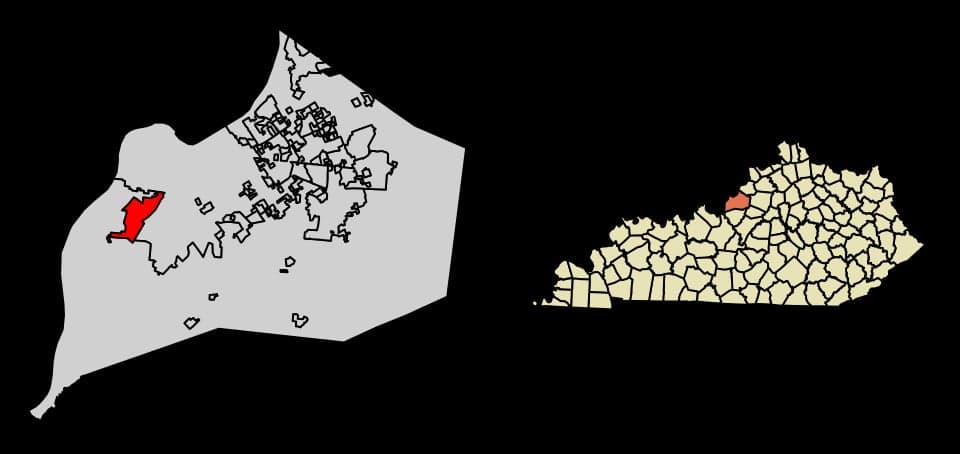
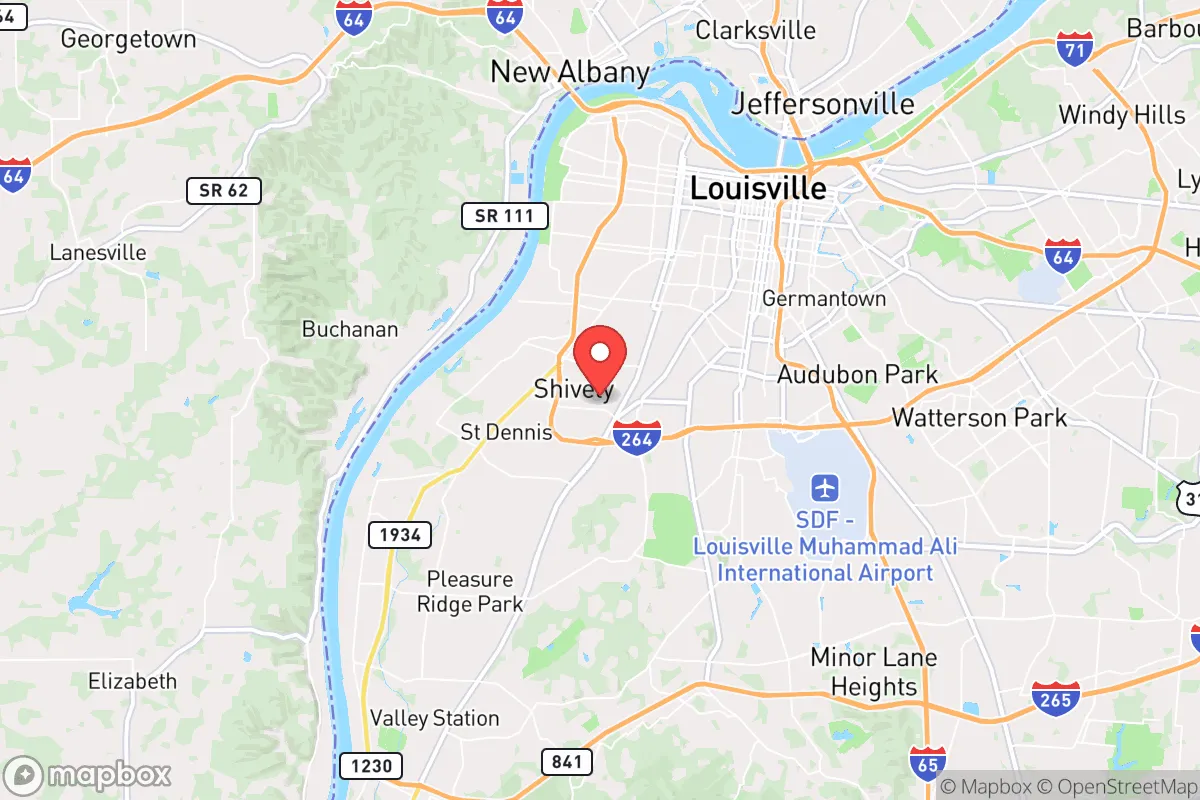
Shively, Kentucky, is a dense, inner-ring suburb of Louisville with a population of 15,556 that is predominantly Black (57.8%) and White (35.6%), with a very small Hispanic community (2.7%) and virtually no foreign-born population (1.5%). The city is characterized by modest single-family homes, a strong working-class identity, and a low college attainment rate of 12.7%, making it one of the less-educated municipalities in Jefferson County. Its people are largely rooted in multi-generational families who arrived in distinct waves tied to industrial growth and postwar suburbanization, creating a community that is both stable and economically challenged.
How the city was settled and grew
Shively was originally farmland settled by German and Irish Catholic families in the mid-19th century, drawn by cheap land along the Louisville & Nashville Railroad corridor. The city incorporated in 1938 as a defensive move to avoid annexation by Louisville, and its early population was overwhelmingly White, working-class, and employed in nearby distilleries, stockyards, and rail yards. The first major residential wave built out the St. Helen's neighborhood around the Catholic church of the same name, where German and Irish families clustered in small bungalows and shotgun houses. A second wave of White families, many from eastern Kentucky coal country, arrived during World War II to work at the Louisville Naval Ordnance Plant and filled the Dixie Highway corridor with modest frame homes. By 1950, Shively was nearly 100% White and had grown to roughly 8,000 residents, with a tight-knit, parish-centered social life anchored by St. Helen's and St. Rita's churches.
Modern era (post-1965)
The post-1965 period brought dramatic demographic change as White flight from Louisville's West End accelerated and Black families moved into Shively seeking affordable housing and better schools. The Park Hill and Pleasure Ridge Park border areas saw the first Black homebuyers in the 1970s, often purchasing homes from White sellers who were relocating to Bullitt County or the East End. By 1990, Shively had shifted to roughly 50% Black and 48% White, a transition that occurred with little new construction—most housing stock dates from the 1940s through 1960s. The Shively Heights subdivision, built in the 1950s for White veterans, became majority Black by 2000. The Hispanic population grew modestly from near zero in 1990 to 2.7% today, concentrated in rental units along Seventh Street Road, but remains far smaller than in neighboring Louisville. The foreign-born share (1.5%) is negligible, meaning nearly all residents are U.S.-born, and the city has not attracted the immigrant streams seen in other Louisville suburbs like Okolona or Fern Creek.
The future
Shively's population is projected to continue its gradual decline from a peak of roughly 17,000 in 1970, driven by an aging housing stock and limited new development. The Black share appears to have plateaued near 58%, while the White share continues a slow decline as older White residents pass away or move out. The Hispanic population is growing from a very low base but remains too small to reshape the city's character. Young families are increasingly choosing newer subdivisions in Bullitt County or the East End, leaving Shively with an older-than-average population. The city is not tribalizing into distinct ethnic enclaves—rather, it is homogenizing into a predominantly Black, working-class community with a shrinking White minority and no significant Asian or Indian presence. For a conservative-leaning mover, Shively offers low home prices and proximity to Louisville's industrial job base, but the low college attainment rate and limited demographic diversity mean it is unlikely to attract professionals or immigrant entrepreneurs in the next decade.
Shively is becoming a quieter, older, and more uniformly Black suburb, with little of the ethnic churn seen in other Jefferson County communities. For someone moving in now, the city offers affordability and a stable, family-oriented feel, but the demographic trends suggest a continued loss of younger families and a slow population decline absent a major economic catalyst.

* Values derived from national, state, county, city and local statistics and may differ in a specific area. Last updated: 2026-04-21T09:49:42.000Z
Narrative content on this page is AI-generated and may contain mistakes. Verify any details that matter before acting on them.
ReloMaps may earn a commission from affiliate links at no extra cost to you.

