Photo: Wikipedia
Demographics of Sherwood, AR
Affluence Level in Sherwood, AR
A middle-class area roughly in line with national averages across income, home values, education, and employment.
People of Sherwood, AR
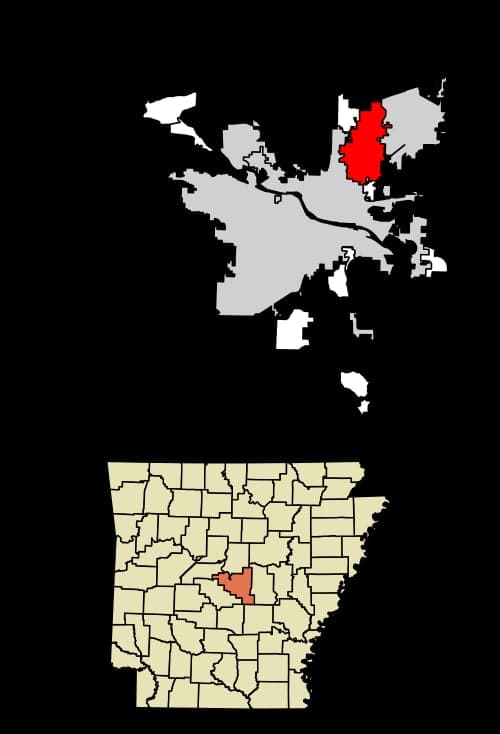
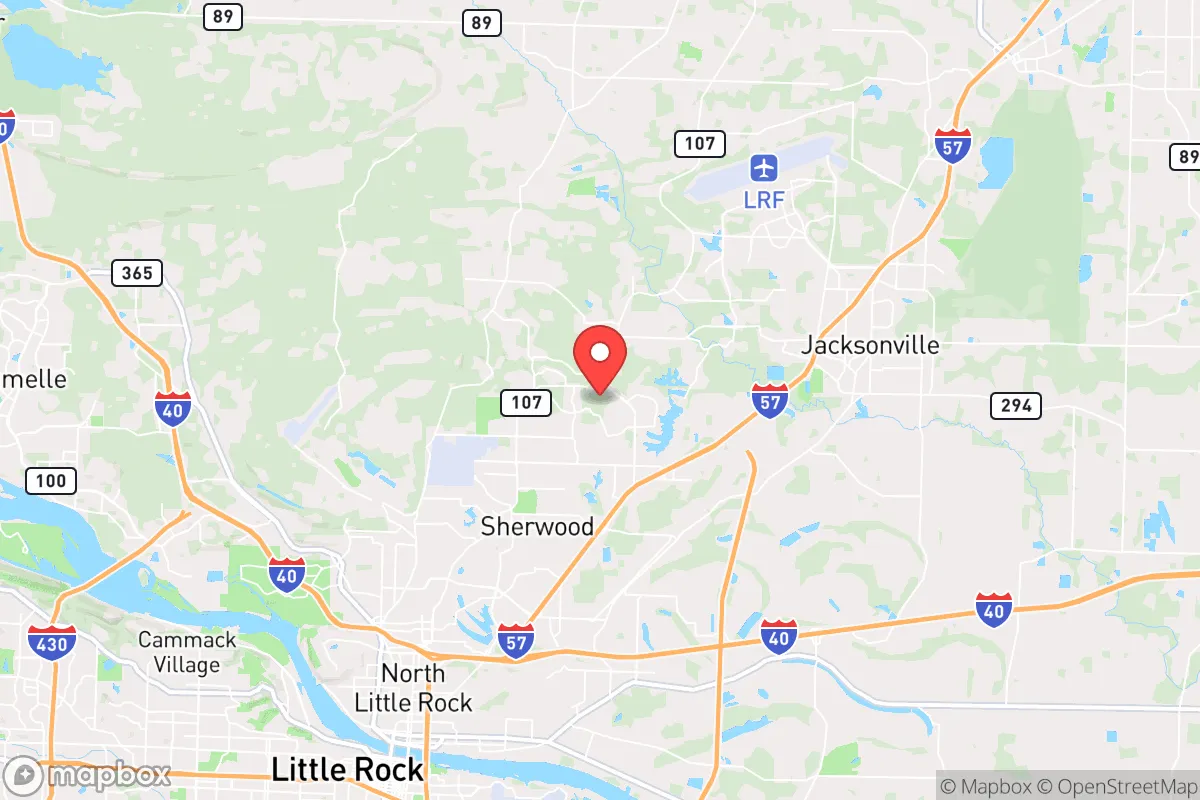
Sherwood, Arkansas, is a predominantly White (62.4%) and Black (28.9%) suburban city of 32,915 residents, characterized by a low foreign-born population of just 1.0% and a college-educated rate of 34.5%. The city’s identity is rooted in its post-World War II development as a bedroom community for nearby Little Rock and North Little Rock, with a population that has historically been native-born and family-oriented. Today, Sherwood is a stable, middle-class suburb where racial lines are largely drawn between older, predominantly White neighborhoods and newer subdivisions that have attracted a growing Black middle class, while Hispanic (3.5%) and East/Southeast Asian (1.3%) communities remain small but present.
How the city was settled and grew
Sherwood’s human history begins not with colonial settlement but with the post-World War II suburban boom. The area was originally part of rural Pulaski County, with sparse farming families and a few crossroads communities. The turning point came in the 1950s and 1960s, when the expansion of the Little Rock Air Force Base (just north in Jacksonville) and the growth of North Little Rock’s industrial base drew young families and veterans to the area. The city was officially incorporated in 1948, but its real population surge began in the 1960s and 1970s. The earliest subdivisions, such as Sherwood Forest and Oakwood Hills, were built for White, middle-class families fleeing the urban core of Little Rock. These neighborhoods were developed on former farmland and offered affordable single-family homes, attracting a wave of native-born Arkansans, many of whom worked at the air base, in manufacturing, or in Little Rock’s government and healthcare sectors. The original population was overwhelmingly White and native-born, with no significant immigrant presence.
Modern era (post-1965)
After the 1965 Hart-Cellar Act, Sherwood saw little direct immigration due to its lack of industrial or agricultural jobs that typically attract foreign-born workers. Instead, the city’s demographic shifts came from domestic migration. The most significant change was the steady growth of the Black population, which rose from a small minority in the 1970s to nearly 29% today. This growth was driven by Black families moving from Little Rock and North Little Rock into newer subdivisions like Grayson Pointe and Ridgepointe, which were built in the 1990s and 2000s. These neighborhoods offered larger homes and better schools than older, more segregated parts of the metro area. Meanwhile, older neighborhoods like Sherwood Forest and Oakwood Hills remained predominantly White, creating a pattern of racial clustering by housing stock age rather than by formal segregation. The Hispanic population grew slowly, reaching 3.5%, with families concentrated in rental duplexes and apartments near the Brockington Road corridor. The East/Southeast Asian community (1.3%) is small and dispersed, with no single ethnic enclave, while the Indian subcontinent population (0.1%) is negligible. The city’s foreign-born share of 1.0% is among the lowest in the Little Rock metro, reflecting Sherwood’s character as a native-born, English-dominant suburb.
The future
Sherwood’s population is likely to continue its gradual diversification, but the pace will be slow. The Black population is expected to grow further as more middle-class Black families seek affordable suburban housing, particularly in newer developments like The Preserve at Sherwood and Foxwood, which are attracting a mix of White and Black buyers. The Hispanic share may rise modestly as service-sector employment expands, but Sherwood lacks the industrial or agricultural base to draw large immigrant flows. The East/Southeast Asian and Indian populations will likely remain small, as these groups tend to cluster in Little Rock’s western suburbs (e.g., West Little Rock) or in Conway. The city is not tribalizing into distinct ethnic enclaves; rather, it is experiencing a slow, organic integration, with most neighborhoods becoming more mixed over time. The biggest demographic risk is aging: Sherwood’s median age is 38.7, and the city may struggle to attract young adults without more rental housing and entertainment options. The next 10-20 years will likely see Sherwood remain a stable, predominantly White and Black suburb, with a small but growing Hispanic presence, and little change in its native-born character.
For a mover considering Sherwood, the city offers a predictable, family-oriented environment with low crime and good schools, but little ethnic or cultural diversity. The population is largely native-born, English-speaking, and politically conservative, with a strong sense of local community. The city is becoming slightly more diverse along Black-White lines, but remains a place where the foreign-born and non-English-speaking populations are minimal. This is a suburb for those seeking stability and homogeneity, not for those looking for a multicultural or immigrant-rich experience.

* Values derived from national, state, county, city and local statistics and may differ in a specific area. Last updated: 2026-04-30T02:17:22.000Z
Narrative content on this page is AI-generated and may contain mistakes. Verify any details that matter before acting on them.
ReloMaps may earn a commission from affiliate links at no extra cost to you.

