
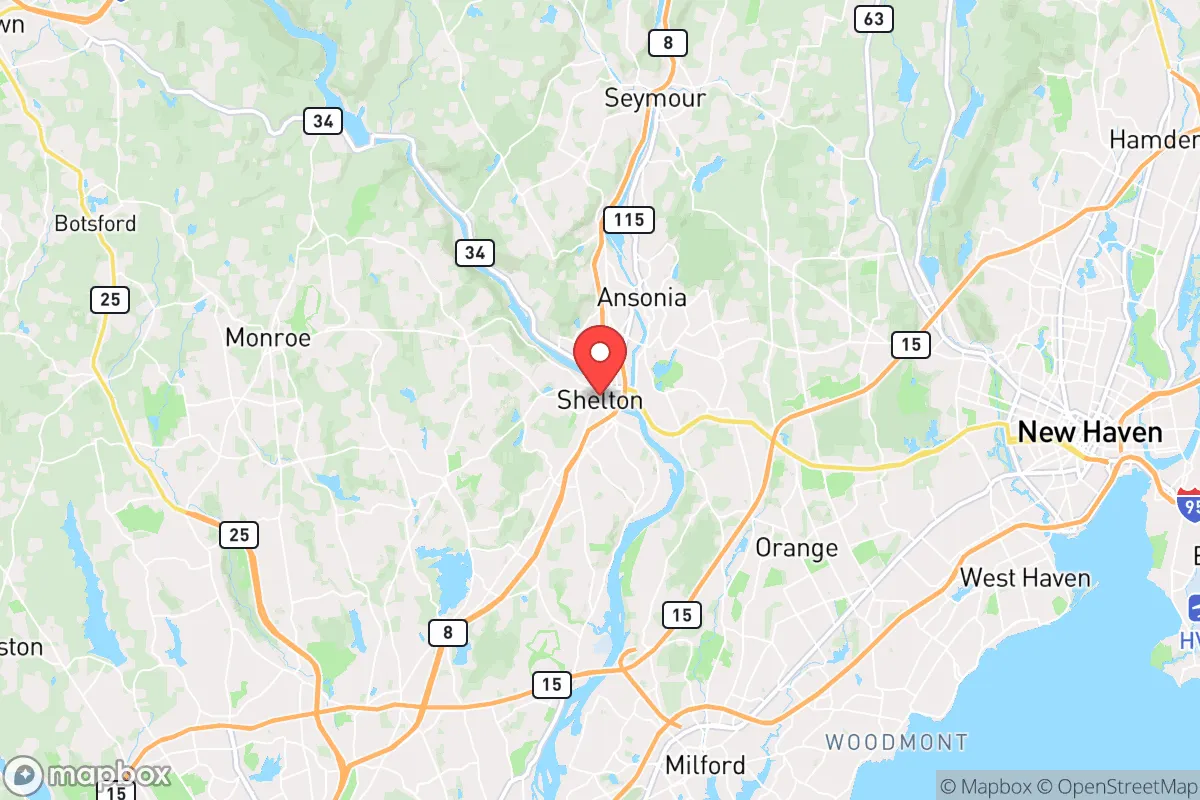
Photo: Wikipedia
Personal Sovereignty in Shelton, CT
Viable for self-reliance. Generally workable, though some barriers may limit total independence.
What does Personal Sovereignty tell us?
Personal Sovereignty measures your capacity for self-reliance and independence with minimal government friction. Higher scores mean fewer barriers between you and the way you want to live... but it assumes you have the space you need and good neighbors.
What does this tell us?
Personal Sovereignty measures your capacity for self-reliance and independence with minimal government friction. Higher scores mean fewer barriers between you and the way you want to live... but it assumes you have the space you need and good neighbors.
State Policy
Energy independence: Importer (5% of energy produced in-state)
Personal Liberty
Homesteading

Personal Liberty Analysis
Shelton, Connecticut, offers a mixed bag for those prioritizing personal sovereignty, where a relatively high degree of local autonomy in daily life is counterbalanced by a state-level regulatory framework that leans heavily toward intervention. For the survivalist or prepper, the city provides a suburban-rural blend with tangible opportunities for self-reliance, but it sits within a state government that consistently ranks among the most restrictive in the nation on gun rights, taxation, and medical freedom. The key to understanding Shelton is recognizing that your personal sovereignty here is largely a function of what you can control on your own property and within your immediate community, while the state apparatus remains a persistent, if distant, threat to that autonomy. This analysis breaks down the specific areas where you can exercise freedom and where you must remain vigilant against government overreach.
Tax burden and regulatory posture: The cost of living under state control
Connecticut’s tax burden is among the highest in the country, and Shelton residents feel this acutely. The state imposes a progressive income tax with rates reaching nearly 7%, a sales tax of 6.35%, and some of the highest property taxes in the nation. Shelton’s mill rate, while not the worst in Fairfield County, still translates to a significant annual bill on a typical home. For the self-reliant individual, this means a substantial portion of your income is siphoned off before you can invest in your own preparedness—whether that’s land, supplies, or training. The regulatory posture at the state level is equally burdensome. Connecticut has a notoriously complex business and environmental regulatory environment, which can stifle small-scale enterprises like a home-based workshop, a small farm, or a cottage food operation. Zoning in Shelton is generally more permissive than in neighboring cities like Trumbull or Monroe, but you still face state-level hurdles for anything beyond basic home maintenance. The bottom line: your tax dollars fund a large state bureaucracy that often works against your interests, so financial planning for sovereignty must account for this heavy overhead.
Self-defense and gun law specifics: Navigating a restrictive state within a permissive city
This is the most critical area where state overreach directly impacts personal sovereignty. Connecticut has some of the strictest gun laws in the country, including a ban on "assault weapons" (defined broadly), a 10-round magazine limit, and a requirement for a permit to purchase any firearm, which involves a background check, a safety course, and a waiting period. The state also has a "red flag" law that allows for the temporary seizure of firearms without a criminal conviction, a tool that many preppers view as a direct threat to due process and self-defense rights. Shelton itself is a relatively pro-Second Amendment community within this hostile state environment. The local police department is generally professional and not known for aggressive enforcement of state gun laws beyond what is required. However, you cannot legally carry a firearm openly or concealed without a state-issued permit, and the process is expensive and time-consuming. For the survivalist, this means you can own firearms for home defense and hunting, but your ability to carry for personal protection outside the home is heavily restricted. The state’s legal climate also means that using deadly force in self-defense, even in a clear-cut home invasion, can lead to a lengthy legal battle. If you value the right to keep and bear arms without government permission, Connecticut is not the place for you. Shelton offers a better local culture than most of the state, but the legal ceiling is low.
Self-reliance and homesteading viability: Lot sizes, zoning, and off-grid feasibility
Shelton’s geography offers a genuine opportunity for a semi-self-sufficient lifestyle, but it requires careful property selection. The city has a mix of suburban neighborhoods and larger rural lots, particularly in the northern and western sections near the Housatonic River and the Monroe border. Many properties are zoned for one-acre or larger lots, and some areas allow for two to five acres, which is enough for a substantial garden, a few chickens, and even a small orchard. Zoning is generally favorable for backyard agriculture, including beekeeping and small livestock, though you should check specific neighborhood covenants. The city’s water supply is municipal in most areas, but well water is common on larger lots, giving you control over your water source. Off-grid feasibility is limited, however. Connecticut’s building codes are strict, and the state heavily regulates solar panel installation, rainwater collection, and composting toilets. Going fully off-grid is nearly impossible without constant battles with the building department. A more realistic approach is a "grid-tied" homestead where you supplement with solar, grow your own food, and maintain a deep pantry, while still paying property taxes and utility connection fees. The Housatonic River provides a potential water source for irrigation, but state environmental regulations limit its use. For the prepper, Shelton offers a workable compromise: you can achieve a high degree of food and water self-sufficiency on a modest piece of land, but you will never be fully independent of the state’s regulatory grip.
Personal liberties: Parental rights, medical autonomy, speech, and property
On the spectrum of personal liberties, Shelton and Connecticut present a stark contrast. Parental rights are under significant assault at the state level. Connecticut has some of the most progressive education laws in the country, including mandatory curricula on sexual orientation and gender identity in public schools, and a law that allows students to change their gender identity on school records without parental consent. For parents who believe they should have the final say in their children’s upbringing, this is a major red flag. Homeschooling is legal but requires notification and portfolio review, and the state has a history of attempting to increase oversight. Medical autonomy is similarly constrained. Connecticut has broad vaccine mandates for school attendance and has shown a willingness to impose public health orders that restrict individual choice. The state’s medical freedom index is among the lowest in the nation. On the positive side, property rights in Shelton are relatively strong compared to other parts of the state. The city’s zoning board is generally reasonable, and there is no county-level government to add another layer of bureaucracy. Freedom of speech is protected by the First Amendment, but the state’s political culture is overwhelmingly progressive, meaning that expressing conservative or libertarian views in public forums can lead to social ostracism. Your personal sovereignty in Shelton is largely confined to your own property and your immediate family, and even there, the state’s long arm can reach in.
In the final analysis, Shelton offers a tactical advantage for the survivalist who values a strong local community and the ability to be self-sufficient on a manageable piece of land, but it is not a sanctuary from government overreach. Compared to states like New Hampshire, Idaho, or Texas, Connecticut’s tax burden, gun laws, and erosion of parental rights make it a poor choice for those seeking maximum personal sovereignty. However, within the context of the Northeast, Shelton is one of the better options. The city’s rural character, relatively low crime rate, and proximity to natural resources like the Housatonic River provide a foundation for a prepared lifestyle. The key is to go in with eyes wide open: you can build a resilient, self-reliant life here, but you will be doing so under the watchful eye of a state government that does not share your values. If you are willing to fight for every inch of your freedom, Shelton can work. If you want a place where freedom is the default, look elsewhere.

* Values derived from national, state, county, city and local statistics and may differ in a specific area. Last updated: 2026-04-19T09:30:31.000Z
Narrative content on this page is AI-generated and may contain mistakes. Verify any details that matter before acting on them.
ReloMaps may earn a commission from affiliate links at no extra cost to you.

