
Photo: Wikipedia
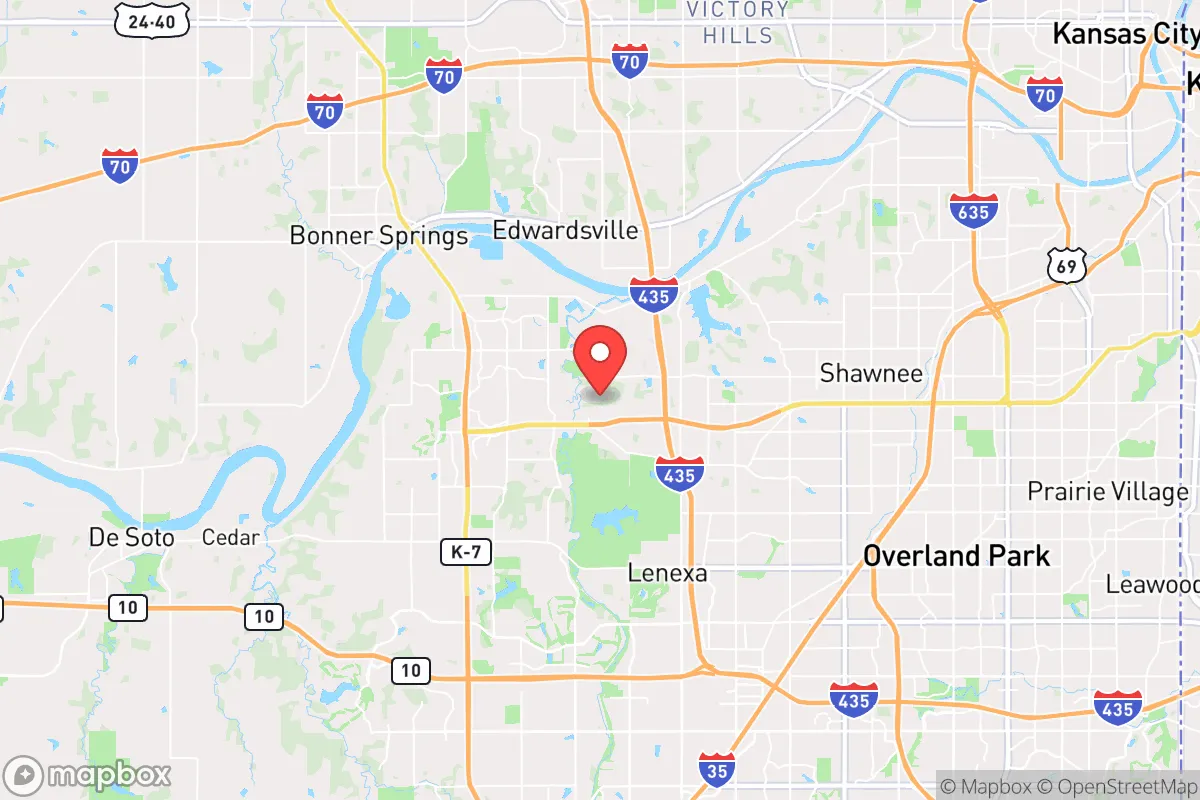
Personal Sovereignty in Shawnee, KS
Viable for self-reliance. Generally workable, though some barriers may limit total independence.
What does Personal Sovereignty tell us?
Personal Sovereignty measures your capacity for self-reliance and independence with minimal government friction. Higher scores mean fewer barriers between you and the way you want to live... but it assumes you have the space you need and good neighbors.
What does this tell us?
Personal Sovereignty measures your capacity for self-reliance and independence with minimal government friction. Higher scores mean fewer barriers between you and the way you want to live... but it assumes you have the space you need and good neighbors.
State Policy
Energy independence: Self-sufficient (80% of energy produced in-state)
Personal Liberty

Personal Liberty Analysis
For the individual or family who values personal sovereignty above all else, Shawnee, Kansas offers a notably stronger autonomy environment than much of the nation, particularly when compared to the coastal states that have aggressively centralized power. The city sits within a state that has, over the past decade, deliberately rolled back government overreach in several key areas, from taxation to self-defense. While no suburban enclave is a libertarian paradise, Shawnee’s legal and cultural framework provides a solid foundation for those seeking to minimize state interference and maximize personal control over their lives, finances, and safety.
Tax burden and regulatory posture for the self-reliant
Kansas has positioned itself as a low-tax state, and Shawnee residents benefit directly from this posture. There is no state income tax on Social Security benefits, and the state’s flat income tax rate of 5.7% applies to all income brackets, meaning the government takes a smaller, predictable slice of your earnings. Property taxes in Johnson County, where Shawnee sits, average around 1.3% of assessed home value, which is moderate for the region but still a significant annual cost. More importantly for the sovereignty-minded, Kansas has a right-to-work law, meaning no one can force you to join a union as a condition of employment—a direct check on institutional power over your livelihood. The regulatory environment for small businesses and home-based enterprises is relatively light, with no state-level occupational licensing for many common trades, allowing you to pivot to self-employment or side hustles without excessive bureaucratic hurdles. This combination of low, predictable taxes and minimal occupational licensing creates a climate where your labor and capital remain largely under your own control, not the state’s.
Self-defense and gun law specifics in Shawnee
Kansas is a constitutional carry state, meaning no permit is required to carry a concealed firearm for anyone legally allowed to possess one. Shawnee, as a Johnson County suburb, fully respects this right—there are no local ordinances that override state preemption on firearms. Open carry is also legal without a permit. For those who want the reciprocity benefits of a permit, the Kansas concealed carry license is shall-issue and recognized by over 30 other states. The state’s Castle Doctrine and Stand Your Ground laws are robust: you have no duty to retreat in any place you are lawfully present, and the use of deadly force is presumed justified if an intruder has unlawfully entered your home, vehicle, or occupied structure. Magazine capacity restrictions, firearm registration, and waiting periods are all nonexistent at the state level. For the prepper, this means you can build your defensive capability without the state tracking your inventory or imposing arbitrary limits. The only notable restriction is that you must be 21 to carry concealed without a permit, but that is a minor speed bump in an otherwise permissive legal landscape.
Self-reliance and homesteading viability in Shawnee
Shawnee is a developed suburb, so don’t expect wide-open acreage for a full-scale homestead. Typical residential lots range from a quarter-acre to half-acre, with some older neighborhoods offering slightly larger parcels. The city’s zoning code does allow for backyard chickens (hens only, no roosters) on lots of sufficient size, and many residents keep small vegetable gardens. However, the city has restrictions on livestock—no goats, pigs, or cattle are permitted within city limits. For those seeking true self-sufficiency, the rural areas of western Johnson County or neighboring Miami County offer 5- to 20-acre parcels within a 30-minute drive, where you can keep larger animals and build more extensive infrastructure. Off-grid living is not feasible within Shawnee proper; the city requires connection to municipal water and sewer, and building codes are enforced. Solar panels are allowed but must comply with HOA covenants if applicable. The real sovereignty play here is to live in Shawnee for its strong job market and schools while owning a separate rural property for serious food production and storage. The state’s favorable laws on rainwater collection (no permit required) and beekeeping (allowed with minimal regulation) make that dual-property strategy viable.
Personal liberties: parental rights, medical autonomy, speech, and property
Kansas has been a battleground for parental rights, and the current legal framework leans heavily toward family autonomy. The state’s Parental Bill of Rights, enacted in 2023, gives parents explicit authority over their children’s education, healthcare, and moral upbringing. Schools must obtain parental consent before administering any medical or mental health services, and curriculum transparency laws require that instructional materials be available for parent review. Medical autonomy is more mixed: Kansas has not adopted vaccine mandates for adults, and there is no state-level requirement for COVID-19 vaccines for employment or public accommodation. However, the state does require certain childhood immunizations for school attendance, though medical and religious exemptions are available. On speech, Kansas has no hate speech laws that criminalize protected expression, and the state’s public universities have been relatively restrained in imposing viewpoint-based restrictions. Property rights are strong, with no statewide rent control and a relatively straightforward eminent domain process that requires just compensation. The state’s homestead exemption protects up to $60,000 of your home’s value from creditors, offering a modest shield against financial overreach. For the parent or individual who wants to raise children without state indoctrination or medical coercion, Shawnee’s legal environment is one of the more accommodating in the Midwest.
When stacked against other relocation options, Shawnee, Kansas provides a high degree of personal sovereignty without the extreme isolation of rural Montana or the regulatory chaos of Texas’s urban centers. The state has deliberately chosen to limit its own power over your finances, your family, and your self-defense. The trade-off is that you live in a well-managed suburb with good infrastructure and a relatively homogeneous culture—which some see as a loss of diversity but others see as a reduction in social friction. For the strategic relocator who values freedom but needs a functioning economy and decent schools, Shawnee is a rare sweet spot where the state mostly stays out of your way, and you can build the life you want with minimal interference from the apparatus of government.

* Values derived from national, state, county, city and local statistics and may differ in a specific area. Last updated: 2026-05-03T06:02:22.000Z
Narrative content on this page is AI-generated and may contain mistakes. Verify any details that matter before acting on them.
ReloMaps may earn a commission from affiliate links at no extra cost to you.

