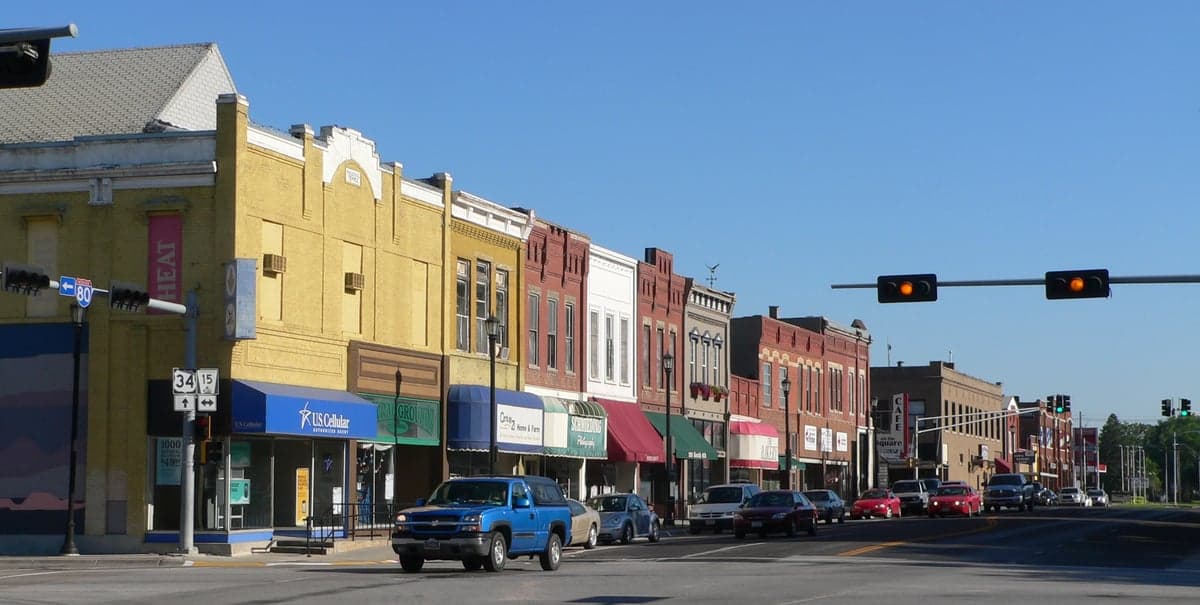
Photo: Wikipedia
Strategic Assessment of Seward, NE
Workable tactical position. Some exposure to population density or targets, but generally defensible in a crisis.
What does the Strategic Assessment tell us?
Our Strategic Assessment grades tactical survivability of an area. Major population centers, military targets, fallout zones, natural disasters, and border exposure all drive risk — lower exposure means a more defensible position in a crisis.
This is heavily inspired by Joel Skousen's Strategic Relocation book. Highly recommended you checkout the book ($)What does this tell us?
Our Strategic Assessment grades tactical survivability of an area. Major population centers, military targets, fallout zones, natural disasters, and border exposure all drive risk — lower exposure means a more defensible position in a crisis.
This is heavily inspired by Joel Skousen's Strategic Relocation book. Highly recommended you checkout the book ($)Strategic Pillars

Key Distances
Regional Safe Places
Below is our recommended "safe zones" in Nebraska and the surrounding area based on our strategic heuristics. For most people, it's unrealistic to live in a “safe zone” full-time due to work, family or other personal reasons. They tend to be more rural. However, many of these areas are perfect for second homes and retreat properties that double as a vacation home or even a short-term rental.
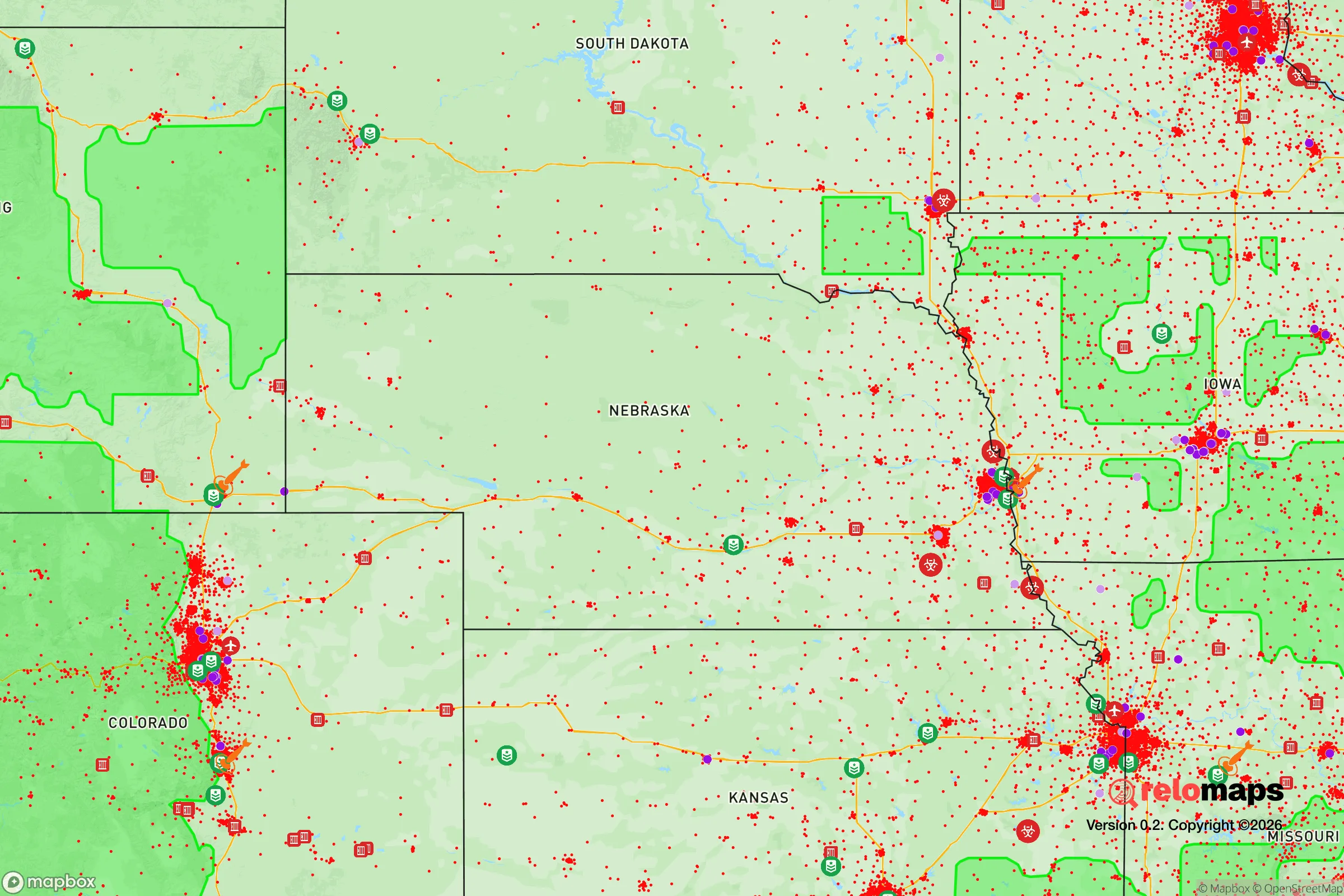
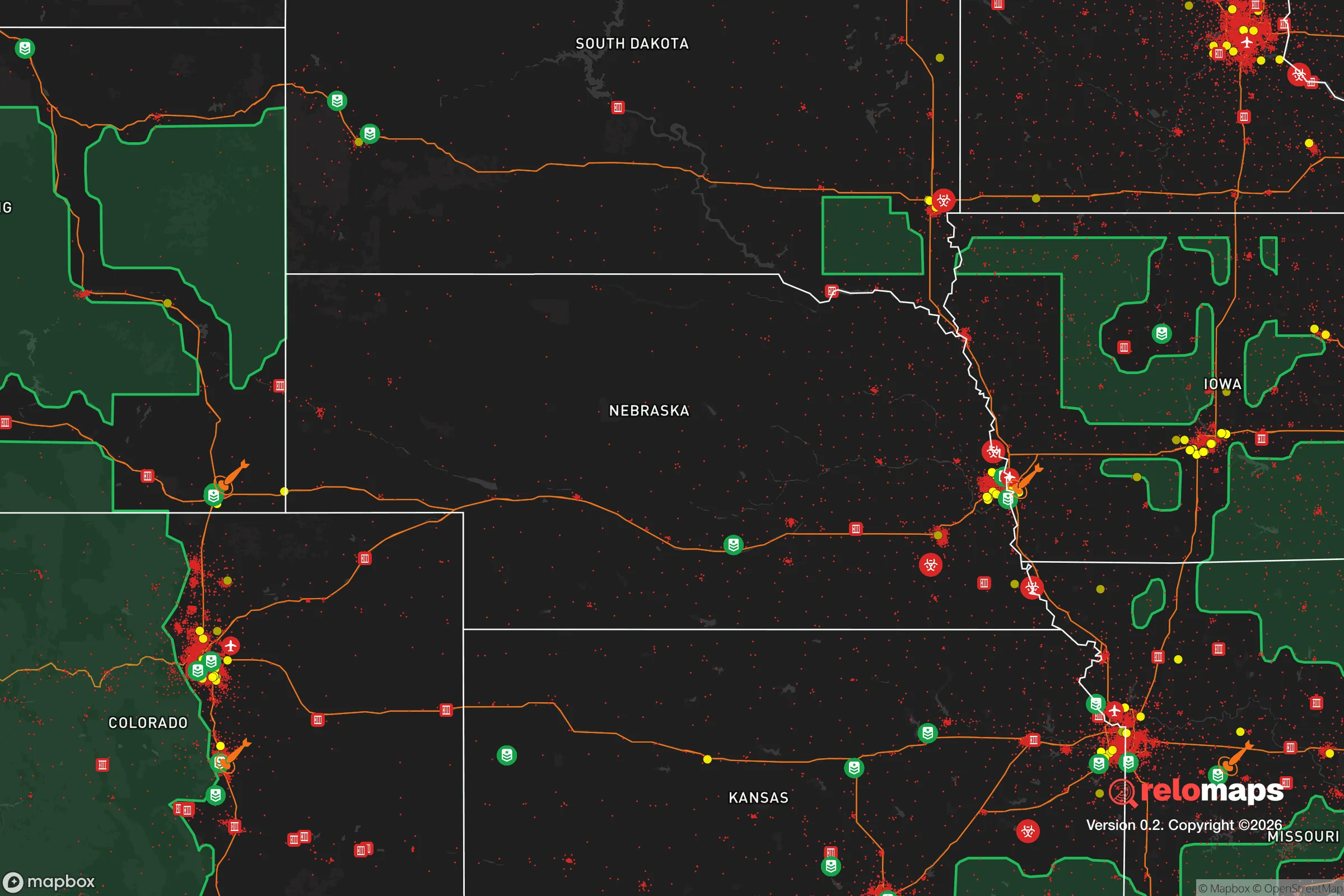


Important Note: For informational purposes only. This does not mean nothing bad ever happens in the green zones. Please use common sense. This is based on public data and modeled with AI. We tried to take a conservative approach but mistakes happen. We update this regularly as new information becomes available.
Solar Generator Recommendations
Backup power matters more here than in safer locations. We've picked three solar generators across budgets and capacity tiers — start with the budget unit if you only need a few essentials, or step up if you want to run a fridge and HVAC for days at a time.

Jackery Portable Power Station Explorer 300
Budget OptionPower on the Go: Weighing only 11 lbs, it's convenient to set up and store with book-sized foldable solar panels

BLUETTI Portable Power Station AC180
Designed for both indoor and outdoor scenarios, AC180 is highly capable as it has a robost capacity and continuous output power.

EF ECOFLOW DELTA Pro Ultra Power Station
Upgraded PickEcoFlow DELTA Pro Ultra is a whole-home energy system designed to grow with your family. Integrated with the Smart Home Panel 2, it scales to meet your evolving energy needs — keeping your home powered, intelligent, and secure through every stage of life.
We earn a commission, at no additional cost to you.
Strategic Assessment Analysis
Seward, Nebraska, sits in a sweet spot that resilience-minded relocators rarely find: close enough to Lincoln and Omaha to access their resources, yet far enough to avoid the blast zones, civil unrest, and supply-chain choke points that make big cities liabilities in a crisis. The town’s position along the Platte River corridor, its agricultural hinterland, and its low population density give it a baseline survivability that most suburban or exurban locations simply cannot match. For a conservative-leaning individual or family looking to weather economic collapse, social unrest, or a major disaster, Seward offers a defensible, resource-rich anchor point—provided you understand its specific risks and plan accordingly.
Geographic position and natural advantages for long-term survival
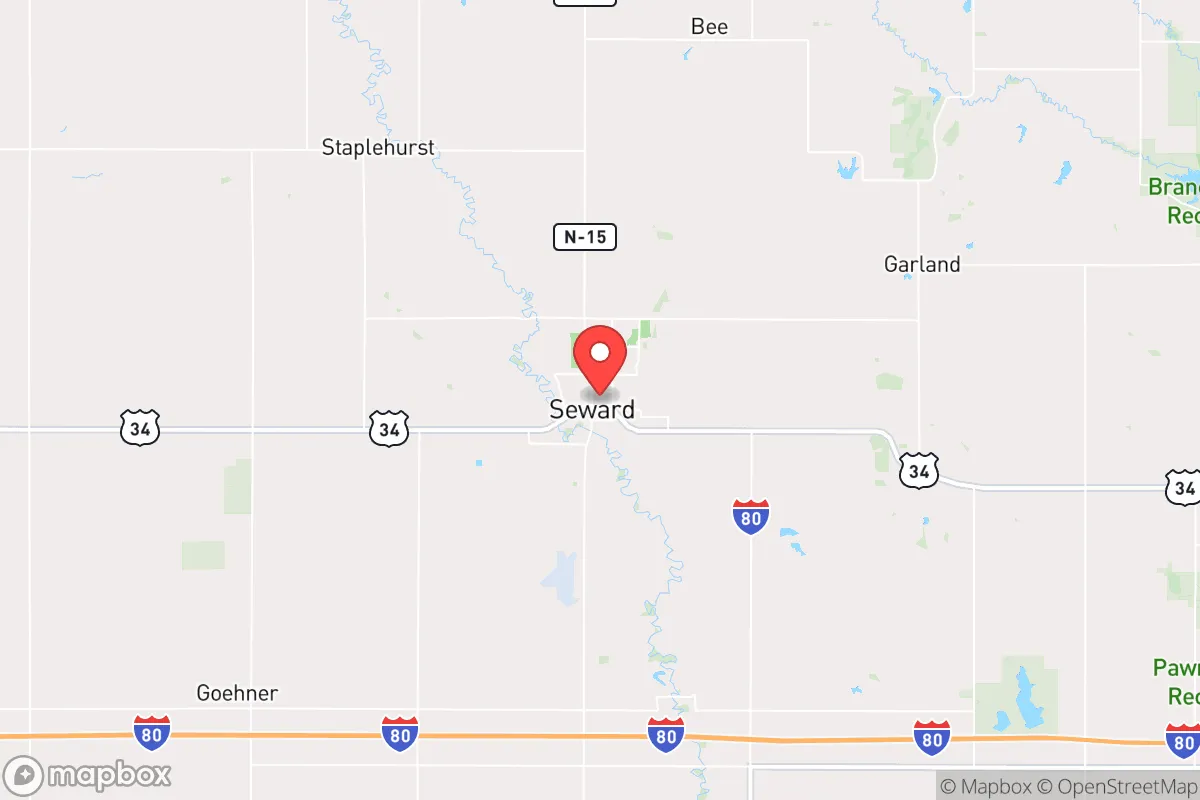
Seward’s location is its strongest card. It sits roughly 25 miles west of Lincoln and 80 miles southwest of Omaha, placing it outside the likely blast radius of any nuclear or conventional strike on those cities, yet within a day’s drive for resupply or medical evacuation if roads remain passable. The Platte River runs just north of town, providing a reliable surface water source—critical if municipal wells fail or the grid goes down. The surrounding terrain is flat to gently rolling farmland, which means good visibility for security, minimal wildfire risk compared to forested regions, and soil that can be worked for subsistence agriculture. Groundwater is plentiful in the region; the Ogallala Aquifer’s eastern edge lies not far west, and local wells in Seward County typically tap into the Platte Valley aquifer at depths of 50–150 feet. For a prepper, that means you can drill a well without needing industrial equipment. The climate is continental—hot summers, cold winters—but the growing season averages around 160 days, long enough for corn, beans, squash, and hardy greens. Snowpack in the winter provides an additional water source if filtered. The lack of major mountain ranges or coastlines also means Seward is largely immune to hurricanes, tsunamis, and catastrophic landslides. Tornadoes are the primary natural threat, but the town’s building stock is mostly post-1970s construction, and basements are common—a feature any survivalist should prioritize.
Risks, exposures, and proximity to fallout-relevant landmarks
No location is without vulnerabilities, and Seward has several that demand attention. The most obvious is its proximity to Lincoln and Omaha—not just for fallout, but for the human wave of refugees that would pour west along Highway 34 and Interstate 80 in a crisis. If a major event hits those cities, Seward could see a surge of desperate people within hours. The town’s population of roughly 7,600 would be overwhelmed quickly if it becomes a waypoint. Additionally, the Platte River itself is a double-edged sword: it provides water, but it also creates a natural corridor for movement, meaning you’d need to monitor approaches from the river bottom. There are no major military bases or nuclear power plants within 50 miles—the nearest reactor is the Fort Calhoun plant near Omaha, about 70 miles northeast—so direct fallout from a strike on those targets is unlikely to be lethal here, but prevailing winds from the west mean any contamination from a strike on the Strategic Air Command headquarters at Offutt Air Force Base (south of Omaha) could drift toward Seward depending on the weather. More concerning is the rail line that runs through town—the BNSF mainline carries hazardous materials, including anhydrous ammonia and crude oil, through the heart of Seward. A derailment or intentional sabotage could contaminate local water or air, so any prepper should have a plan to seal off a safe room or evacuate east or south if a plume develops. Finally, the town’s reliance on the grid and municipal water is a vulnerability; while backup generators are common in rural Nebraska, the local hospital and emergency services have limited redundancy. You cannot count on FEMA or state aid arriving quickly in a widespread event—Seward County’s emergency management resources are thin.
Practical resilience for a relocator: food, water, energy, and defensibility
For a family or individual serious about self-sufficiency, Seward offers a workable foundation. The town is surrounded by row-crop agriculture—corn, soybeans, and wheat—and there are numerous small farms within a 10-mile radius that could be bartered with or purchased outright. The Seward County Farmers Market operates seasonally, but in a collapse scenario, local grain elevators and feed stores would become critical assets. Water is the bigger concern: the municipal supply comes from wells drawing on the Platte Valley aquifer, but if the grid fails, electric pumps stop. A prepper should install a hand pump or solar-powered pump on a private well, or at minimum have a Berkey or similar gravity filter for surface water from the Platte. Rainwater catchment is viable here—annual precipitation averages 28 inches—but you’ll need storage tanks and a first-flush diverter. Energy resilience is achievable: Seward gets plenty of sun (about 220 sunny days per year), and wind is consistent on the plains, so a small solar array with battery storage or a wind turbine can cover basic needs. Natural gas is piped into town, but in a long-term grid-down scenario, you’d want a wood stove or propane backup. Defensibility is mixed. Seward’s layout is a classic small town with a compact downtown and residential streets radiating outward. The perimeter is open farmland, which gives good lines of sight but also means you’d need to secure a property with fencing, dogs, and possibly a watch rotation if you’re in a group. The town has a police force of about 12 officers and a county sheriff’s office with another 10 deputies—enough for routine law enforcement, but not for sustained civil unrest. Your best bet is to buy a few acres on the outskirts, preferably with a well, septic, and a metal roof (for rainwater collection). The local gun culture is strong; Nebraska is a shall-issue state for concealed carry, and Seward has a gun shop and a shooting range nearby. Ammo and reloading supplies are generally available, but stock up now—panic buying empties shelves fast.
The strategic picture for Seward is cautiously optimistic. It’s not a hardened bunker or a remote mountain redoubt, but it’s a practical, affordable place to build a resilient life without the isolation that makes community support impossible. The risks—refugee flow, rail hazards, grid dependence—are manageable with planning and modest investment. For a conservative relocator who wants to stay connected to the broader world while maintaining the ability to disconnect when things go sideways, Seward hits a rare balance. It’s the kind of town where you can know your neighbors, grow your own food, and still drive to a Home Depot in 30 minutes—until the day you can’t. And on that day, you’ll be glad you’re here instead of in a subdivision outside Omaha.

* Values derived from national, state, county, city and local statistics and may differ in a specific area. Last updated: 2026-09-21T19:02:24.000Z
Narrative content on this page is AI-generated and may contain mistakes. Verify any details that matter before acting on them.
ReloMaps may earn a commission from affiliate links at no extra cost to you.

