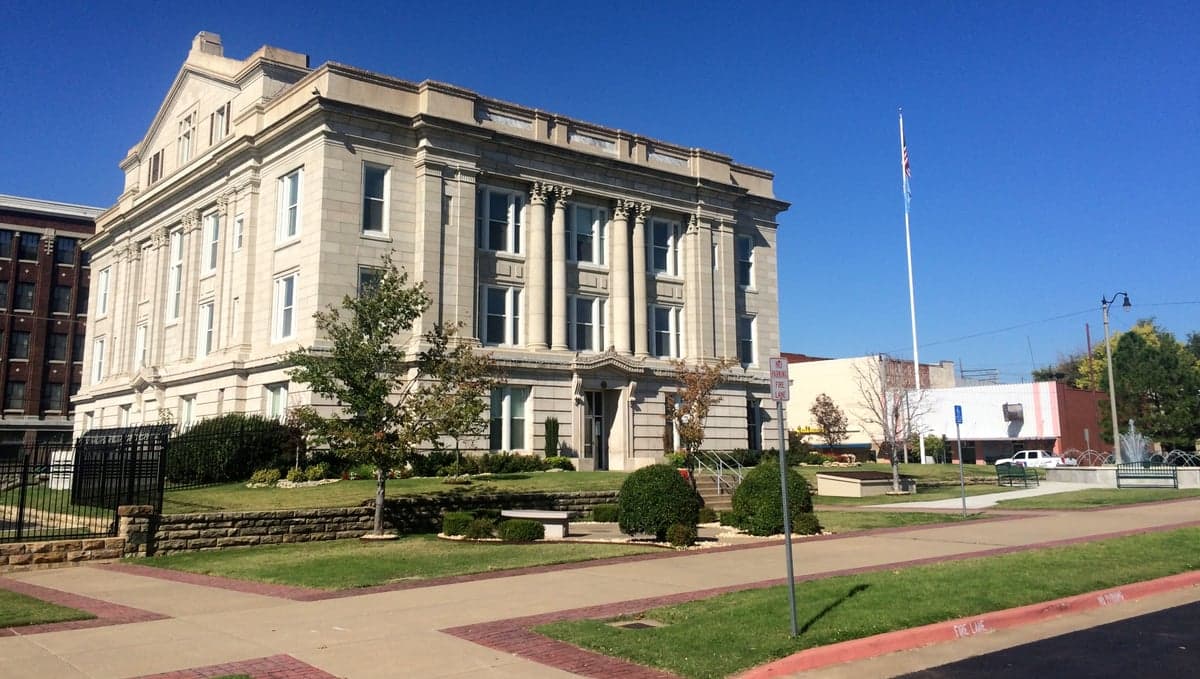
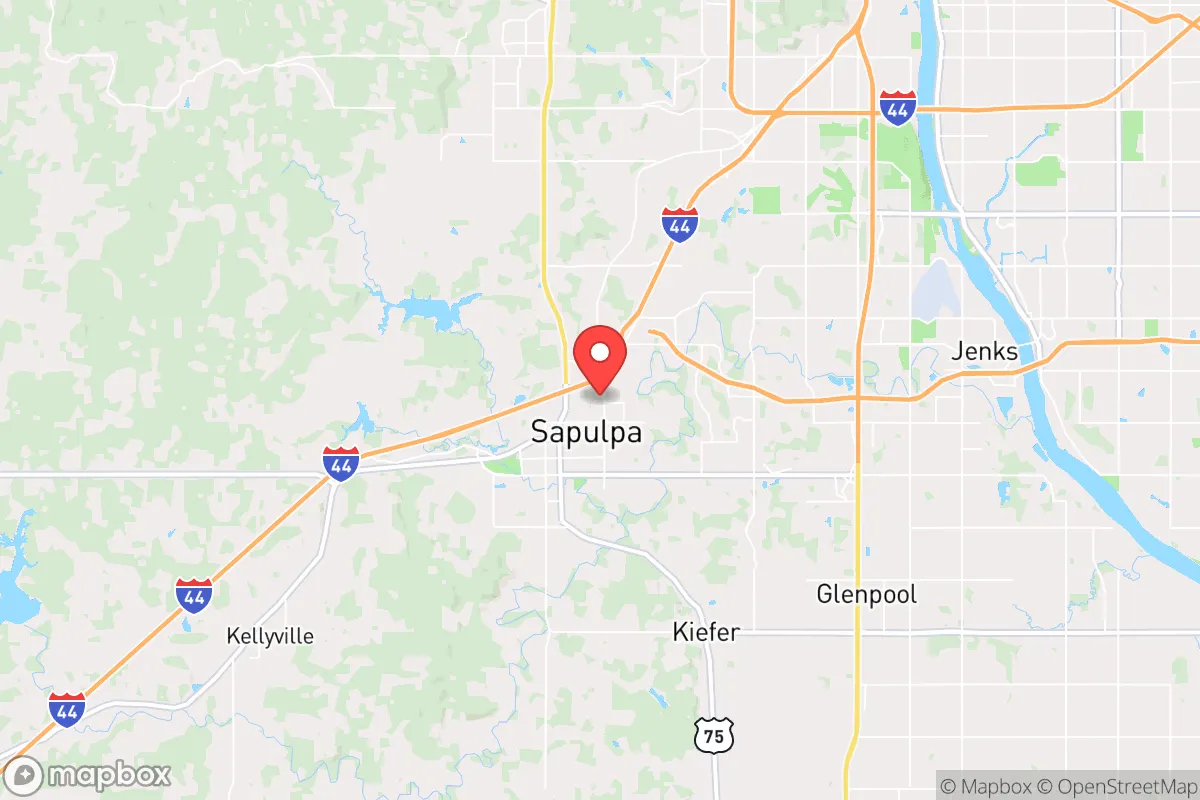
Photo: Wikipedia
Demographics of Sapulpa, OK
Affluence Level in Sapulpa, OK
A below-average socioeconomic profile. Incomes, home values, and educational attainment trail the U.S., with higher poverty and unemployment.
People of Sapulpa, OK
The people of Sapulpa, Oklahoma, today number 22,268, forming a community that is predominantly White (69.2%) with a small but established Hispanic population (7.2%) and a notably low foreign-born share of just 1.5%. The city retains a distinct working-class character, shaped by its history as a railroad and oil town, and is marked by a lower college attainment rate (19.7%) compared to state and national averages. Sapulpa’s identity is rooted in its Creek Nation origins and its role as a regional industrial hub, giving it a sense of place that is both Native American and blue-collar Oklahoman.
How the city was settled and grew
Sapulpa was founded in the 1880s as a railroad stop on the St. Louis–San Francisco Railway, named after a Creek Indian leader, Chief Sapulpa. The original population was a mix of Creek (Muscogee) families who had been forcibly relocated to Indian Territory in the 1830s and white settlers who arrived after the 1889 Land Run and subsequent allotment of tribal lands. The discovery of oil in the nearby Glenn Pool field in 1905 triggered a boom, drawing workers from the South and Midwest. The historic Downtown Sapulpa district, centered on Dewey Avenue, was built by these early oil and railroad workers, with brick storefronts and modest frame houses. The South Heights neighborhood, located south of the railroad tracks, became home to many of the African American families who arrived during the oil boom, working as laborers and domestic workers. By the 1920s, Sapulpa’s population had swelled to over 8,000, and the North Creek area, near the Sapulpa Creek, housed many of the Creek families who remained after allotment, maintaining ties to the tribal community.
Modern era (post-1965)
After the 1965 Hart-Cellar Act, Sapulpa saw very little international immigration, reflected in its current foreign-born rate of just 1.5%. Instead, the city’s demographic changes came from domestic in-migration, particularly from rural Oklahoma and the broader South. The Hispanic population, now 7.2%, began growing in the 1990s and 2000s, drawn by jobs in the city’s manufacturing and warehousing sectors. These families settled primarily in the West Sapulpa area, near the industrial parks along Highway 66, where affordable housing and proximity to work made it a natural landing point. The Black population, at 3.5%, has remained stable and concentrated in the historic South Heights neighborhood, though some families have moved to newer subdivisions in the East Side near the Sapulpa High School campus. The Asian population is very small (0.9% East/Southeast Asian, 0.2% Indian subcontinent), with most families living in the Lake Sahoma area, a newer residential section on the city’s western edge. Suburbanization has been limited; Sapulpa has not experienced the rapid sprawl seen in nearby Tulsa suburbs like Broken Arrow or Bixby, and its population has grown only modestly since 2000.
The future
Sapulpa’s population is likely to remain stable and slowly aging, with limited growth from either domestic or international migration. The city’s low college attainment rate and reliance on manufacturing and logistics jobs suggest it will continue to attract working-class families from rural Oklahoma, but the lack of a major university or high-tech employer limits in-migration of younger, educated professionals. The Hispanic population is expected to grow gradually, possibly reaching 10-12% by 2040, as families already in the area have children and attract relatives from other parts of Oklahoma and Texas. The White population, while still the majority, will likely decline slightly as older residents pass away and younger adults move to Tulsa or other metro areas for white-collar jobs. The city is not tribalizing into distinct ethnic enclaves; instead, it is slowly homogenizing as older neighborhoods like South Heights and North Creek see new residents of varied backgrounds. The Creek Nation remains a significant cultural presence, but its members are increasingly dispersed across the city rather than concentrated in historic areas.
For someone moving in now, Sapulpa offers a stable, affordable, and predominantly working-class community with a strong sense of local history. The population is not diversifying rapidly, and the city’s character will likely remain much the same over the next decade: a small, slow-growing industrial town where family ties and local institutions—churches, schools, and the Creek Nation—anchor daily life. New residents should expect a place where change comes slowly, and where the past—from the railroad depot to the oil derricks—still shapes the present.

* Values derived from national, state, county, city and local statistics and may differ in a specific area. Last updated: 2026-04-21T09:09:34.000Z
Narrative content on this page is AI-generated and may contain mistakes. Verify any details that matter before acting on them.
ReloMaps may earn a commission from affiliate links at no extra cost to you.

