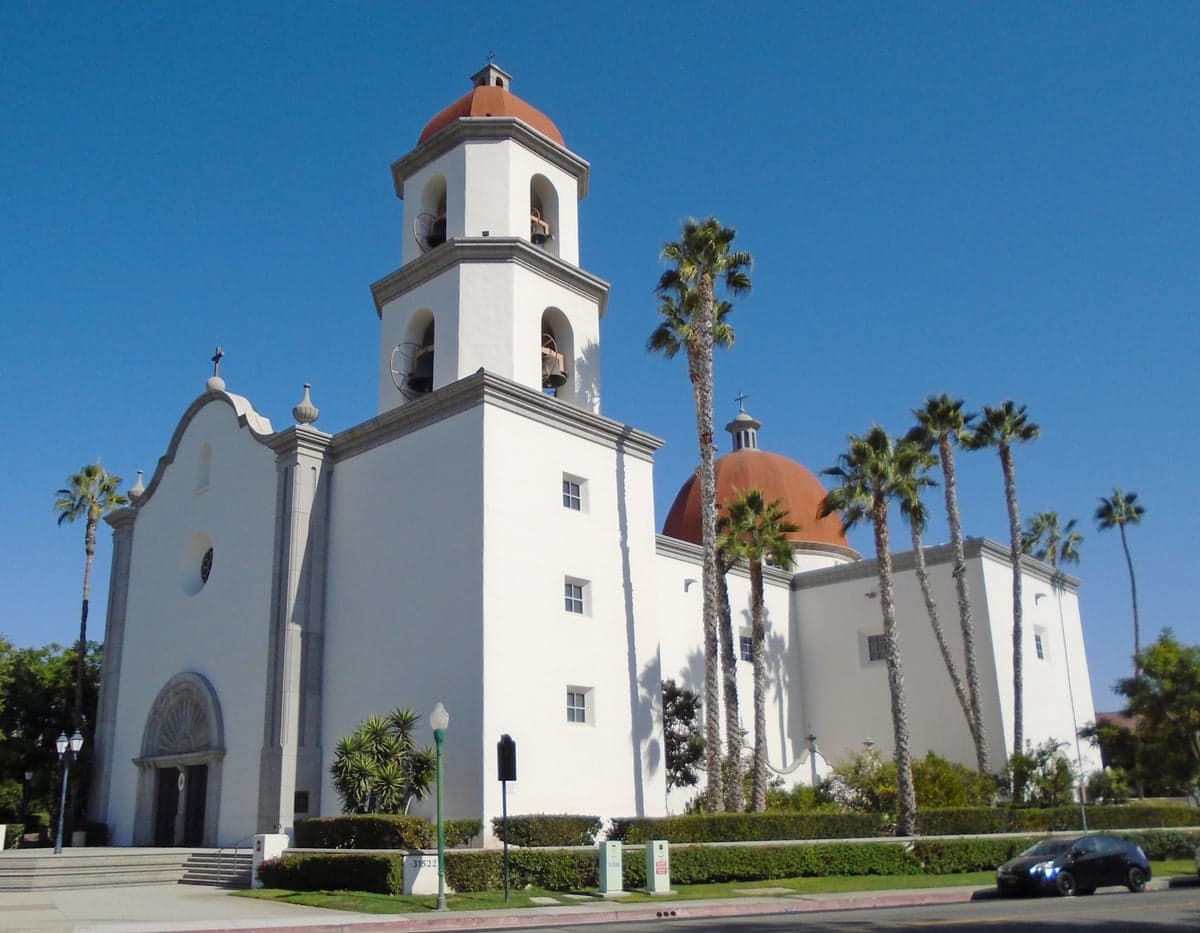
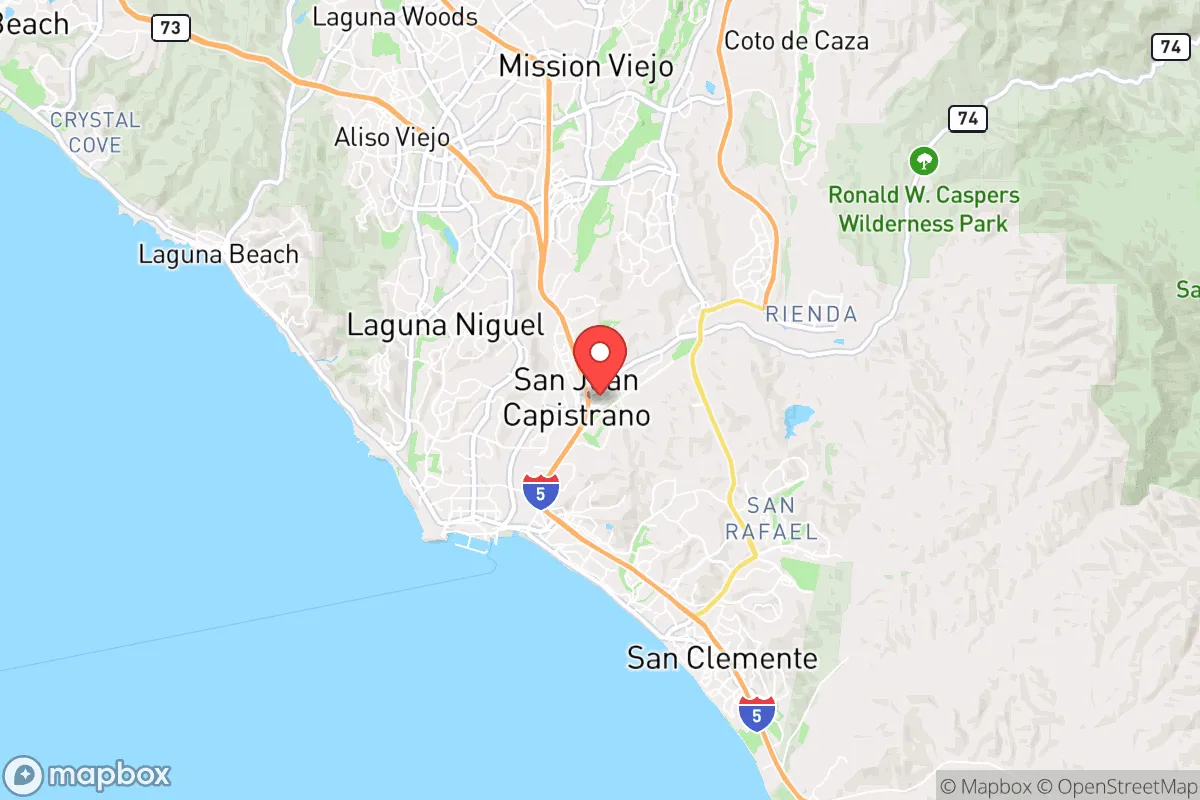
Photo: Wikipedia
Personal Sovereignty in San Juan Capistrano, CA
Moderate friction. Expect trade-offs in some aspect of personal liberty and independence.
What does Personal Sovereignty tell us?
Personal Sovereignty measures your capacity for self-reliance and independence with minimal government friction. Higher scores mean fewer barriers between you and the way you want to live... but it assumes you have the space you need and good neighbors.
What does this tell us?
Personal Sovereignty measures your capacity for self-reliance and independence with minimal government friction. Higher scores mean fewer barriers between you and the way you want to live... but it assumes you have the space you need and good neighbors.
State Policy
Energy independence: Importer (25% of energy produced in-state)
Personal Liberty
Homesteading

Personal Liberty Analysis
San Juan Capistrano offers a moderate level of personal sovereignty within the heavily regulated framework of California, where state-level mandates often override local autonomy. While the city itself maintains a relatively business-friendly and property-rights-respecting posture compared to coastal peers like Santa Ana or Irvine, residents must contend with California’s high tax burden, strict gun laws, and extensive environmental regulations. For a relocation-minded individual or family prioritizing independence, the trade-off is clear: you gain a historic, semi-rural community with strong local governance, but you operate within a state that consistently ranks among the most restrictive in the nation for personal liberties.
Tax burden and regulatory posture in San Juan Capistrano
California’s overall tax burden is the highest in the nation, and San Juan Capistrano residents feel this acutely. The state’s progressive income tax tops out at 13.3% for high earners, and the base sales tax rate in Orange County is 7.75%, though local add-ons can push it higher. Property taxes are capped at 1% of assessed value under Proposition 13, but with median home prices exceeding $1.2 million, the annual bill is substantial. The city’s regulatory posture is lighter than in neighboring San Clemente or Dana Point: San Juan Capistrano has a reputation for resisting overdevelopment and preserving its historic downtown, which translates to fewer bureaucratic hurdles for small businesses and homeowners seeking permits for additions or renovations. However, California’s California Environmental Quality Act (CEQA) still applies, adding months to any construction project. For a self-reliant individual, the key takeaway is that while local government is relatively hands-off, state-level taxes and regulations create a baseline friction that cannot be avoided.
Self-defense rights and California gun law specifics
California’s firearm laws are among the strictest in the country, and San Juan Capistrano residents must comply fully. The state requires a 10-day waiting period and a Firearm Safety Certificate for all purchases, and the roster of approved handguns is limited. Magazine capacity is capped at 10 rounds, and “assault weapons” are banned by feature. Concealed carry permits (CCWs) are issued by the Orange County Sheriff’s Department, which has historically been more permissive than coastal counties—since the Supreme Court’s Bruen decision in 2022, the county has moved to a “shall-issue” standard, meaning applicants who pass a background check and complete a training course are generally approved. However, the process still takes 3–6 months and costs several hundred dollars. Open carry is prohibited. For self-defense at home, no permit is needed for a firearm, but storage laws require guns to be locked away when not in use. The practical reality is that while you can legally own and carry a firearm in San Juan Capistrano, the process is burdensome and the legal landscape is hostile to gun ownership compared to states like Texas or Arizona.
Self-reliance and homesteading viability: lot sizes, zoning, and off-grid feasibility
San Juan Capistrano’s semi-rural character offers more homesteading potential than most Orange County cities, but it is far from a free-range environment. Many residential lots in the city’s older neighborhoods, particularly near the Los Rios Historic District, are 0.25 to 0.5 acres, allowing for substantial gardens, small orchards, and even backyard chickens (allowed with a permit and subject to noise ordinances). Zoning in the city’s “Rural Residential” areas permits keeping horses, goats, and other livestock on lots of 1 acre or more, though such properties are limited and expensive—typically starting above $2 million. Off-grid living is effectively impossible: California building codes require connection to the municipal water and sewer systems, and solar panels must be grid-tied to qualify for net metering. Rainwater harvesting is legal but restricted to barrel systems under 5,000 gallons without a permit. The city’s climate—Mediterranean with 12 inches of rain annually—makes dry farming challenging without irrigation. For a family seeking true self-sufficiency, San Juan Capistrano offers a taste of rural life within a suburban framework, but the regulatory and climatic constraints mean you will still rely on external systems for water, power, and waste.
Personal liberties: parental rights, medical autonomy, speech, and property
California’s progressive state laws heavily shape personal liberties in San Juan Capistrano. Parental rights are strong in theory—the state’s Education Code grants parents access to curriculum and the right to opt children out of sex education—but recent legislation (e.g., AB 1955, effective 2024) prohibits schools from notifying parents if a child changes their gender identity, a flashpoint for conservative families. Medical autonomy is limited: California mandates vaccination for school attendance (with narrow medical exemptions) and has strict laws against alternative medicine practitioners operating outside licensed scopes. Free speech is protected under the First Amendment, but the state’s “safe place” laws restrict certain speech near healthcare facilities, and hate speech statutes are broadly enforced. Property rights are the strongest local liberty: San Juan Capistrano’s city council has consistently opposed state-mandated high-density housing, and the city’s zoning code protects single-family neighborhoods from upzoning. However, the California Coastal Commission has veto power over development within the coastal zone, which includes parts of the city near San Juan Creek. For a conservative-leaning resident, the city itself is a relative haven for property rights and local control, but state-level mandates on education, health, and speech create a persistent tension.
Overall, San Juan Capistrano occupies a middle ground in personal sovereignty: it is one of the more freedom-respecting cities in California, with a local government that pushes back against state overreach on housing and development, but it remains firmly within a state that taxes heavily, regulates firearms strictly, and limits medical and educational autonomy. Compared to a city like Austin, Texas, or Boise, Idaho, the regulatory burden is significantly higher. Compared to San Francisco or Los Angeles, it is notably lighter. For a relocation-minded individual or family who values independence but is tied to California for work or family, San Juan Capistrano offers the best balance of local autonomy and semi-rural lifestyle available in coastal Southern California—provided you accept the state-level constraints as a fixed cost of living there.

* Values derived from national, state, county, city and local statistics and may differ in a specific area. Last updated: 2026-11-19T03:45:23.000Z
Narrative content on this page is AI-generated and may contain mistakes. Verify any details that matter before acting on them.
ReloMaps may earn a commission from affiliate links at no extra cost to you.

