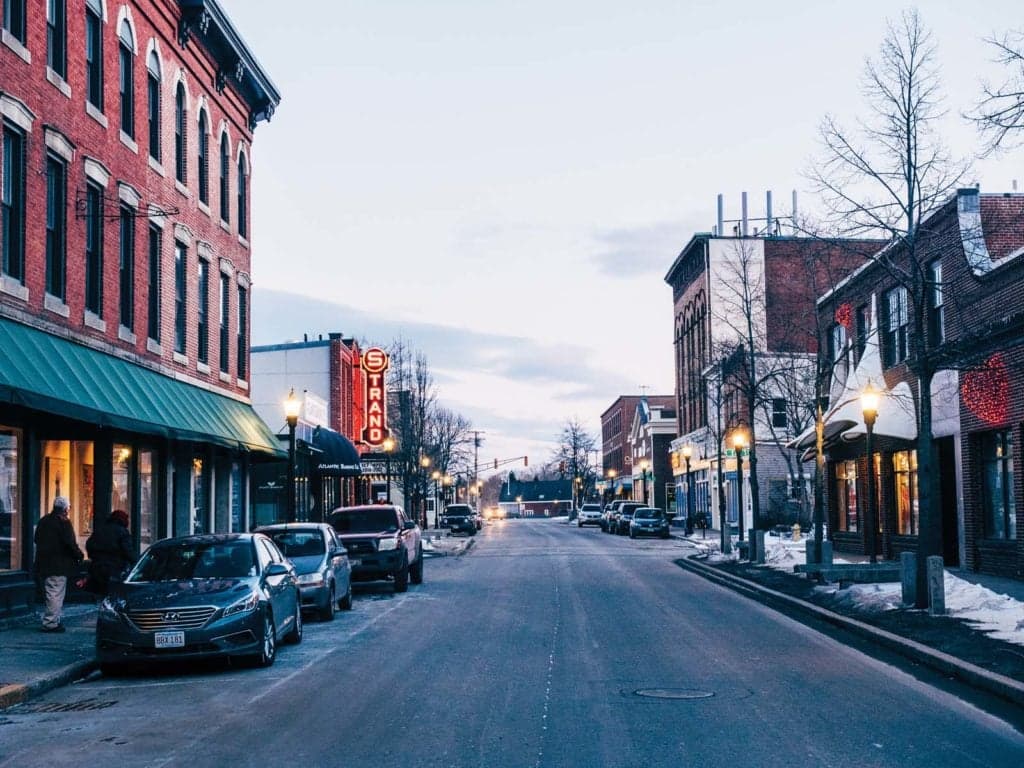
Photo: Wikipedia
Personal Sovereignty in Rockland, ME
Viable for self-reliance. Generally workable, though some barriers may limit total independence.
What does Personal Sovereignty tell us?
Personal Sovereignty measures your capacity for self-reliance and independence with minimal government friction. Higher scores mean fewer barriers between you and the way you want to live... but it assumes you have the space you need and good neighbors.
What does this tell us?
Personal Sovereignty measures your capacity for self-reliance and independence with minimal government friction. Higher scores mean fewer barriers between you and the way you want to live... but it assumes you have the space you need and good neighbors.
State Policy
Energy independence: Importer (30% of energy produced in-state)
Personal Liberty
Homesteading

Personal Liberty Analysis
For the individualist or prepper evaluating Rockland, Maine, personal sovereignty here is a study in contrasts: the state-level framework imposes some of the nation’s most restrictive gun laws and a high tax burden, yet the local culture and geography offer genuine opportunities for self-reliance, off-grid living, and a hands-off social environment. You won’t find a libertarian paradise, but you will find a place where the state’s heavy hand is often balanced by a deep-rooted Yankee independence and a landscape that rewards those who can work it. The key is knowing exactly where the lines are drawn and whether you can live within them—or around them.
Tax burden and regulatory posture for the self-reliant
Maine’s tax posture is a significant drag on personal sovereignty. The state imposes a progressive income tax with a top marginal rate of 7.15%, and property taxes are among the highest in the nation—Knox County’s median effective rate hovers around 1.3% of assessed value, meaning a modest $300,000 home carries an annual bill of nearly $4,000. For the prepper trying to stockpile supplies or invest in land, this is money that could otherwise go toward self-sufficiency. Sales tax is 5.5%, but it jumps to 8% on prepared food and lodging, which can sting if you’re relying on local services during a transition. The regulatory environment is mixed: Maine has strict environmental laws, particularly around coastal development and wetlands, which can complicate building a remote cabin or installing a septic system. However, the state is notably hands-off regarding building codes in unorganized territories (townships with no local government), and Knox County’s planning offices are generally pragmatic. For the serious homesteader, the biggest hurdle is the property tax—it’s a permanent cost that never goes away, unlike a mortgage. If you’re looking to minimize government overhead, Rockland itself is not the answer; the surrounding unincorporated areas or towns like Union and Washington offer lower tax rates and fewer zoning entanglements.
Self-defense and gun law specifics in Maine
This is the sharpest edge of the sovereignty trade-off. Maine is a “may-issue” state for concealed carry permits, but in practice, the sheriff in Knox County issues permits to qualified applicants without undue delay—expect a 30- to 60-day wait after a background check and a $60 fee. The state does not require a permit for open carry, which is a small win for the prepper who wants to keep a sidearm on a hip while working land. However, the 2023 “yellow flag” law (LD 222) allows police to seize firearms from individuals deemed a threat by a medical professional, without a court order—a clear overreach that should concern anyone who values due process. Magazine capacity is limited to 10 rounds for rifles and 15 for handguns, and there is a 72-hour waiting period on all firearm purchases. Private sales between individuals are legal without a background check, which preserves a gray market for transfers. The state also bans “assault weapons” as defined by a 2023 law, though enforcement is inconsistent and many preppers simply buy before moving or use private sales. For the survivalist, the takeaway is that Maine is not Texas or New Hampshire—you can defend your home, but the state has erected meaningful barriers. Stock up before you arrive, and keep your legal paperwork in order.
Self-reliance and homesteading viability: lot sizes, zoning, and off-grid feasibility
Rockland’s immediate area is not ideal for serious homesteading—minimum lot sizes in the city are typically 5,000 to 10,000 square feet, and zoning restricts livestock and large gardens. But drive 15 minutes inland to Warren or 20 minutes north to Hope, and the picture changes dramatically. Knox County has large swaths of unorganized territory where minimum lot sizes are 2 acres for a single-family home, and many parcels are 5 to 20 acres with no zoning beyond basic septic and well requirements. Off-grid living is legally feasible: Maine has no state law requiring grid connection, and many rural properties rely on solar panels, propane, and wood heat. The state offers a 30% tax credit on solar installations, and net metering is available if you do connect. Water rights are favorable—you can drill a well on your own property without a permit, though you must test for contaminants. The growing season is short (May to September), but the soil in Knox County is loamy and well-drained, suitable for root vegetables, berries, and hardy greens. For the prepper, the real constraint is winter: heating a home with wood requires 4-6 cords per season, and propane delivery can be unreliable in deep snow. The county’s emergency services are stretched thin, so self-reliance on water, heat, and food storage is not a lifestyle choice—it’s a necessity. The local culture respects this; neighbors will help you split wood, but they won’t call the county if you’re living off-grid without a permit.
Personal liberties: parental rights, medical autonomy, speech, and property
On parental rights, Maine is a mixed bag. The state mandates school attendance until age 17, and homeschooling requires an annual notice to the local superintendent with a brief outline of curriculum—no testing or portfolio review is required, which is a win for autonomy. However, Maine has a universal vaccination law for schoolchildren (no religious exemption), which could be a dealbreaker for families who oppose mandates. Medical autonomy is under pressure: the state has a prescription drug monitoring program that tracks all controlled substances, and telehealth for out-of-state providers is restricted. For the prepper, this means stocking antibiotics and emergency meds before moving is wise, as local doctors are cautious about prescribing. Free speech is protected under the First Amendment, but Maine has a “malicious harassment” statute that can be used to prosecute speech deemed threatening—a vague law that could chill political expression. Property rights are relatively strong: there is no statewide rent control, and eminent domain is rarely used for private development. The state’s “right to farm” law protects agricultural operations from nuisance lawsuits, which is a boon for the homesteader. However, the coastal zoning overlay in Rockland restricts building heights and shoreline access, so if you buy waterfront, expect state oversight on any construction. The overall vibe is that the state trusts you to live your life until you bump into a regulated activity—then the paperwork begins.
Compared to other areas in the Northeast, Rockland offers a moderate-to-high level of personal sovereignty for the prepared individual. The tax burden is heavy, the gun laws are restrictive by national standards, and the state has a clear appetite for regulation in health and education. But the land itself—cheap, remote, and forgiving—provides a buffer that many suburban or urban areas cannot match. For the survivalist who values self-reliance over convenience, Rockland’s surrounding countryside is a viable base of operations, provided you enter with eyes open and a plan to work around the state’s overreach. The real sovereignty here is not granted by the government; it’s carved out by the people who know how to live without it.

* Values derived from national, state, county, city and local statistics and may differ in a specific area. Last updated: 2026-05-01T16:57:17.000Z
Narrative content on this page is AI-generated and may contain mistakes. Verify any details that matter before acting on them.
ReloMaps may earn a commission from affiliate links at no extra cost to you.

