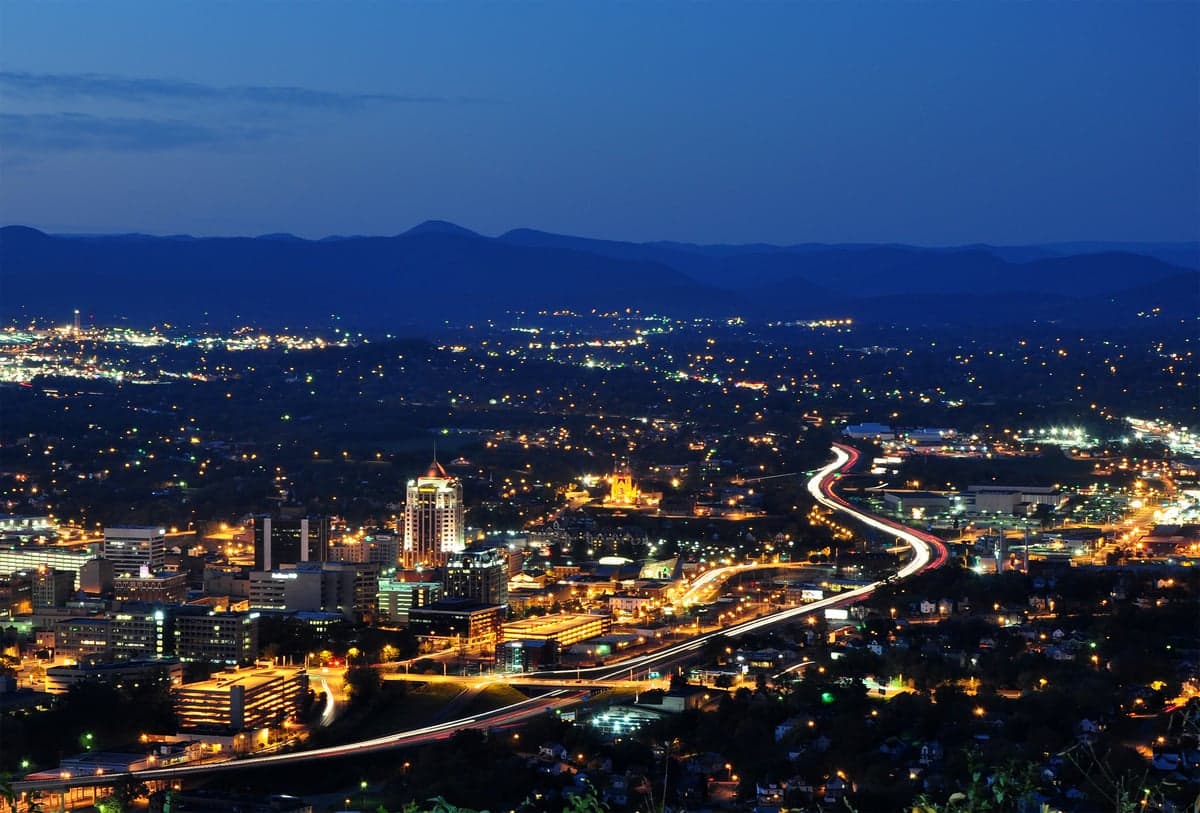
Photo: Wikipedia
Quality of Life in Roanoke, VA
Above-average quality of iife. The area offers a reasonable cost of living, decent mobility, and a mix of neighborhood amenities.
What does Quality of Life tell us?
Quality of Life blends cost of living, nearby amenities, socioeconomic signals, and neighborhood character. City-level scores represent the whole municipality; individual neighborhoods can differ.
What does this tell us?
Quality of Life blends cost of living, nearby amenities, socioeconomic signals, and neighborhood character. City-level scores represent the whole municipality; individual neighborhoods can differ.
Cost of Living
25% below national average
The Real Cost of Living in Roanoke, VA for 2026
| Tier | Individual | Family (4) |
|---|---|---|
| Survival | $15k | $29k |
| Comfortable | $35k | $52k |
| Luxury | $95k+ | $147k+ |
| Elite (Top 5%) | $132k+ | $205k+ |
102%
The Area Signal
A metric tracking the socioeconomic signals of the area.
Hobbies
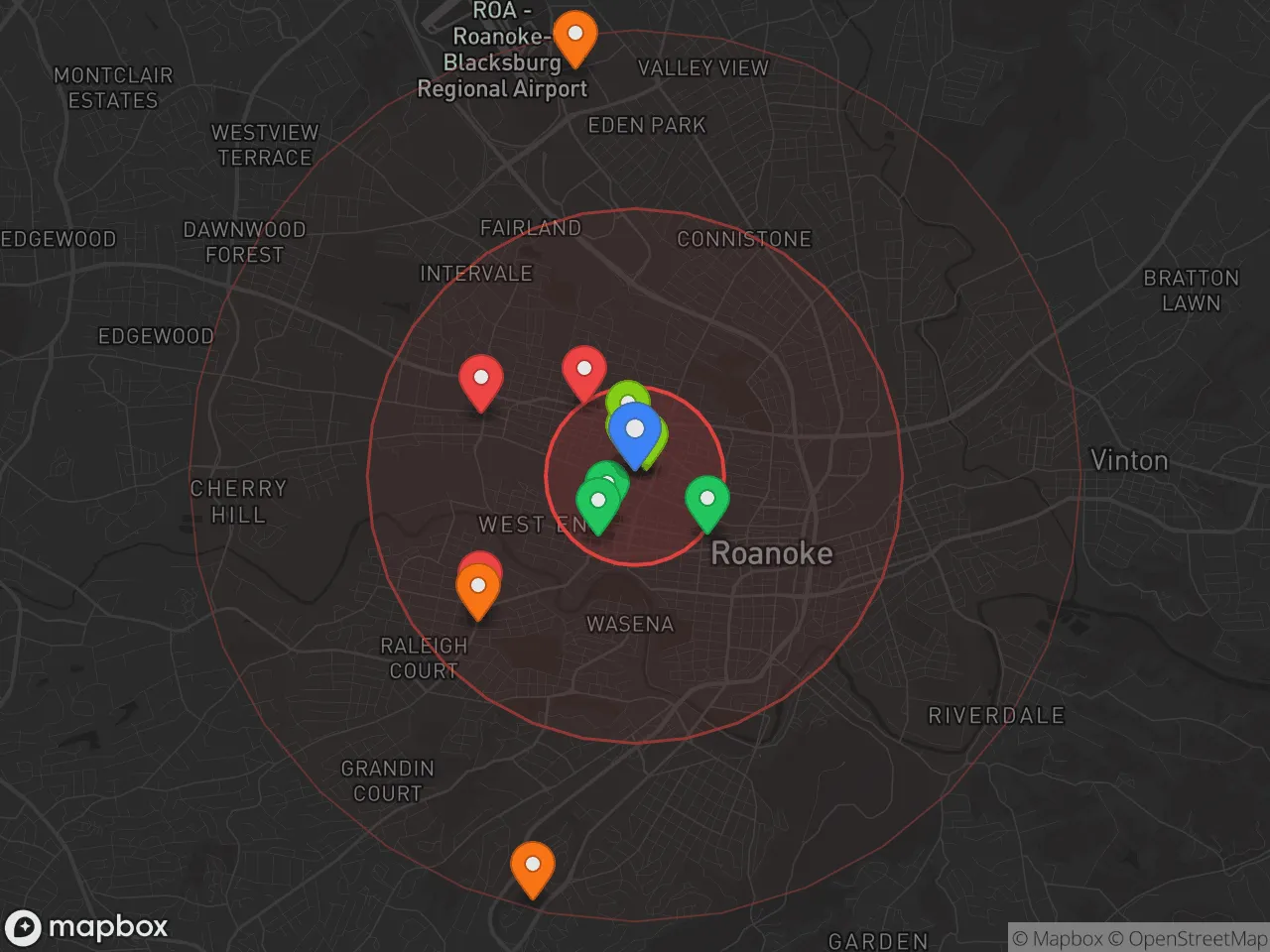
Explore the areaGroceries
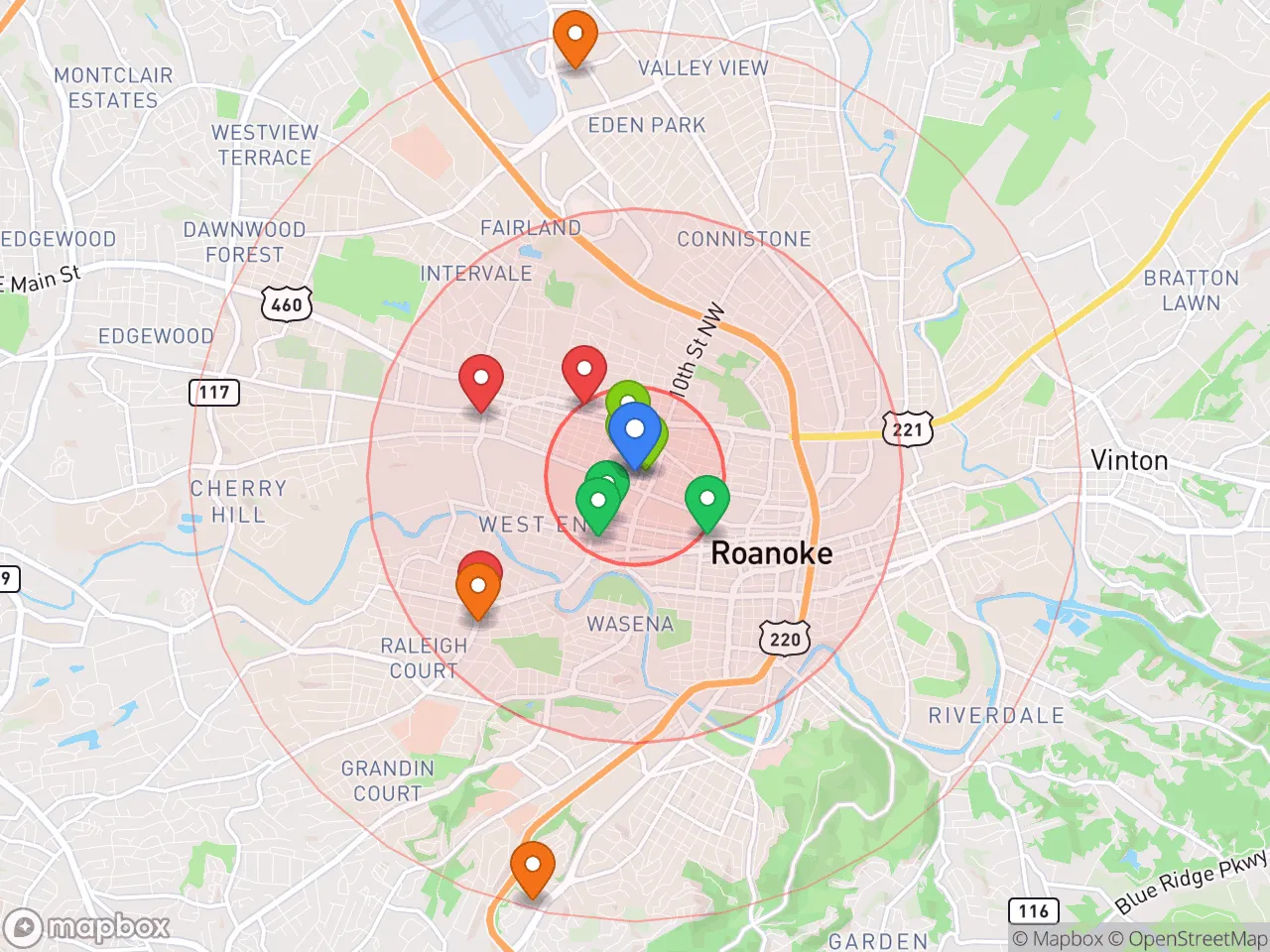
8 within 10 miles
Gas
20 within 10 miles
Hospital
7 within 20 miles
Airport
RDU — Raleigh–Durham International
Post Office
USPS — Roanoke, VA
Critical Amenities
Quality-of-Life Analysis
Roanoke, Virginia, offers a quality of life defined by Appalachian affordability and a steady, blue-collar character, with a cost of living index of 75 (25 percent below the U.S. average) that attracts a mix of young professionals, remote workers, and retirees seeking financial breathing room. The city’s median household income hovers around the national median, but the low housing costs mean residents often have more disposable income than peers in pricier metros. Roanoke’s population skews slightly older than the national average, with a growing contingent of newcomers drawn by the region’s outdoor access and slower pace, though the local economy remains anchored in healthcare, logistics, and manufacturing rather than tech or finance.
Cost of living, housing affordability, and how Roanoke compares to nearby cities
Roanoke’s cost of living index of 75 is the lowest among Virginia’s major metros, significantly undercutting Richmond (index 93) and the Washington, D.C. suburbs (index 140+). The median home value of $180,500 is roughly half the national median and about 40 percent lower than in Charlottesville, 70 miles east. Median rent sits at $964, making it possible for a single earner making $40,000 annually to afford a one-bedroom apartment without exceeding the 30 percent income guideline. The average commute of 19.9 minutes is notably short—well under the national average of 27 minutes—and reflects Roanoke’s compact geography and limited traffic congestion. Property taxes are moderate, with an effective rate around 1.0 percent of assessed value, and Virginia’s income tax (2–5.75 percent bracket) applies, but the low housing base keeps total monthly costs manageable. For comparison, a similar home in Blacksburg (home to Virginia Tech) would cost roughly $50,000 more, while in Lynchburg, 50 miles south, prices are comparable but job options are narrower.
Amenities, schools, and what daily life feels like in Roanoke
Daily life in Roanoke revolves around the Blue Ridge Parkway and the Roanoke River Greenway, a 10-mile paved trail system that connects downtown to parks and neighborhoods. The city’s public school system, Roanoke City Public Schools, serves about 13,000 students and includes magnet programs at Patrick Henry High School and William Fleming High School, though overall state rankings place the district below suburban counterparts like Roanoke County Schools. For private options, Community School and North Cross School are well-regarded. Healthcare is a major local employer—Carilion Clinic and LewisGale Medical Center anchor the region—and the Virginia Tech Carilion School of Medicine adds a research-hospital presence. Grocery access is solid, with Kroger and Food Lion locations citywide, and the Roanoke Farmers Market operates year-round in the historic market district. Entertainment leans toward outdoor recreation (hiking McAfee Knob, fishing at Smith Mountain Lake) and cultural staples like the Taubman Museum of Art and the Jefferson Center performing arts venue. The restaurant scene is modest but improving, with a cluster of independent eateries along Grandin Road and in the Wasena neighborhood.
Roanoke is best suited for people who prioritize low housing costs and short commutes over urban density or high-end amenities. Remote workers, early-career healthcare professionals, and retirees on fixed incomes will find the affordability especially attractive, while families should weigh the public school options against nearby suburban districts. The city’s slower rhythm and strong outdoor orientation appeal to those who value hiking, biking, and a four-season climate over nightlife or cultural variety. For anyone seeking a low-stress, low-cost base in the mid-Atlantic, Roanoke delivers a practical, grounded quality of life that few comparably sized cities can match.

Crime in Roanoke, VA
Higher crime rates than 74% of comparable U.S. locations.
Violent CrimeViolent Crime Analysis
Property CrimeProperty Crime Analysis
Crime Analysis
Roanoke, Virginia, reports a violent crime rate of 552.8 incidents per 100,000 residents and a property crime rate of 3,456.1 per 100,000, figures that place the Star City well above both state and national averages. While the city offers a lower cost of living and access to the Blue Ridge Mountains, its safety profile is a significant concern for potential residents, particularly given the broader context of progressive criminal justice policies in the region that can impact recidivism and public safety.
Crime in context
Roanoke’s violent crime rate is roughly 50% higher than the national average and more than double the Virginia state average. The property crime rate similarly exceeds national benchmarks by a wide margin. These numbers are not outliers; they reflect a persistent trend in a mid-sized city that has struggled with economic transition and population decline. When compared to other Virginia metros like Lynchburg or Harrisonburg, Roanoke consistently reports higher crime volumes. The presence of progressive judges and district attorneys in the broader Roanoke Valley legal system—who often prioritize diversion programs and reduced sentencing over incarceration—raises legitimate concerns about accountability. Such policies, while well-intentioned, can lead to more offenders cycling back onto the streets, directly undermining public safety and victim justice.
What residents experience
For those living in Roanoke, property crime is the most tangible daily risk. Vehicle break-ins, package thefts, and residential burglaries are common complaints, particularly in neighborhoods near downtown and major corridors like Williamson Road. Violent crime, while less frequent in daily life, is concentrated in specific areas and often involves interpersonal disputes or drug-related activity. Residents report that police response times can vary, and the effectiveness of community policing is hampered by staffing shortages. The city’s reliance on restorative justice programs and alternative sentencing for non-violent offenders, while reducing jail populations, has not demonstrably lowered crime rates—a pattern that should give pause to families and professionals considering relocation.
Neighborhood-level variation
Safety in Roanoke is not uniform. The city’s southwest quadrant, including neighborhoods like South Roanoke and Wasena, generally sees lower crime rates and a stronger sense of security, with more active neighborhood watches and private security presence. Conversely, areas in the northwest and parts of the southeast, such as Melrose-Rugby and Hurt Park, experience higher concentrations of both violent and property crime. The city’s Old Southwest district has seen revitalization but still contends with opportunistic theft. For prospective residents, choosing a neighborhood with a proven track record of lower crime and proactive community engagement is critical. Suburban options in Roanoke County—such as Cave Spring or Hollins—offer significantly lower crime rates and are often recommended for those prioritizing safety over urban convenience.
* Values derived from national, state, county, city and local statistics and may differ in a specific area. Last updated: 2026-05-02T05:03:55.000Z
Narrative content on this page is AI-generated and may contain mistakes. Verify any details that matter before acting on them.
ReloMaps may earn a commission from affiliate links at no extra cost to you.

