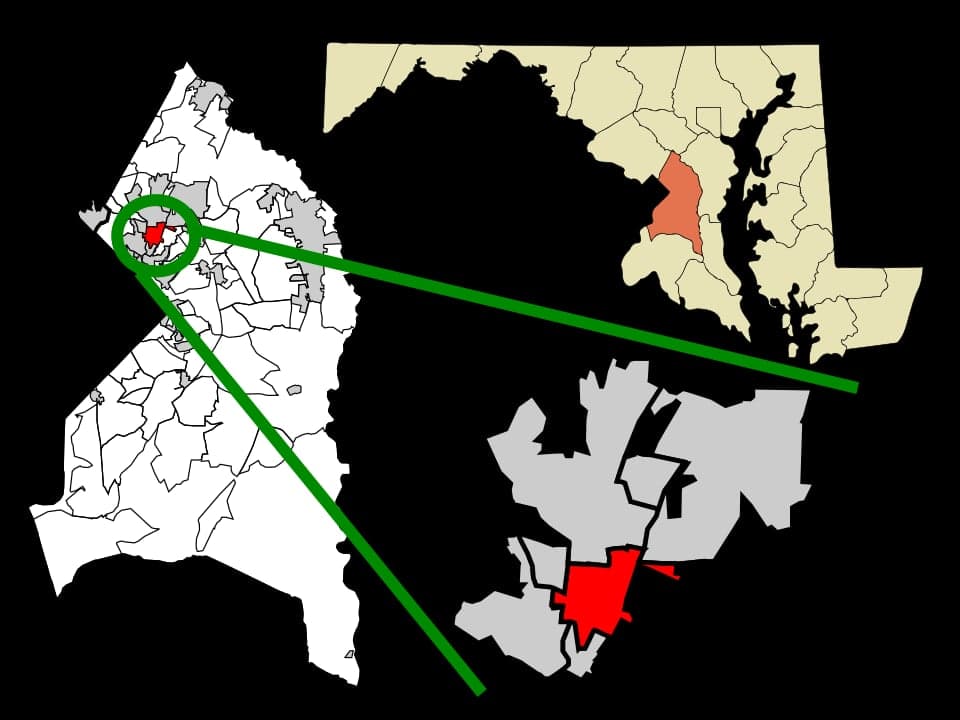
Photo: Wikipedia
Personal Sovereignty in Riverdale Park, MD
Viable for self-reliance. Generally workable, though some barriers may limit total independence.
What does Personal Sovereignty tell us?
Personal Sovereignty measures your capacity for self-reliance and independence with minimal government friction. Higher scores mean fewer barriers between you and the way you want to live... but it assumes you have the space you need and good neighbors.
What does this tell us?
Personal Sovereignty measures your capacity for self-reliance and independence with minimal government friction. Higher scores mean fewer barriers between you and the way you want to live... but it assumes you have the space you need and good neighbors.
State Policy
Energy independence: Importer (8% of energy produced in-state)
Personal Liberty
Homesteading

Personal Liberty Analysis
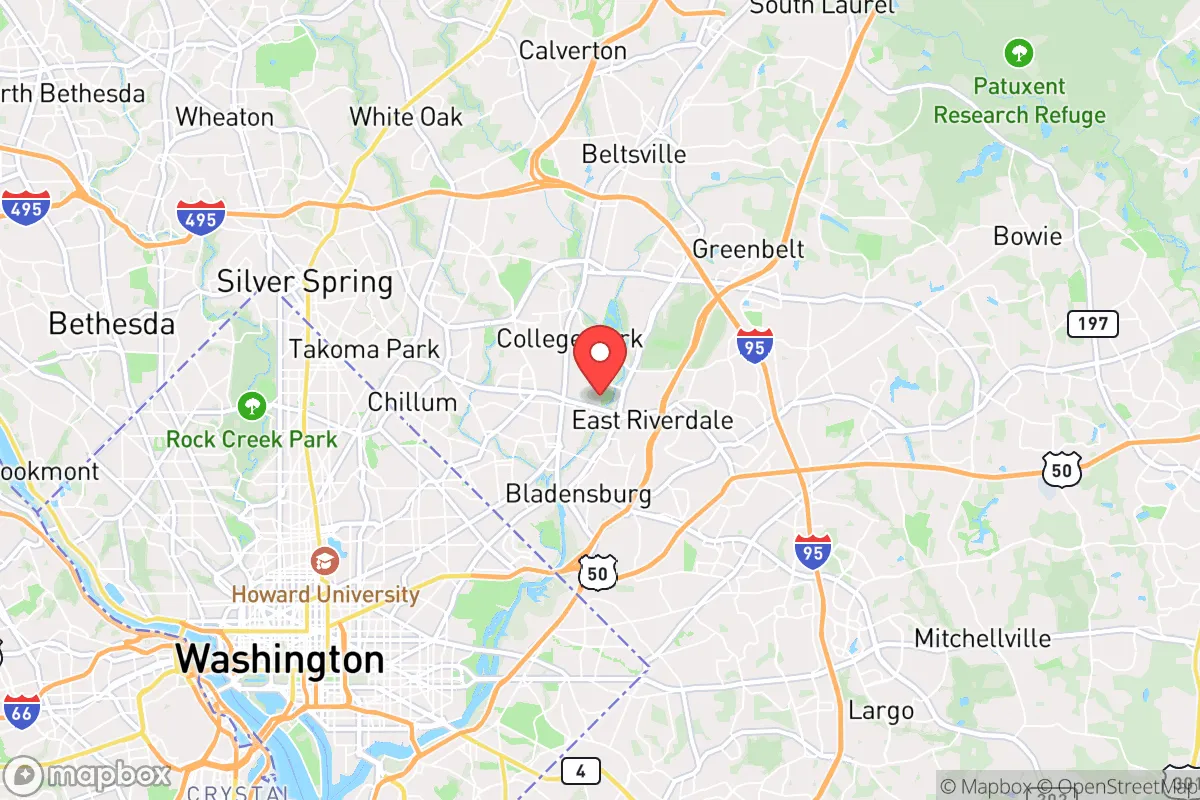
Riverdale Park, Maryland, presents a challenging environment for personal sovereignty, particularly for those with a survivalist or prepper mindset. Located in Prince George’s County, this inner-suburb of Washington, D.C., is subject to some of the most restrictive state-level laws in the nation regarding self-defense, taxation, and property rights. While the town itself has a small-town feel with tree-lined streets, the overarching regulatory climate from Annapolis and the county government significantly limits individual autonomy, making it a location that requires careful strategic consideration for anyone prioritizing freedom and self-reliance.
Tax burden and regulatory posture in Prince George’s County
Maryland’s tax posture is among the heaviest in the country, and Riverdale Park residents feel it directly. The state imposes a progressive income tax with rates up to 5.75%, and Prince George’s County adds its own local income tax of 3.2%, bringing the combined top marginal rate to nearly 9%. Property taxes are also a major factor, with the county’s effective rate hovering around 1.1% of assessed value, which is above the national average. For a prepper or conservative household, this means a significant portion of income is diverted to state and county coffers before you can allocate it to your own preparedness supplies, land improvements, or emergency funds. The regulatory environment is equally burdensome. Maryland’s strict environmental regulations, building codes, and permitting processes can delay or outright block projects like installing a backup generator, building a root cellar, or constructing a privacy fence. The county’s zoning code is dense and enforced, leaving little room for the kind of independent property modifications that a self-reliant lifestyle demands. Every permit, inspection, and fee is a small erosion of your ability to control your own property and time.
Self-defense and gun law specifics in a restrictive state
For anyone serious about personal and family defense, Riverdale Park sits in a hostile legal environment. Maryland is a "may-issue" state for concealed carry permits, meaning local law enforcement has discretion in granting them, though a 2022 Supreme Court ruling (NYSRPA v. Bruen) has forced a shift toward "shall-issue" practices. However, the state still requires an extensive application process, including an 8-hour training course, fingerprinting, and a background check. The real choke point is the state’s ban on "assault weapons" and high-capacity magazines (over 10 rounds), which directly limits the types of firearms you can own for home defense or SHTF scenarios. Furthermore, Maryland has a "red flag" law that allows authorities to seize firearms based on a complaint, without a criminal conviction. This is a direct threat to the prepper’s core principle of maintaining the means to defend life and liberty. Prince George’s County also has its own local gun laws that can be more restrictive than state statutes, including additional storage requirements. If self-defense is a non-negotiable priority, this area requires a high tolerance for legal risk and a willingness to navigate a complex, rights-restricting bureaucracy.
Self-reliance and homesteading viability: lot sizes, zoning, and off-grid feasibility
Riverdale Park is a densely developed suburb, and the prospects for true homesteading or off-grid living are extremely limited. The typical residential lot size is small—often less than a quarter-acre—which severely restricts gardening, raising livestock, or storing significant supplies. The town’s zoning code is strictly residential, with prohibitions on keeping chickens, goats, or other "farm animals" on standard lots. Even a large vegetable garden may be subject to homeowner association (HOA) rules or county nuisance ordinances. Off-grid feasibility is nearly zero. Maryland law requires connection to the municipal water and sewer system in most of the county, and solar panel installations are subject to complex permitting and utility interconnection agreements. Building a rainwater catchment system for potable use is heavily regulated. For a prepper looking to establish a self-sufficient compound, Riverdale Park is a poor fit. The best you can realistically achieve is a well-stocked pantry and a small, permitted garden. Any serious self-reliance project—like a wood-burning stove, a backup well, or a substantial food storage building—will likely run afoul of local codes and HOA covenants.
Personal liberties: parental rights, medical autonomy, speech, and property
Maryland’s state-level policies consistently prioritize government authority over individual and parental rights. In education, the state mandates curriculum standards that can override local school board decisions, and there is a strong push for comprehensive sex education and critical race theory frameworks in public schools. Parental opt-out rights exist but are often limited and require active, ongoing vigilance. Medical autonomy is heavily restricted. Maryland has strict vaccine mandates for school attendance, and during the COVID-19 pandemic, the state imposed some of the most aggressive lockdowns and business closures in the nation. For a prepper concerned about future public health emergencies, this signals a willingness to override personal medical choices. Freedom of speech is constitutionally protected, but the county’s political culture is overwhelmingly progressive, meaning dissenting views—especially on gun rights, taxation, or government overreach—can face social and professional repercussions. Property rights are also constrained. The county’s strong eminent domain powers and aggressive code enforcement mean that your property is never truly yours to use as you see fit. The state’s "Smart Growth" policies funnel development into dense areas, limiting the ability to own and control larger, more private parcels of land.
In the broader context of the Mid-Atlantic, Riverdale Park represents a low-sovereignty environment. Compared to rural areas in Virginia or West Virginia, where property taxes are lower, gun laws are more permissive, and zoning is less restrictive, this town is a strategic liability for anyone prioritizing personal autonomy and preparedness. The combination of high taxes, restrictive gun laws, dense zoning, and a government that actively limits parental and medical choice creates an atmosphere where self-reliance is constantly fighting an uphill battle. For a conservative-leaning individual or family with a prepper mindset, Riverdale Park is best viewed as a temporary location or a place to build financial resources before relocating to a jurisdiction that respects the fundamental right to live freely, defend oneself, and control one’s own property without constant government interference.

* Values derived from national, state, county, city and local statistics and may differ in a specific area. Last updated: 2026-04-22T02:38:24.000Z
Narrative content on this page is AI-generated and may contain mistakes. Verify any details that matter before acting on them.
ReloMaps may earn a commission from affiliate links at no extra cost to you.

