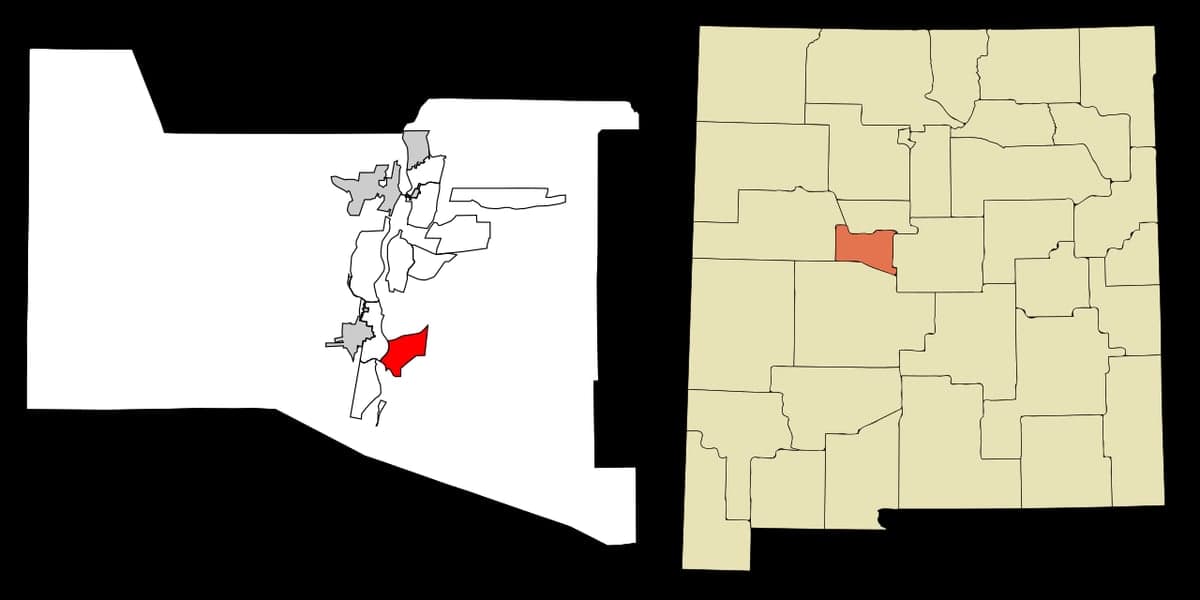
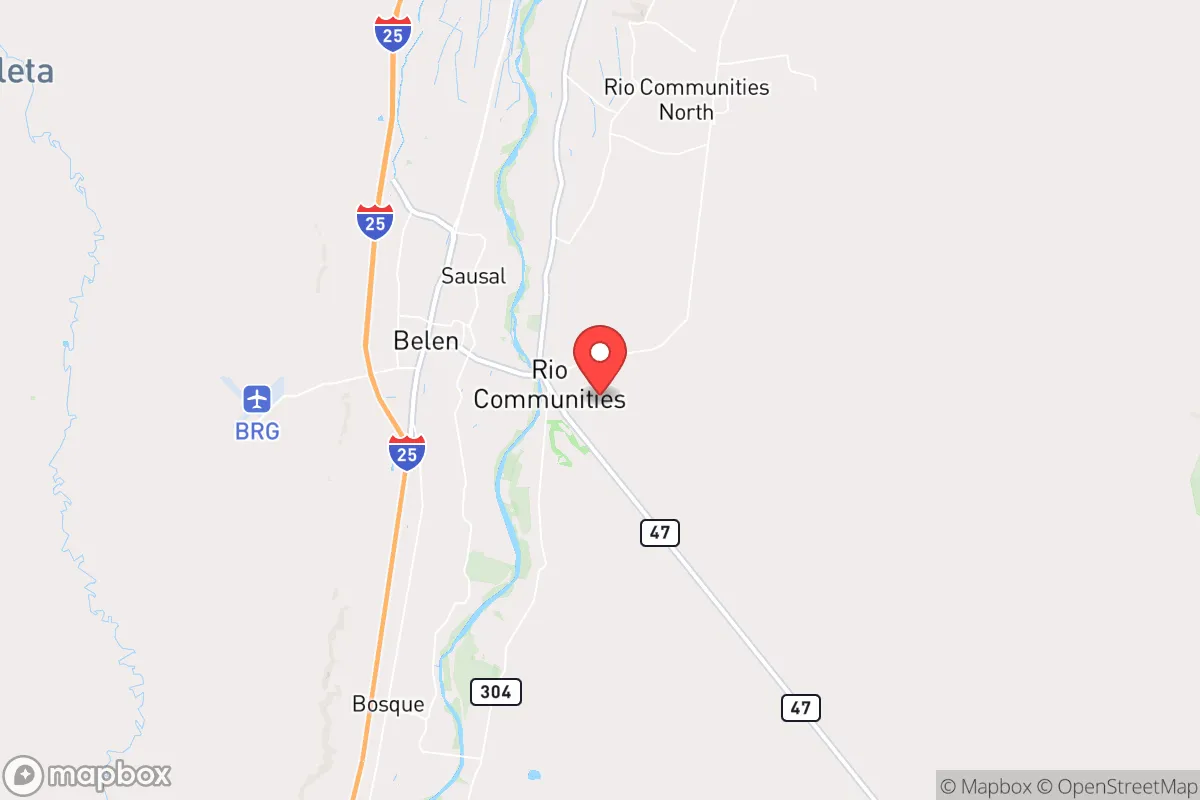
Photo: Wikipedia
Personal Sovereignty in Rio Communities, NM
Viable for self-reliance. Generally workable, though some barriers may limit total independence.
What does Personal Sovereignty tell us?
Personal Sovereignty measures your capacity for self-reliance and independence with minimal government friction. Higher scores mean fewer barriers between you and the way you want to live... but it assumes you have the space you need and good neighbors.
What does this tell us?
Personal Sovereignty measures your capacity for self-reliance and independence with minimal government friction. Higher scores mean fewer barriers between you and the way you want to live... but it assumes you have the space you need and good neighbors.
State Policy
Energy independence: Net exporter (250% of energy produced in-state)
Personal Liberty
Homesteading

Personal Liberty Analysis
For the individual or family prioritizing personal sovereignty above all else, Rio Communities, New Mexico, offers a mixed but potentially compelling picture. Located in Valencia County, roughly 30 miles south of Albuquerque, this unincorporated area provides a degree of autonomy that is increasingly rare in the modern United States, though it operates within the broader framework of New Mexico state law—a framework that has both significant strengths and notable weaknesses for those seeking maximum personal freedom. The key is understanding where the state’s regulatory reach ends and where local conditions allow for genuine self-reliance.
Tax burden and regulatory climate for the self-reliant
New Mexico’s overall tax burden is moderate compared to many states, which is a net positive for those looking to keep more of their own resources. There is no state inheritance or estate tax, a critical consideration for anyone building generational wealth or a self-sufficient homestead. The state’s gross receipts tax (GRT) is the primary revenue mechanism, and it applies broadly—including to services—so expect a higher effective tax on purchases than in states with a traditional sales tax. Property taxes in Valencia County are notably low, often under 1% of assessed value, which directly supports the goal of owning land free from excessive government claims. The regulatory posture at the state level is mixed: New Mexico has a reputation for being business-friendly in some sectors (like oil and gas) but less so in others (like environmental permitting). For the prepper or homesteader, the most relevant factor is that Valencia County and Rio Communities specifically have minimal zoning enforcement compared to urban areas. There are no city-level building codes in the unincorporated county, meaning you can construct outbuildings, workshops, or even a primary residence with far less bureaucratic interference than in a municipality. However, the state does enforce the New Mexico Construction Industries Division rules for any habitable structure, so a permit is still required for a house. The net effect is a lower regulatory burden than in the Albuquerque metro or Santa Fe, but not a complete absence of oversight.
Self-defense and gun law specifics in New Mexico
For the armed citizen, New Mexico presents a nuanced environment. The state is a shall-issue jurisdiction for concealed carry, meaning if you meet the statutory requirements (training, background check, residency), the state must issue the permit. There is no discretionary denial by a local sheriff. Open carry is legal without a permit for anyone 19 or older who can legally possess a firearm. This is a strong foundation for personal defense. However, there are significant caveats. New Mexico has a red flag law (Extreme Risk Firearm Protection Order) that allows law enforcement or family members to petition a court to temporarily seize firearms from an individual deemed a risk. This is a direct infringement on due process and a tool that can be abused. Additionally, the state has a background check requirement for all private firearm sales, including those between individuals at gun shows or in private transactions. This closes the so-called "gun show loophole" and adds a layer of government oversight to what should be a private transaction. For the survivalist, the most important fact is that New Mexico does not have a state preemption law for firearms. This means cities and counties can pass their own, more restrictive ordinances. While Valencia County is generally rural and pro-Second Amendment, the city of Belen (adjacent to Rio Communities) has its own local ordinances. Always verify local rules. The legal landscape is not as free as states like Arizona or Texas, but it is far more permissive than states like California or New York.
Self-reliance and homesteading viability: lot sizes, zoning, and off-grid feasibility
This is where Rio Communities truly shines for the self-reliant individual. The area is characterized by large, affordable lots—often one to five acres or more—with very little restrictive zoning. The county’s land use code is permissive, allowing for a wide range of agricultural and residential activities. Raising chickens, goats, or even a few head of cattle is generally not an issue. Gardening, rainwater catchment, and small-scale farming are all feasible. The critical question for the prepper is off-grid living. New Mexico state law does not require a connection to the electrical grid, but it does require a habitable dwelling to have a safe water supply and a sanitary sewage system. A well and a septic system are the standard solutions, and both are permitted with county health department approval. Solar power is legal and common, with net metering available if you do choose to connect to the grid. The climate is arid, so water conservation and rainwater harvesting are practical necessities, not just lifestyle choices. The county does not actively enforce "nuisance" ordinances against things like stored materials, vehicles, or non-standard dwellings, as long as they are not a public health hazard. This creates a de facto environment where a person can build a self-sufficient homestead with minimal government interference, provided they handle their own waste and water responsibly. The biggest challenge is the dry climate, which limits what you can grow without irrigation, but for the determined homesteader, this is a manageable constraint.
Personal liberties: parental rights, medical autonomy, speech, and property
On the broader spectrum of personal liberties, New Mexico is a mixed bag. Parental rights are relatively strong in the sense that the state does not have a universal vaccine mandate for school attendance (though individual school districts can impose requirements). Homeschooling is legal and requires only a simple notification to the state, with no standardized testing or curriculum approval required. This is a major plus for families seeking educational autonomy. Medical autonomy is more concerning. New Mexico has legalized recreational marijuana and has a robust medical cannabis program, which some may view as a positive for personal choice, but the state also has a history of aggressive public health mandates. During the COVID-19 pandemic, the governor imposed some of the strictest and longest-lasting restrictions in the nation, including business closures and mask mandates. This demonstrated a willingness to override personal choice in the name of public health, a red flag for anyone concerned about government overreach. Freedom of speech is protected by the First Amendment, but the state has no specific shield laws for journalists or citizens that go beyond federal protections. Property rights are generally respected, with the notable exception of the state’s water rights system. New Mexico operates under a prior appropriation doctrine, meaning water rights are tied to the land and can be forfeited if not used. This is a critical consideration for any homesteader: you must understand your water rights before purchasing land, as they are separate from the land deed and can be complex to transfer.
In the final analysis, Rio Communities offers a high degree of personal sovereignty relative to most of the United States, but it is not a libertarian paradise. The low property taxes, permissive zoning, large lots, and strong gun rights create a solid foundation for self-reliance. The state-level red flag law, private sale background checks, and demonstrated willingness to impose public health mandates are significant drawbacks. For the survivalist or prepper who is willing to navigate the state’s regulatory framework—particularly around water rights and building permits—this area provides a rare combination of affordability, space, and freedom that is increasingly difficult to find. It is a place where you can live largely on your own terms, but you must remain vigilant about state-level encroachments on that autonomy. Compared to the Pacific Northwest or the Northeast, it is a bastion of liberty. Compared to Texas or Arizona, it is a step back in certain key areas. For the strategic relocator, it is a viable option that requires careful due diligence, not a blind leap.

* Values derived from national, state, county, city and local statistics and may differ in a specific area. Last updated: 2026-05-01T02:54:28.000Z
Narrative content on this page is AI-generated and may contain mistakes. Verify any details that matter before acting on them.
ReloMaps may earn a commission from affiliate links at no extra cost to you.

