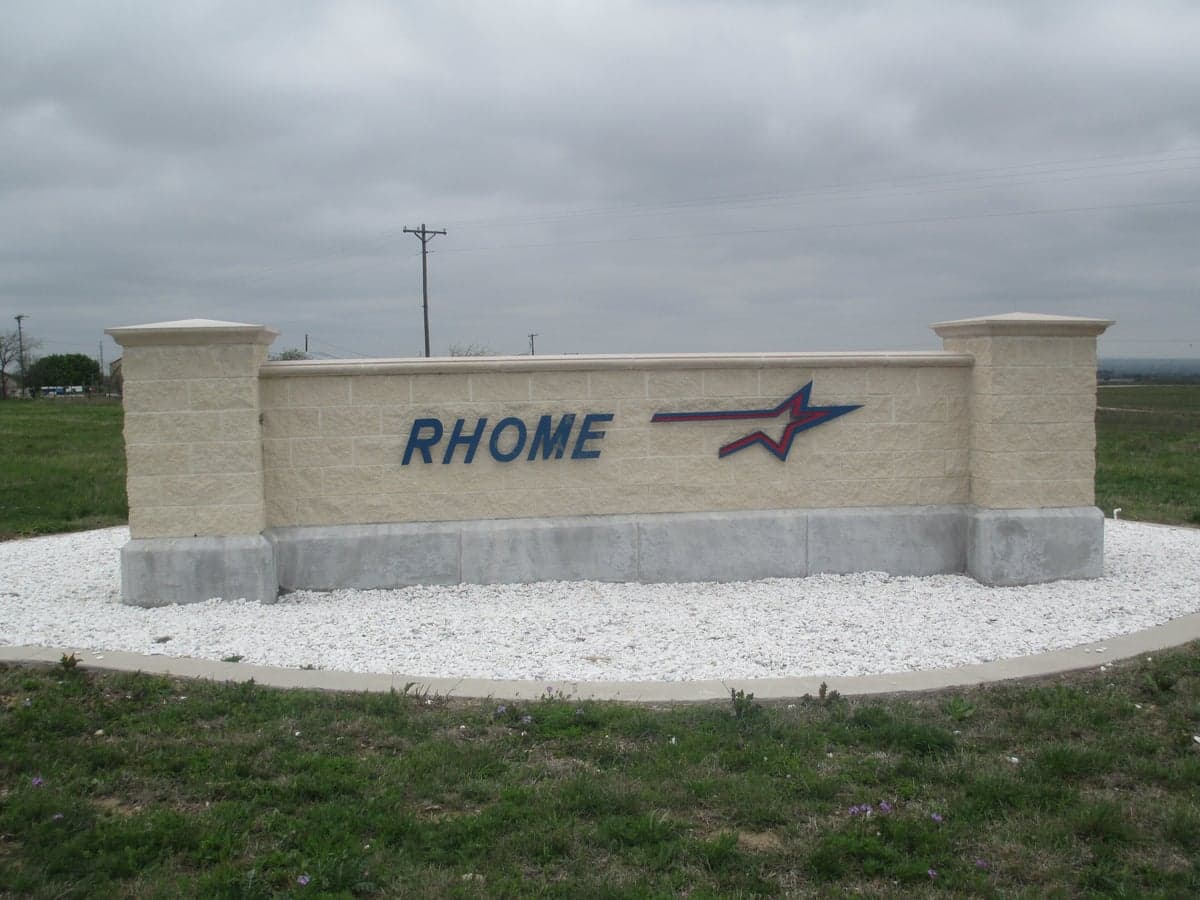
Photo: Wikipedia
Strategic Assessment of Rhome, TX
Meaningful friction. Expect exposure to either population pressure, blast zones, or natural disaster risk. Consider buying a retreat property.
What does the Strategic Assessment tell us?
Our Strategic Assessment grades tactical survivability of an area. Major population centers, military targets, fallout zones, natural disasters, and border exposure all drive risk — lower exposure means a more defensible position in a crisis.
This is heavily inspired by Joel Skousen's Strategic Relocation book. Highly recommended you checkout the book ($)What does this tell us?
Our Strategic Assessment grades tactical survivability of an area. Major population centers, military targets, fallout zones, natural disasters, and border exposure all drive risk — lower exposure means a more defensible position in a crisis.
This is heavily inspired by Joel Skousen's Strategic Relocation book. Highly recommended you checkout the book ($)Strategic Pillars

Key Distances
Regional Safe Places
Below is our recommended "safe zones" in Texas and the surrounding area based on our strategic heuristics. For most people, it's unrealistic to live in a “safe zone” full-time due to work, family or other personal reasons. They tend to be more rural. However, many of these areas are perfect for second homes and retreat properties that double as a vacation home or even a short-term rental.

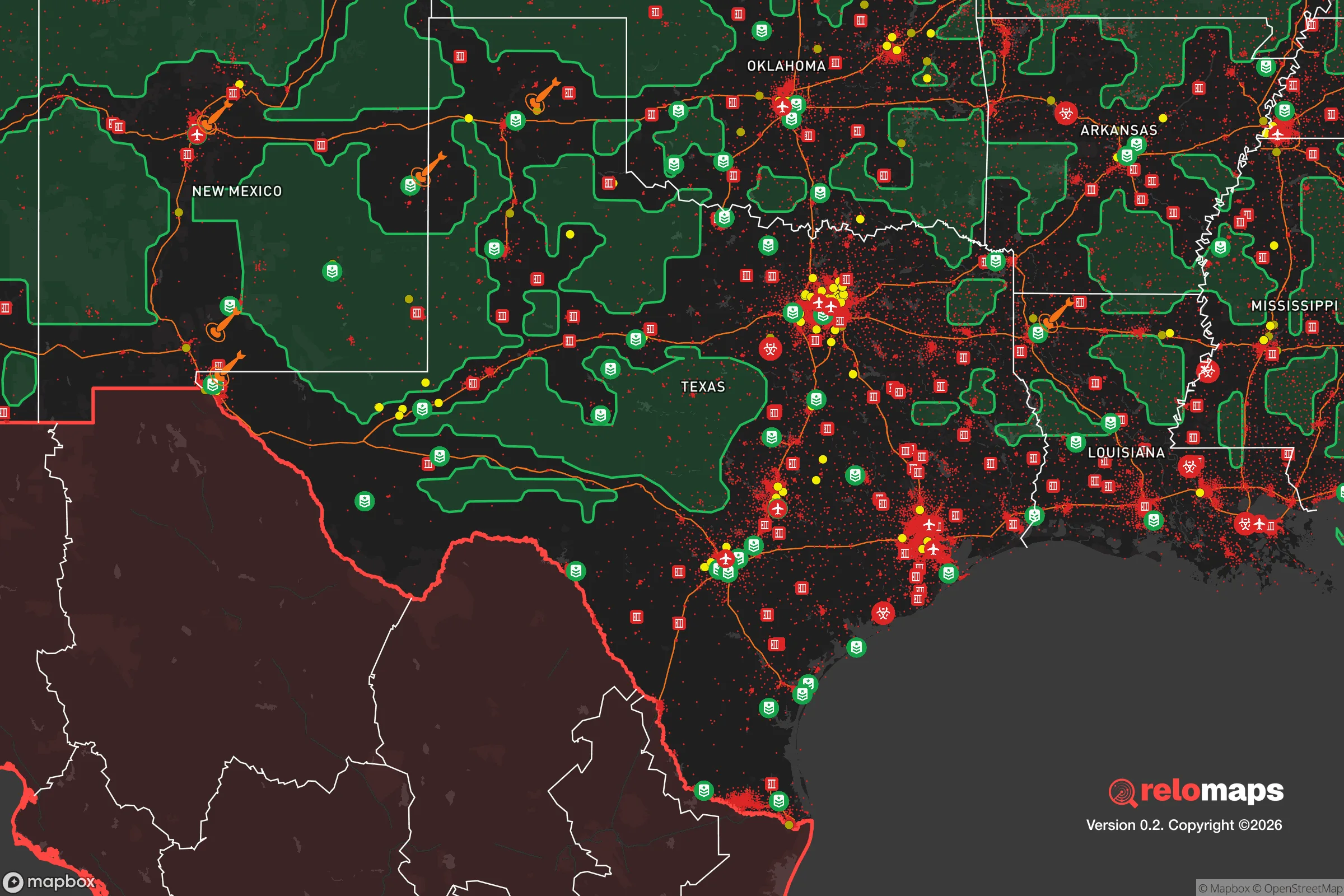


Important Note: For informational purposes only. This does not mean nothing bad ever happens in the green zones. Please use common sense. This is based on public data and modeled with AI. We tried to take a conservative approach but mistakes happen. We update this regularly as new information becomes available.
Solar Generator Recommendations
Backup power matters more here than in safer locations. We've picked three solar generators across budgets and capacity tiers — start with the budget unit if you only need a few essentials, or step up if you want to run a fridge and HVAC for days at a time.

Jackery Portable Power Station Explorer 300
Budget OptionPower on the Go: Weighing only 11 lbs, it's convenient to set up and store with book-sized foldable solar panels

BLUETTI Portable Power Station AC180
Designed for both indoor and outdoor scenarios, AC180 is highly capable as it has a robost capacity and continuous output power.

EF ECOFLOW DELTA Pro Ultra Power Station
Upgraded PickEcoFlow DELTA Pro Ultra is a whole-home energy system designed to grow with your family. Integrated with the Smart Home Panel 2, it scales to meet your evolving energy needs — keeping your home powered, intelligent, and secure through every stage of life.
We earn a commission, at no additional cost to you.
Strategic Assessment Analysis
Rhome, Texas, sits in a sweet spot that few fast-growing North Texas towns can claim: close enough to the Metroplex for supply runs and work, but far enough that a major civic collapse or mass casualty event in Dallas-Fort Worth won't wash over your front porch. This isn't a bug—it's the core of its strategic value. For a relocator thinking in terms of decades, not just next year's property tax bill, Rhome offers a rare combination of rural buffer, local governance that still remembers what county roads look like, and a geography that doesn't funnel trouble straight to your doorstep.
Geographic position and natural advantages for long-term security
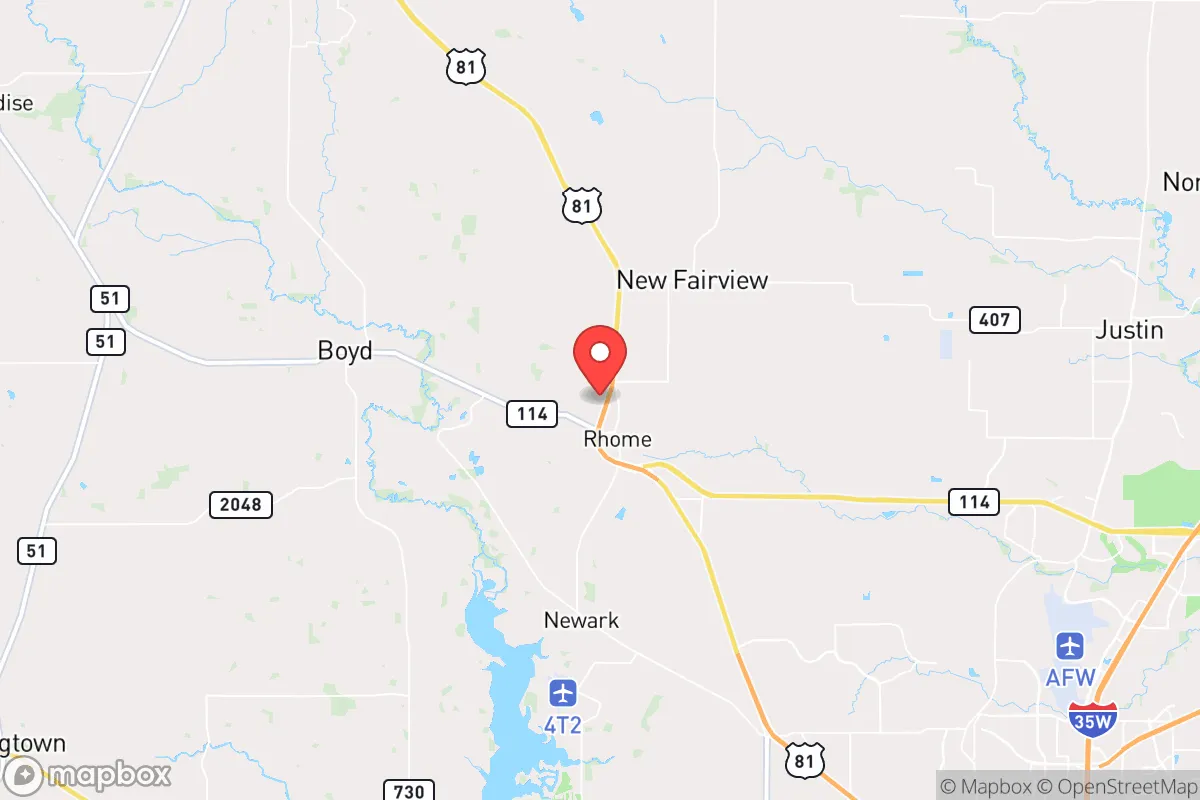
Rhome sits in far northeastern Wise County, roughly 12 miles north of the Fort Worth city limits and about 35 miles northwest of downtown Fort Worth. That puts it beyond the suburban sprawl that now reaches past Haslet and into the edge of the Barnett Shale country. The terrain is rolling prairie with scattered oak mottes—nothing dramatic, but enough gentle elevation and tree cover to break line of sight and provide natural defensibility. The area sits on the western edge of the Eastern Cross Timbers, a band of post oak and blackjack that historically slowed movement and still offers decent cover for anyone who knows how to use it. Water is the real advantage here: the Trinity River runs about 10 miles east, and Lake Bridgeport—a 13,000-acre reservoir—lies roughly 15 miles northwest. That's a serious freshwater asset in a drought-prone state. The local water table is workable for private wells, and many rural properties in the county already have them. The climate is classic North Texas: hot summers, occasional ice storms in winter, and a tornado risk that's real but not exceptional. The area's position on the edge of the Balcones Escarpment means less floodplain exposure than communities closer to the Trinity's main stem.
Risks, exposures, and proximity to fallout-relevant landmarks
Let's be direct: Rhome's biggest strategic weakness is its proximity to the Dallas-Fort Worth metroplex, a population center of roughly 8 million people. In a mass casualty event—whether pandemic, coordinated attack, or economic collapse triggering urban unrest—that population becomes a liability. The major evacuation routes (US 81/287 and Texas 114) run right through or near town. In a worst-case scenario, those roads become chokepoints or, worse, vectors for looting and refugee flow. The good news is that Rhome is not on a direct line from any obvious high-value target. DFW Airport, the region's most likely target in a kinetic event, is 35 miles south. The nuclear reactor at Comanche Peak (Glen Rose) is about 60 miles southwest—outside the 10-mile plume exposure pathway zone, though within the 50-mile ingestion pathway zone. The Barnett Shale gas fields that surround Wise County bring their own risks: well blowouts, pipeline leaks, and the occasional H₂S release from sour gas operations. There are no major military installations closer than Naval Air Station Fort Worth (Joint Reserve Base) at 30 miles. The county's own emergency management is solid but small—Wise County has about 70,000 residents total, so don't expect FEMA-level response in the first 72 hours. That's actually a plus for preppers: you're not competing with millions for resources, but you need to be self-reliant.
Practical resilience for a relocator: food, water, energy, and defensibility
For someone serious about self-sufficiency, Rhome checks most boxes. Water is the first concern, and the area delivers: private wells are common, and the local aquifer (the Trinity Group) is productive at depths of 200-400 feet. Rainwater catchment is viable with average annual rainfall around 35 inches. Food production is realistic—the growing season runs March through November, and the sandy loam soils are workable for gardens, orchards, and small livestock. Wise County is still agricultural enough that raising chickens, goats, or a few head of cattle won't draw attention. The local farmers' co-op in Decatur (15 minutes north) stocks feed, fencing, and veterinary supplies. Energy is a mixed bag. Oncor Electric Delivery runs the grid, and outages happen during ice storms and summer thunderstorms. Solar is viable—the area gets about 220 sunny days per year—but you'll want battery storage and a backup generator. Natural gas is widely available in town, but rural properties often rely on propane. Defensibility is where Rhome shines relative to suburban alternatives. The town itself is small (population around 1,800), with a compact layout that's easy to monitor. The surrounding rural properties offer standoff distance, multiple egress routes via county roads, and enough tree cover to make approach detection possible. The local sheriff's office has a substation in Rhome, and Wise County's law enforcement culture is still rooted in rural Texas—responsive, armed, and not inclined to tolerate nonsense. That said, don't expect police to reach you quickly if you're 10 miles out on a dirt road. The community factor matters: Rhome's population skews conservative, church-going, and family-oriented. In a prolonged disruption, that social fabric is a force multiplier—neighbors who share your values are worth more than any stockpile.
The overall strategic picture for Rhome is one of calculated trade-offs. You're not in the remote Idaho mountains, and you're not in a fortified bunker. What you are is positioned on the edge of a major metro area with enough buffer to absorb shocks, enough local resources to sustain a household through a bad year, and enough like-minded people to form a mutual-aid network if things go sideways. The growth pressure is real—Wise County added 30% population between 2010 and 2020—but Rhome itself remains small enough that you can still buy a few acres without competing with developers. For a conservative-leaning relocator who wants to be prepared for civic unrest, mass casualty events, or simply the slow unraveling of urban systems, Rhome offers a practical middle ground: not a retreat, but a redoubt. The key is to move before the sprawl closes the gap, and to build your resilience plan around the reality that you're on the edge of a big city, not beyond its reach. That's not a weakness—it's a fact to plan around.

* Values derived from national, state, county, city and local statistics and may differ in a specific area. Last updated: 2026-05-10T18:41:47.000Z
Narrative content on this page is AI-generated and may contain mistakes. Verify any details that matter before acting on them.
ReloMaps may earn a commission from affiliate links at no extra cost to you.

