Photo: Wikipedia
Demographics of Redmond, WA
Affluence Level in Redmond, WA
A wealthy area with high-earning, well-educated households. Incomes, home values, and educational attainment meaningfully outpace national averages.
People of Redmond, WA
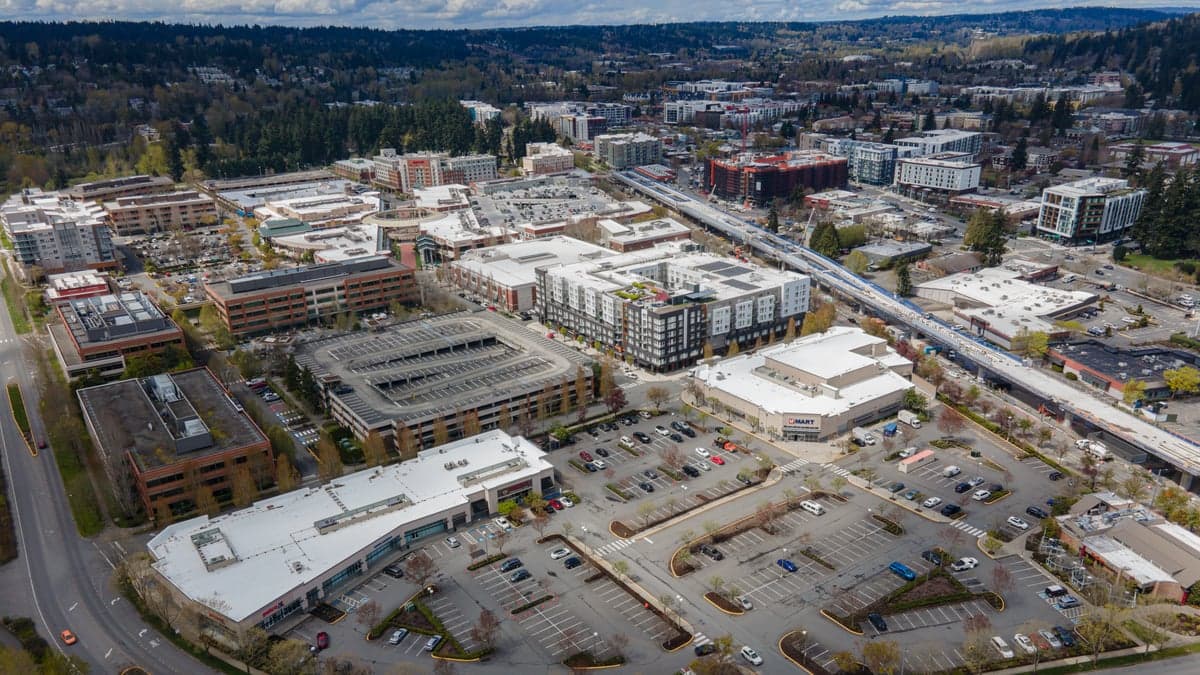
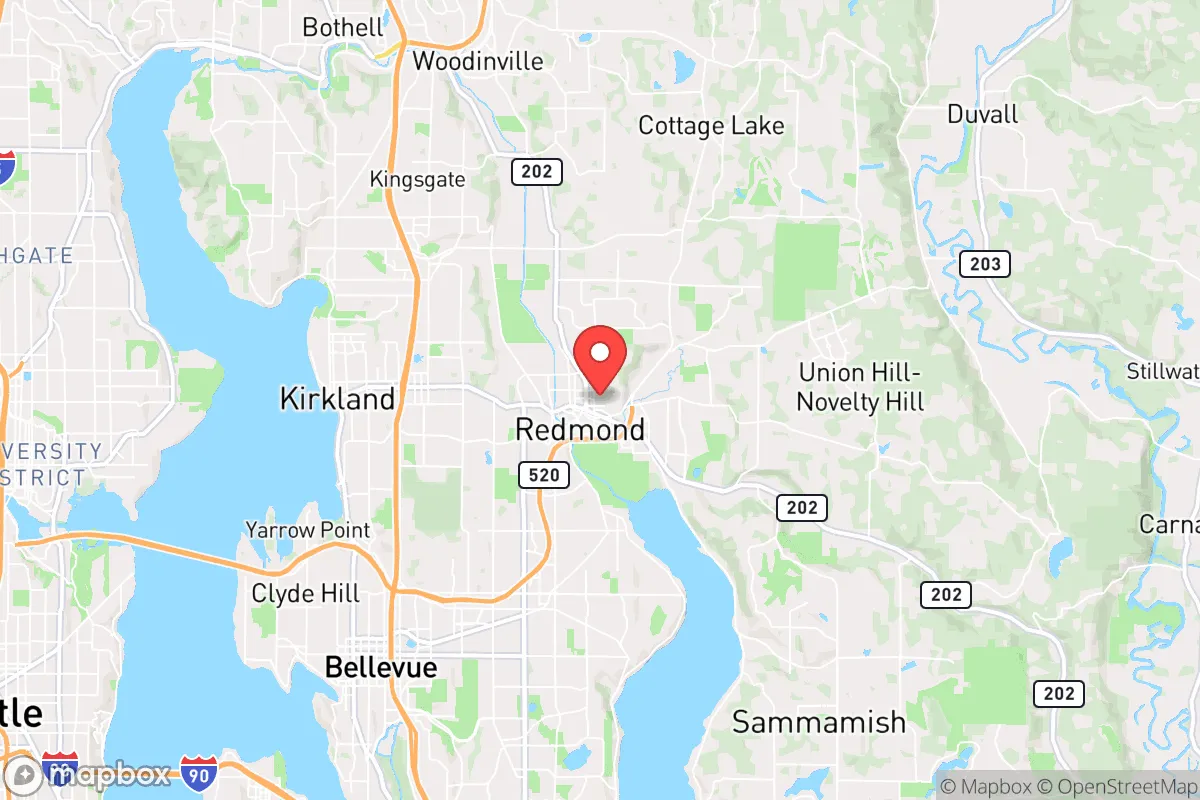
Redmond, Washington, is a city of 75,721 residents defined by its dual identity as a global tech hub and a family-oriented suburb. Its population is notably highly educated (74.7% college graduates), heavily foreign-born (29.8%), and ethnically diverse, with a distinctive demographic profile: 46.7% White, 22.1% Indian (subcontinent), 17.0% East/Southeast Asian, 6.8% Hispanic, and 2.1% Black. The city’s character is shaped by the intersection of long-established single-family neighborhoods and rapidly densifying transit-oriented districts, creating a place where Microsoft employees, second-generation immigrant families, and native-born professionals coexist.
How the city was settled and grew
Redmond’s original population was drawn by the timber industry and the arrival of the railroad in the 1880s. The first White settlers, primarily of Scandinavian and German descent, established farms and logging camps in what is now the Old Redmond neighborhood around Leary Way and Cleveland Street. By the early 1900s, a small downtown had formed, serving a population of roughly 500. The city remained a sleepy agricultural and lumber town through the 1950s, with most residents living in modest Craftsman homes near the Sammamish River. The Education Hill neighborhood, developed in the 1950s and 1960s, absorbed the first wave of post-war suburban growth, attracting middle-class families from Seattle and Bellevue. No significant immigrant communities existed during this period; the population was overwhelmingly White and native-born.
Modern era (post-1965)
The 1965 Hart-Cellar Act and Microsoft’s 1979 relocation to Redmond fundamentally reshaped the city’s population. The first major wave of East/Southeast Asian immigrants—primarily Chinese and Vietnamese engineers and their families—arrived in the 1980s and 1990s, settling in the Overlake and Grass Lawn Park neighborhoods near the Microsoft campus. These areas saw rapid construction of townhomes and mid-rise apartments, creating a corridor of Asian-owned businesses along 156th Avenue Northeast. The Indian (subcontinent) population began arriving in force after 2000, driven by H-1B visa recruitment at Microsoft and Amazon. Today, Indian families concentrate heavily in the English Hill and Bear Creek neighborhoods, where large single-family homes on half-acre lots are common. The Downtown Redmond core, redeveloped since 2010 with high-rise apartments and light rail, has attracted a younger, more transient population of tech workers, many of whom are single or childless. Hispanic and Black populations remain small (6.8% and 2.1% respectively) and are dispersed across the city, with no single ethnic enclave. The White share has declined from roughly 80% in 1990 to 46.7% today, driven by both out-migration to more affordable suburbs and the influx of Asian and Indian immigrants.
The future
Redmond’s population is heading toward greater ethnic segmentation rather than homogenization. The Indian (subcontinent) community is the fastest-growing group, projected to approach 30% of the population by 2035, driven by continued tech hiring and chain migration. East/Southeast Asian growth has plateaued as many second-generation families move to suburbs like Sammamish or Issaquah for larger homes and different school districts. The White population is aging and declining in absolute numbers, with many empty-nesters selling to immigrant families. The city is tribalizing into distinct enclaves: English Hill and Bear Creek are becoming predominantly Indian, Overlake remains heavily East/Southeast Asian, and Education Hill and Old Redmond retain a majority-White, longer-term resident base. The Hispanic and Black populations are growing slowly but remain small, concentrated in the rental-heavy Downtown area. The completion of the East Link light rail extension in 2025 will likely accelerate densification in the downtown core, attracting more young professionals and transient renters, while the single-family neighborhoods will continue to see ethnic succession as older White homeowners sell to immigrant families seeking good schools and space.
For a conservative-leaning individual or family considering relocation, Redmond is becoming a city of distinct, increasingly segregated neighborhoods rather than a melting pot. The public schools remain excellent, property values are high and stable, and the tech-driven economy provides abundant jobs. However, the city’s political culture is solidly liberal, and the rapid demographic change has created some friction over school boundaries, development density, and local elections. New arrivals should expect to find their social networks primarily within their own ethnic or professional cohort, as the city’s historic White middle-class community continues to shrink and age out.

* Values derived from national, state, county, city and local statistics and may differ in a specific area. Last updated: 2026-04-21T10:56:45.000Z
Narrative content on this page is AI-generated and may contain mistakes. Verify any details that matter before acting on them.
ReloMaps may earn a commission from affiliate links at no extra cost to you.

