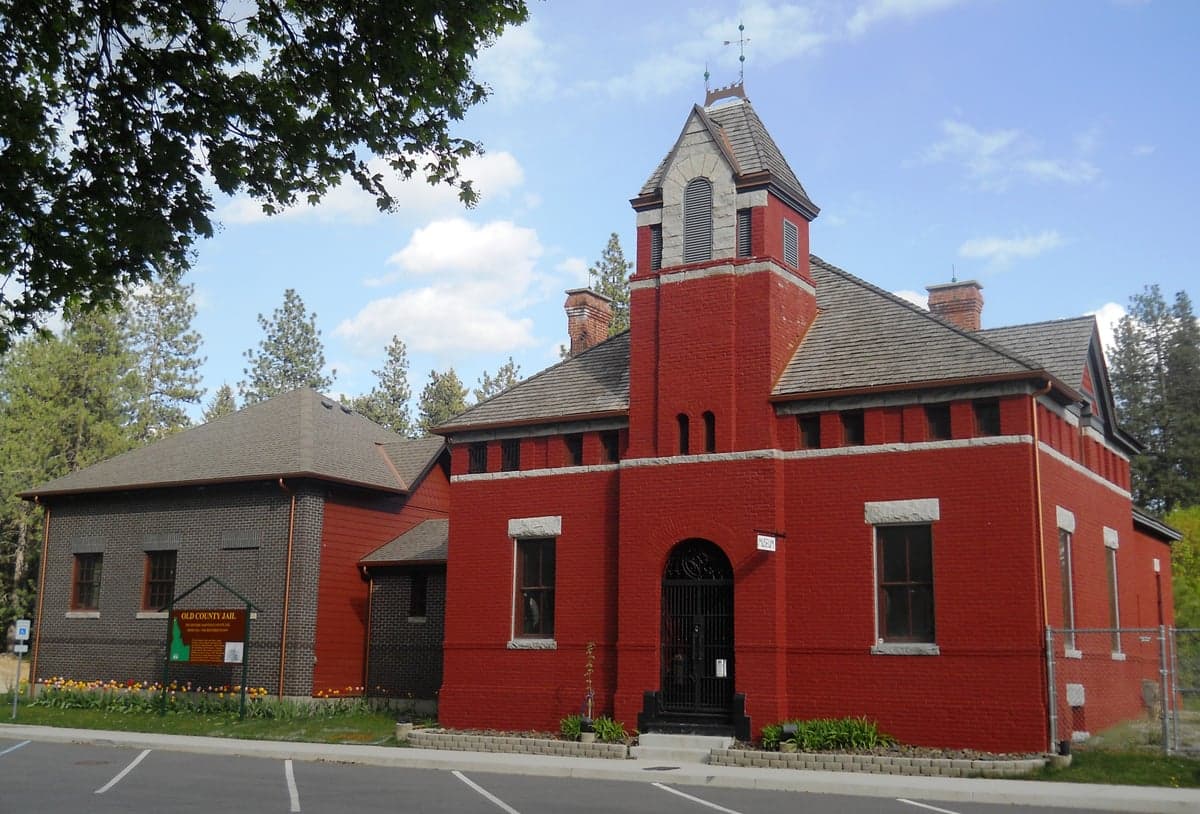
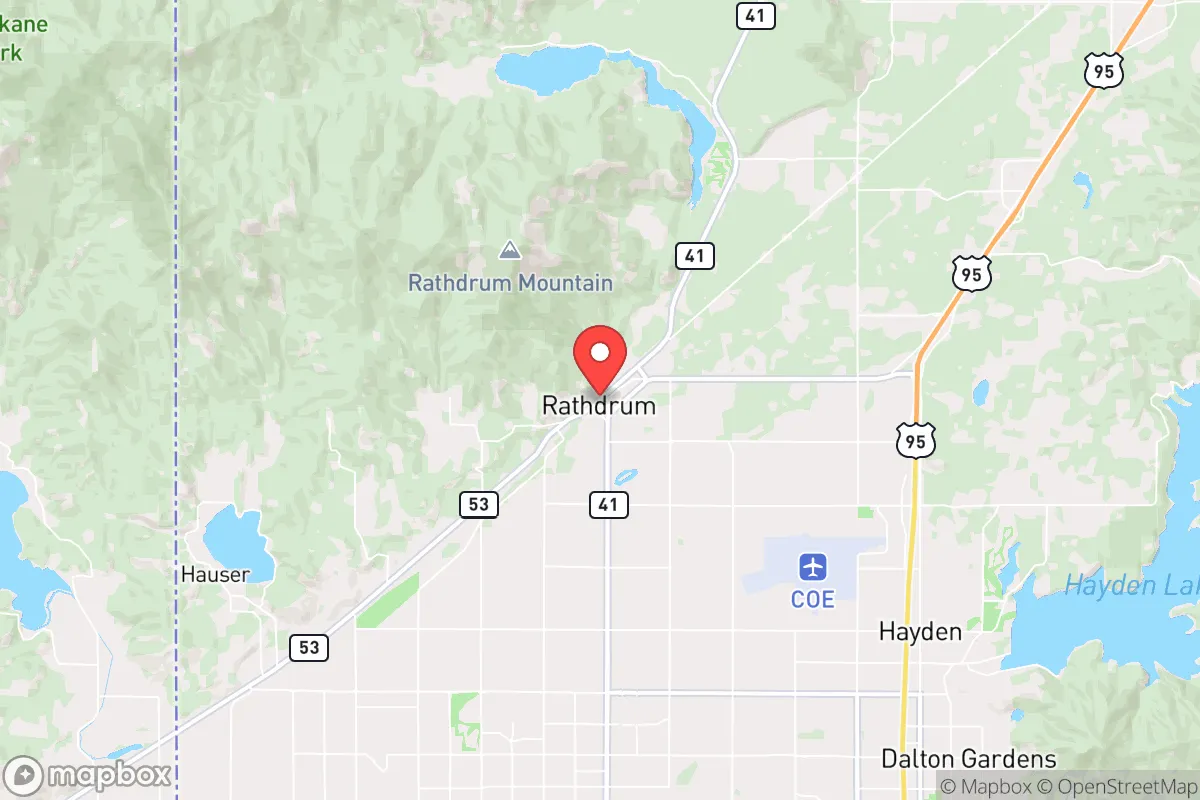
Photo: Wikipedia
Demographics of Rathdrum, ID
Affluence Level in Rathdrum, ID
An upper-middle-class area. Household wealth, education levels, and homeownership run ahead of national benchmarks.
People of Rathdrum, ID
Today, Rathdrum, Idaho is a predominantly white, family-oriented city of 10,133 residents, with a notably low foreign-born population of just 1.1% and a strong conservative character. The city’s identity is rooted in its agricultural and railroad history, with a population that is 88.6% white, 4.0% Hispanic, and negligible shares of Black (0.0%), East/Southeast Asian (0.1%), and Indian subcontinent (0.4%) residents. With only 23.0% of adults holding a college degree, Rathdrum remains a blue-collar, community-focused town where generational families and new domestic arrivals coexist, distinct from the more transient, tourist-driven communities of northern Idaho.
How the city was settled and grew
Rathdrum’s human history began with the arrival of European-American settlers in the 1860s, drawn by the promise of fertile farmland and the construction of the Northern Pacific Railroad. The city was officially platted in 1881, named after a town in Ireland, and quickly became a supply hub for surrounding agricultural communities. The original settlers were primarily of Northern European descent—English, Irish, German, and Scandinavian—who established homesteads in what is now the Historic Downtown Rathdrum district, centered around the railroad depot. These early families built the town’s first churches, schools, and mercantile buildings, many of which still stand along Main Street. A second wave arrived in the early 1900s, drawn by the timber industry and the expansion of the Coeur d’Alene mining district, settling in the Rathdrum Prairie area, where large farms and dairies dominated the landscape. The population remained small and ethnically homogeneous through the mid-20th century, with the 1950 census recording just 1,200 residents, almost entirely white and native-born.
Modern era (post-1965)
Rathdrum’s modern demographic story is one of domestic in-migration, not international immigration. The 1965 Hart-Cellar Act had virtually no impact here; the foreign-born share has never exceeded 2%. Instead, the city’s growth since the 1970s has been driven by white families and retirees relocating from California, Washington, and Oregon, seeking lower taxes, less regulation, and a rural lifestyle. This wave settled primarily in newer subdivisions on the city’s outskirts, such as Meyer’s Addition and Prairie View Estates, which feature larger lots and newer homes. The 1990s and 2000s saw accelerated growth as Spokane’s metropolitan area expanded eastward, with Rathdrum becoming a bedroom community for workers commuting to Coeur d’Alene and Post Falls. The Hispanic population, now 4.0%, began to grow in the 2000s, largely consisting of Mexican-American families working in agriculture and construction, concentrated in the West Rathdrum area near Highway 53. The East/Southeast Asian (0.1%) and Indian subcontinent (0.4%) populations remain tiny, mostly comprising professionals employed at Kootenai Health or local tech firms, with no distinct ethnic enclave. The Black population is effectively zero, reflecting the broader demographic patterns of northern Idaho.
The future
Rathdrum’s population is projected to continue growing, driven by domestic migration from high-cost West Coast states, but it is likely to remain overwhelmingly white and native-born. The foreign-born share is expected to stay below 2%, as the city lacks the industrial or service-sector jobs that attract international immigrants. The Hispanic population may grow modestly, reaching 6-8% by 2040, but will likely assimilate into existing neighborhoods rather than forming a distinct enclave. The city is homogenizing in terms of race and ethnicity, but tribalizing by lifestyle: newer subdivisions like Mountain View Estates attract younger families and remote workers, while older neighborhoods like Historic Downtown retain a higher concentration of retirees and multi-generational locals. The college-educated share is slowly rising as professionals move in, but Rathdrum will likely remain a blue-collar, conservative stronghold for the foreseeable future.
For a conservative-leaning individual or family moving to Rathdrum, the city offers a stable, low-diversity environment where traditional values and community ties remain strong. The population is becoming slightly more educated and affluent, but the core character—white, native-born, family-oriented, and politically conservative—is unlikely to change significantly in the next decade. New arrivals will find a welcoming community of like-minded neighbors, particularly in the newer subdivisions, while the historic core retains the small-town feel that first drew settlers 140 years ago.

* Values derived from national, state, county, city and local statistics and may differ in a specific area. Last updated: 2026-05-03T04:52:33.000Z
Narrative content on this page is AI-generated and may contain mistakes. Verify any details that matter before acting on them.
ReloMaps may earn a commission from affiliate links at no extra cost to you.

