 Popular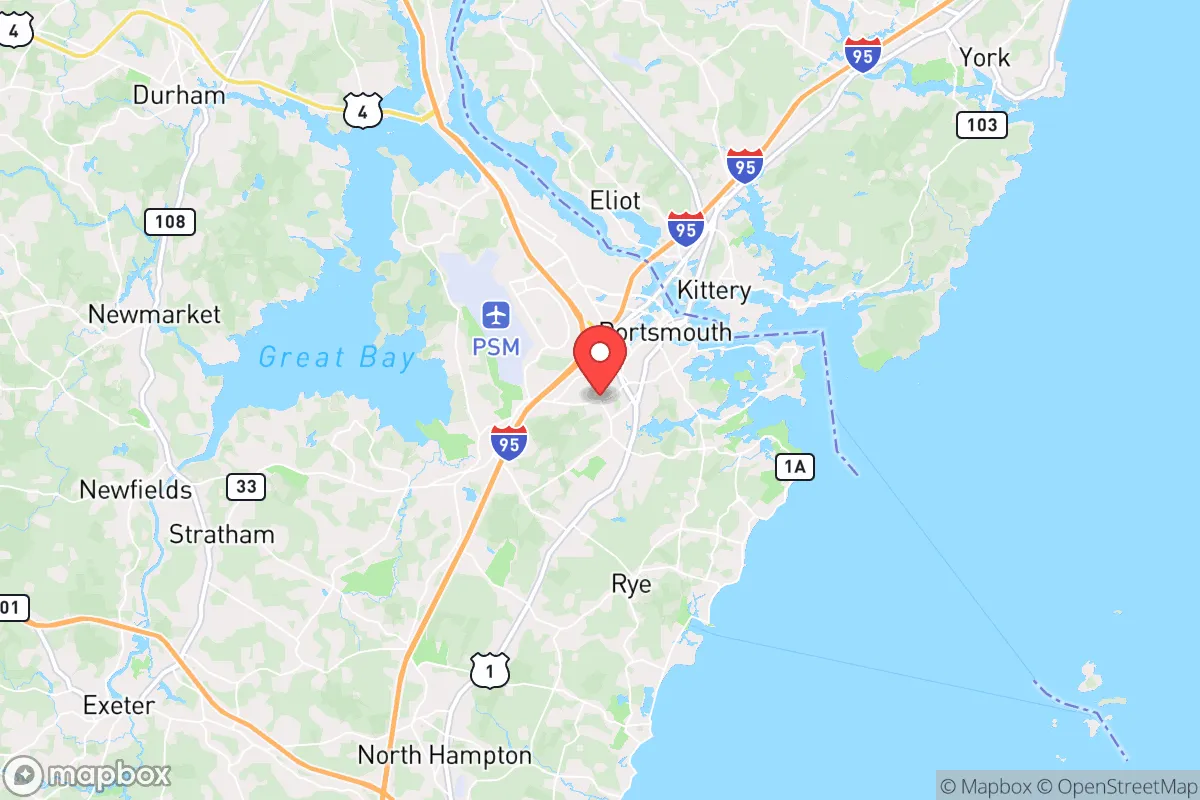
Photo: Wikipedia
Personal Sovereignty in Portsmouth, NH
Viable for self-reliance. Generally workable, though some barriers may limit total independence.
What does Personal Sovereignty tell us?
Personal Sovereignty measures your capacity for self-reliance and independence with minimal government friction. Higher scores mean fewer barriers between you and the way you want to live... but it assumes you have the space you need and good neighbors.
What does this tell us?
Personal Sovereignty measures your capacity for self-reliance and independence with minimal government friction. Higher scores mean fewer barriers between you and the way you want to live... but it assumes you have the space you need and good neighbors.
State Policy
Energy independence: Importer (10% of energy produced in-state)
Personal Liberty
Homesteading

Personal Liberty Analysis
Portsmouth, New Hampshire, presents a complex picture for those prioritizing personal sovereignty. While the city itself leans left politically, it sits within a state that consistently ranks among the most free in the nation due to its lack of an income tax, broad gun rights, and strong property rights protections. For the survivalist or prepper, the key question is whether Portsmouth’s local governance offsets the state-level advantages, and the answer requires a careful look at the balance between local restrictions and state-level autonomy. This analysis examines the specific factors that determine how much control you actually have over your life, property, and family in this historic seacoast city.
Tax burden and regulatory posture: How much of your money and time does the state take?
New Hampshire’s tax structure is a major draw for those seeking to minimize government extraction. There is no state income tax on wages or salaries, no state sales tax, and no capital gains tax. This means every dollar you earn stays in your pocket, a stark contrast to neighboring Massachusetts or Maine. Property taxes, however, are the trade-off. Portsmouth’s property tax rate hovers around $14.50 per $1,000 of assessed value, which is high by national standards but typical for the region. A median-priced home in Portsmouth (around $650,000) would carry an annual tax bill of roughly $9,425. While this is significant, the absence of income and sales taxes means your overall effective tax rate can still be lower than in many other states, especially if you earn a high income. The regulatory environment at the state level is generally light-touch, with no state-level building codes in many rural areas and minimal business licensing requirements. However, Portsmouth’s city government is more interventionist, with strict zoning ordinances, historic district commissions that can dictate exterior changes, and a permitting process that can be slow for new construction or major renovations. For the prepper, this means you’ll keep more of your earnings, but you’ll face more bureaucratic hurdles when trying to modify your property for self-sufficiency.
Self-defense and gun law specifics: Can you legally protect yourself and your family?
New Hampshire is a constitutional carry state, meaning no permit is required to carry a concealed firearm for anyone legally allowed to possess one. This is a bedrock principle for personal sovereignty. There is no state-level firearm registry, no waiting periods, and no restrictions on magazine capacity or “assault weapon” features. The state preempts local gun ordinances, so Portsmouth cannot enact its own bans or restrictions that are stricter than state law. This is critical: even if the city council wanted to limit magazine sizes or ban certain firearms, state law prohibits it. For the survivalist, this means you can legally own and carry the tools you deem necessary for self-defense without government permission slips. The state also has a strong “stand your ground” law, with no duty to retreat before using deadly force if you are lawfully present and believe it is necessary to prevent death or great bodily harm. Background checks are required for commercial sales but not for private transfers between individuals, preserving the ability to trade or gift firearms without government involvement. The only notable restriction is that you must be 18 to purchase a rifle or shotgun and 21 for a handgun from a dealer. For those concerned about government overreach, New Hampshire’s gun laws are among the most protective of individual rights in the Northeast.
Self-reliance and homesteading viability: Lot sizes, zoning, and off-grid feasibility
Portsmouth is a dense, historic city with limited land availability, which directly impacts homesteading potential. The typical residential lot size in the city is 0.1 to 0.25 acres, with many homes on small plots in established neighborhoods. Zoning regulations are strict: raising chickens is permitted with a permit and limits on the number of birds, but keeping goats, pigs, or larger livestock is generally prohibited within city limits. Growing a substantial vegetable garden is feasible on most lots, but you won’t have room for significant food production or storage. Off-grid living is effectively impossible within Portsmouth proper. The city requires connection to municipal water and sewer systems, and building codes mandate grid-tied electrical connections for new construction. Solar panels are allowed but must comply with historic district guidelines in many neighborhoods, and battery storage for true off-grid capability is not a standard allowance. For the prepper seeking true self-reliance, Portsmouth is a poor fit. You would need to look to the surrounding towns like Newfields, Stratham, or Lee, where zoning allows for larger lots (2-5 acres minimum), livestock, and more flexibility with alternative energy systems. The trade-off is a longer commute and less access to Portsmouth’s economic and cultural amenities.
Personal liberties: Parental rights, medical autonomy, speech, and property
New Hampshire has a strong tradition of protecting individual liberties, though local dynamics in Portsmouth can create friction. On parental rights, the state has a “parental bill of rights” law that affirms parents’ fundamental right to direct the upbringing, education, and healthcare of their children. This includes the right to opt out of school curricula and to access educational materials. However, Portsmouth’s public school system is progressive-leaning, and some parents report pushback when requesting exemptions from certain health or social-emotional learning programs. Medical autonomy is a mixed bag. New Hampshire has no state-level vaccine mandate for adults, and there is no requirement for employers to mandate COVID-19 vaccines. However, the state does require certain vaccines for school attendance, with only medical and religious exemptions available (no philosophical exemption). For those concerned about medical freedom, this is a point of tension. Free speech is broadly protected under the state constitution, which has its own free speech clause that courts have interpreted as at least as protective as the First Amendment. Portsmouth has seen local controversies over public comments at city council meetings, but no formal censorship ordinances exist. Property rights are strong at the state level, with no statewide rent control and a requirement that local governments compensate property owners for regulatory takings. However, Portsmouth’s historic district regulations can be onerous, effectively limiting what you can do with your own home’s exterior. For the individualist, the state provides a solid legal framework, but the city’s culture and local ordinances can feel intrusive.
Overall, personal sovereignty in Portsmouth is a study in contrasts. The state of New Hampshire offers a legal environment that is among the most freedom-oriented in the country, with no income tax, constitutional carry, strong property rights, and parental rights protections. However, the city of Portsmouth itself is a high-tax, high-regulation, urbanized environment that limits self-reliance and can feel culturally restrictive for those with a conservative or survivalist mindset. For the prepper or individualist, the best strategy is to live outside the city limits—in a town like Newfields or Stratham—while still benefiting from the state’s legal framework and commuting to Portsmouth for work or amenities. If you must live within the city, you will enjoy strong state-level protections for your firearms and finances, but you will face significant constraints on your ability to live off-grid, raise livestock, or modify your property without bureaucratic approval. Compared to other parts of the Northeast, Portsmouth offers a relatively high degree of personal sovereignty, but it falls short of the true autonomy found in more rural, less regulated areas of the country.

* Values derived from national, state, county, city and local statistics and may differ in a specific area. Last updated: 2026-05-01T22:27:08.000Z
Narrative content on this page is AI-generated and may contain mistakes. Verify any details that matter before acting on them.
ReloMaps may earn a commission from affiliate links at no extra cost to you.

