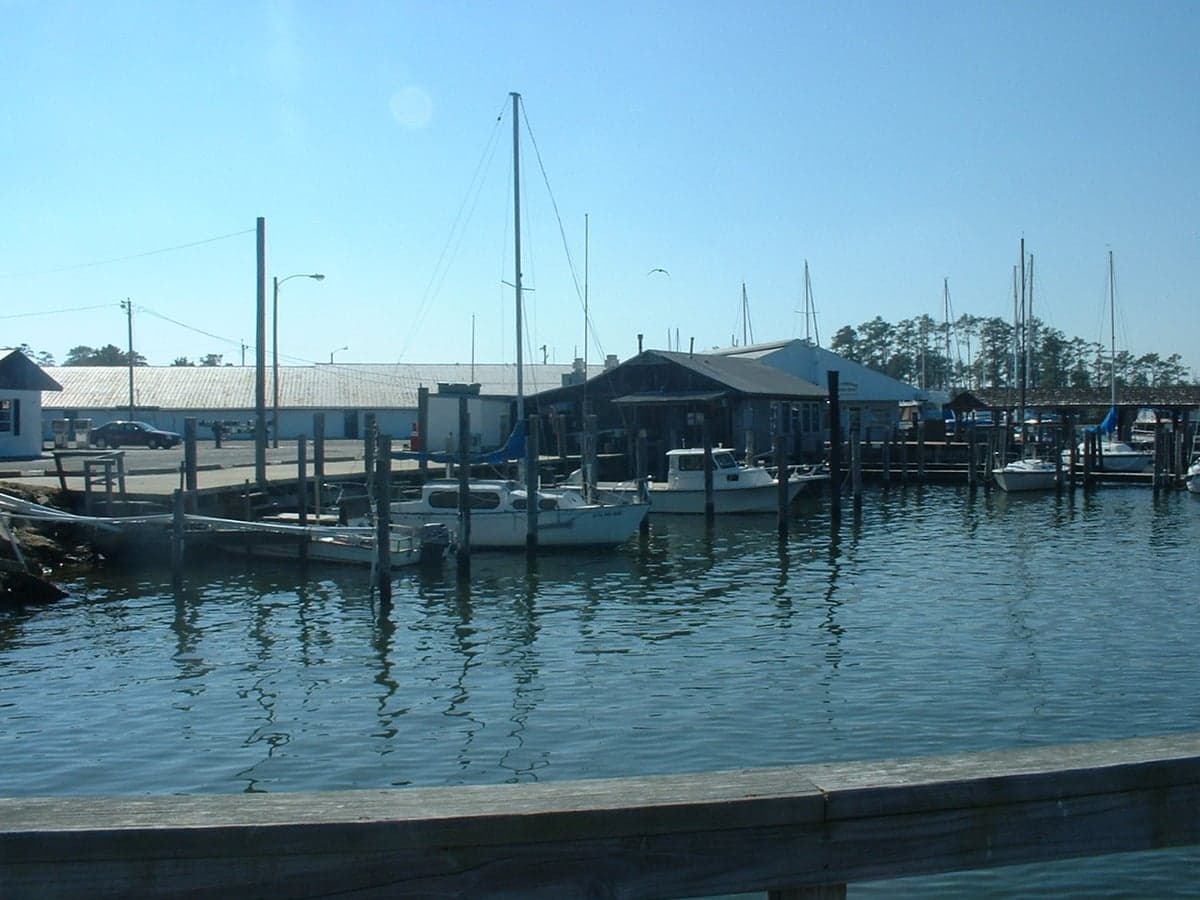
Photo: Wikipedia
Political ClimatePolitical Climate in Poquoson, VA
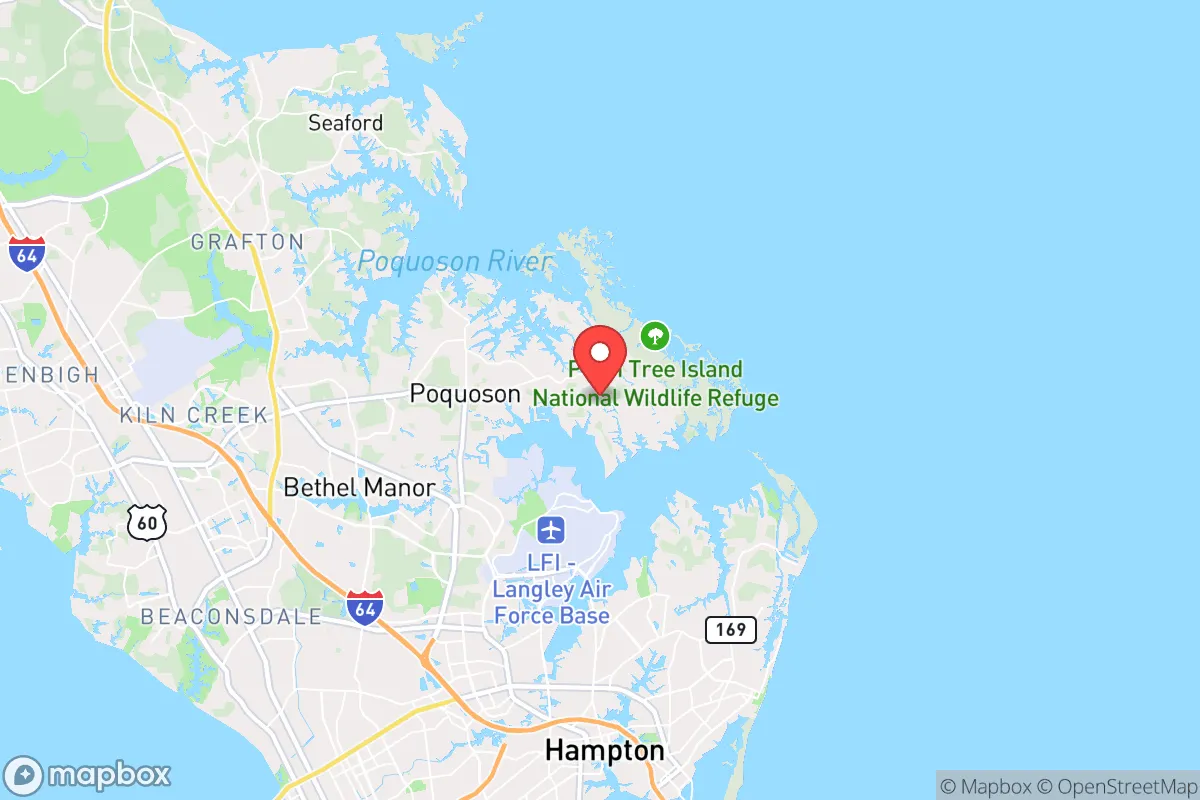
District shown is the primary district for this city’s centroid. Cities may span multiple districts.
Local Political AnalysisPolitical Analysis of Poquoson, VA
Poquoson is one of those places where the political compass hasn't budged much in decades, and that's exactly how most folks here like it. With a Cook Partisan Voting Index of R+3, this small coastal city in southeastern Virginia leans reliably Republican, though it's not a deep-red stronghold like some rural counties further west. The real story is how Poquoson has held its conservative ground even as neighboring Hampton and Newport News have drifted leftward, and there's a growing unease here about whether that balance can hold against the tide of progressive policies creeping in from Richmond and the broader Hampton Roads region.
How it compares
Drive ten minutes west into Hampton, and you're in a city that voted for Joe Biden by a comfortable margin in 2020—a stark contrast to Poquoson's consistent support for Republican candidates at the local, state, and federal levels. Newport News, just across the James River, is similarly blue-leaning, especially in its urban core. Poquoson sits as a conservative island in a sea of shifting politics, and that's not an accident. The city's population is overwhelmingly white, older, and heavily tied to military and defense work at nearby Langley Air Force Base and NASA Langley Research Center. Those are communities that tend to value personal responsibility, limited government, and a healthy skepticism of federal overreach—values that feel increasingly under attack as state-level mandates on everything from land use to education pile up. The contrast with surrounding cities isn't just academic; it shapes daily life, from how schools are run to how local law enforcement operates.
What this means for residents
For someone living in Poquoson, the political climate translates into a tangible sense of autonomy—at least for now. Local government here is small and hands-off, with a city council that has historically resisted the kind of zoning overhauls and density pushes that have transformed parts of Virginia Beach and Norfolk. Property taxes remain relatively low, and there's a strong cultural expectation that the city won't meddle in how you run your household or your business. But there's a real concern among longtime residents that this could change. The recent push from Richmond for statewide housing mandates, renewable energy siting laws, and progressive school curriculum standards feels like a slow erosion of local control. If you value the freedom to decide what happens on your own street and in your own child's classroom, Poquoson still offers that—but the pressure is mounting, and it's hard to ignore the feeling that the next few election cycles could tip the balance.
Culturally, Poquoson is defined by its watermen heritage and its quiet, family-oriented lifestyle. You won't find the kind of activist energy or political signage you see in college towns or urban centers. What you will find is a community that prizes self-reliance and neighborly trust over government programs. The city's biggest policy fights in recent years have been about preserving its rural character—fighting off high-density developments and keeping the waterfront accessible to locals, not tourists. That's a distinctly conservative instinct: protect what's yours, keep the government out of your backyard, and don't let outside interests reshape your home. For now, Poquoson remains a place where that ethos still holds, but the long-term trajectory depends on whether the city can keep the progressive wave from washing over its quiet streets.

State Political ClimatePolitical Climate in Virginia
State Political AnalysisPolitical Environment in the State
Virginia is a state of stark political contradictions, having shifted from a reliably conservative stronghold to a purple battleground over the past two decades, with Democrats now controlling the governorship and both legislative chambers as of 2026. The dominant coalition is a mix of Northern Virginia’s tech-and-government workforce, Richmond’s urban core, and growing minority populations, which together have flipped the state from +6 Republican in 2004 to +10 Democratic in 2020. For a conservative considering relocation, the trajectory is concerning: the state has enacted some of the most progressive policies in the South, while rural and exurban areas remain deeply red but are losing political influence to the booming D.C. suburbs.
Urban vs. rural divide
The political map of Virginia is a tale of two Virginias. The urban crescent—Northern Virginia (Fairfax, Loudoun, Prince William counties), Richmond, and Hampton Roads (Norfolk, Virginia Beach)—drives Democratic victories, with Fairfax County alone delivering over 200,000 more votes for Biden than Trump in 2020. In contrast, rural and exurban areas like Roanoke, Lynchburg, and the Shenandoah Valley vote heavily Republican, with counties like Augusta and Rockingham routinely going +40 points red. The key battlegrounds are the fast-growing exurbs of Fredericksburg and Spotsylvania County, which flipped from red to purple as D.C. commuters moved south. Meanwhile, Virginia Beach remains a swing city—its military and conservative-leaning suburbs keep it competitive, but the city council has trended left since 2020.
Policy environment
Virginia’s policy environment has shifted dramatically left since Democrats took full control in 2020. The state income tax is a flat 5.75%, but property taxes are set locally and can be high—Loudoun County averages 1.1% of assessed value. Sales tax is 5.3% statewide, with local add-ons. On education, the state has eliminated charter school caps and expanded school choice modestly, but Richmond and Fairfax have pushed critical race theory-adjacent curricula and LGBTQ+ policies that alarm many parents. Healthcare is dominated by a Medicaid expansion (2019) that covers 400,000 adults, and the state has enacted a “red flag” gun law (2020) and a ban on assault weapons (2023). Election laws are mixed: Virginia has no-excuse absentee voting and same-day registration, but also requires photo ID. The regulatory posture is business-friendly in name, but environmental and labor regulations are tightening, especially in Northern Virginia.
Trajectory & freedom
Virginia is becoming less free by conservative measures, particularly on gun rights, parental rights, and taxation. The 2020 Virginia General Assembly passed the “Virginia Clean Economy Act,” which mandates a 100% carbon-free grid by 2050 and has driven up energy costs. In 2023, the legislature passed a law allowing transgender students to use bathrooms matching their gender identity, overriding local school boards. On gun rights, the 2020 “red flag” law allows courts to temporarily seize firearms from individuals deemed a threat, and the 2023 assault weapons ban prohibits sales of AR-15s and similar rifles. Property rights took a hit with the 2021 “zoning reform” bill that allows accessory dwelling units in single-family neighborhoods statewide. On the positive side, Virginia has no state-level income tax on military pensions, and the “Right to Farm” act protects agricultural operations from nuisance lawsuits. But the overall trend is toward government expansion—the state budget has grown 40% since 2019.
Civil unrest & political movements
Virginia has been a flashpoint for political movements on both sides. The 2017 “Unite the Right” rally in Charlottesville left one counter-protester dead and sparked national debate on free speech and public safety. Since then, left-wing activist groups like the “Virginia Organizing” and “Indivisible” chapters have been highly effective in mobilizing suburban voters, while conservative groups like the “Virginia Citizens Defense League” (gun rights) and “Moms for Liberty” (parental rights) have grown rapidly. Immigration politics are tense: Fairfax County and Arlington are “sanctuary” jurisdictions that limit cooperation with ICE, while rural counties like Prince William have passed resolutions opposing sanctuary policies. Election integrity remains a hot-button issue—the 2020 election saw no major fraud, but the state’s use of drop boxes and universal mail-in ballot applications (since repealed) fueled distrust. Visible flashpoints include school board meetings in Loudoun County, which became national symbols of parental rights battles over critical race theory and transgender policies.
Projection
Over the next 5-10 years, Virginia will likely continue its leftward drift, driven by in-migration from blue states and the growth of Northern Virginia’s tech sector. The 2025 gubernatorial election will be a bellwether—if a Republican wins, it could slow the trend, but demographic shifts favor Democrats. The state’s population is projected to grow 5% by 2030, with most growth in the D.C. suburbs and Richmond. Rural areas will continue to lose population and political clout. Expect further gun control measures, expansion of LGBTQ+ protections, and higher taxes to fund green energy mandates and education spending. The “Virginia Clean Economy Act” will drive up electricity rates, and zoning reforms will accelerate suburban densification. For conservatives, the state will feel increasingly like a blue island in a red South, with pockets of freedom in the Shenandoah Valley and Southside Virginia.
For a conservative moving to Virginia, the bottom line is this: you can find like-minded communities in the Shenandoah Valley, Roanoke, or Virginia Beach’s rural outskirts, but you’ll be fighting a state government that is increasingly progressive. Your property taxes will rise, your gun rights will be restricted, and your children’s schools may push curricula you disagree with. If you value low taxes and maximum personal freedom, Virginia is no longer the safe bet it was 20 years ago—but if you’re willing to engage politically, it’s still a state where local elections matter and conservative voices can make a difference.
* Values derived from national, state, county, city and local statistics and may differ in a specific area. Last updated: 2026-05-03T20:38:33.000Z
Narrative content on this page is AI-generated and may contain mistakes. Verify any details that matter before acting on them.
ReloMaps may earn a commission from affiliate links at no extra cost to you.

