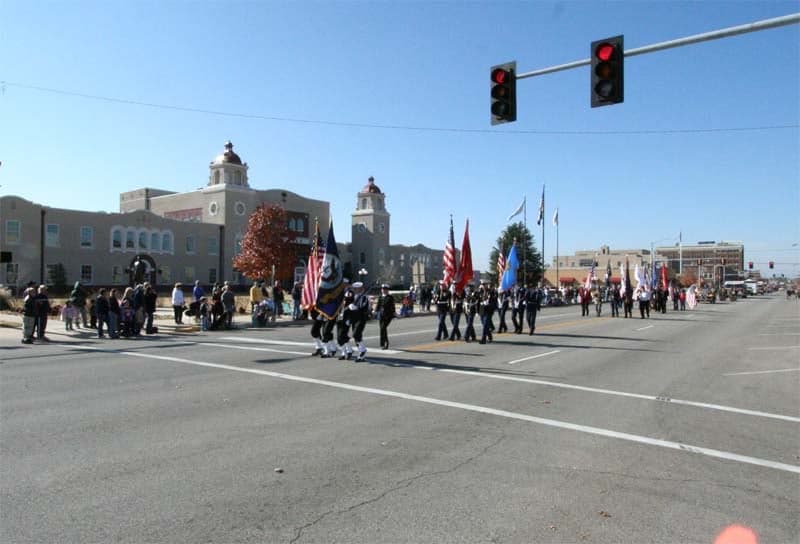
Photo: Wikipedia
Political ClimatePolitical Climate in Ponca City, OK
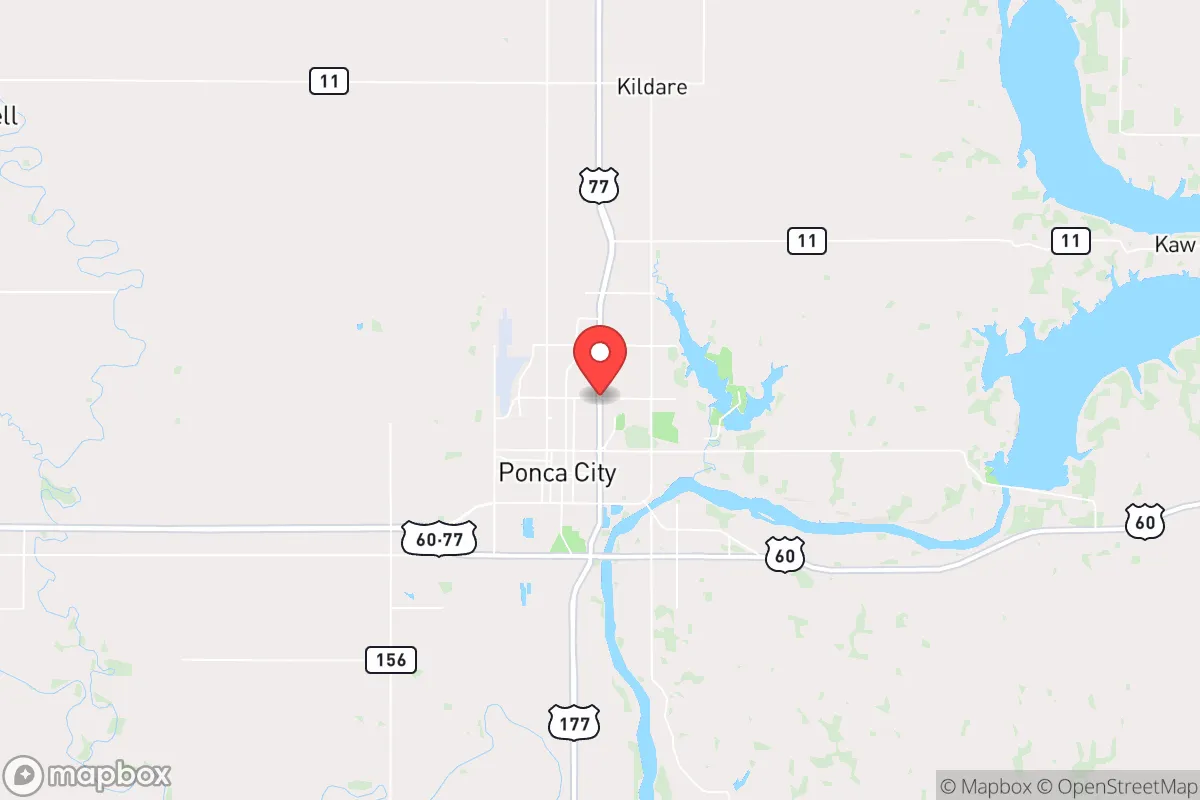
District shown is the primary district for this city’s centroid. Cities may span multiple districts.
Local Political AnalysisPolitical Analysis of Ponca City, OK
Ponca City leans heavily conservative, and that’s not just a feeling—it’s baked into the numbers. The area carries a Cook PVI of R+23, meaning it votes about 23 points more Republican than the national average. That’s a deep red, and it’s been that way for as long as most folks around here can remember. You don’t see wild swings election to election; the community’s values are pretty stable, and the voting patterns reflect a consistent preference for limited government, local control, and traditional social norms. If you’re looking for a place where the political winds don’t shift with every national news cycle, this is it.
How it compares
Drive thirty minutes south to Stillwater, and you’ll feel a different vibe. Stillwater’s got Oklahoma State University, which brings in a younger, more transient population, and its politics are noticeably more mixed—still conservative overall, but with a visible progressive minority that shows up in city council races and local ballot measures. Ponca City doesn’t have that. We’re more like Bartlesville to the north or Enid to the west—older industrial and energy towns where the political conversation stays grounded in fiscal responsibility and personal liberty. The contrast is sharpest on social issues: what’s debated in Stillwater’s coffee shops is often settled opinion here. That’s not to say we’re isolated—just that the community’s political center of gravity hasn’t drifted the way it has in college towns or the Oklahoma City suburbs.
What this means for residents
For someone moving here, the practical effect is that government tends to stay out of your daily life. Taxes are low, zoning is minimal, and there’s not a lot of appetite for new regulations on businesses or property owners. The city council and county commission are reliably conservative, so you won’t see sudden pushes for progressive policy experiments—no defunding police debates, no heavy-handed mask mandates, no aggressive diversity quotas in local hiring. That’s a relief if you’ve lived somewhere where every local election feels like a battle over cultural issues. The trade-off is that public services are lean: don’t expect the kind of transit, bike lanes, or social programs you’d find in a blue-leaning city of similar size. Most residents prefer it that way—they’d rather keep their money and their freedom than fund programs they don’t use.
One thing that does stand out culturally is the strong sense of self-reliance. People here don’t look to the government to solve problems. When the pandemic hit, for example, local businesses and churches organized their own support networks rather than waiting for state or federal aid. That’s the Ponca City way. There’s also a deep respect for the Second Amendment—you’ll see open carry regularly, and no one blinks. Property rights are taken seriously, and any talk of land-use restrictions or environmental mandates gets met with skepticism. If you value personal autonomy and want to live somewhere that hasn’t embraced the progressive agenda, Ponca City offers a straightforward, no-nonsense political environment that’s held steady for decades and shows no signs of changing course.

State Political ClimatePolitical Climate in Oklahoma
State Political AnalysisPolitical Environment in the State
Oklahoma has been a reliably red state for decades, with Republicans holding every statewide office and supermajorities in both legislative chambers, but the political climate here isn't as simple as a straight party-line vote. The state's conservative lean is deep and durable—Donald Trump won it by 33 points in 2020 and by 31 points in 2024—but the real story is the growing tension between the traditional, small-government, libertarian-leaning conservatism of rural Oklahoma and the more establishment, business-friendly, and increasingly suburban Republicanism of the metro areas. Over the last 10-20 years, the state has shifted from a place where Democrats could still win statewide (Brad Henry was governor as recently as 2011) to one where the GOP primary is the only election that matters, but that primary is now a battlefield between populists and pragmatists.
Urban vs. rural divide
The political map of Oklahoma is a classic red-state patchwork, but the urban centers are where the action is. Oklahoma City and its sprawling suburbs—places like Edmond, Norman, and Yukon—are the engine of the state's Republican majority, but they're not monolithic. Oklahoma County itself has been trending purple; in 2020, Trump won it by just 8 points, down from 14 points in 2016, and in 2024, the margin tightened further. Tulsa is a different beast—it's historically more conservative than OKC, but its downtown and midtown neighborhoods have seen a surge of younger, more progressive voters, while the suburbs like Broken Arrow and Bixby remain deeply red. The rural areas—the Panhandle, the southwest around Lawton, and the southeast around McAlester—are where the GOP's base is strongest, often voting 80%+ Republican. But the real divide isn't just urban vs. rural; it's between the old-school, oil-and-gas, Chamber of Commerce Republicans in the suburbs and the newer, more populist, anti-establishment conservatives in the exurbs and small towns. That split is playing out in every primary election, especially in the state legislature.
Policy environment
Oklahoma's policy environment is aggressively conservative, but with a distinctly libertarian streak that sets it apart from some other red states. The state has a flat income tax of 4.75% (down from 5% in 2022), and there's a serious push to eliminate it entirely—Governor Kevin Stitt has made that a priority. Property taxes are among the lowest in the nation, and there's no tax on groceries. On education, the state passed a universal school choice program in 2023—the Oklahoma Parental Choice Tax Credit Act—that gives families up to $7,500 per child for private school expenses, a huge win for parental rights. Healthcare is a mixed bag: Oklahoma did expand Medicaid under a 2020 ballot initiative (State Question 802), which was a rare progressive victory, but the state has also passed some of the strictest abortion laws in the country, including a near-total ban with no exceptions for rape or incest. Election laws are tight—voter ID is required, and the state has purged inactive voters aggressively. The regulatory environment is business-friendly, especially for energy and agriculture, but there's a growing frustration among conservatives that the state government isn't small enough—the state budget has nearly doubled in the last decade, and many feel the bureaucracy is bloated.
Trajectory & freedom
On the freedom front, Oklahoma is a mixed bag, and the trajectory is genuinely concerning for anyone who values limited government. On the positive side, the state has been a leader on gun rights—constitutional carry passed in 2019, and there's no state-level red flag law. The school choice expansion in 2023 was a major win for parental freedom. But there are real red flags. The state's criminal justice system is still overly punitive—Oklahoma has one of the highest incarceration rates in the country, though there have been some reforms like State Question 780, which reclassified some drug possession offenses as misdemeanors. More troubling is the trend toward government overreach on social issues. In 2022, the state passed HB 1775, which effectively bans the teaching of certain concepts about race and gender in public schools—a move that many conservatives support but that also represents the state dictating curriculum content. The real flashpoint is medical freedom: Oklahoma has some of the most restrictive vaccine mandates for state employees and contractors, but it also passed a law in 2023 banning any future vaccine mandates by private businesses—a double-edged sword that both protects and limits choice. The bottom line: Oklahoma is becoming more free in some areas (school choice, gun rights) but less free in others (expanding government surveillance, increasing state control over local schools).
Civil unrest & political movements
Oklahoma hasn't seen the kind of large-scale civil unrest that has hit places like Portland or Seattle, but there have been notable flashpoints. The 2020 protests in Oklahoma City and Tulsa over George Floyd's death were relatively small and mostly peaceful, though there were some property damage incidents in Tulsa's downtown. The bigger political movement in recent years has been on the right: the "Ten Commandments" movement, the push for a state-based constitutional convention, and the growing "Oklahoma First" populism that's skeptical of federal overreach. Immigration politics are less heated here than in border states, but there's a strong undercurrent of concern—Oklahoma passed a law in 2024 requiring state and local law enforcement to cooperate with federal immigration authorities, and there's been a push to ban sanctuary cities (though none exist). Election integrity is a hot topic: the state's voter ID laws are strict, and there was a major controversy in 2022 when the state's election board purged over 200,000 inactive voters, which critics called voter suppression but supporters called cleaning up the rolls. The most visible flashpoint for a new resident would be the constant presence of political signage and the intensity of local politics—school board meetings in Owasso and Jenks have become battlegrounds over curriculum and library books.
Projection
Over the next 5-10 years, Oklahoma is likely to become even more Republican, but the nature of that Republicanism is shifting. The in-migration from blue states—especially Texas and California—is bringing more moderate, business-oriented conservatives to the suburbs of OKC and Tulsa, while the rural areas are becoming more populist and anti-establishment. The state's demographic trends are concerning for traditional conservatives: the population is aging, and younger Oklahomans are more libertarian on social issues but still fiscally conservative. The big wild card is the state's budget—if the oil and gas industry continues to boom, the state will have more money to throw at pet projects, which could lead to government expansion. If the industry falters, the pressure to cut taxes and shrink government will intensify. The most likely outcome is a state that remains deeply red but with a more fractured Republican party—the establishment vs. the populists—and a growing tension between the desire for limited government and the reality of a state that has grown accustomed to spending. For a new resident, expect the political climate to remain stable in terms of partisan lean, but expect the internal debates to get louder and more personal.
For someone moving to Oklahoma, the bottom line is this: you're coming to a state where your vote will matter most in the Republican primary, not the general election. The political culture is friendly to traditional values, gun rights, and school choice, but it's also a place where the government is not as small as the rhetoric suggests. If you're looking for a state that respects personal liberty and keeps government out of your life, Oklahoma is a solid choice—but keep an eye on the state legislature, because the temptation to use government power to enforce a particular vision of morality is real and growing. The best advice: get involved in local politics, because that's where the real decisions are being made, and don't assume that a Republican supermajority means a small government. It often means the opposite.
* Values derived from national, state, county, city and local statistics and may differ in a specific area. Last updated: 2026-04-25T13:53:41.000Z
Narrative content on this page is AI-generated and may contain mistakes. Verify any details that matter before acting on them.
ReloMaps may earn a commission from affiliate links at no extra cost to you.

