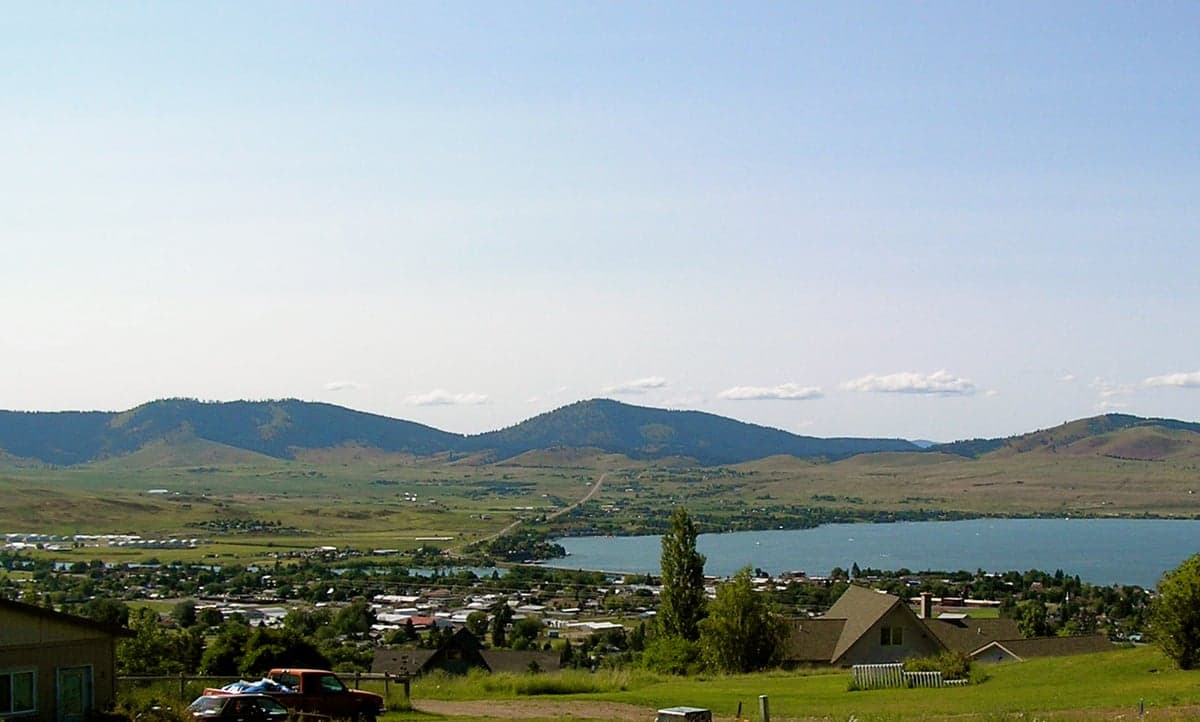
Photo: Wikipedia
Strategic Assessment of Polson, MT
Workable tactical position. Some exposure to population density or targets, but generally defensible in a crisis.
What does the Strategic Assessment tell us?
Our Strategic Assessment grades tactical survivability of an area. Major population centers, military targets, fallout zones, natural disasters, and border exposure all drive risk — lower exposure means a more defensible position in a crisis.
This is heavily inspired by Joel Skousen's Strategic Relocation book. Highly recommended you checkout the book ($)What does this tell us?
Our Strategic Assessment grades tactical survivability of an area. Major population centers, military targets, fallout zones, natural disasters, and border exposure all drive risk — lower exposure means a more defensible position in a crisis.
This is heavily inspired by Joel Skousen's Strategic Relocation book. Highly recommended you checkout the book ($)Strategic Pillars

Key Distances
Regional Safe Places
Below is our recommended "safe zones" in Montana and the surrounding area based on our strategic heuristics. For most people, it's unrealistic to live in a “safe zone” full-time due to work, family or other personal reasons. They tend to be more rural. However, many of these areas are perfect for second homes and retreat properties that double as a vacation home or even a short-term rental.
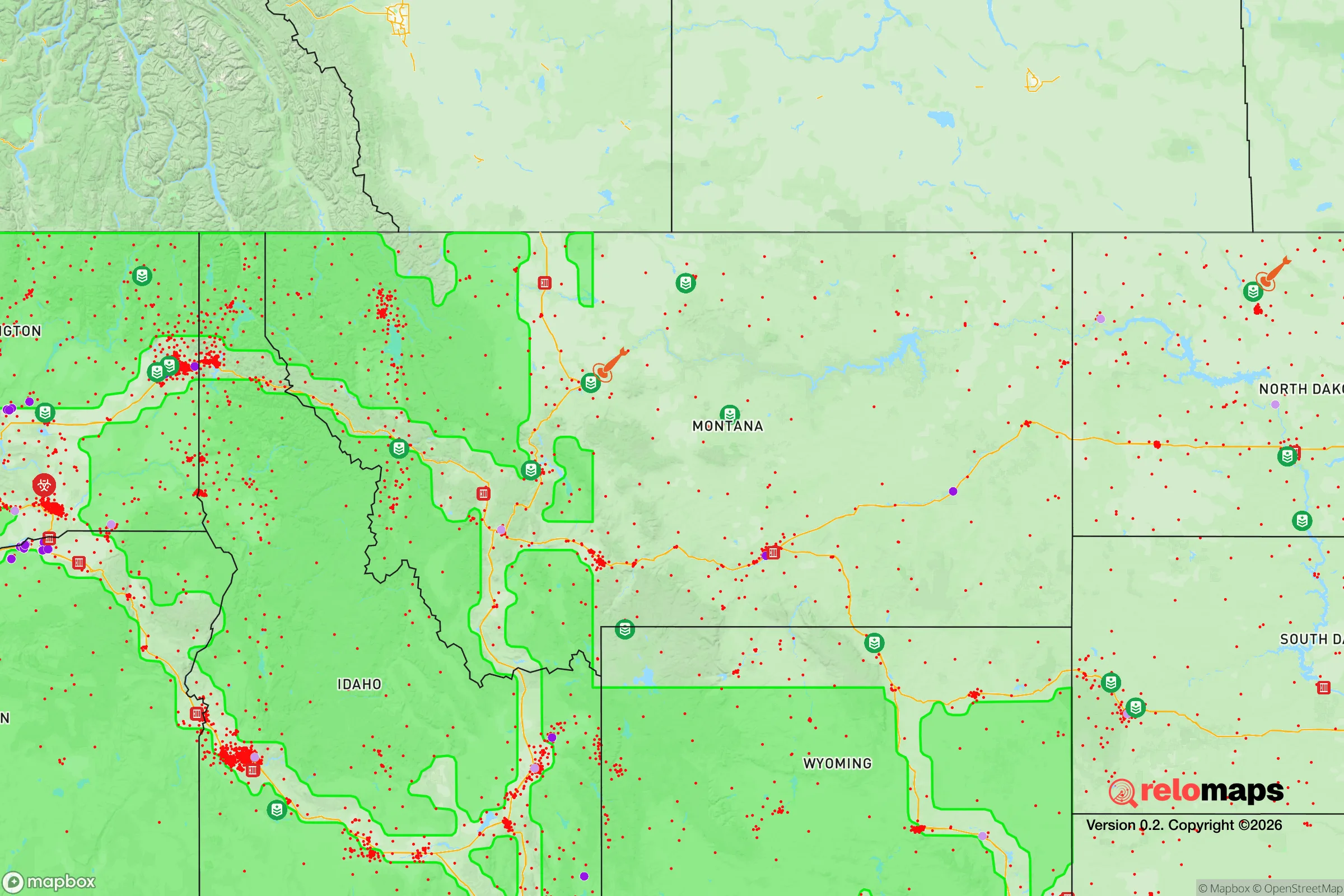


Important Note: For informational purposes only. This does not mean nothing bad ever happens in the green zones. Please use common sense. This is based on public data and modeled with AI. We tried to take a conservative approach but mistakes happen. We update this regularly as new information becomes available.
Solar Generator Recommendations
Backup power matters more here than in safer locations. We've picked three solar generators across budgets and capacity tiers — start with the budget unit if you only need a few essentials, or step up if you want to run a fridge and HVAC for days at a time.

Jackery Portable Power Station Explorer 300
Budget OptionPower on the Go: Weighing only 11 lbs, it's convenient to set up and store with book-sized foldable solar panels

BLUETTI Portable Power Station AC180
Designed for both indoor and outdoor scenarios, AC180 is highly capable as it has a robost capacity and continuous output power.

EF ECOFLOW DELTA Pro Ultra Power Station
Upgraded PickEcoFlow DELTA Pro Ultra is a whole-home energy system designed to grow with your family. Integrated with the Smart Home Panel 2, it scales to meet your evolving energy needs — keeping your home powered, intelligent, and secure through every stage of life.
We earn a commission, at no additional cost to you.
Strategic Assessment Analysis
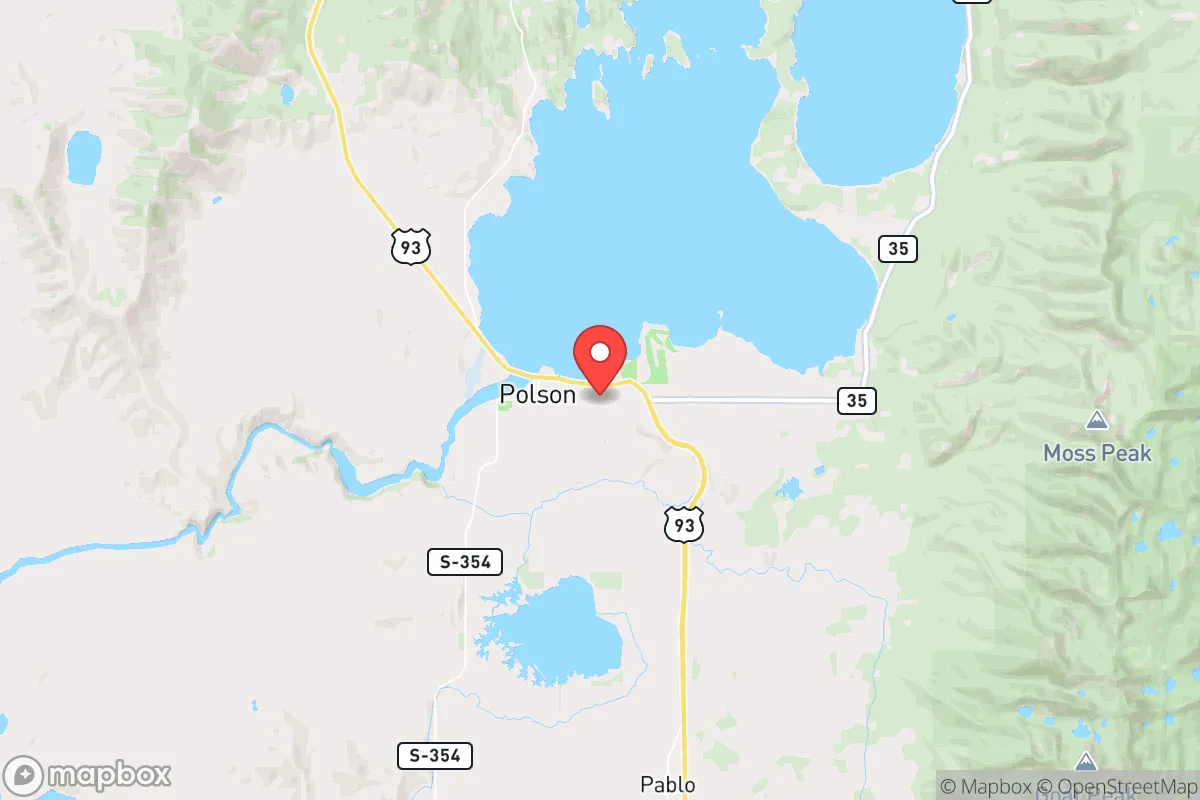
Polson, Montana, sits on the southern shore of Flathead Lake, and from a strategic relocation standpoint, its primary advantage is a combination of geographic isolation and access to a massive freshwater resource. The town itself is small—roughly 5,000 residents—but it serves as the seat of Lake County, placing it at a functional crossroads without the density of a major population center. For someone thinking in terms of resilience, Polson offers a buffer from the chaos of the West Coast and the Front Range, while still being within a day’s drive of essential supply chains in Missoula or Kalispell. The key question is whether this location provides enough separation from the risks that come with a deteriorating national picture, and the answer is cautiously favorable, provided you understand the specific vulnerabilities of the area.
Geographic position and natural advantages for long-term security
Polson’s position at the outlet of Flathead Lake—the largest natural freshwater lake west of the Mississippi—is its single most valuable asset for any prepper or survivalist. The lake holds roughly 1.2 trillion gallons of water, and the Flathead River runs through town, meaning a relocator here has access to a virtually inexhaustible supply of potable water, even in drought years that plague other parts of the Mountain West. The surrounding Mission Mountains and the Salish Mountains create a natural funnel for travel, which is a double-edged sword: they limit easy access for large-scale threats but also restrict your own egress if you need to bug out. The valley floor sits at roughly 2,900 feet, giving a four-season climate with cold winters that act as a natural deterrent to transient populations and opportunistic threats. The growing season is short—roughly 100 to 120 frost-free days—but the lake moderates temperatures enough to support orchards and market gardens, which is a serious plus for anyone planning to supplement food stores with local production. From a strategic geography perspective, Polson is far enough from the Interstate 90 corridor (about 60 miles north of Missoula) to avoid the worst of refugee flows from a Cascadia Subduction Zone event or a Yellowstone Caldera scenario, yet close enough to reach a regional medical center in Kalispell (about 45 minutes north) if needed.
Risks, exposures, and proximity to fallout-relevant landmarks
No location is a fortress, and Polson has several exposure points that a serious relocator must account for. The most immediate risk is the proximity to the Flathead Indian Reservation, which surrounds the town. This is not a commentary on the residents—many are good people—but from a legal and jurisdictional standpoint, Lake County and the Confederated Salish and Kootenai Tribes share authority over large portions of the land. During a breakdown of civil order, overlapping jurisdictions can create confusion over law enforcement, property rights, and resource allocation. You need to be aware of which parcels are fee land versus trust land, because building a hardened retreat on trust land introduces complications you don’t want during a crisis. The second major exposure is the rail line that runs through Polson—the Montana Rail Link spur that connects to the main line in Dixon. In a national emergency, rail corridors become vectors for both military movement and desperate populations. Polson is also roughly 90 miles from the Columbia Falls aluminum plant and the rail yards in Whitefish, which, while not primary nuclear targets, could see secondary effects from a broader conflict. The biggest single risk, however, is the Hungry Horse Dam, about 50 miles north. It’s a 350-foot concrete arch dam holding back the South Fork of the Flathead River. A deliberate breach or a catastrophic failure would send a wall of water down the Flathead Valley, and while Polson is far enough downstream to see a moderated surge rather than an instantaneous wave, the flooding of low-lying areas along the river and lake shore would be severe. Anyone building near the water needs to be at least 50 feet above the lake’s normal level to have a margin of safety.
Practical resilience for a relocator: food, water, energy, and defensibility
For the individual or family serious about self-sufficiency, Polson offers a mix of strong fundamentals and notable gaps. Water is the easy win: a well drilled into the shallow aquifer near the lake will produce reliably, and surface water from the river is abundant. The challenge is that many existing homes in town are on municipal water from the lake, which means you’re dependent on the treatment plant staying operational. A prepper should prioritize a property with a private well and a hand pump or a solar-powered backup. Food security is more complicated. The valley has good soil for orchards—cherries and apples do well—and there are local farms selling beef, pork, and poultry, but the growing season is short enough that you cannot rely on a single garden to feed a family year-round. You’ll need to invest in a greenhouse, cold storage, and a deep pantry. The local grocery stores (Rosauers and Super 1) are adequate for normal times, but supply chains here are thin; a trucking disruption would empty shelves in 48 hours. Energy is a bright spot: the area has decent solar insolation (about 4.5 peak sun hours per day), and net metering is available through Flathead Electric Cooperative. A grid-tied solar array with battery backup is the standard play, but if you want true off-grid capability, you’ll need a generator for the long, cloudy stretches in December and January. Defensibility is moderate. The town itself is laid out along the lake shore and the river, with a few choke points on the highways (Highway 93 north to Kalispell and Highway 35 east to Bigfork). A determined group could block those routes, but the surrounding terrain is open enough that a motivated person could bypass them on foot or ATV. The best strategy is to locate a few miles outside of town, on a dead-end road with a clear field of fire and a neighbor you trust. The local sheriff’s office is small—about 15 deputies for the entire county—so during a prolonged crisis, you are the first and last line of defense.
The overall strategic picture for Polson is that of a solid B+ location for a relocator with a prepper mindset. It has the water, the isolation from major population centers, and a climate that discourages casual migration. The risks are real but manageable: jurisdictional complexity with the reservation, a dam upstream that demands respect, and a short growing season that forces you to plan ahead. Compared to the chaos of a coastal city or the vulnerability of a town sitting on an interstate, Polson offers a defensible position with enough natural resources to sustain a small, prepared group through a multi-year disruption. The key is to arrive with your skills and supplies already in place, because the local infrastructure is not designed to support a sudden influx of people. If you’re looking for a place to hunker down and ride out the storm, this valley can work—but only if you treat it as a base to be hardened, not a paradise to be enjoyed. The lake is beautiful, but in a broken world, beauty is a secondary concern to survival.

* Values derived from national, state, county, city and local statistics and may differ in a specific area. Last updated: 2026-04-29T23:39:16.000Z
Narrative content on this page is AI-generated and may contain mistakes. Verify any details that matter before acting on them.
ReloMaps may earn a commission from affiliate links at no extra cost to you.

