 Popular
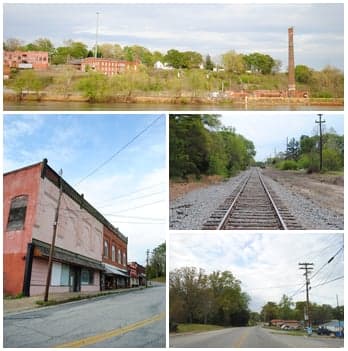
Photo: Wikipedia
Personal Sovereignty in Piedmont, SC
Viable for self-reliance. Generally workable, though some barriers may limit total independence.
What does Personal Sovereignty tell us?
Personal Sovereignty measures your capacity for self-reliance and independence with minimal government friction. Higher scores mean fewer barriers between you and the way you want to live... but it assumes you have the space you need and good neighbors.
What does this tell us?
Personal Sovereignty measures your capacity for self-reliance and independence with minimal government friction. Higher scores mean fewer barriers between you and the way you want to live... but it assumes you have the space you need and good neighbors.
State Policy
Energy independence: Importer (25% of energy produced in-state)
Personal Liberty
Homesteading

Personal Liberty Analysis
Piedmont, South Carolina, offers a notably high degree of personal sovereignty, grounded in South Carolina’s consistently low-tax, limited-government framework and a strong cultural emphasis on self-reliance. For individuals and families who prioritize autonomy—whether in financial decisions, self-defense, or lifestyle choices—the area presents a regulatory environment that is deliberately light-touch, with state preemption laws limiting local overreach in key areas like firearms and property rights. This analysis breaks down the specific factors that define personal sovereignty in Piedmont, from tax burden and gun laws to homesteading feasibility and personal liberties, providing a clear picture for those evaluating relocation based on freedom and independence.
Tax burden and regulatory posture: How South Carolina’s framework shapes Piedmont
South Carolina’s tax and regulatory climate is among the most favorable in the Southeast for those seeking to minimize government intrusion into personal finances. The state levies a flat income tax rate of 6.2% (as of 2026, down from 7% in 2022), with a standard deduction of $14,600 for single filers and $29,200 for married couples filing jointly. Property taxes in Piedmont, part of Anderson County, are notably low: the effective property tax rate on owner-occupied homes is approximately 0.45% of assessed value, one of the lowest in the nation. There is no state estate tax or inheritance tax, and the state’s sales tax rate is 6%, with local add-ons bringing the total in Piedmont to about 7%. For a family earning $80,000 annually, total state and local tax burden typically falls under 8% of income, well below the national average of 10-12%. Regulatory posture is similarly restrained: South Carolina is a right-to-work state, has no state-level minimum wage above the federal $7.25, and imposes minimal occupational licensing requirements compared to states like California or New York. Zoning in unincorporated areas of Anderson County is largely permissive, with no county-wide building codes for agricultural structures under 5,000 square feet. This combination of low taxes and limited regulation means residents keep more of their earnings and face fewer bureaucratic hurdles when starting a business, building a workshop, or modifying their property.
Self-defense and gun law specifics: Stand your ground and permitless carry
South Carolina is a strong Second Amendment state, and Piedmont residents benefit from some of the most permissive firearm laws in the country. The state enacted permitless (constitutional) carry in March 2024, allowing any law-abiding adult 18 or older to carry a concealed or open handgun without a permit. This law preempts local ordinances, meaning Piedmont’s town council cannot impose its own restrictions on carry or storage. South Carolina also has a stand your ground law (codified in S.C. Code § 16-11-440), which removes any duty to retreat before using deadly force in self-defense, provided the person is lawfully present and not engaged in criminal activity. Castle doctrine protections extend to vehicles and occupied structures. For those who still wish to obtain a concealed weapons permit (CWP) for reciprocity with other states, the process is straightforward: a background check, a fingerprint-based application, and a training course (typically 4-8 hours). The state does not require registration of firearms, and there is no waiting period for handgun purchases from private sellers (though federal background checks apply for FFL dealers). Magazine capacity is unrestricted. For a family moving from a restrictive state like New York or California, the shift is dramatic: no permits, no waiting periods, and full legal protection for defensive use of force in your home or vehicle.
Self-reliance and homesteading viability: Lot sizes, zoning, and off-grid feasibility
Piedmont’s rural character and permissive zoning make it a strong candidate for those pursuing self-reliance, whether through gardening, livestock, or off-grid living. Residential lots in the area commonly range from 0.5 to 5 acres, with many properties in unincorporated Anderson County having no minimum lot size for agricultural use. Zoning in the county’s Agricultural (AG) district allows for livestock (horses, cattle, goats, poultry), beekeeping, and crop cultivation without special permits, as long as structures are set back at least 30 feet from property lines. For off-grid feasibility, South Carolina has no state law prohibiting rainwater collection, and Anderson County does not require a permit for rainwater cisterns under 5,000 gallons. Solar panel installation is permitted without county-level restrictions, though net metering is available through Duke Energy Progress (the primary utility) at a retail rate for systems under 20 kW. Composting toilets and greywater systems are allowed under state health regulations, provided they meet basic septic standards. The county does not enforce building codes on structures under 200 square feet, making small sheds, chicken coops, or tiny homes feasible without permits. However, full-time off-grid living (no utility connection) is technically allowed but may trigger health department inspections for septic systems. For a family wanting to raise chickens, grow vegetables, and install solar panels without government interference, Piedmont offers one of the most accommodating environments in the Upstate.
Personal liberties: Parental rights, medical autonomy, speech, and property
South Carolina law strongly protects parental rights in education and healthcare. The state’s Parental Rights in Education Act (2023) requires schools to notify parents of any changes in a student’s mental, emotional, or physical health, and prohibits classroom instruction on sexual orientation or gender identity in grades K-5. Parents have the right to opt their children out of any sex education or health curriculum. In healthcare, South Carolina does not require parental consent for minors to receive routine medical care (e.g., vaccinations), but does require parental consent for abortion (with a judicial bypass option). Medical freedom is further supported by the state’s COVID-19 vaccine mandate prohibition (2022), which bars employers and government entities from requiring vaccination as a condition of employment or service. Speech protections are robust: South Carolina has no hate speech laws that restrict expression, and the state constitution explicitly protects free speech. Property rights are reinforced by the state’s Private Property Protection Act, which limits eminent domain to public uses (e.g., roads, utilities) and prohibits taking land for private economic development. For a family concerned about government overreach in education, healthcare, or property, Piedmont sits within a legal framework that consistently prioritizes individual and parental autonomy over state or local mandates.
Overall, Piedmont offers one of the highest levels of personal sovereignty in the Southeast, rivaled only by parts of Texas and Florida. The combination of low taxes, permitless carry, permissive zoning for homesteading, and strong parental rights creates an environment where individuals and families can live largely free from government interference in daily life. While no location is entirely free of regulation—building permits are still required for major construction, and state health codes apply to septic systems—the burden here is minimal compared to states with more centralized control. For a conservative-leaning reader prioritizing autonomy, Piedmont represents a strategic choice where the legal and cultural framework aligns with self-reliance and limited government.

* Values derived from national, state, county, city and local statistics and may differ in a specific area. Last updated: 2026-10-10T16:28:41.000Z
Narrative content on this page is AI-generated and may contain mistakes. Verify any details that matter before acting on them.
ReloMaps may earn a commission from affiliate links at no extra cost to you.

