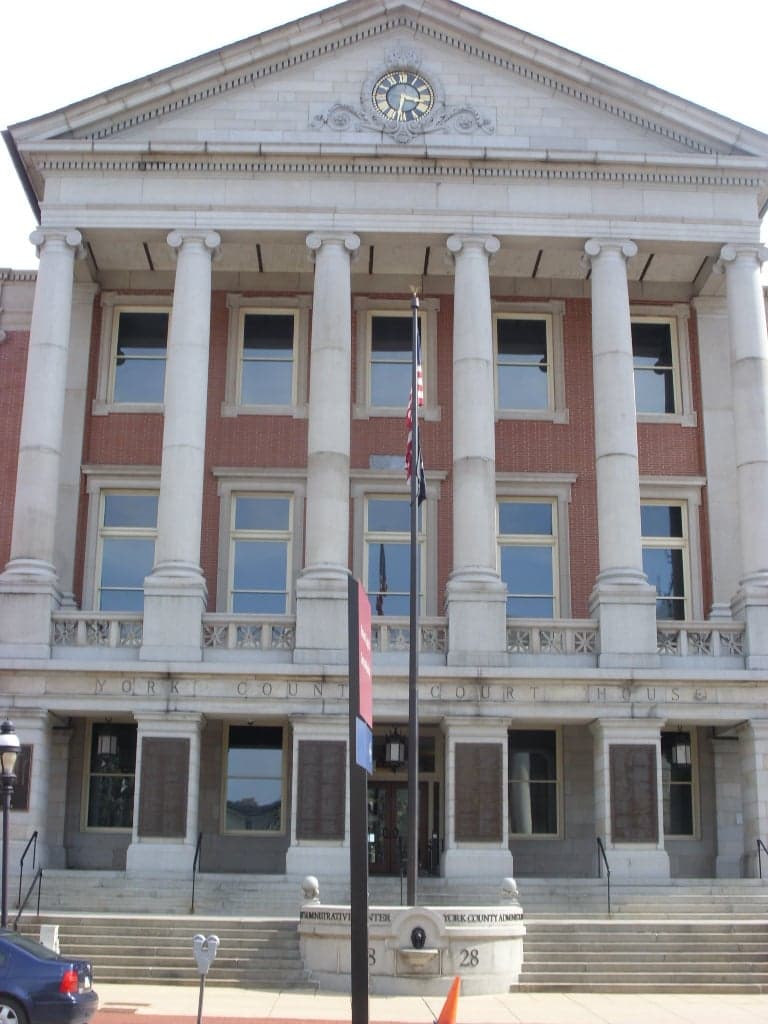
Photo: Wikipedia
Quality of Life in York County
A livable area that tracks near national norms for affordability, walkability, and neighborhood health.
What does Quality of Life tell us?
Quality of Life measures an area by evaluating factors like cost of living, nearby amenities, country club access, airport proximity, socioeconomic signals and neighborhood character. For large states, this is a general average — quality of life can vary dramatically between metro areas, suburbs, and rural communities within the same state.
What does this tell us?
Quality of Life measures an area by evaluating factors like cost of living, nearby amenities, country club access, airport proximity, socioeconomic signals and neighborhood character. For large states, this is a general average — quality of life can vary dramatically between metro areas, suburbs, and rural communities within the same state.
Cost of Living
7% below national average
123%
The Real Cost of Living in York County for 2026
| Tier | Individual | Family (4) |
|---|---|---|
| Survival | $18k | $35k |
| Comfortable | $46k | $67k |
| Luxury | $127k+ | $197k+ |
| Elite (Top 5%) | $149k+ | $231k+ |
Quality-of-Life Analysis
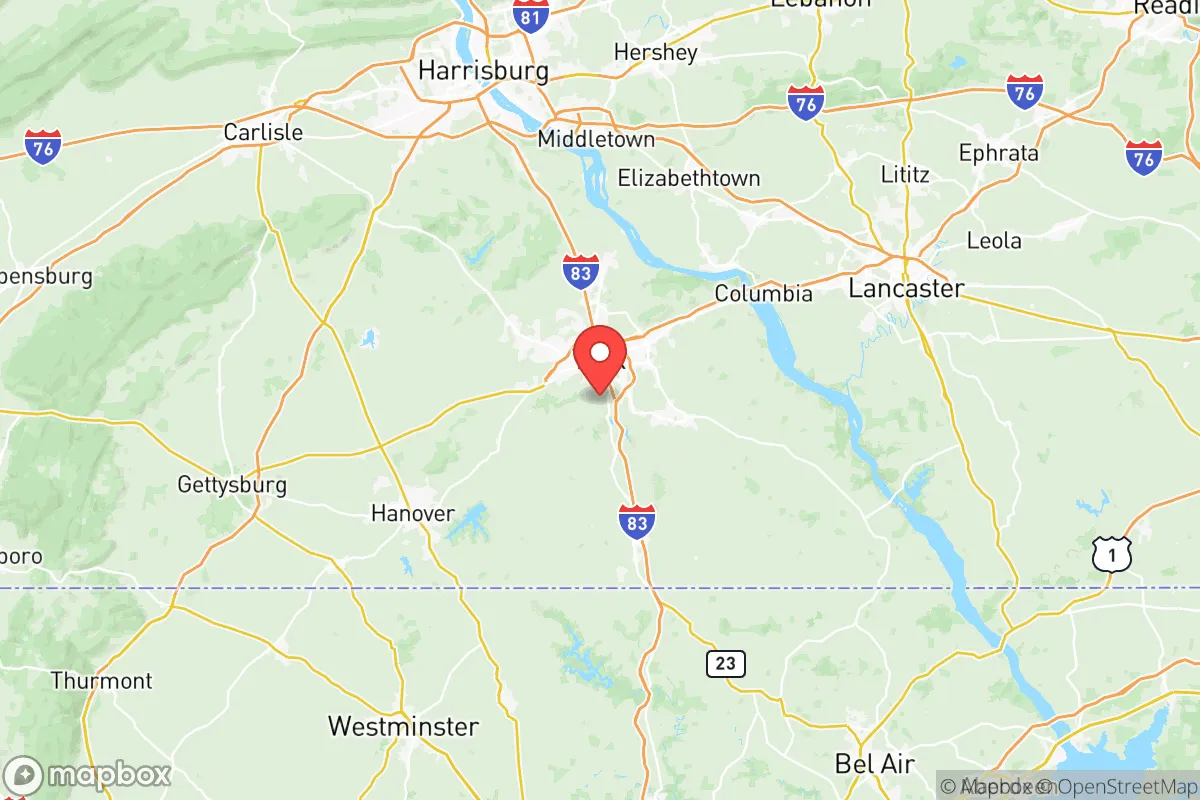
York County, Pennsylvania offers a broad quality-of-life spectrum that ranges from the walkable, historic core of its largest city to quiet agricultural hamlets and suburban bedroom communities, drawing everyone from young professionals and commuters to retirees and rural homesteaders. With a cost of living index of 93 (well below the national average of 100), a median home value of $235,000, and a median rent of $1,150, the county provides tangible affordability across nearly all its settings. The average commute of roughly 27 minutes keeps most of the county within reasonable reach of employment hubs in York City, Harrisburg, and even Baltimore.
Largest town(s) & population centers
York City is the county's primary urban center and its most densely populated area, with roughly 44,000 residents. Daily life here is defined by a compact, walkable downtown anchored by Continental Square, the York County History Center, and a growing roster of breweries and farm-to-table restaurants along the Codorus Creek. The city has seen a modest revitalization push since the early 2020s, with new apartment conversions in former industrial buildings and a stronger arts scene at the Appell Center for the Performing Arts. Just outside the city limits, York Township and Springettsbury Township function as the county's primary suburban corridors, filled with big-box retail along Route 30, chain restaurants, and newer housing developments. These areas attract families and commuters who want quick access to I-83 and the amenities of a mid-sized metro without the city school district's challenges. Hanover, the county's second-largest borough (roughly 16,000 residents), offers a more self-contained small-city feel with its own historic downtown, the Utz Snacks factory tour, and a strong manufacturing employment base.
Smaller towns & rural pockets
Beyond the main population centers, York County is dotted with distinct smaller communities that each offer a different pace. Dillsburg, in the northern corner near the Cumberland County line, is a classic small borough with a walkable main street, a popular farmers market, and easy access to the Appalachian Trail. Glen Rock and New Freedom, both in the southern part of the county along the Maryland border, serve as commuter outposts for workers heading to Baltimore or Towson, with the Northern Central Railway trail providing a major recreational draw. Red Lion and Dallastown are tight-knit boroughs in the southeastern quadrant, each with their own school districts and a strong sense of local identity centered on community events and youth sports. The county's truly rural pockets are found in Peach Bottom Township and Fawn Township along the Susquehanna River, where working farms, river access points, and Amish buggies are common sights. Stewartstown, in the far south, remains a quiet crossroads community with limited services but deep roots in local agriculture.
Cost & lifestyle range
The cost of living and lifestyle options vary significantly across the county. At the more expensive end, York Township and Springettsbury Township have median home values pushing $280,000–$310,000, driven by newer subdivisions and proximity to shopping and highways. Hanover sits near the county median, with a typical home around $235,000 and rents averaging $1,150, offering a balanced mix of historic homes and newer construction. At the lower end, York City itself has median home values closer to $140,000–$160,000, making it one of the most affordable urban centers in Pennsylvania, though buyers should factor in higher property taxes and older housing stock. Rural townships like Peach Bottom and Fawn offer the cheapest land per acre, often under $10,000 per acre for undeveloped parcels, but with longer drives to grocery stores and medical care. The lifestyle spread is equally wide: a resident in York City can walk to a coffee shop and a concert venue, while someone in Stewartstown might drive 20 minutes to the nearest supermarket and rely on a well and septic system.
York County is a place where a wide range of residents can find a fit — from the urban-oriented renter who values walkability and cultural amenities in York City, to the suburban family prioritizing good schools and a short commute in Springettsbury, to the rural landowner seeking space and quiet in Peach Bottom. The county's affordability and geographic diversity mean that lifestyle choice is rarely constrained by budget alone, making it a practical option for those who want to trade some urban intensity for a lower cost of living without sacrificing all access to city amenities.

Crime in York County
WARNING: The crime statistics are unreliable for this jurisdiction. Local authorities have either not reported or under reported their data to the FBI. This could be due to bad intentions, incompetence or technical issues. Regardless, we suggest skepticism.
Higher crime rates than 62% of comparable U.S. locations.
Violent CrimeViolent Crime Analysis
Property CrimeProperty Crime Analysis
Crime Analysis
York County, Pennsylvania, presents a mixed safety profile that varies significantly between its urban core and surrounding communities. With a violent crime rate of 223.2 per 100,000 residents and a property crime rate of 1,332 per 100,000, the county sits below the national average for violent offenses but above the statewide median for property crimes. The county's largest city, York City, drives a disproportionate share of these incidents, while suburban townships and boroughs like Shrewsbury, Dallastown, and Red Lion consistently report lower crime volumes.
Crime in context
York County's violent crime rate of 223.2 per 100,000 is roughly 30% lower than the U.S. national average of about 370 per 100,000, but it exceeds Pennsylvania's statewide rate of approximately 280 per 100,000. Property crime in the county, at 1,332 per 100,000, is notably higher than the Pennsylvania average of roughly 1,100 per 100,000 and sits near the national median. The disparity is largely driven by York City, where per-capita rates for both violent and property offenses are roughly double the county average. In contrast, suburban municipalities such as Springettsbury Township and Manchester Township report property crime rates closer to 800–900 per 100,000, pulling the county-wide figure upward only because of the city's higher density and reporting volume.
What residents experience
Daily life in York County varies sharply by location. In York City, residents contend with a higher likelihood of aggravated assault and theft, with the city's violent crime rate estimated at over 500 per 100,000. The city's police department has faced staffing challenges, and the county's judicial district—covering both the city and surrounding areas—has seen progressive district attorneys in recent cycles. Progressive prosecutorial policies, which often emphasize diversion programs and reduced sentencing for repeat offenders, have been linked to higher recidivism and a perception of leniency that frustrates victims and emboldens property criminals. In the city's core, residents report frequent car break-ins and package thefts, while suburban neighborhoods in areas like West York and Hanover experience sporadic burglaries but far fewer violent encounters. The county's rural northern townships, such as Warrington Township and Newberry Township, see crime rates below 100 per 100,000 for violent offenses, making them among the safest areas in the region.
Neighborhood-level variation
The most pronounced safety divide exists between York City and the rest of the county. Within the city, the central business district and neighborhoods near the Codorus Creek corridor see the highest concentration of incidents, while the historic district and areas near York College maintain moderate crime levels due to campus security and community watch programs. Outside the city, the boroughs of Shrewsbury and Dallastown report violent crime rates under 100 per 100,000, and Red Lion sees property crime rates roughly half the county average. The southern end of the county, near the Maryland border, benefits from lower population density and stronger community policing. However, residents in any part of the county should remain vigilant: property crime, particularly theft from vehicles and sheds, occurs even in low-crime townships, and the county's overall property crime rate remains a concern for homeowners and renters alike.
* Values derived from national, state, county, city and local statistics and may differ in a specific area. Last updated: 2026-05-13T01:58:18.000Z
Narrative content on this page is AI-generated and may contain mistakes. Verify any details that matter before acting on them.
ReloMaps may earn a commission from affiliate links at no extra cost to you.

