 Popular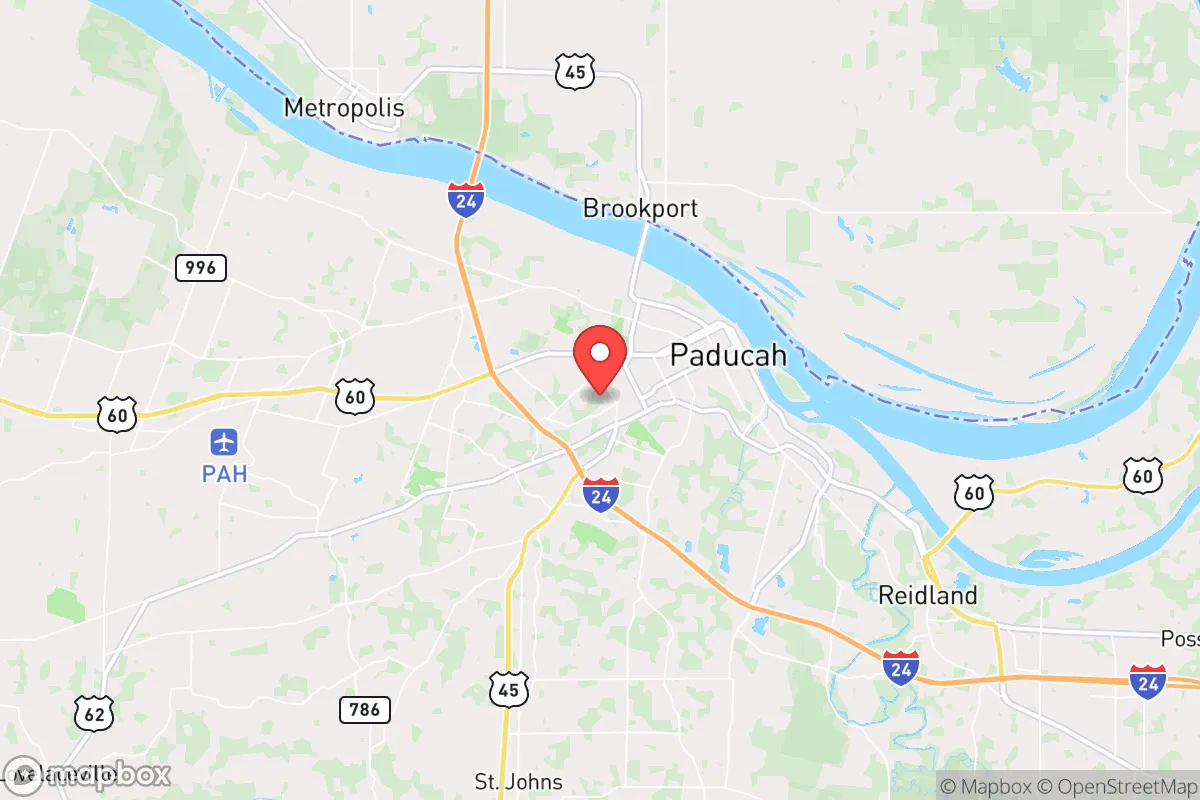
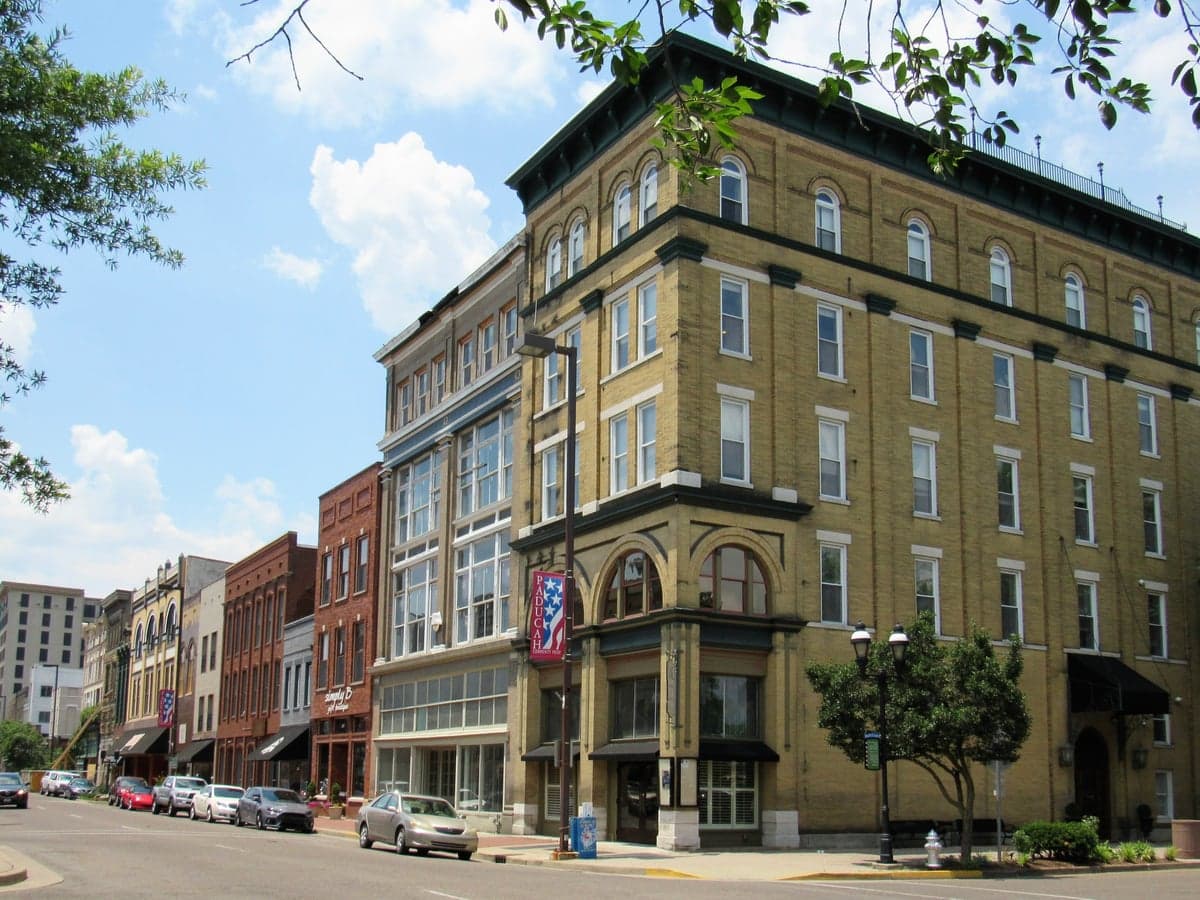
Photo: Wikipedia
Strategic Assessment of Paducah, KY
Workable tactical position. Some exposure to population density or targets, but generally defensible in a crisis.
What does the Strategic Assessment tell us?
Our Strategic Assessment grades tactical survivability of an area. Major population centers, military targets, fallout zones, natural disasters, and border exposure all drive risk — lower exposure means a more defensible position in a crisis.
This is heavily inspired by Joel Skousen's Strategic Relocation book. Highly recommended you checkout the book ($)What does this tell us?
Our Strategic Assessment grades tactical survivability of an area. Major population centers, military targets, fallout zones, natural disasters, and border exposure all drive risk — lower exposure means a more defensible position in a crisis.
This is heavily inspired by Joel Skousen's Strategic Relocation book. Highly recommended you checkout the book ($)Strategic Pillars

Key Distances
Regional Safe Places
Below is our recommended "safe zones" in Kentucky and the surrounding area based on our strategic heuristics. For most people, it's unrealistic to live in a “safe zone” full-time due to work, family or other personal reasons. They tend to be more rural. However, many of these areas are perfect for second homes and retreat properties that double as a vacation home or even a short-term rental.
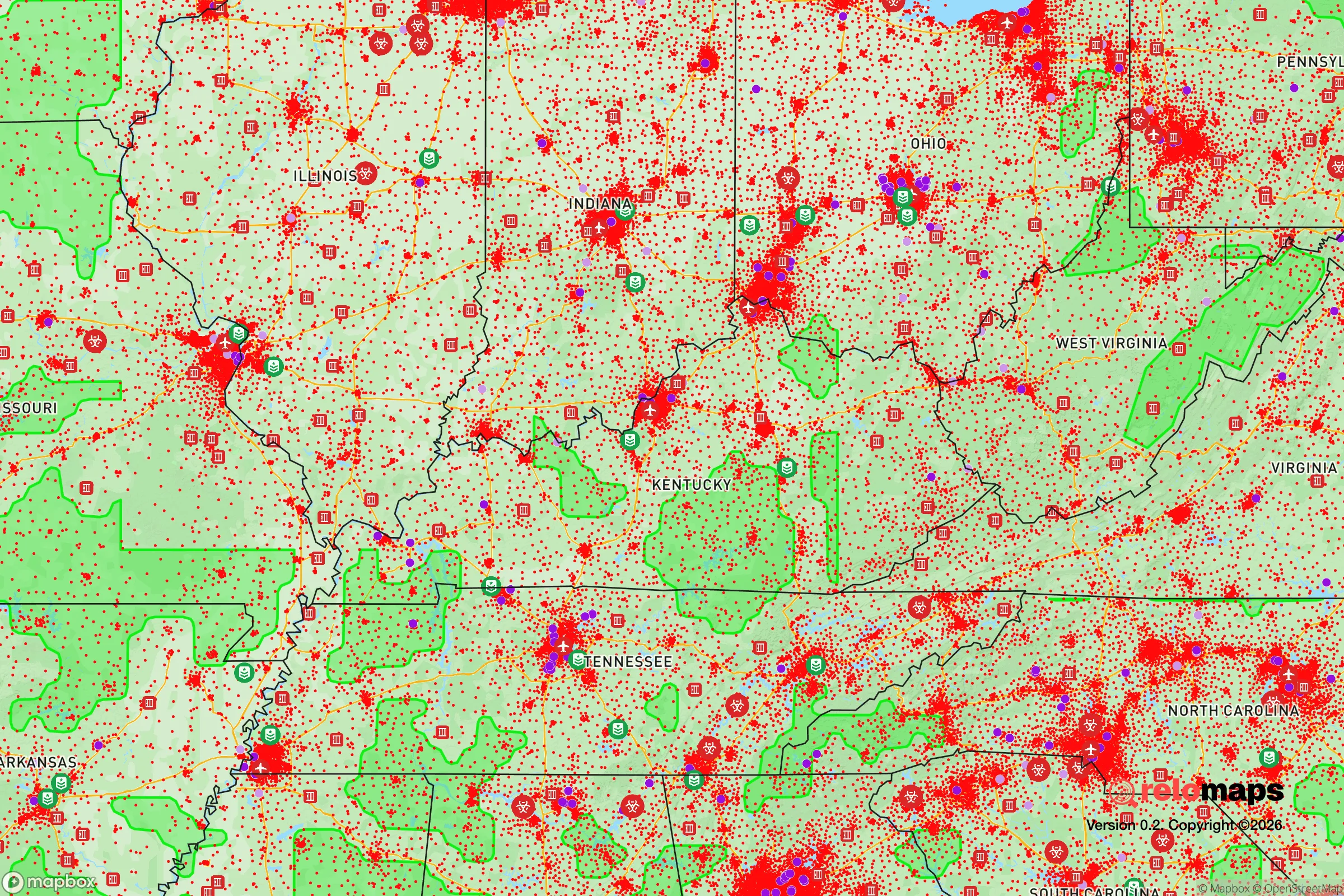
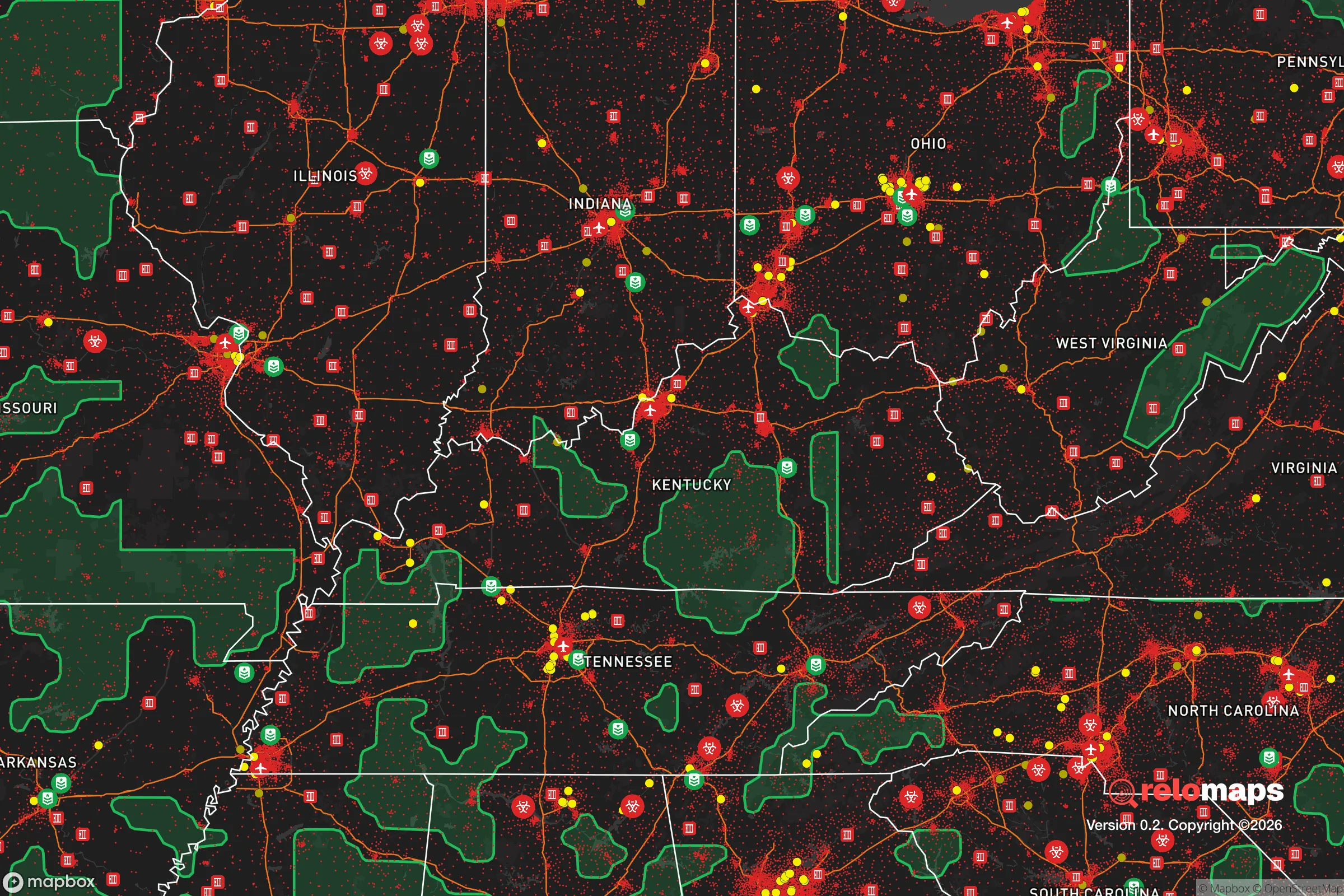


Important Note: For informational purposes only. This does not mean nothing bad ever happens in the green zones. Please use common sense. This is based on public data and modeled with AI. We tried to take a conservative approach but mistakes happen. We update this regularly as new information becomes available.
Solar Generator Recommendations
Backup power matters more here than in safer locations. We've picked three solar generators across budgets and capacity tiers — start with the budget unit if you only need a few essentials, or step up if you want to run a fridge and HVAC for days at a time.

Jackery Portable Power Station Explorer 300
Budget OptionPower on the Go: Weighing only 11 lbs, it's convenient to set up and store with book-sized foldable solar panels

BLUETTI Portable Power Station AC180
Designed for both indoor and outdoor scenarios, AC180 is highly capable as it has a robost capacity and continuous output power.

EF ECOFLOW DELTA Pro Ultra Power Station
Upgraded PickEcoFlow DELTA Pro Ultra is a whole-home energy system designed to grow with your family. Integrated with the Smart Home Panel 2, it scales to meet your evolving energy needs — keeping your home powered, intelligent, and secure through every stage of life.
We earn a commission, at no additional cost to you.
Strategic Assessment Analysis
Paducah, Kentucky, offers a compelling strategic position for those prioritizing resilience and self-sufficiency, sitting at the confluence of the Ohio and Tennessee Rivers in a region that has historically been insulated from the worst of national disruptions. Its location—roughly 150 miles from Nashville, 170 from St. Louis, and 200 from Memphis—places it far enough from major metropolitan centers to avoid the immediate fallout of civil unrest or mass casualty events, yet close enough to access regional resources if needed. The city’s population of roughly 25,000, with McCracken County at about 67,000, provides a small-town buffer against the chaos of larger urban areas, while its industrial and transportation infrastructure offers practical advantages for long-term preparedness. For the conservative-leaning relocator concerned with national instability, Paducah represents a middle ground: not a remote bunker, but a defensible, resource-rich hub with a lower risk profile than most cities of its size.
Geographic position and natural advantages for long-term security
Paducah’s geographic assets are its strongest card in a resilience playbook. The confluence of the Ohio and Tennessee Rivers provides abundant water resources—critical for both daily use and agricultural self-sufficiency—and the region sits atop the Mississippi Embayment aquifer, one of the largest groundwater systems in the country. This means that even in a scenario where municipal water treatment is compromised, well-drilling is viable, and surface water is plentiful for non-potable needs. The surrounding landscape is a mix of fertile bottomlands and rolling hills, with the Land Between the Lakes National Recreation Area just 30 miles east offering 170,000 acres of forest, game, and isolation for those who need to bug out. The area’s elevation is modest (around 340 feet), but it’s far enough from major fault lines to avoid seismic risks, and tornadoes—while a real threat—are manageable with proper sheltering. The Ohio River also serves as a natural barrier to the north, slowing any large-scale movement from that direction, and the region’s low population density (about 100 people per square mile in McCracken County) means fewer eyes on your operations. For the prepper, this is a location that gives you options: stay put and fortify, or retreat into the woods with a solid buffer zone.
Risks, exposures, and proximity to fallout-relevant landmarks
No strategic assessment is honest without weighing the liabilities, and Paducah has a few that demand attention. The most glaring is the Paducah Gaseous Diffusion Plant, a former uranium enrichment facility that sits just west of the city and is now a Superfund site. While operations ceased in 2013, the site still holds radioactive waste and is undergoing cleanup; a major accident or terrorist strike could release contaminants, though the risk is low in a stable scenario. More concerning for the prepper is the plant’s history as a target for environmental activists and its symbolic value—any national unrest could see it become a focal point for disruption. Additionally, the city lies within 100 miles of the Kentucky Dam and the Tennessee Valley Authority’s grid infrastructure, which, while not a direct threat, means that a cascading grid failure could affect power reliability. The proximity to the Mississippi River corridor also means that any major flood event—like the 2011 Ohio River flood that crested at 54 feet in Paducah—could isolate the city for days, cutting supply routes. On the human side, Paducah is a transportation hub for rail and barge traffic, which in a crisis could attract refugees from larger cities seeking the same resources you are. The Interstate 24 and US-60 corridors are natural chokepoints; expect them to be clogged or contested if things go sideways. The key is to plan for these exposures: avoid low-lying flood zones, secure your property against transient traffic, and have a bug-out route that avoids the main highways.
Practical resilience for a relocator: food, water, energy, and defensibility
For the individual or family looking to build a resilient homestead, Paducah’s practical assets are solid but require work. Food security is viable: the surrounding counties (Graves, Marshall, Livingston) are agricultural, with corn, soybeans, and livestock operations that can be tapped through local farmers’ markets or direct purchases. The growing season runs from April to October, and the soil is good for gardens, though you’ll want to test for any residual contamination from the industrial past. Water is abundant, as noted, but municipal supply is treated and vulnerable to disruption; a well with a hand pump or a rainwater catchment system is a must. The Ohio River is a reliable backup, but you’ll need filtration—think Berkey or Sawyer systems—given agricultural runoff and industrial history. Energy is a mixed bag: the grid is served by the Tennessee Valley Authority, which is stable but not immune to cyberattacks or natural disasters. Solar is viable—the region gets about 200 sunny days per year—but you’ll need battery storage for overcast stretches. Natural gas is available in town, but propane tanks are the better bet for off-grid cooking and heating. Defensibility is where Paducah shines for the prepared relocator. The city’s layout—a compact downtown with residential neighborhoods spreading outward—means you can choose a property on the outskirts (e.g., near the Land Between the Lakes or in rural McCracken County) with good sightlines and limited access points. The local gun culture is strong; Kentucky is a constitutional carry state, and McCracken County has a sheriff’s office that is generally pro-Second Amendment. For community resilience, the area has a network of churches and volunteer fire departments that can serve as coordination points, but don’t expect formal prepper groups—you’ll likely be building your own network. The biggest practical challenge is the lack of a major medical center within 50 miles; the local hospital (Baptist Health Paducah) is adequate for routine care, but for trauma or complex issues, you’re looking at a 2-hour drive to Nashville or St. Louis. Stockpile antibiotics, trauma kits, and know basic field medicine.
The overall strategic picture for Paducah is that of a viable, but not ideal, relocation target for the conservative prepper. It offers a rare combination of water abundance, agricultural access, and geographic insulation from the worst of urban collapse, all within a state that respects individual rights and has a low regulatory burden for property and firearms. The trade-offs are real: the industrial legacy of the uranium plant, the flood risk, and the potential for refugee flow from nearby cities like Nashville or Memphis. For the single individual or family willing to invest in off-grid infrastructure—well, solar, food storage, and a defensible perimeter—Paducah provides a solid foundation. It’s not a remote mountain retreat, but it’s also not a concrete jungle waiting to burn. In a world where the country’s stability feels increasingly fragile, this city offers a middle path: enough resources to thrive, enough distance to survive, and enough community to rebuild. The key is to move before the crisis, secure your position, and keep your head down. Paducah won’t save you by itself, but it gives you the tools to save yourself.

* Values derived from national, state, county, city and local statistics and may differ in a specific area. Last updated: 2026-04-21T11:01:31.000Z
Narrative content on this page is AI-generated and may contain mistakes. Verify any details that matter before acting on them.
ReloMaps may earn a commission from affiliate links at no extra cost to you.

