Demographics of Ottawa Hills, OH
Affluence Level in Ottawa Hills, OH
An upper-middle-class area. Household wealth, education levels, and homeownership run ahead of national benchmarks.
People of Ottawa Hills, OH
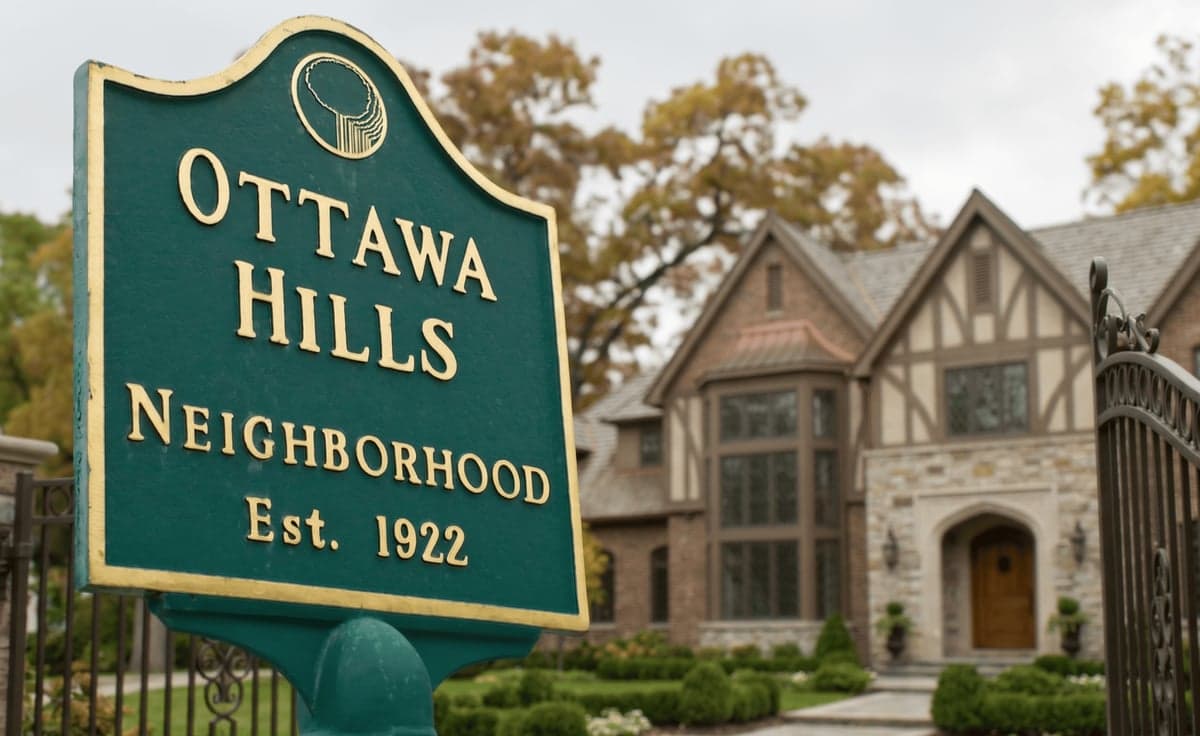
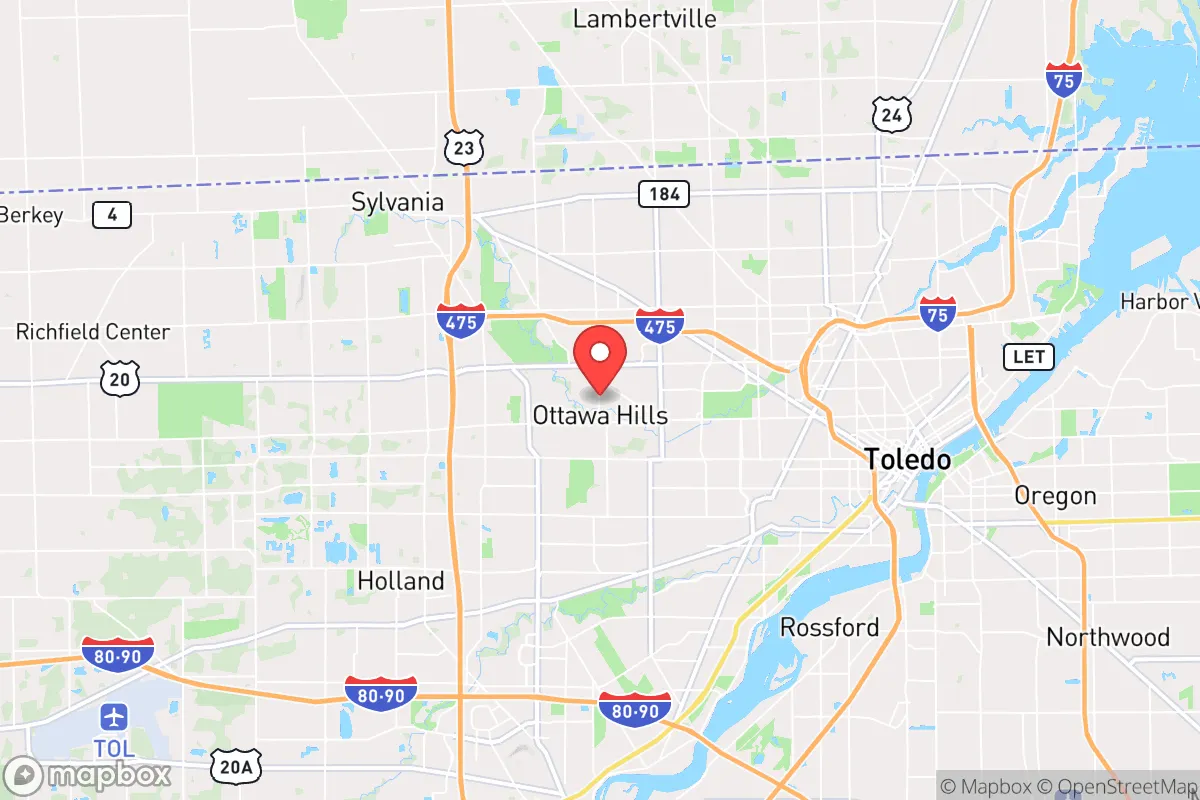
Ottawa Hills, Ohio, is a small, affluent village of 4,796 residents that functions as a tightly-knit, family-oriented enclave within the Toledo metropolitan area. Known for its top-rated public schools, large historic homes, and strong sense of community governance, the village is notably homogeneous: 81.5% White, with a distinctive professional-class character reflected in a 68.3% college-educated population. Its residents are predominantly long-term homeowners who value privacy, low crime rates, and a deliberate separation from the urban dynamics of neighboring Toledo.
How the city was settled and grew
Ottawa Hills was not a product of 19th-century industrial settlement but a planned suburban retreat, incorporated in 1927. The land was originally part of the larger Ottawa Indian reservation and later became farmland owned by prominent Toledo families. The village’s founding population was almost entirely White, upper-middle-class professionals—doctors, lawyers, and business executives—who sought a bucolic, exclusive alternative to Toledo’s dense, ethnically diverse neighborhoods. The original core, known as the Old Village (centered on Indian and Bancroft roads), was platted with large lots and winding roads designed to discourage through traffic. The first wave of home construction in the 1920s and 1930s produced Tudor, Colonial Revival, and Craftsman homes that still define the area. A second wave of growth occurred after World War II, when returning GIs and their families built more modest ranch-style homes in the Westmoreland and Edgewood sections, though the village’s restrictive zoning and high property values kept development exclusive. No significant immigrant or minority populations settled here during this era; the village was deliberately marketed as a “restricted” community, a fact reflected in its near-total White population through the 1960s.
Modern era (post-1965)
The 1965 Hart-Cellar Act and subsequent fair housing laws had a muted effect on Ottawa Hills. Unlike inner-ring Toledo suburbs that experienced rapid racial turnover, Ottawa Hills’ high home prices and lack of rental housing limited demographic change. The village’s Black population remains at just 2.6%, and its Hispanic population at 2.1%—both well below national averages. The most notable post-1965 shift has been the arrival of professional-class Indian and East/Southeast Asian families, drawn by the school district’s reputation. Indian-subcontinent residents now make up 4.6% of the population, and East/Southeast Asian residents 3.2%, concentrated in the newer Fox Chase and Woodlawn subdivisions built in the 1990s and 2000s. These families are overwhelmingly college-educated (often in STEM or medicine) and have integrated smoothly into the village’s civic life, serving on school boards and neighborhood associations. The foreign-born share remains very low at 1.5%, indicating that most non-White residents are U.S.-born or long-term naturalized citizens. The village’s character remains defined by its White professional majority, but the Indian and Asian communities have become visible, stable minorities without the ethnic clustering seen in larger cities.
The future
Ottawa Hills’ population is aging slowly—the median age is 44—and the village is not growing. The population has hovered around 4,800 for two decades, constrained by a lack of developable land and a deliberate policy of limiting new construction. The Indian and East/Southeast Asian shares are likely to plateau rather than surge, as the village’s high cost of entry ($400,000+ median home value) and small lot sizes deter the large multigenerational households common in some immigrant communities. The White population will remain the overwhelming majority, though it may slowly decline as older homeowners sell to younger professional families of diverse backgrounds. The village is not homogenizing into a single culture, nor is it tribalizing into distinct enclaves; rather, it is becoming a class-based community where income and education level matter more than ethnicity. The Old Village will retain its historic character, while Fox Chase and Woodlawn will continue to attract the most diverse new residents. No significant growth in Hispanic, Black, or Arab populations is expected, given the absence of rental housing, public transit, or entry-level jobs.
For a conservative-leaning family or individual considering relocation, Ottawa Hills offers a stable, low-diversity, high-amenity environment where property values are resilient and schools are elite. The village is not becoming more cosmopolitan or diverse in a broad sense; it is selectively diversifying by attracting highly educated professionals from a few specific backgrounds while remaining largely closed to lower-income or less-educated populations. The bottom line: Ottawa Hills is a wealthy, well-managed, and demographically predictable village—ideal for those seeking a safe, academically rigorous community, but not for those looking for urban energy, ethnic variety, or affordable entry points.

* Values derived from national, state, county, city and local statistics and may differ in a specific area. Last updated: 2026-04-27T17:50:30.000Z
Narrative content on this page is AI-generated and may contain mistakes. Verify any details that matter before acting on them.
ReloMaps may earn a commission from affiliate links at no extra cost to you.

