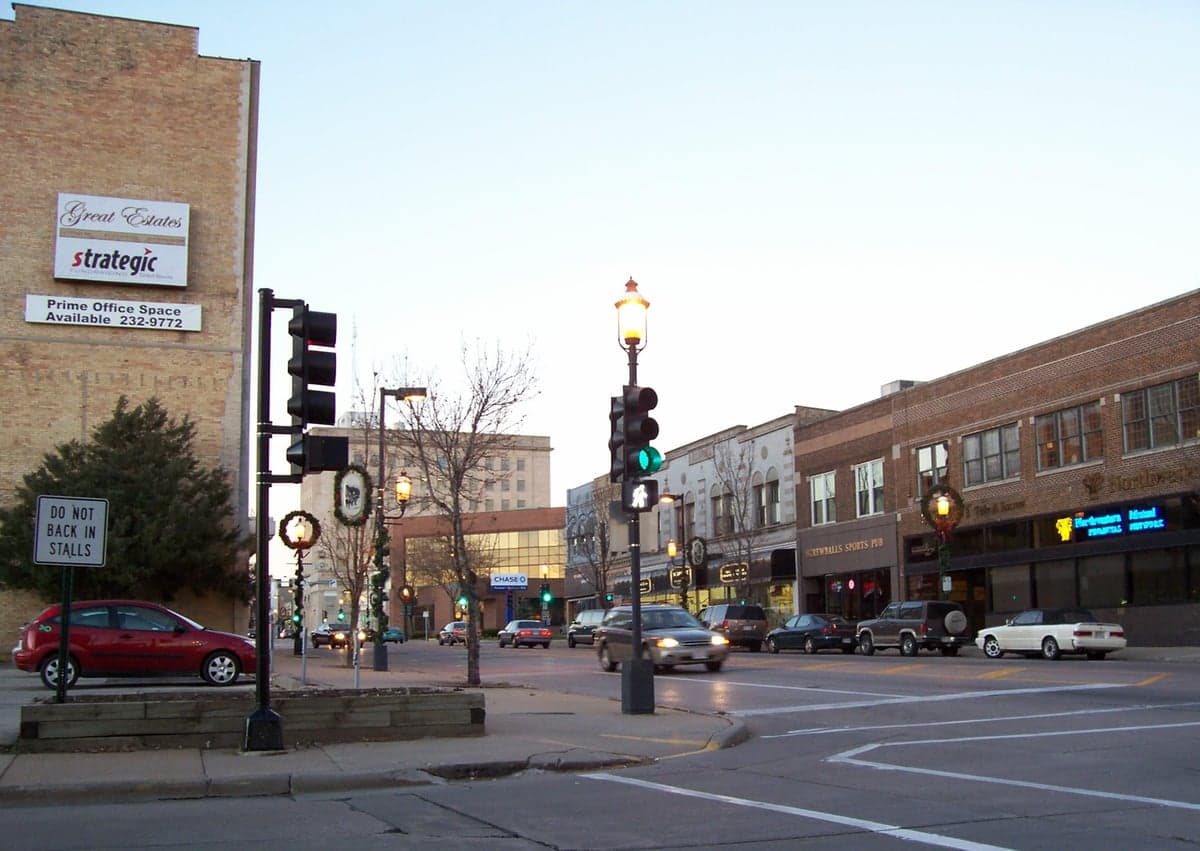
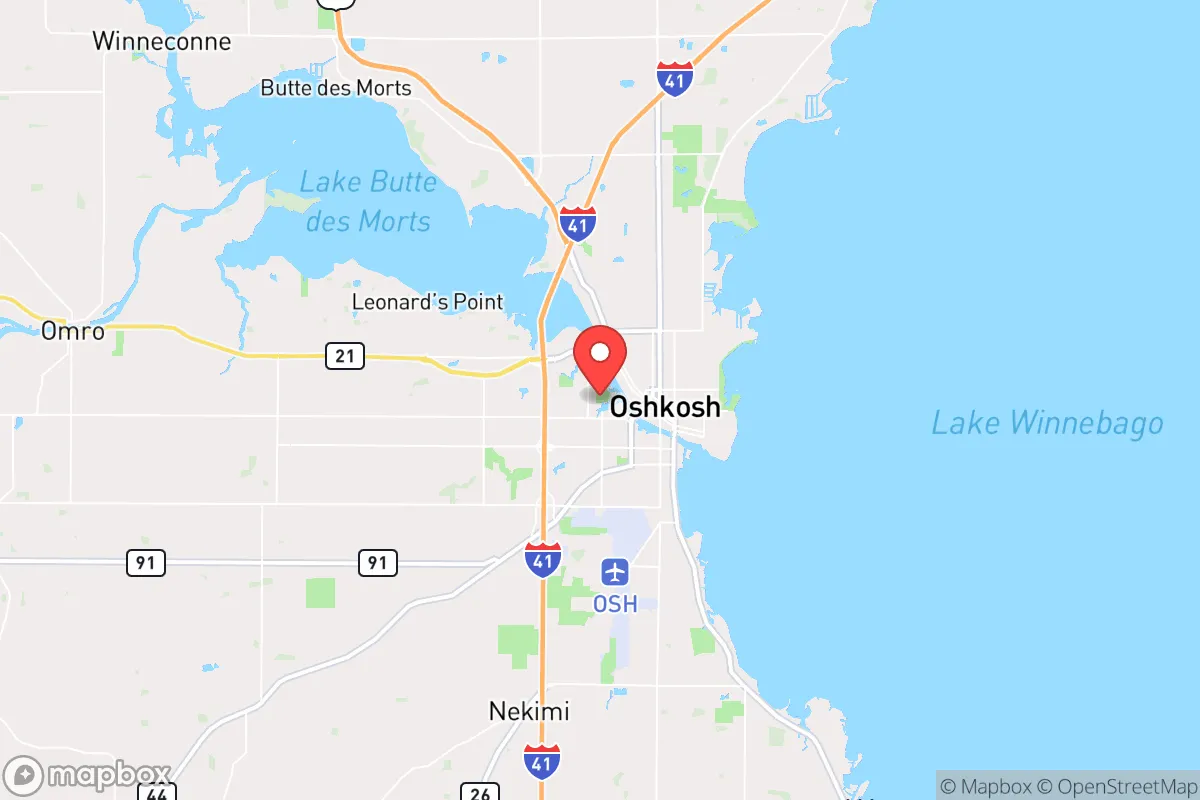
Photo: Wikipedia
Strategic Assessment of Oshkosh, WI
Meaningful friction. Expect exposure to either population pressure, blast zones, or natural disaster risk. Consider buying a retreat property.
What does the Strategic Assessment tell us?
Our Strategic Assessment grades tactical survivability of an area. Major population centers, military targets, fallout zones, natural disasters, and border exposure all drive risk — lower exposure means a more defensible position in a crisis.
This is heavily inspired by Joel Skousen's Strategic Relocation book. Highly recommended you checkout the book ($)What does this tell us?
Our Strategic Assessment grades tactical survivability of an area. Major population centers, military targets, fallout zones, natural disasters, and border exposure all drive risk — lower exposure means a more defensible position in a crisis.
This is heavily inspired by Joel Skousen's Strategic Relocation book. Highly recommended you checkout the book ($)Strategic Pillars

Key Distances
Regional Safe Places
Below is our recommended "safe zones" in Wisconsin and the surrounding area based on our strategic heuristics. For most people, it's unrealistic to live in a “safe zone” full-time due to work, family or other personal reasons. They tend to be more rural. However, many of these areas are perfect for second homes and retreat properties that double as a vacation home or even a short-term rental.
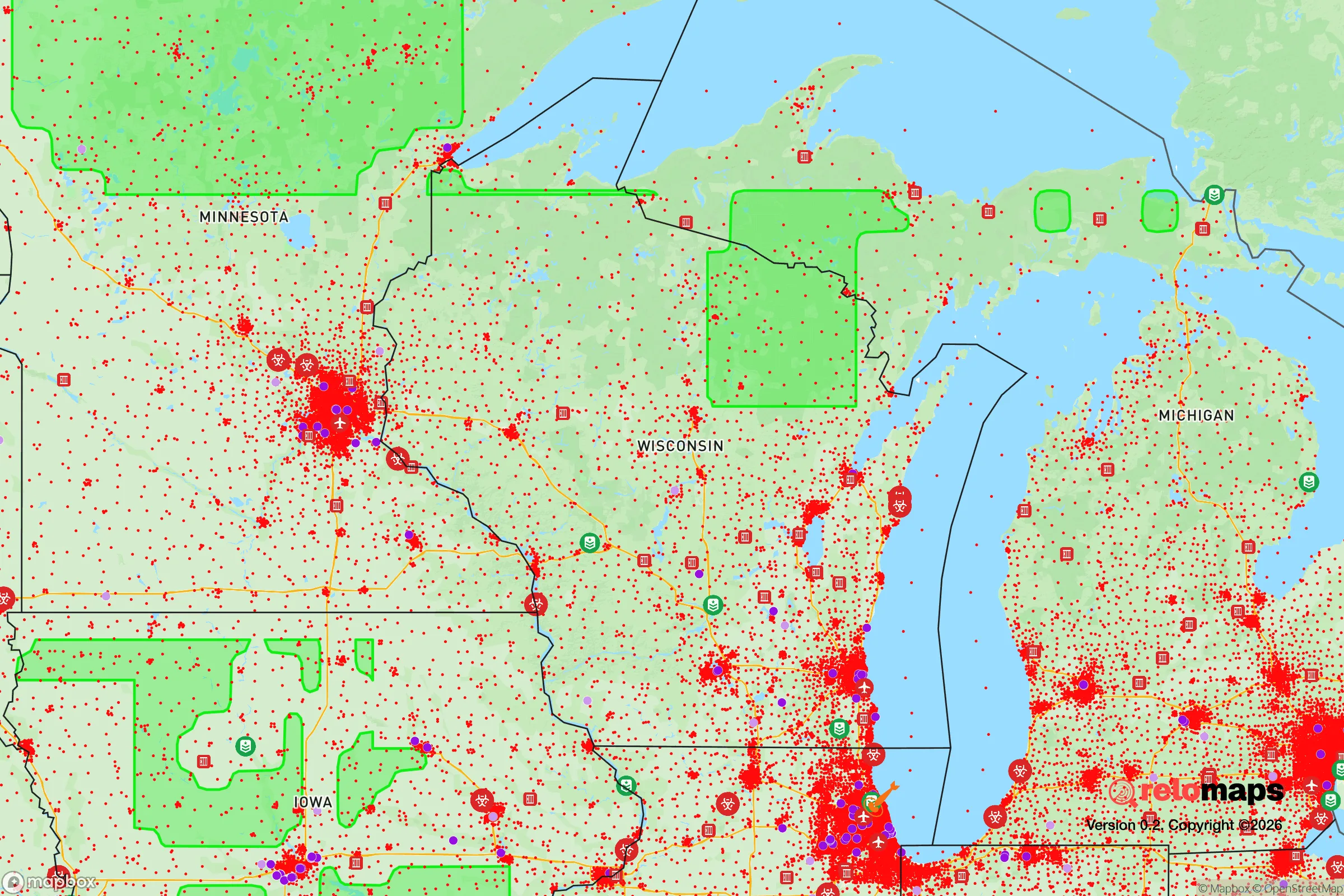
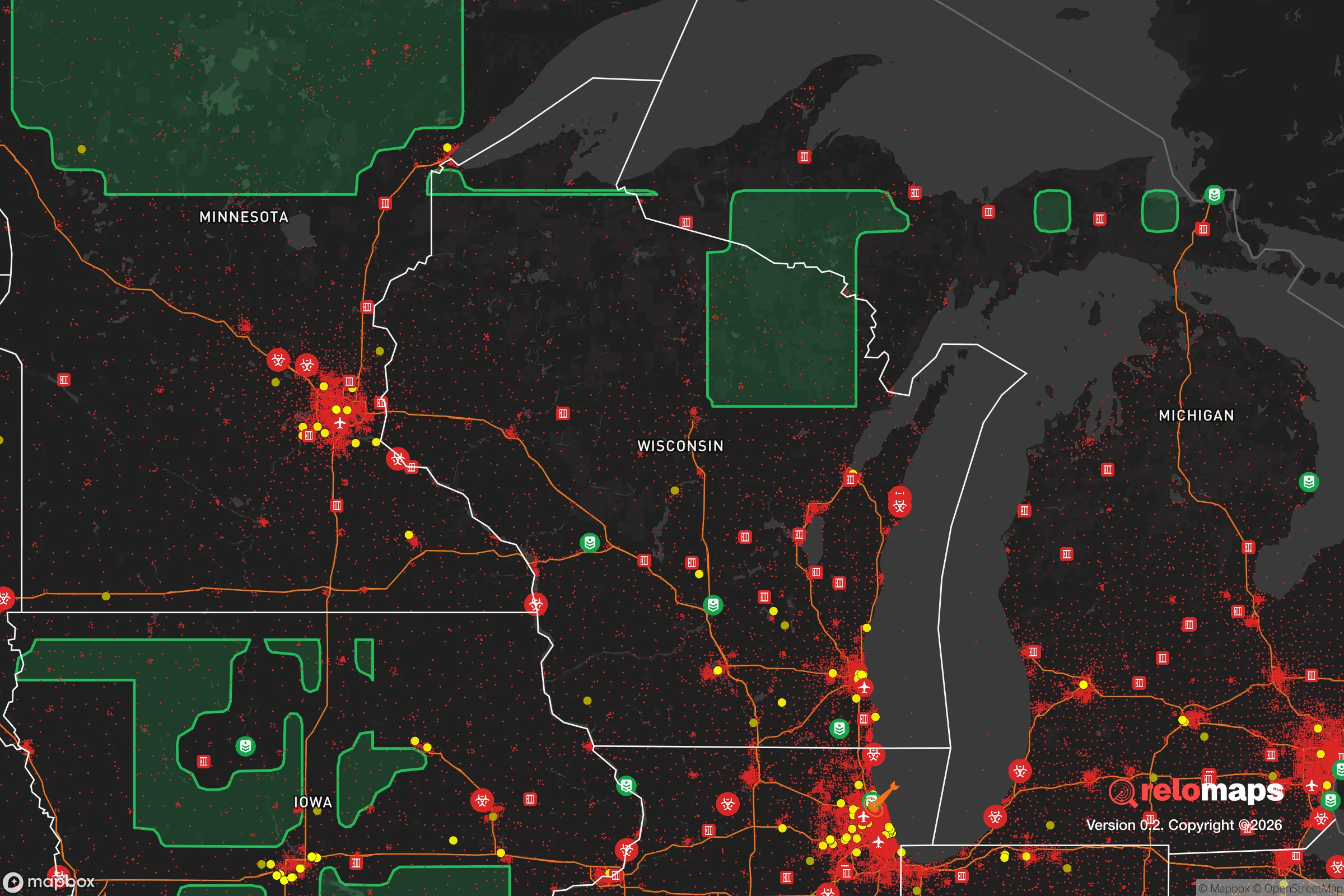


Important Note: For informational purposes only. This does not mean nothing bad ever happens in the green zones. Please use common sense. This is based on public data and modeled with AI. We tried to take a conservative approach but mistakes happen. We update this regularly as new information becomes available.
Solar Generator Recommendations
Backup power matters more here than in safer locations. We've picked three solar generators across budgets and capacity tiers — start with the budget unit if you only need a few essentials, or step up if you want to run a fridge and HVAC for days at a time.

Jackery Portable Power Station Explorer 300
Budget OptionPower on the Go: Weighing only 11 lbs, it's convenient to set up and store with book-sized foldable solar panels

BLUETTI Portable Power Station AC180
Designed for both indoor and outdoor scenarios, AC180 is highly capable as it has a robost capacity and continuous output power.

EF ECOFLOW DELTA Pro Ultra Power Station
Upgraded PickEcoFlow DELTA Pro Ultra is a whole-home energy system designed to grow with your family. Integrated with the Smart Home Panel 2, it scales to meet your evolving energy needs — keeping your home powered, intelligent, and secure through every stage of life.
We earn a commission, at no additional cost to you.
Strategic Assessment Analysis
Oshkosh, Wisconsin, sits in a sweet spot that few relocation analysts fully appreciate: it offers genuine geographic resilience without the isolation that makes daily life impractical. Located on the western shore of Lake Winnebago at the mouth of the Fox River, the city anchors a region that combines industrial muscle, agricultural abundance, and a population density low enough to avoid the worst of urban collapse scenarios. For a conservative-leaning relocator thinking about long-term preparedness—whether for civil unrest, supply chain disruptions, or mass casualty events—Oshkosh presents a defensible base with real strategic depth. The key is understanding where its advantages end and where its exposures begin.
Geographic position and natural advantages for long-term security
Oshkosh’s location is its strongest card. It sits roughly 90 miles north of Milwaukee and 50 miles southwest of Green Bay, close enough to access major medical and logistical infrastructure but far enough to avoid being caught in the blast radius of a major metropolitan collapse. The city is part of the Fox River Valley, a corridor that runs through some of Wisconsin’s most productive farmland. Within a 30-minute drive, you’ve got thousands of acres of corn, soybeans, and dairy operations—meaning local food production isn’t a theoretical backup; it’s the baseline economy. Lake Winnebago, the largest inland lake in Wisconsin, provides a massive freshwater reservoir that isn’t easily contaminated or cut off. The Fox River itself offers a secondary water source and a natural transportation corridor. The terrain is flat to gently rolling, which limits defensible chokepoints but also means no single geographic feature funnels threats directly into the city. The region’s cold winters act as a natural population filter—people who aren’t serious about staying tend to leave, which keeps the year-round community tighter and more self-reliant.
Risks, exposures, and proximity to fallout-relevant landmarks
No location is immune, and Oshkosh has real vulnerabilities. The most obvious is its proximity to the Oshkosh Corporation headquarters and the EAA Aviation Museum—both are high-profile industrial and tourist assets that could become targets during civil unrest or asymmetric attacks. The annual EAA AirVenture fly-in draws over 600,000 visitors in late July, turning the city into a dense, high-value target for a week. If you’re relocating for strategic reasons, you need to plan around that event: either leave town or have a hardened shelter during that window. The city also sits within 100 miles of the Point Beach Nuclear Plant near Two Rivers, Wisconsin, and about 150 miles from the Byron Nuclear Generating Station in Illinois. A worst-case release from either would put Oshkosh in a downwind plume zone depending on weather patterns. On the plus side, the prevailing winds in this region are from the west-northwest, which pushes fallout away from the city in most scenarios. The Fox River itself is a contamination vector—any upstream industrial accident or deliberate poisoning could affect the city’s water supply, though Lake Winnebago’s volume provides dilution that smaller rivers lack. Finally, Oshkosh is a rail and highway hub (US-41 and several state highways converge here), which makes it a natural chokepoint for supply movements. In a crisis, that could mean military or militia checkpoints, or it could mean the city becomes a target for groups trying to control regional logistics.
Practical resilience for a relocator: food, water, energy, and defensibility
For a single individual or a family looking to set up a sustainable base, Oshkosh offers a mix of immediate and long-term options. Food security is strong: the surrounding farmland produces enough to feed the region several times over, and the city has multiple farmers’ markets, co-ops, and bulk-buying clubs. The Oshkosh Food Co-op and local CSAs make it easy to establish supply relationships before a crisis hits. Water is abundant but requires planning. Lake Winnebago is drinkable with basic filtration, but the city’s municipal supply comes from the lake and is treated—meaning if the grid goes down, you need your own pump and filter system. Many homes in the area have private wells, which is a major advantage if you can find a property outside city limits. Energy resilience is mixed: the region is served by Wisconsin Public Service, which has a decent reliability record, but winter storms can knock out power for days. Solar is viable (the area gets about 4.5 peak sun hours per day), but you’ll need battery storage and a backup generator for the long, dark winters. Wood heating is common and practical—there are plenty of hardwood forests within a 20-minute drive. Defensibility is the weak point. Oshkosh is flat and spread out, with no natural high ground or narrow approaches. A determined group could enter from multiple directions. The best strategy is to live on the outskirts—think the towns of Omro, Winneconne, or rural areas north of the city—where you have more space, fewer neighbors, and better sightlines. The city itself is not defensible in a siege scenario, but it’s a good place to stockpile supplies and maintain a low profile until you need to bug out to a more remote location.
The overall strategic picture for Oshkosh is one of calculated trade-offs. It’s not a survivalist’s paradise—you won’t find mountain redoubts or off-grid compounds here. What you will find is a functioning small city with a conservative-leaning population, a strong manufacturing base (Oshkosh Defense, Mercury Marine, and several metal fabricators), and a community that still values self-reliance and neighborly mutual aid. The risks are real: the EAA event, the nuclear plants, the highway chokepoints. But for someone who wants to be prepared without living in a bunker, Oshkosh offers a realistic middle ground. You can work a normal job, send your kids to decent schools, and still have a defensible plan for when things go sideways. The key is to treat the city as a base of operations, not a final redoubt—and to have your exit route to the northwoods or the Upper Peninsula mapped out before you need it. If you’re serious about resilience, Oshkosh deserves a hard look. Just don’t expect it to save you if you don’t do the prep work yourself.

* Values derived from national, state, county, city and local statistics and may differ in a specific area. Last updated: 2026-04-21T10:15:15.000Z
Narrative content on this page is AI-generated and may contain mistakes. Verify any details that matter before acting on them.
ReloMaps may earn a commission from affiliate links at no extra cost to you.

