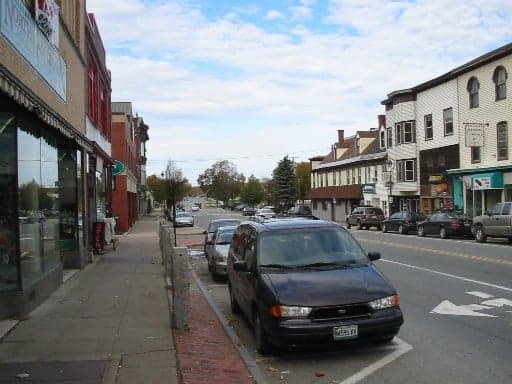
Photo: Wikipedia
Political ClimatePolitical Climate in Old Town, ME
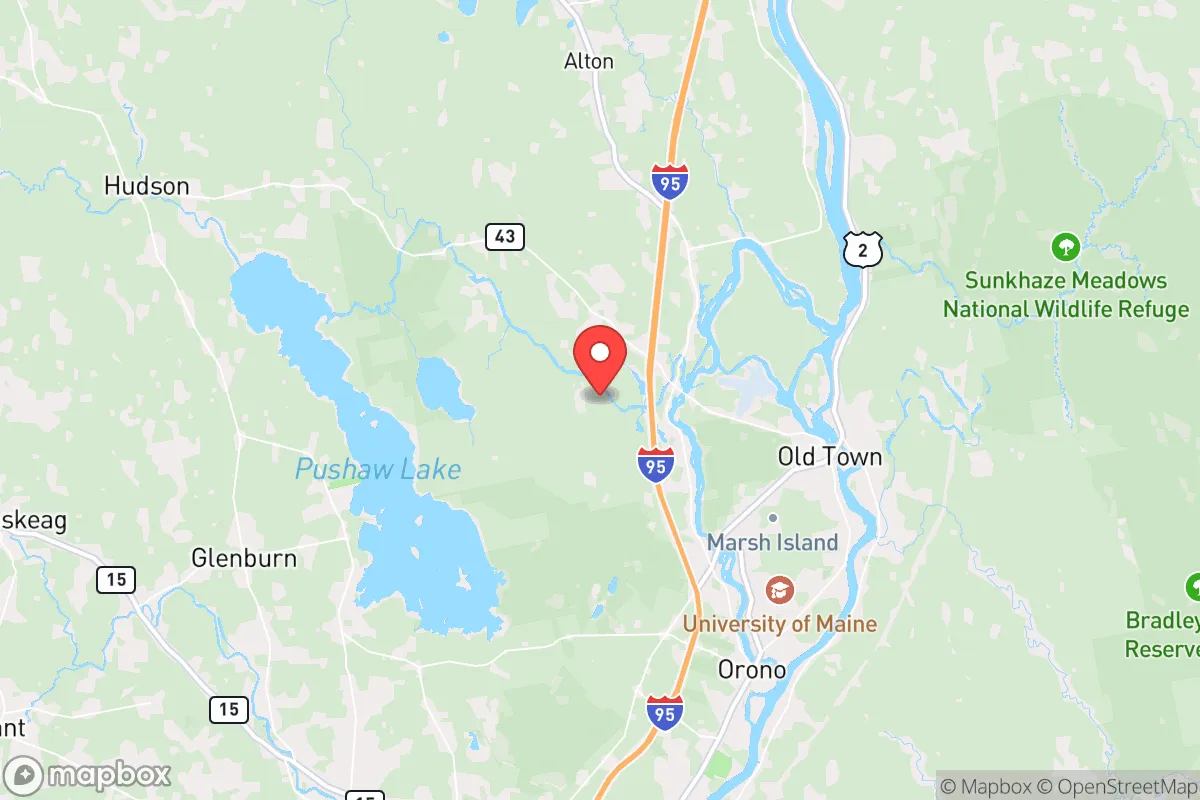
District shown is the primary district for this city’s centroid. Cities may span multiple districts.
Local Political AnalysisPolitical Analysis of Old Town, ME
Old Town, Maine, has always been a place where folks value their independence and don’t take kindly to being told how to live their lives. With a Cook PVI of R+4, the area leans reliably conservative, though it’s not the deep-red stronghold you’d find in some parts of northern Maine. Over the past decade, you’ve seen a slow but steady shift—more people moving in from places like Orono and Bangor, bringing with them a more progressive mindset that’s starting to chafe against the traditional, live-and-let-live attitude that’s been the backbone of this community for generations. It’s not a full-blown takeover yet, but the trajectory is concerning if you value personal freedoms and local control over your own affairs.
How it compares
When you look at the political map, Old Town sits in a bit of a buffer zone. Head south to Bangor, and you’re in a more liberal-leaning area where government programs and progressive policies are more accepted. Drive north to places like Millinocket or Lincoln, and you’ll find a much stronger conservative streak—folks who are dead set against any kind of overreach from Augusta or Washington. Old Town itself is a mix: you’ve got your long-time residents who remember when the paper mill was king and the union hall was the center of town, and they tend to vote for candidates who promise to keep government out of their wallets and their homes. But the university influence from nearby Orono is creeping in, and you’re seeing more young families and retirees from out of state who think that more regulations and higher taxes are the answer to everything. It’s a tension that’s palpable at town council meetings, where debates over zoning and local ordinances can get heated.
What this means for residents
For those of us who’ve been here a while, the biggest worry is that the slow drift toward progressive policies will erode the very things that make Old Town a good place to live. You’re already seeing it in small ways—talk of stricter building codes, more environmental restrictions that could hurt small businesses, and a push for “equity” initiatives in the schools that feel more like indoctrination than education. The local government is still mostly conservative, but the margins are getting tighter. If you’re a hunter, a small business owner, or just someone who doesn’t want the government telling you what you can do with your property, you need to pay attention. The next few election cycles could decide whether Old Town stays a place where personal freedom is respected or becomes another town where you need a permit to breathe.
Cultural and policy distinctions
One thing that still sets Old Town apart is its strong sense of community self-reliance. You don’t see the same push for big government programs here that you do in Portland or even Bangor. The local schools still emphasize traditional values, and there’s a healthy skepticism of any new policy that comes with a price tag or a mandate. That said, the cultural shift is real—you’ll hear more talk about “sustainability” and “inclusivity” at the coffee shop than you did ten years ago, and some of the old-timers are worried that the next generation won’t fight to keep the government off their backs. If you’re considering a move here, know that you’re coming to a place where the political climate is still largely conservative, but it’s not immune to the progressive trends sweeping the country. Keep an eye on local elections and town meetings—that’s where the real battles are being fought.

State Political ClimatePolitical Climate in Maine
State Political AnalysisPolitical Environment in the State
Maine has long been known as a politically independent state, but over the past 20 years it has shifted from a moderate, live-and-let-live place to a state where the progressive coastal corridor increasingly dominates state policy. While registered Democrats outnumber Republicans by about 5 points statewide, the real story is the urban-rural chasm: Portland and its suburbs drive the leftward tilt, while vast stretches of northern and western Maine remain deeply conservative. The 2024 presidential election saw Maine split its electoral votes for the third time in history, with the 2nd Congressional District going to Trump by 7 points while the 1st District went to Harris by 22 points — a 29-point gap that defines the state’s political reality.
Urban vs. rural divide
The political map of Maine is essentially two states. The southern coastal crescent — Portland, South Portland, Brunswick, and Biddeford — votes like a New England suburb of Boston: heavily Democratic, culturally progressive, and increasingly dense. Portland itself has not voted for a Republican presidential candidate since 1988. In contrast, the vast 2nd Congressional District, which covers 80% of the state’s landmass, is anchored by Bangor, Lewiston, and Presque Isle, where Trump won in 2020 and 2024 by comfortable margins. The rural-urban split is starkest in Androscoggin County (Lewiston-Auburn), which flipped from Obama to Trump and has stayed red, while neighboring Cumberland County (Portland) has become one of the most Democratic counties in New England. York County, once a swing area, has been trending blue as Portland’s exurbs expand southward. The Midcoast region around Camden and Rockland is a mixed bag, with tourist towns leaning left and working-class fishing communities leaning right.
Policy environment
Maine’s policy climate has shifted markedly left in the last decade. The state has a progressive income tax with a top marginal rate of 7.15%, and property taxes are among the highest in the nation — a burden that hits rural landowners hard. In 2023, the legislature passed LD 1610, a sweeping gun control package that expanded background checks to private sales and created a 72-hour waiting period for all firearm purchases, despite strong opposition from rural counties. Education policy is dominated by the teachers’ union, and school choice is limited — Maine has no voucher program and only a handful of charter schools, mostly in Portland. Healthcare is heavily regulated, with the state running its own exchange and expanding Medicaid under the 2017 voter referendum. Election laws are relatively open: same-day voter registration is allowed, and no voter ID is required at the polls, which has been a point of contention for conservatives. The state also enacted a strict paid family leave program in 2023, funded by a payroll tax, which small business owners in places like Ellsworth and Farmington view as another cost burden.
Trajectory & freedom
On personal freedom, Maine is a mixed bag trending in a concerning direction for conservatives. The state has no death penalty and legalized recreational marijuana in 2016, which many see as a positive for personal liberty. However, the 2023 gun control package (LD 1610) was the most significant expansion of firearm restrictions in state history, and there is active discussion of a so-called “red flag” law that would allow temporary seizure of firearms without a criminal conviction. Parental rights have eroded: in 2021, the legislature passed LD 135, which removed the requirement for schools to notify parents if a child changes their gender identity or pronouns — a law that sparked massive backlash in rural districts. Property rights are under pressure from environmental regulations, particularly the Maine Land Use Planning Commission rules that restrict development in the unorganized territories. On the tax front, the Property Tax Fairness Credit helps some homeowners, but the overall burden remains high. The state’s Right to Repair law for vehicle data passed in 2023, which was a win for consumer freedom, but the broader regulatory environment is becoming more restrictive, especially for small businesses and gun owners.
Civil unrest & political movements
Maine has seen its share of political flashpoints. The 2020 Portland protests over George Floyd’s death turned violent on several nights, with property damage and clashes between police and demonstrators. The Maine Gun Owners’ Rights Coalition has been highly active, organizing rallies at the State House in Augusta against LD 1610, drawing thousands of attendees from rural counties. Immigration politics are a growing issue: Portland has declared itself a sanctuary city, and the state has a “Welcoming Maine” initiative that provides state-funded services to asylum seekers, which has strained local resources in Lewiston and Portland. The 2023 shooting in Lewiston, where a gunman killed 18 people, became a political flashpoint, with gun control advocates using it to push LD 1610 while rural residents argued it was a mental health failure, not a gun law issue. Election integrity concerns have been raised by conservatives, particularly around the state’s use of no-excuse absentee voting and the lack of voter ID, though no major fraud has been proven. The Maine State Police have been criticized by both sides for their handling of protests and the Lewiston response.
Projection
Over the next 5-10 years, Maine is likely to continue its slow leftward drift, driven by in-migration from Massachusetts and New York into the southern coast. The 2nd Congressional District will remain a Republican stronghold for now, but demographic trends — younger, more diverse populations moving to Portland and its suburbs — will keep the state legislature and governor’s office in Democratic hands. The rural exodus is real: counties like Aroostook and Washington are losing population, reducing their political clout. Expect more gun control, more environmental regulation (especially on coastal development and heat pumps), and continued expansion of state-funded social programs. The Maine Democratic Party is pushing for a state-level version of the Green New Deal, which would further restrict energy choices. For conservatives, the best bet is to look at towns like Windham or Oxford, where the rural character and conservative voting patterns are more resilient. The state’s independent streak is real, but it’s increasingly expressed as “progressive independent” rather than the old Yankee libertarianism.
For a conservative moving to Maine, the bottom line is this: you can find your people in the 2nd District, but you will be fighting an uphill battle at the state level. The tax burden is high, gun rights are under constant threat, and parental rights are being eroded in the schools. If you value low taxes, strong Second Amendment protections, and local control, you will need to be politically active — or consider a state like New Hampshire, which shares Maine’s beauty but has a much more freedom-friendly policy environment. Maine is still a beautiful place to live, but the political climate is becoming less hospitable to conservative values with each legislative session.
* Values derived from national, state, county, city and local statistics and may differ in a specific area. Last updated: 2026-05-01T10:16:34.000Z
Narrative content on this page is AI-generated and may contain mistakes. Verify any details that matter before acting on them.
ReloMaps may earn a commission from affiliate links at no extra cost to you.

