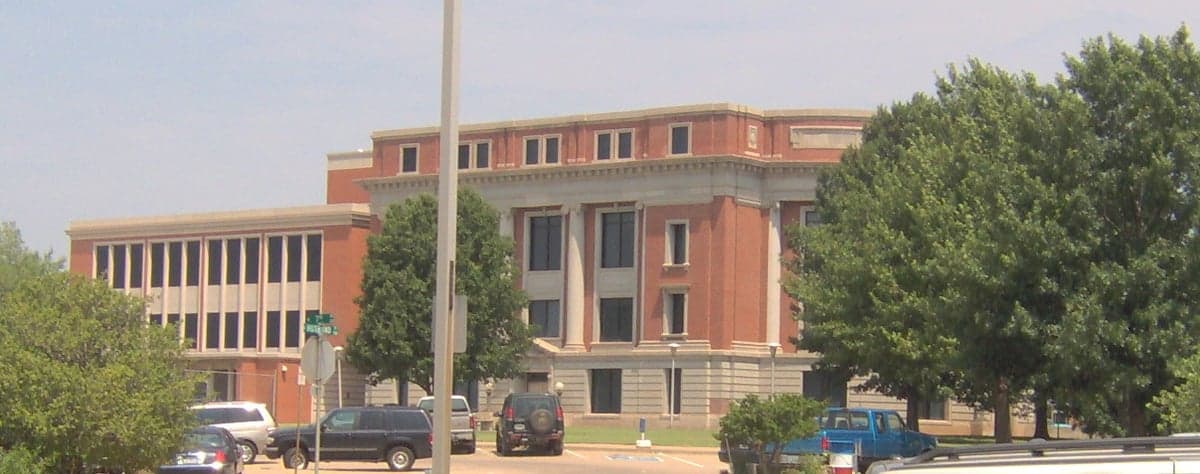
Photo: Wikipedia
Demographics of Payne County
Affluence Level in Payne County
A middle-class area roughly in line with national averages across income, home values, education, and employment.
People of Payne County
Payne County today is a study in contrasts: a largely white, college-educated population centered on Stillwater, home to Oklahoma State University, set within a historically rural, agricultural landscape. With a population of 82,290, the county is significantly more educated (40.1% college degree) and less diverse (74.3% white, 4.6% foreign-born) than the national average, giving it a character shaped by the university's influence rather than by broad immigration or industrial change. The county's identity is a blend of Old West settlement, land-grant university culture, and a quiet, steady domestic migration pattern that has produced a stable, family-oriented population with deep local roots.
Settlement & growth (pre-1960)
The land that became Payne County was originally part of the hunting and farming territory of the Osage, Pawnee, and Wichita peoples, who lived in dispersed villages along the Cimarron River and its tributaries. The region saw no permanent European settlement until after the Civil War, when the U.S. government forcibly removed the Iowa, Sac and Fox, and other tribes from Kansas to reservations in what is now eastern Payne County, concentrated around the present-day town of Yale on the old Cimarron Crossing. The county itself, however, was not formally organized until its 1889 opening by the Land Run—the famous "Unassigned Lands" that drew tens of thousands of homesteaders in a single day.
The 1889 Land Run remains the defining settlement event in Payne County's human history. On April 22, 1889, an estimated 10,000 people—mostly white settlers from Kansas, Missouri, Iowa, and Illinois—staked claims on the 320-acre tracts surrounding the newly established towns of Stillwater, Perkins, and Cushing. These were not wealthy migrants; they were small farmers, merchants, and laborers drawn by the promise of free land under the Homestead Act. The majority were native-born whites of British Isles ancestry (English, Scots-Irish, and Welsh), with smaller groups of German and Czech immigrants who clustered farming communities near Ripley and Glencoe along the Cimarron bottomlands. The county was named after Governor William Payne, a leader of the earlier "Boomer" movement that had pushed for opening the territory to white settlement.
The early 20th century brought a second wave: railroad and oil workers. The discovery of the Cushing-Drumright oil field in 1912 triggered a five-year boom that transformed Cushing from a farm hamlet into a roughneck town of 20,000 people, with workers pouring in from Texas, Arkansas, and the oil fields of Pennsylvania and West Virginia. At its peak in 1915, Cushing was the largest crude oil storage and pipeline hub in the world, drawing a transient, male-dominated workforce that included African American laborers and a scattering of Italian and Polish immigrants who worked the pipelines and refineries. That boom faded by 1920, and many oil workers moved on or settled into permanent homes in Stillwater, which was emerging as the county's stable anchor with the founding of Oklahoma A&M College (now OSU) in 1890.
The Dust Bowl and Great Depression of the 1930s reshaped the county's population again. From 1930 to 1940, Payne County's population stagnated at around 40,000 as farm families—particularly sharecroppers and tenant farmers—abandoned the parched, wind-scoured land and joined the larger "Okie" migration to California. Those who stayed were the more established landowning farmers and townspeople; the county's rural population never fully recovered to its 1910 peak. After World War II, the GI Bill transformed Stillwater into a college town. Enrollment at Oklahoma A&M surged from 7,000 in 1945 to over 15,000 by 1960, bringing a wave of veterans and their families from across Oklahoma and the southern Plains. This period saw the construction of suburban-style neighborhoods around Western Road in Stillwater and the establishment of the Lake Carl Blackwell recreation area, cementing the university's role as the county's primary economic and demographic engine.
Modern era (post-1965)
The 1965 Hart-Cellar Act had a limited direct effect on Payne County compared to larger U.S. metro areas, because the county has never been a major immigrant destination. The foreign-born share has hovered near 4-5% for decades, far below the national average. The modest post-1965 immigrant population is overwhelmingly tied to Oklahoma State University: graduate students and faculty from East and Southeast Asia (2.5% of the county's population) and the Indian subcontinent (1.5% of the population) arrived from the 1980s onward, settling almost exclusively in Stillwater neighborhoods near campus—the Bluestem and Woodcrest subdivisions being the most concentrated areas. These groups are highly educated, often holding temporary or permanent academic positions, and do not form the dense ethnic enclaves seen in large cities; instead, they integrate into the student-and-faculty culture of the university.
Domestic migration, not immigration, has been the far larger driver of demographic change since 1965. From 1970 to 2020, Payne County grew from 50,600 to 82,290 residents, a growth rate of 63%—modest by Sun Belt standards but steady. The growth came from two streams: former Oklahoma State students who stayed after graduation, and retirees and families from Oklahoma City and Tulsa seeking a quieter, lower-cost college-town lifestyle. The Hispanic population (6.4% of the county) grew from near-zero in 1980, driven not by recent foreign immigration but by migration within the United States—families from Texas, New Mexico, and southern Oklahoma moved to Stillwater and Cushing for work in construction, meatpacking (the Cargill plant in Cushing), and packing services. This is a mostly native-born, U.S.-raised Hispanic population, concentrated in affordable housing near the industrial corridors of South Perkins Road and East McElroy Road in Stillwater.
The Black population (3.6%) has been stable since 1970, with concentrations in Stillwater's older neighborhoods near the 12th Avenue corridor and in the historic oil-era sections of Cushing. Black residents are largely multi-generational Oklahomans, descendants of the 1889 homesteaders and the 1910s oil workers, with a smaller number of university-affiliated professionals. The county has not experienced the African American suburban growth seen in places like Oklahoma City or Dallas; instead, the Black share has held flat as the white population has grown around it. The Indian and Asian populations, while small in absolute numbers, are the fastest-growing groups in percentage terms since 2010, driven entirely by OSU's expansion of international graduate programs in engineering, business, and the sciences.
The future
Payne County is likely to continue its trajectory of slow, steady growth dominated by domestic migration and university-driven international enrollment. The foreign-born share may rise modestly to 6-7% over the next decade, but European, Canadian, and other non-Asian immigrant groups remain almost invisible, with no signs of change. The Hispanic share is projected to grow gradually through natural increase and continued in-migration from Texas and the Southwest, possibly reaching 10-12% by 2040, but will likely follow the pattern of assimilation into the broader local culture rather than forming a distinct ethnic enclave. The Asian and Indian communities will remain concentrated in the university sphere; they are not "tribalizing" into separate neighborhoods but rather integrating into the professional-class culture of Stillwater, with their children attending the same schools, participating in the same activities, and intermarrying at rates typical of college towns.
The larger risk for the county's demographic future is the stagnation of the traditional small towns—Cushing, Perkins, Yale, and Ripley—which have seen flat or slightly declining populations since 2010 as young people leave for college and do not return. The county's growth is almost entirely in Stillwater, and that growth is increasingly concentrated in the more affluent, newer neighborhoods around Airport Road and 19th Avenue, with older rural communities fading. This consolidation is homogenizing Payne County around the university-and-service-sector culture of Stillwater, while the farming and oil-town character that defined it a century ago recedes into memory.
For someone moving into Payne County in 2026, the bottom line is this: you are entering a stable, moderately conservative, college-town environment where population growth is self-selecting—people come because they want a safe, educated, family-centered community, not because economic necessity or chain migration pushes them here. The county will not become a diverse melting pot; it will remain predominantly white, highly educated, and anchored by a single institution (OSU). The quiet towns will continue to shrink, and the future of the county lies in Stillwater's suburban-style development, with a population that is younger, more transient, and more globally connected than the rural ancestors who arrived in the 1889 Land Run. It is a place where the past is honored but the future is being written by university families, not by waves of new immigrants or industrial booms.

* Values derived from national, state, county, city and local statistics and may differ in a specific area. Last updated: 2026-06-01T14:00:58.000Z
Narrative content on this page is AI-generated and may contain mistakes. Verify any details that matter before acting on them.
ReloMaps may earn a commission from affiliate links at no extra cost to you.

