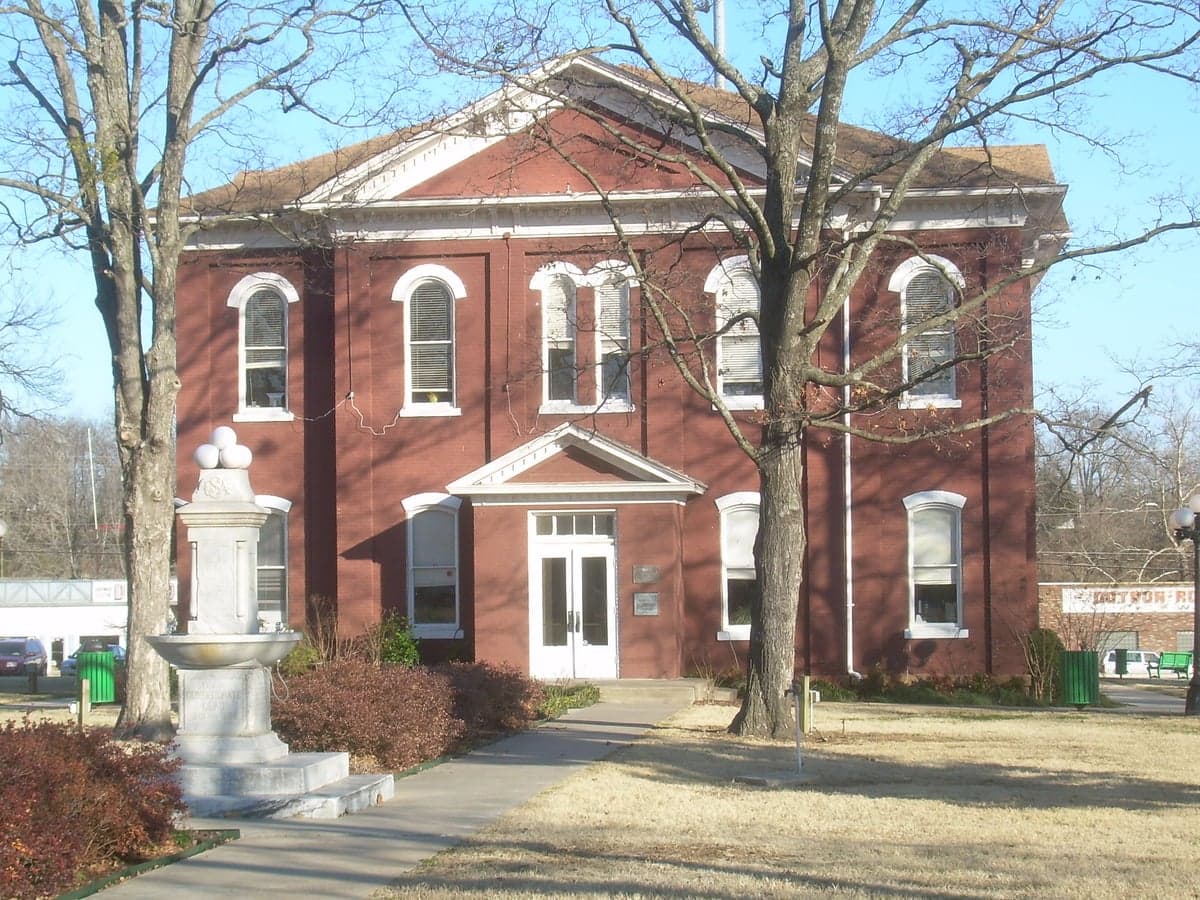
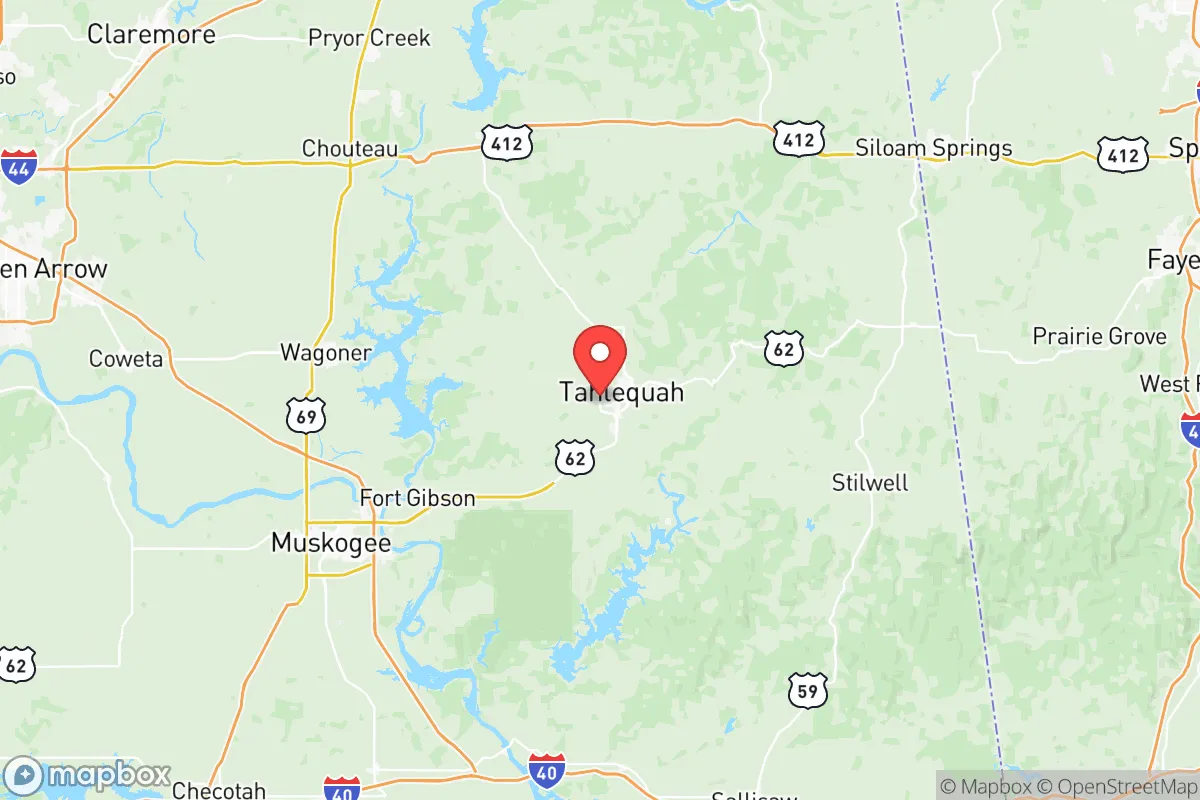
Photo: Wikipedia
Political ClimatePolitical Climate in Cherokee County
Showing district-level results — no local-only data available.
Local Political AnalysisPolitical Analysis of Cherokee County
Cherokee County, Oklahoma, is about as solidly red as they come, with a Cook PVI of R+28 that puts it a full ten points to the right of the state as a whole (R+18). That’s not just a number—it reflects a deep, ingrained conservative culture that’s been the backbone of this area for generations. You don’t see the kind of political drift here that’s creeping into some parts of the state; the county has held steady, and if anything, the local sentiment is getting more wary of outside influences. The trajectory is one of holding the line, not shifting left.
How it compares
When you stack Cherokee County up against Oklahoma’s statewide average, the difference is stark. The state as a whole is already reliably Republican, but this county is a fortress. In the 2024 presidential race, Donald Trump likely pulled well over 70% of the vote here, while statewide he probably landed around 65%. That extra margin comes from a population that’s overwhelmingly rural, with a strong sense of self-reliance and a deep skepticism of federal overreach. But it’s not a monolith—there are real pockets of variation. Tahlequah, the county seat and home to Northeastern State University, leans noticeably more moderate, with some precincts even trending blue in recent cycles due to the academic and younger demographic. You’ll find more progressive-leaning voters around the downtown area and near campus. Meanwhile, Hulbert and Keys are rock-ribbed conservative, with turnout that reliably crushes any liberal opposition. The swing precincts are few and far between, but they’re mostly in the rural fringe areas around Park Hill and Briggs, where a mix of Cherokee Nation members and working-class families sometimes split tickets on local issues. Still, the overall trend is clear: this county is getting redder, not bluer, as residents push back against what they see as government overreach into personal freedoms—especially around property rights, gun ownership, and school curriculum.
What this means for residents
For folks living here, the political climate means a lot of day-to-day freedoms are protected. You’re not going to see the kind of heavy-handed zoning or business regulations that plague more progressive areas. Property taxes stay low, and there’s a general hands-off attitude from local government—unless it’s about enforcing conservative values, like keeping critical race theory or gender ideology out of public schools. That said, there’s a growing concern among long-time residents about the slow creep of progressive ideas, especially through state-level mandates or federal funding strings. The Cherokee Nation, which has a significant presence here, tends to be more centrist on economic issues but has shown some troubling signs of embracing diversity, equity, and inclusion (DEI) initiatives that feel like a foot in the door for leftist ideology. Locals I’ve talked to are keeping a close eye on that, because once those programs take root, they tend to expand.
Culturally, Cherokee County is a place where people still wave the flag and mean it. The biggest policy distinction from the rest of Oklahoma is the strong influence of the Cherokee Nation, which operates its own health clinics, schools, and law enforcement. That dual sovereignty can be a double-edged sword—sometimes it protects local autonomy, other times it creates bureaucratic headaches. But overall, the vibe is one of rugged independence. If you’re looking for a place where the government stays out of your business and your neighbors share your values, this is it. Just don’t expect the political winds to shift anytime soon—they’re blowing the same direction they always have.

State Political ClimatePolitical Climate in Oklahoma
State Political AnalysisPolitical Environment in the State
Oklahoma is a deeply conservative state, with a Cook PVI of R+18 that makes it one of the most reliably Republican strongholds in the nation. The dominant coalition is a mix of rural traditionalists, evangelical Christians, and suburban conservatives, with Democrats largely confined to a few urban pockets and tribal communities. Over the past 10-20 years, the state has shifted further right, driven by a combination of rural population retention, the collapse of the old Democratic machine in rural areas, and an influx of conservative transplants from bluer states like California and Texas.
Urban vs. rural divide
The political map of Oklahoma is a study in contrasts. The two major metros — Oklahoma City and Tulsa — are the only places where Democrats can compete, but even they are not reliably blue. Oklahoma City’s core is moderately liberal, with precincts in the Plaza District and Midtown voting Democratic, but the sprawling suburbs like Edmond, Moore, and Yukon are solidly red. Tulsa is similar: the downtown and Brookside areas lean left, but the surrounding suburbs of Broken Arrow, Jenks, and Bixby are among the most conservative in the state. The real engine of Republican dominance is rural Oklahoma. Counties like Beaver, Texas, and Grant in the Panhandle routinely vote 85-90% Republican. The Ozark foothills in the east and the Red River counties along the Texas border are also deeply red. The only notable exceptions are Adair County (Cherokee Nation) and Haskell County (Choctaw Nation), where tribal influence sometimes produces Democratic wins, but these are small and isolated.
Policy environment
Oklahoma’s policy environment is aggressively conservative. The state has a flat income tax of 4.75%, with ongoing efforts to phase it out entirely — a top priority for Governor Kevin Stitt. There is no estate tax, and property taxes are among the lowest in the nation (averaging around 0.9% of home value). The regulatory posture is business-friendly, with a right-to-work law and minimal zoning restrictions outside of major cities. Education policy is a flashpoint: the state has a robust school choice program, including the Oklahoma Parental Choice Tax Credit (up to $7,500 per child for private school expenses), and a growing charter school sector. However, public school funding remains a perennial issue, with teacher pay ranking near the bottom nationally despite recent raises. Healthcare is a mixed bag: the state refused Medicaid expansion until 2020, when a ballot initiative forced it through, but the system remains underfunded. Election laws are strict: voter ID is required, early voting is limited to three days, and absentee ballots require a notary or witness. The state also passed SB 440 in 2023, which bans ranked-choice voting and restricts ballot drop boxes — moves that have drawn praise from conservatives for election integrity and criticism from progressives as voter suppression.
Trajectory & freedom
Oklahoma is moving in a direction that many conservatives see as more free, particularly on economic and Second Amendment fronts. In 2019, the state passed constitutional carry (permitless concealed and open carry), and in 2023, it expanded that to include campus carry at public universities. On parental rights, HB 1775 (2021) bans the teaching of certain concepts related to race and gender in public schools, and SB 615 (2022) requires schools to notify parents of any curriculum changes. Medical autonomy took a hit with the near-total abortion ban (SB 612, 2022), which has no exceptions for rape or incest — a policy that reflects the state’s strong evangelical influence but has also sparked backlash among some libertarian-leaning conservatives who favor limited government. Property rights are generally strong, with no statewide rent control and minimal eminent domain abuse, though oil and gas interests often hold sway over land use decisions. The biggest concern for freedom-minded residents is the state’s high incarceration rate (second in the nation) and the criminalization of drug possession, which has led to a bloated prison system. Recent reforms like SQ 780 (2016) reclassified simple drug possession as a misdemeanor, but the system remains punitive.
Civil unrest & political movements
Oklahoma has seen relatively little civil unrest compared to coastal states, but there have been flashpoints. The 2020 George Floyd protests in Oklahoma City and Tulsa were large by local standards, with some property damage and clashes with police, but they were short-lived. The Tulsa Race Massacre centennial in 2021 brought renewed attention to racial history, but the political response was muted — no major policy changes emerged. On the right, the Oklahoma Second Amendment Association (OK2A) is a powerful grassroots force, regularly mobilizing against any gun control proposals. Immigration politics are less heated than in border states, but HB 4156 (2024) requires law enforcement to check immigration status of anyone arrested, and there is strong support for border security. Election integrity remains a hot topic: the 2020 election saw no major fraud in Oklahoma, but the state’s Republican legislature has passed multiple bills tightening voting procedures, including SB 440 mentioned earlier. There is no serious secession or nullification movement, though some rural counties have passed symbolic resolutions asserting local control over federal land management, particularly in the Wichita Mountains and Ouachita National Forest areas.
Projection
Over the next 5-10 years, Oklahoma is likely to become even more conservative, but with some interesting wrinkles. In-migration from California and Texas is accelerating, particularly to the Oklahoma City suburbs and the Tulsa metro, bringing both conservative and libertarian-leaning newcomers who are pushing for lower taxes and less regulation. The flat tax phase-out is likely to pass by 2028, making Oklahoma one of the few states with no income tax. However, this will put pressure on public services, especially education and infrastructure. The tribal compact disputes with Governor Stitt are a wildcard — if the state continues to clash with tribal nations over gaming and jurisdiction, it could create instability in eastern Oklahoma. Demographically, the state is aging and slowly diversifying, but the Hispanic population (now about 12%) is growing fastest in the Panhandle and southwest Oklahoma, which could shift some rural areas toward more moderate positions on immigration over time. The Oklahoma City core may become slightly more liberal as young professionals move in, but the suburbs will remain deeply red. Overall, expect the R+18 lean to hold or even deepen.
For a new resident, the bottom line is this: Oklahoma offers a low-tax, low-regulation environment with strong protections for gun rights and parental control over education. You’ll find a culture that values personal responsibility and community, but you’ll also need to accept that the state government is deeply involved in social issues — particularly around abortion and drug policy. If you’re looking for a place where your vote actually counts in a conservative direction, where your taxes are low, and where you can raise a family without constant political drama, Oklahoma is a solid bet. Just be prepared for the summers and the fact that your neighbors will likely know your business.
* Values derived from national, state, county, city and local statistics and may differ in a specific area. Last updated: 2026-05-12T10:28:20.000Z
Narrative content on this page is AI-generated and may contain mistakes. Verify any details that matter before acting on them.
ReloMaps may earn a commission from affiliate links at no extra cost to you.

