Photo: Wikipedia
Demographics of North Tonawanda, NY
Affluence Level in North Tonawanda, NY
A below-average socioeconomic profile. Incomes, home values, and educational attainment trail the U.S., with higher poverty and unemployment.
People of North Tonawanda, NY
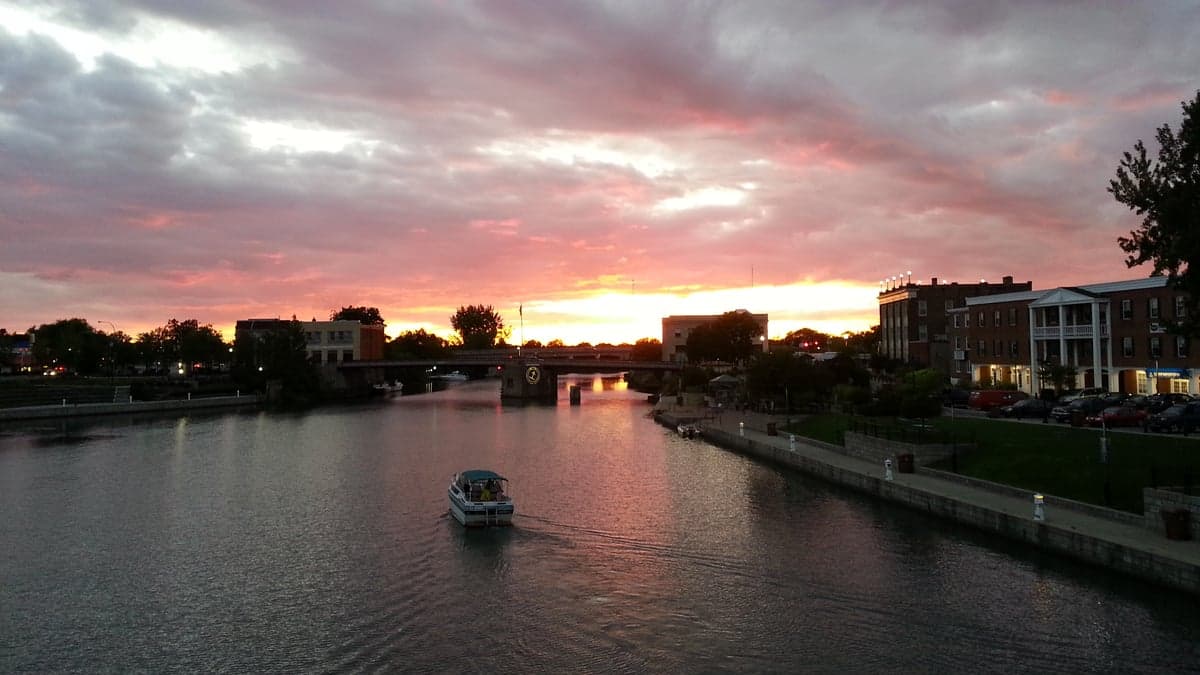
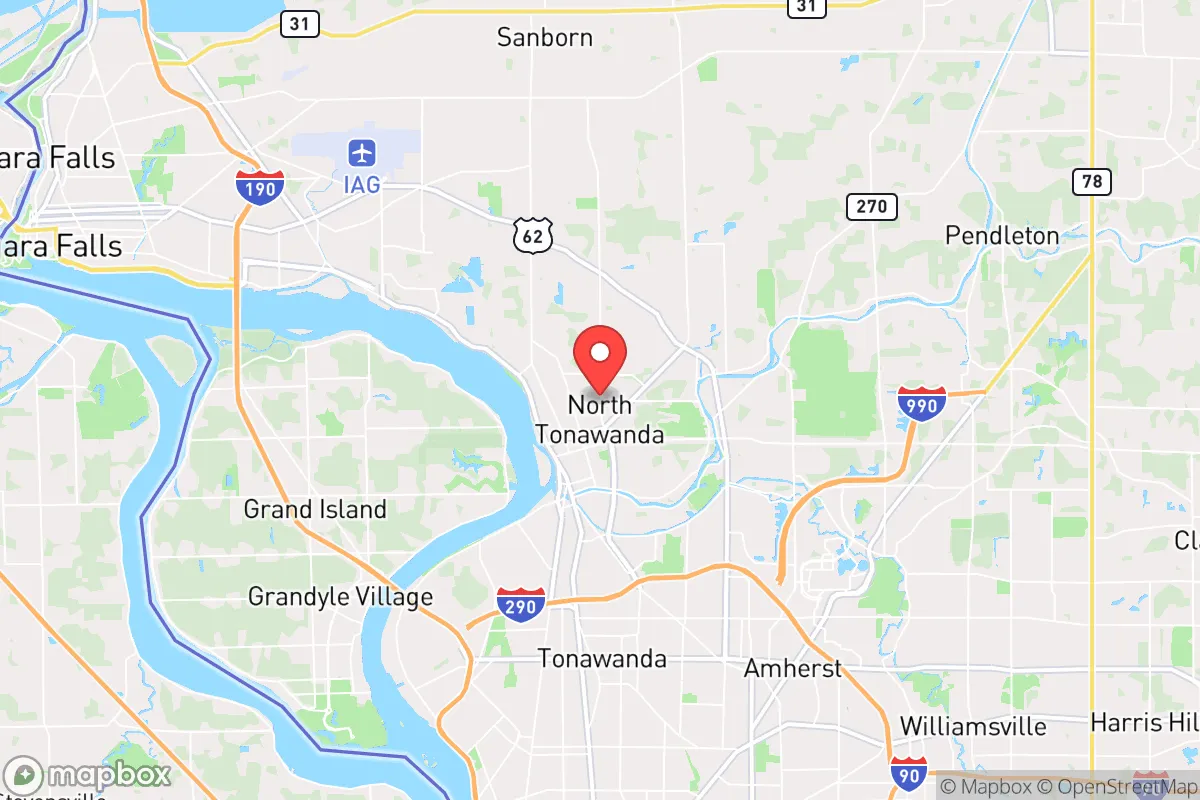
The people of North Tonawanda, New York, today number 30,338 and form a predominantly white, working-to-middle-class community with a distinct blue-collar identity rooted in its industrial past. The city is notably less diverse than the surrounding Niagara County or the Buffalo metro area, with 90.1% of residents identifying as white alone, a foreign-born population of just 1.7%, and a college attainment rate of 26.6%—below the national average. This is a place where family roots run deep, neighborhood loyalties are strong, and the population is slowly aging and shrinking, creating a stable but cautious atmosphere for newcomers.
How the city was settled and grew
North Tonawanda's population story begins not with colonial settlement but with explosive 19th-century industrial growth. The Erie Canal's completion in 1825 made the Tonawanda Creek a strategic waterway, and by the 1850s, the village was a lumber boomtown. German immigrants arrived first, drawn by jobs in the sawmills and planing mills that lined the creek. They settled the Gratwick-Riverside neighborhood, building the tight-knit, working-class blocks that still define the area. A second major wave came from Poland and Italy between 1890 and 1910, filling the mills and the new chemical and paper plants. Polish families concentrated in the Oliver Street corridor, establishing St. Albert's parish and a network of social clubs. Italian immigrants clustered near the Payne Avenue and Goundry Street area, where they built St. Joseph's Church and a thriving small-business district. By 1920, the city's population had already reached roughly 15,000, and the lumber industry—once the world's largest—was giving way to diversified manufacturing. The River Road industrial corridor became the city's economic spine, employing generations of residents in factories producing paper, chemicals, and automotive parts.
Modern era (post-1965)
After the 1965 Hart-Cellar Act, North Tonawanda saw minimal immigration compared to larger cities. The foreign-born share today sits at just 1.7%, and the city's racial composition has shifted only slightly. The white population, which was over 98% as recently as 1990, now stands at 90.1%. The largest minority group is Hispanic or Latino at 2.8%, followed by Black residents at 1.8%, East/Southeast Asian communities at 0.8%, and Indian-subcontinent residents at 0.4%. These small but present groups have settled mostly in the Shawnee neighborhood and the Wheatfield border area, where newer, more affordable housing stock exists. Domestic in-migration has been minimal; most new residents come from elsewhere in Erie or Niagara counties, often drawn by lower property taxes and a slower pace of life than Buffalo offers. The city's population peaked at 34,757 in 1970 and has declined gradually since, reflecting the loss of manufacturing jobs and the broader Rust Belt trend of outmigration among young adults. The Gratwick-Riverside and Oliver Street neighborhoods remain overwhelmingly white and older, while the Shawnee area shows slightly more diversity, though still far below regional averages.
The future
North Tonawanda's population is heading toward continued slow decline and modest aging. The median age has crept above 40, and the under-18 population has shrunk to roughly 20%. Without significant new immigration or a reversal of the regional economic trends, the city will likely see its population dip below 30,000 within the next decade. The small Hispanic and East/Southeast Asian communities are growing incrementally, but they are not yet large enough to reshape the city's character. The Indian-subcontinent population remains tiny and stable. The city is not tribalizing into distinct ethnic enclaves; rather, it is homogenizing as the older white population ages in place and younger families leave for suburbs farther from the urban core. The Oliver Street and Payne Avenue corridors, once vibrant ethnic hubs, are now more generically American in their retail and residential makeup.
For someone moving in now, North Tonawanda offers a stable, affordable, and safe environment with a clear sense of local identity—but it is a community in demographic stasis. The population is not diversifying rapidly, the economy is not booming, and the city's future depends on whether it can attract younger families and new residents from outside the immediate region. It is a place for those who value continuity over change, and who are comfortable in a predominantly white, working-class setting with deep local roots.

* Values derived from national, state, county, city and local statistics and may differ in a specific area. Last updated: 2026-05-01T07:59:41.000Z
Narrative content on this page is AI-generated and may contain mistakes. Verify any details that matter before acting on them.
ReloMaps may earn a commission from affiliate links at no extra cost to you.

