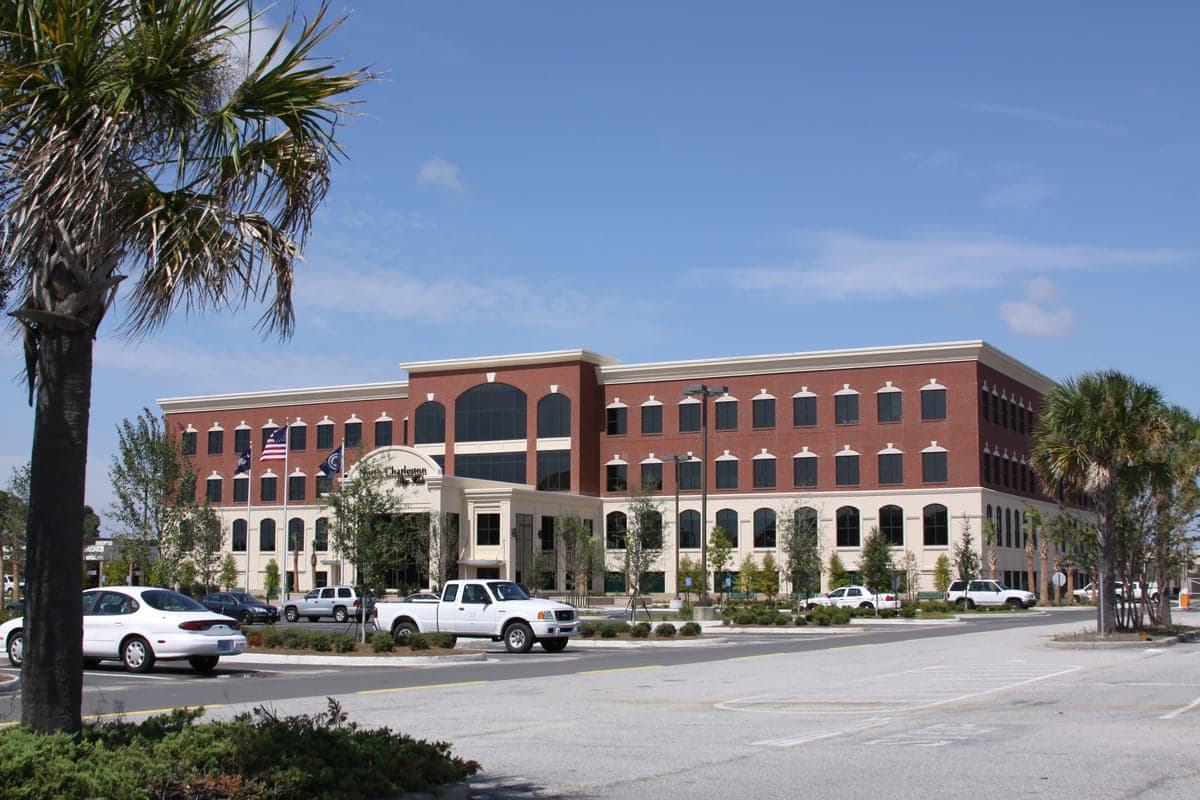
Photo: Wikipedia
Demographics of North Charleston, SC
Affluence Level in North Charleston, SC
A middle-class area roughly in line with national averages across income, home values, education, and employment.
People of North Charleston, SC
North Charleston, South Carolina, is a working-class city of 117,460 residents defined by its industrial roots, racial diversity, and a population that is 41.6% Black, 37.0% White, 12.8% Hispanic, and 2.9% East/Southeast Asian. It is denser and more urban than its suburban neighbors, with a distinctive blue-collar character shaped by the Charleston Naval Base and surrounding manufacturing. The city’s identity is one of pragmatic resilience, where long-standing Black communities live alongside newer Hispanic and Asian arrivals, creating a patchwork of neighborhoods that remain economically modest but socially vibrant.
How the city was settled and grew
North Charleston did not exist as a city until 1972, but its population history begins in the late 19th century with the expansion of railroads and heavy industry. The area was originally a collection of rural plantations and small farming settlements, but the arrival of the Charleston Naval Base in 1901 and the Charleston Naval Shipyard in 1909 transformed it into a company town for defense workers. The first major wave of population came during World War I and World War II, when the federal government built housing for thousands of white and Black laborers recruited from across the South. The historic neighborhood of Park Circle, laid out in 1917 as a planned community for shipyard workers, became the original white middle-class enclave, while Black workers settled in Liberty Hill and Accabee, areas that grew as segregated mill villages and freedmen’s communities. By the 1950s, the city’s population was roughly 60% white and 40% Black, with nearly all adults employed by the base or its contractors. The closing of the naval base in 1996 would later devastate the local economy, but the neighborhoods built during this era—especially Ferndale and Riverside—still house descendants of those original defense workers.
Modern era (post-1965)
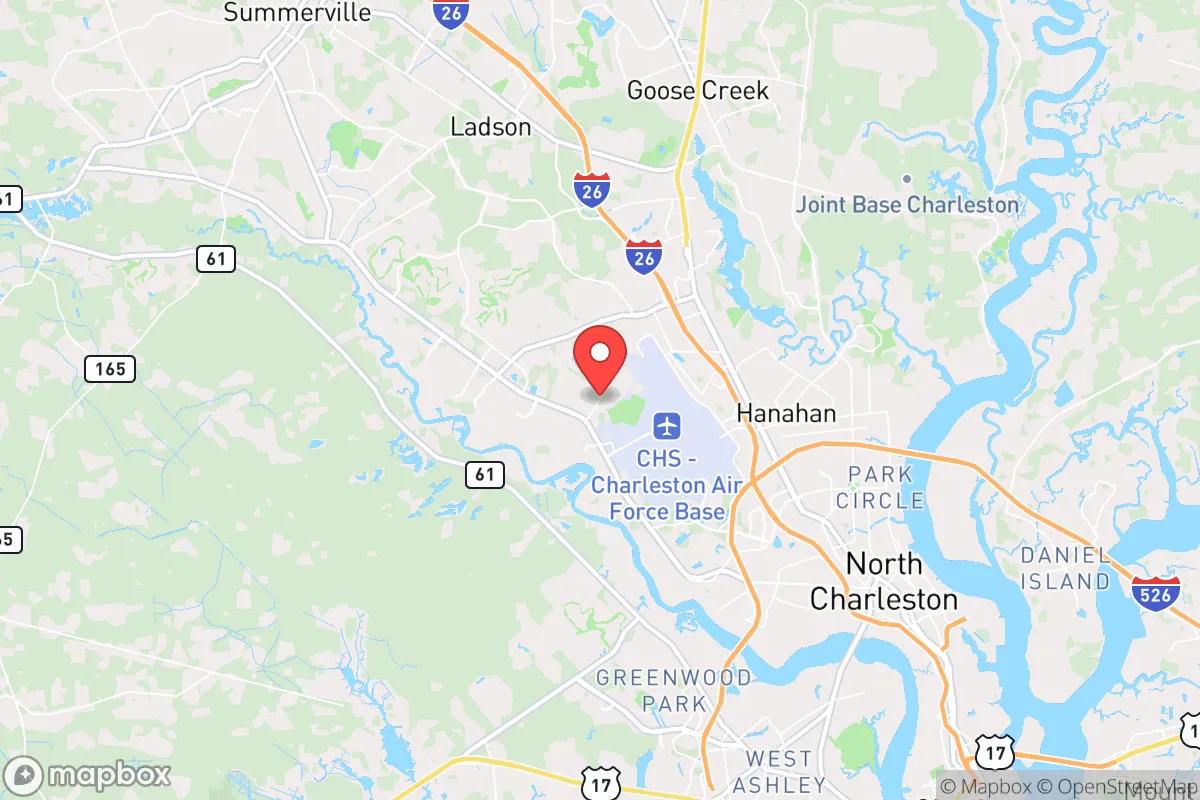
The Hart-Cellar Immigration Act of 1965 had a delayed but significant effect on North Charleston. The city’s foreign-born population today stands at 7.7%, a figure that has grown steadily since the 1990s as new immigrant groups arrived to fill service and construction jobs. The largest post-1965 shift has been the growth of the Hispanic community, now 12.8% of the population, concentrated in the Dorchester Road corridor and the Ashleyville area near the old naval base. These neighborhoods have seen a wave of Mexican and Central American families, many working in hospitality, landscaping, and light manufacturing. The East/Southeast Asian community (2.9%) is smaller but visible, with Vietnamese and Filipino families settling near Montague Avenue and the Airport District, often drawn by jobs at Charleston International Airport and the Boeing assembly plant. The Indian subcontinent population (0.6%) is a recent, small addition, mostly professionals in healthcare and tech living near the University Boulevard area. Meanwhile, the Black population has remained the largest single group, but its share has declined from over 50% in 2000 as white and Hispanic in-migration increased. White residents, now 37.0%, have been returning to parts of Park Circle and Olde North Charleston in a modest gentrification wave, drawn by lower home prices compared to downtown Charleston.
The future
North Charleston’s population is heading toward greater ethnic complexity rather than homogenization. The Hispanic share is projected to rise to 15-18% by 2035, driven by continued immigration and higher birth rates, while the Black share may stabilize around 38-40% as white and Asian in-migration continues. The city is not tribalizing into rigid enclaves—neighborhoods like Park Circle are becoming more mixed—but economic divides are sharpening. The college-educated share is only 28.0%, well below the national average, and the city remains a destination for lower-income families priced out of Charleston proper. The East/Southeast Asian community is likely to grow slowly, primarily through family reunification, while the Indian population will remain a thin professional layer. The biggest unknown is the impact of the Boeing and Volvo plants: if they expand, North Charleston could see a new wave of skilled workers, but if automation reduces labor demand, the city may continue as a low-wage service hub. The next decade will likely see continued Hispanic growth, modest white gentrification in historic neighborhoods, and a Black population that remains the largest group but becomes less dominant numerically.
For someone moving to North Charleston today, the city offers a genuinely diverse, working-class environment with lower costs than Charleston but also lower educational attainment and fewer white-collar jobs. It is a place where immigrant communities are growing but not yet assimilating into a single mainstream, and where the legacy of the naval base still shapes the economy and the neighborhoods. The city is becoming more Hispanic and more Asian, but it remains fundamentally a Black and white Southern industrial town—one that is slowly, unevenly, becoming something new.

* Values derived from national, state, county, city and local statistics and may differ in a specific area. Last updated: 2026-04-29T23:25:22.000Z
Narrative content on this page is AI-generated and may contain mistakes. Verify any details that matter before acting on them.
ReloMaps may earn a commission from affiliate links at no extra cost to you.

