Photo: Wikipedia
Strategic Assessment of North Augusta, SC
Meaningful friction. Expect exposure to either population pressure, blast zones, or natural disaster risk. Consider buying a retreat property.
What does the Strategic Assessment tell us?
Our Strategic Assessment grades tactical survivability of an area. Major population centers, military targets, fallout zones, natural disasters, and border exposure all drive risk — lower exposure means a more defensible position in a crisis.
This is heavily inspired by Joel Skousen's Strategic Relocation book. Highly recommended you checkout the book ($)What does this tell us?
Our Strategic Assessment grades tactical survivability of an area. Major population centers, military targets, fallout zones, natural disasters, and border exposure all drive risk — lower exposure means a more defensible position in a crisis.
This is heavily inspired by Joel Skousen's Strategic Relocation book. Highly recommended you checkout the book ($)Strategic Pillars

Key Distances
Regional Safe Places
Below is our recommended "safe zones" in South Carolina and the surrounding area based on our strategic heuristics. For most people, it's unrealistic to live in a “safe zone” full-time due to work, family or other personal reasons. They tend to be more rural. However, many of these areas are perfect for second homes and retreat properties that double as a vacation home or even a short-term rental.
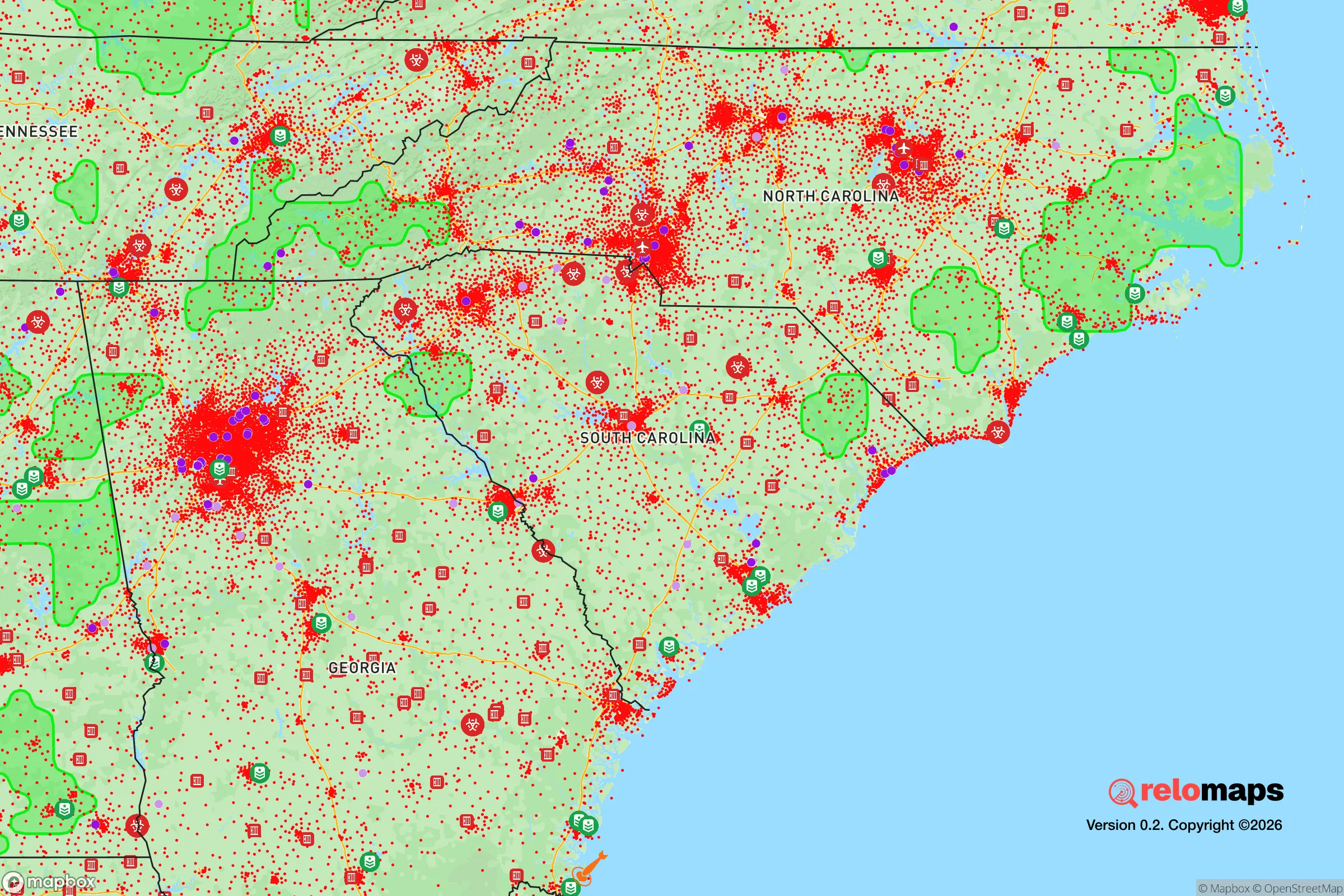
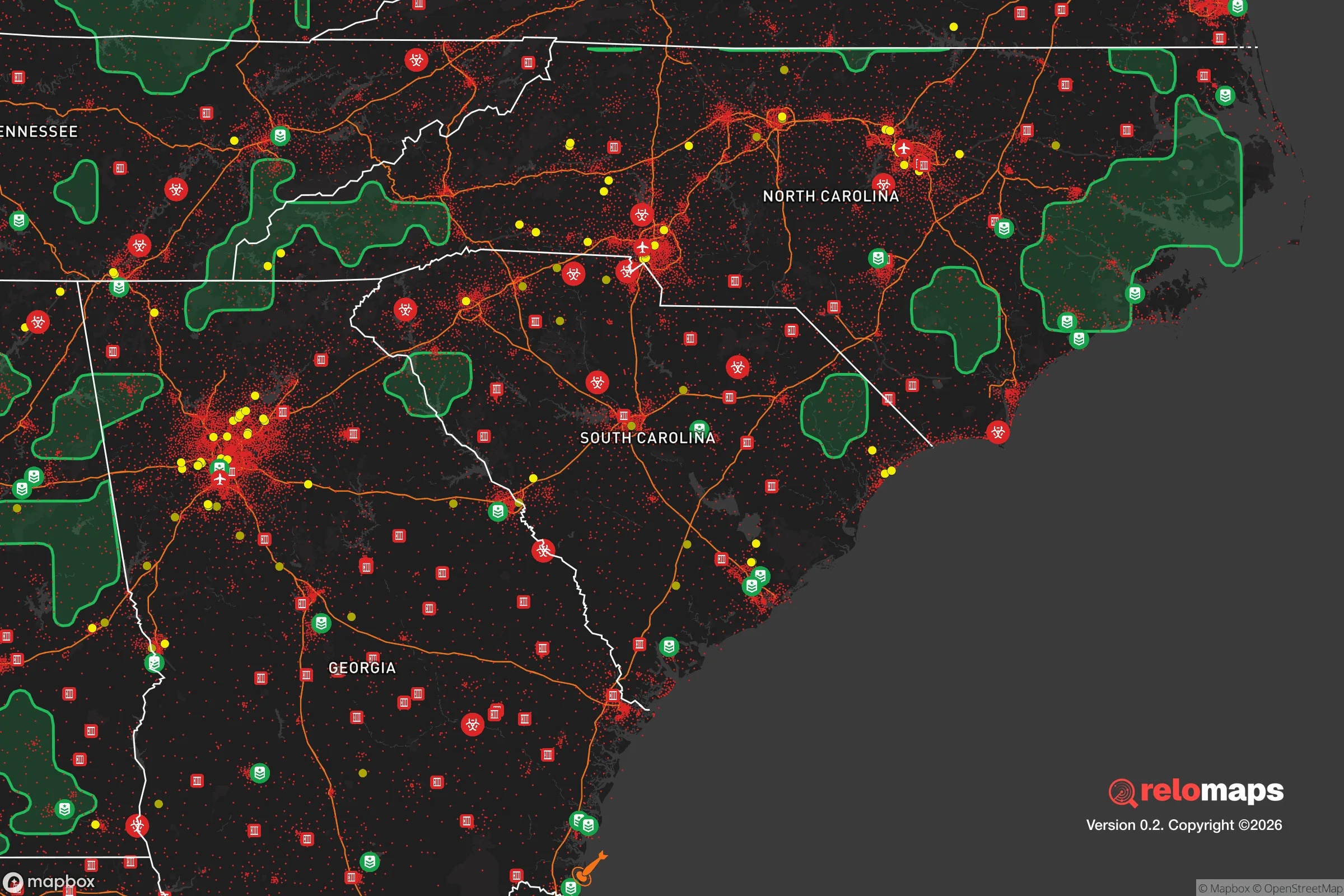


Important Note: For informational purposes only. This does not mean nothing bad ever happens in the green zones. Please use common sense. This is based on public data and modeled with AI. We tried to take a conservative approach but mistakes happen. We update this regularly as new information becomes available.
Solar Generator Recommendations
Backup power matters more here than in safer locations. We've picked three solar generators across budgets and capacity tiers — start with the budget unit if you only need a few essentials, or step up if you want to run a fridge and HVAC for days at a time.

Jackery Portable Power Station Explorer 300
Budget OptionPower on the Go: Weighing only 11 lbs, it's convenient to set up and store with book-sized foldable solar panels

BLUETTI Portable Power Station AC180
Designed for both indoor and outdoor scenarios, AC180 is highly capable as it has a robost capacity and continuous output power.

EF ECOFLOW DELTA Pro Ultra Power Station
Upgraded PickEcoFlow DELTA Pro Ultra is a whole-home energy system designed to grow with your family. Integrated with the Smart Home Panel 2, it scales to meet your evolving energy needs — keeping your home powered, intelligent, and secure through every stage of life.
We earn a commission, at no additional cost to you.
Strategic Assessment Analysis
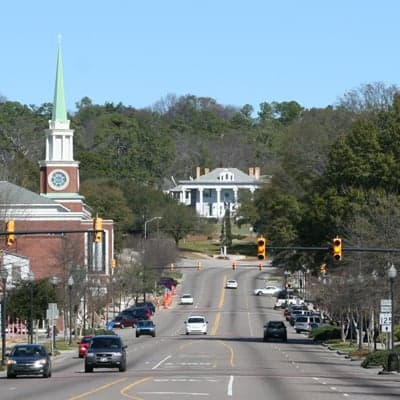
North Augusta, South Carolina, offers a surprisingly resilient strategic position for those prioritizing preparedness and long-term stability, combining the advantages of a smaller community with the resources of a nearby major city. Its location along the Savannah River, just across from Augusta, Georgia, provides a buffer from the most intense urban chaos while still granting access to critical infrastructure. For a conservative-leaning relocator focused on self-reliance and security, this area presents a compelling mix of geographic defensibility, resource availability, and relative insulation from the worst-case scenarios of national instability.
Geographic position and natural advantages for long-term stability
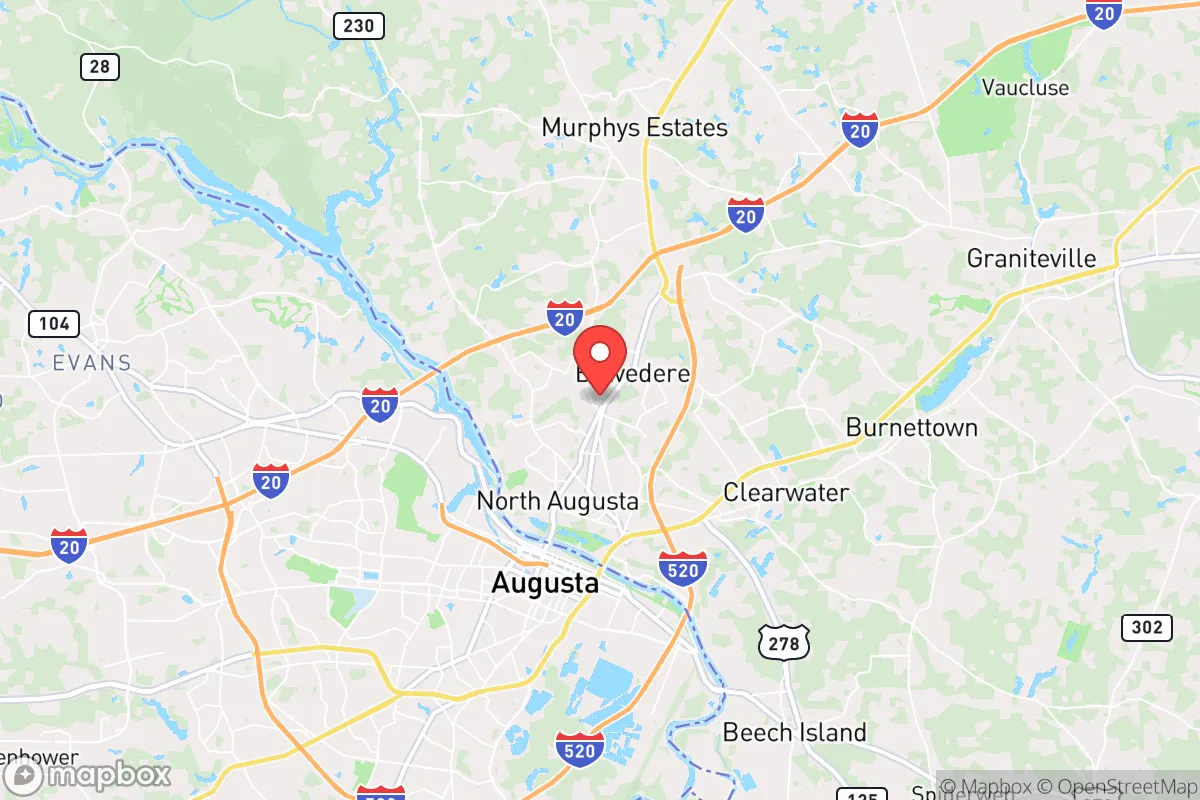
North Augusta sits in a sweet spot: close enough to Augusta, GA (population ~200,000) to tap into its hospitals, supply chains, and transportation hubs, but far enough to avoid being ground zero for urban unrest or a mass casualty event. The Savannah River is a double-edged asset—it provides a reliable water source and a natural barrier to the south and west, which can be leveraged for perimeter security or evacuation routes. The area’s topography is gently rolling, with mixed pine and hardwood forests that offer cover and resources for hunting or foraging if supply chains falter. The climate is humid subtropical, meaning a long growing season for gardens and livestock, though you’ll need to manage heat and humidity. The region’s low population density (Aiken County, where North Augusta is located, has about 170,000 people spread over 1,080 square miles) means less competition for resources during a crisis compared to denser metro areas like Atlanta or Charlotte.
Risks, exposures, and proximity to fallout-relevant landmarks
The most significant strategic downside is proximity to the Savannah River Site (SRS), a nuclear weapons complex and waste storage facility about 25 miles southeast. While SRS has been a major employer and economic driver, it’s also a potential target for sabotage, accident, or even a direct strike in a broader conflict. A catastrophic release from SRS could render large swaths of the region uninhabitable for decades, and prevailing winds could carry fallout directly toward North Augusta. Additionally, the area is within a few hours’ drive of Fort Gordon (now Fort Eisenhower), a major Army cyber command center, and the Port of Savannah, a critical logistics hub—both high-value targets in a war scenario. Natural risks are moderate: the region sees occasional tornadoes, severe thunderstorms, and the threat of hurricanes tracking inland (like Hurricane Helene in 2024, which caused widespread power outages and tree damage). Flooding along the Savannah River is a concern for low-lying properties, but North Augusta’s elevation (mostly 200-400 feet) mitigates this. The biggest practical risk is grid dependency—the local power infrastructure is aging, and a prolonged blackout from a cyberattack or EMP would hit hard without backup systems.
Practical resilience for a relocator: food, water, energy, and defensibility
For a prepper or survivalist, North Augusta’s practical resilience is a mixed bag. Water is abundant—the Savannah River is a reliable source, but you’ll need filtration and purification gear, as industrial runoff and agricultural chemicals are present. Municipal water comes from the river and is treated, but in a grid-down scenario, wells are the gold standard; many homes in the outskirts have them, but city water users are vulnerable. Food production is viable: the growing season runs from March to November, and local soil is sandy loam that drains well but requires amendment for heavy crops. Farmers’ markets and local farms (like the Aiken County Farmers Market) offer fresh produce in normal times, but in a crisis, you’ll want your own garden and seed bank. Livestock is feasible—chickens, goats, and even cattle are common in the rural areas just outside town. Energy is a weak point: the grid is served by Dominion Energy and Aiken Electric Cooperative, both of which have seen outages from storms and ice. Solar is a strong option (the area gets about 220 sunny days per year), but you’ll need battery storage and a backup generator for winter cloud cover. Natural gas is available in town but not in rural pockets. Defensibility is moderate: the river provides a natural barrier to the south, but the terrain is open enough that a determined group could approach from multiple directions. The community is generally conservative and pro-gun, with a strong hunting culture, so you’ll find like-minded neighbors—but vet them carefully, as the area also has transient populations tied to the medical and military sectors. The local sheriff’s office (Aiken County) is well-funded and responsive, but in a widespread collapse, you’re largely on your own. The best strategy is to buy land on the outskirts (north or east of town) with good sightlines, a well, and a defensible perimeter.
The overall strategic picture for a conservative relocator
North Augusta is a solid B+ for a strategic relocation if you’re looking for a balance between access to resources and escape from urban chaos. It’s not a remote bunker location—you’re still within 150 miles of Atlanta, Columbia, and Savannah, which means you’ll feel the ripple effects of any major event in those cities. But the local economy is diversified (healthcare, manufacturing, nuclear, military support), and the community is politically aligned with self-reliance and preparedness. The biggest wildcard is the Savannah River Site: if you’re worried about nuclear risks, this isn’t the place. If you accept that risk as manageable (and many locals do), the area offers good water, decent growing conditions, and a population that won’t look at you sideways for owning a generator and a stockpile. The housing market is still affordable relative to the coasts—median home prices around $300,000—and property taxes are low (South Carolina has no state tax on Social Security and a flat income tax). For a single individual or family willing to invest in off-grid upgrades (solar, well, septic, reinforced structures), North Augusta provides a realistic base for weathering the next decade of uncertainty. Just don’t expect total isolation—you’re trading some security for convenience, and that trade is worth understanding before you commit.

* Values derived from national, state, county, city and local statistics and may differ in a specific area. Last updated: 2026-04-30T03:41:47.000Z
Narrative content on this page is AI-generated and may contain mistakes. Verify any details that matter before acting on them.
ReloMaps may earn a commission from affiliate links at no extra cost to you.

