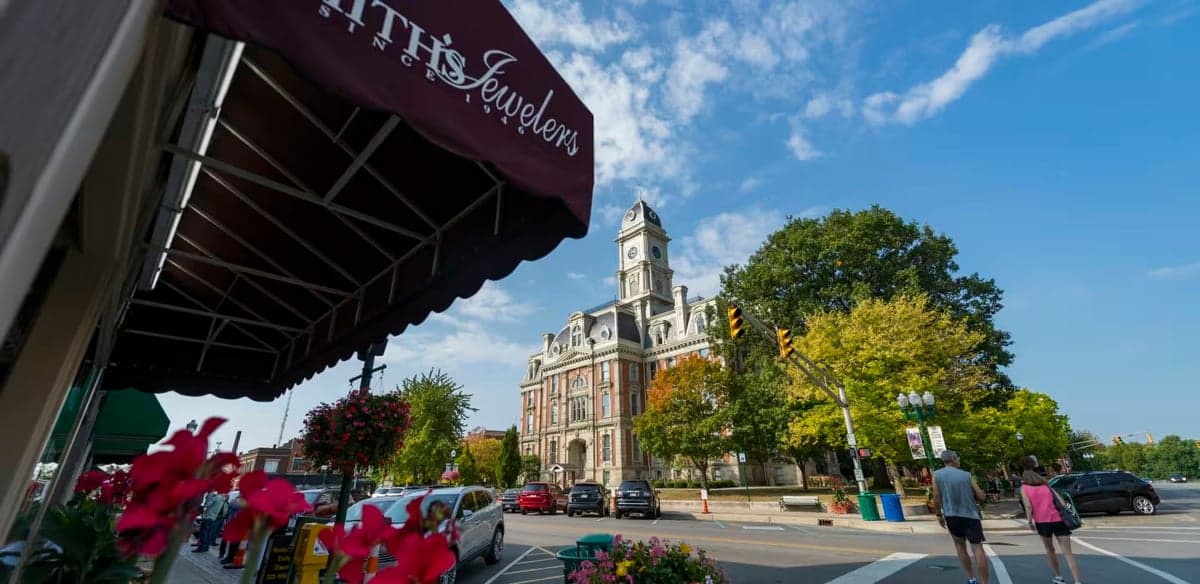
Photo: Wikipedia
Political ClimatePolitical Climate in Noblesville, IN
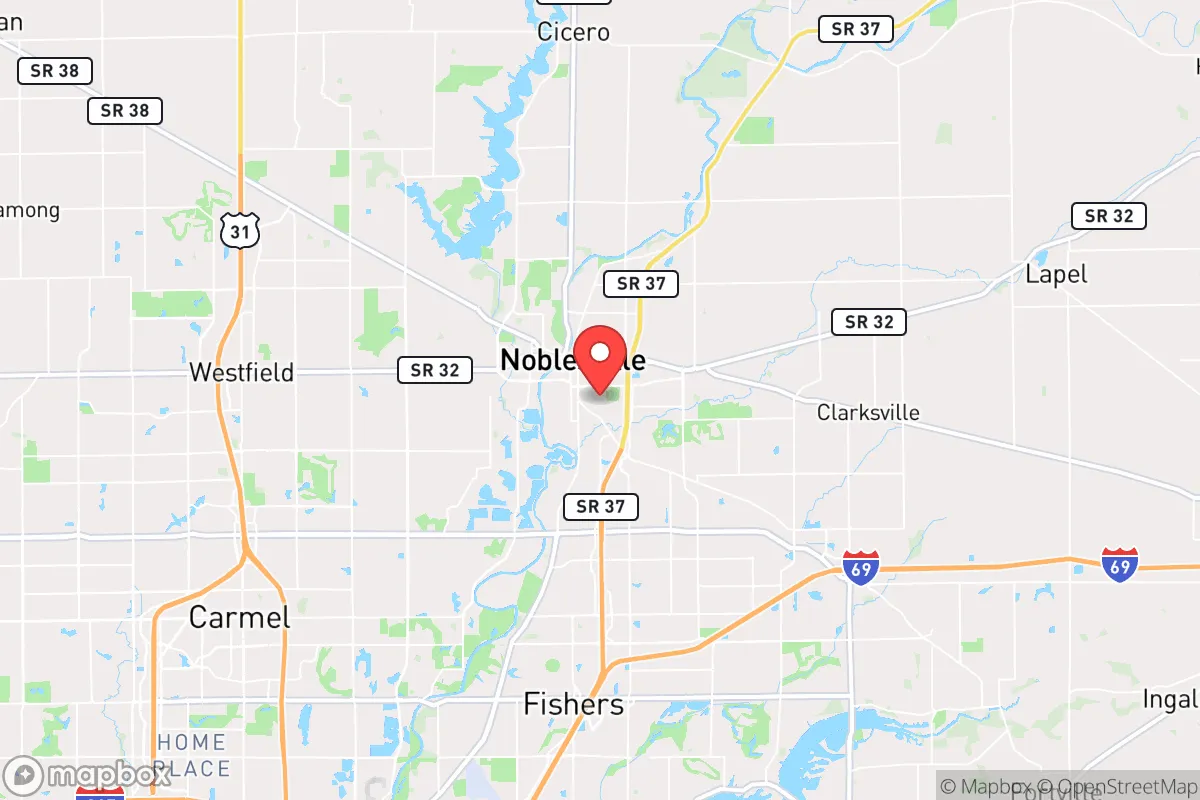
District shown is the primary district for this city’s centroid. Cities may span multiple districts.
Local Political AnalysisPolitical Analysis of Noblesville, IN
Noblesville has long been a reliably conservative community, and the numbers back that up with a Cook PVI of R+8, meaning the district leans about eight points more Republican than the national average. But if you've lived here as long as I have, you've watched that conservative identity get tested in real time. The city's political lean is still solidly red, but the trajectory is a little more complicated than it used to be. You're seeing a subtle shift as more folks move up from Indianapolis and Hamilton County's explosive growth brings in a mix of perspectives that weren't here twenty years ago.
How it compares
Compared to the rest of Hamilton County, Noblesville holds its conservative ground pretty well. Carmel, just to the south, has gotten noticeably more purple over the last decade, with a city council that's increasingly split and a mayor who's been willing to push progressive-style policies on things like housing density and climate initiatives. Fishers has also trended more moderate, especially among younger families. Noblesville, though, still feels like the place where people move specifically to get away from that kind of government overreach. The contrast is real: drive ten minutes south and you're in a place where the local government is more likely to tell you how to use your property or what kind of light fixture you can put on your porch. Here, the general attitude is still "live and let live," as long as you're not hurting anyone. The surrounding rural areas, like Cicero and Arcadia, are even more conservative, so Noblesville sits as a kind of buffer zone between the big-city influence and the small-town values that still define most of the county outside the I-69 corridor.
What this means for residents
For the average Noblesville resident, the political climate translates into a few concrete realities. Taxes are lower here than in Carmel or Fishers, and the city government has historically been reluctant to expand its footprint into your personal life. You won't see the same kind of aggressive zoning ordinances or business regulations that pop up in more progressive suburbs. The school board, too, has remained largely conservative, which means parents have had more say in curriculum and library materials than in districts where administrators run the show. That said, the 2024 election cycle brought some close races that would have been unthinkable a decade ago. A few city council seats were hotly contested, and the margin of victory for conservative candidates was narrower than many of us expected. That's the part that keeps me up at night: the slow creep of progressive ideology into local government, often under the guise of "smart growth" or "equity initiatives." Once that door cracks open, it's hard to shut.
On the cultural side, Noblesville still flies the American flag proudly, and you'll see plenty of "We Back the Blue" signs in yards. The annual Fourth of July parade is a big deal, and local churches are still central to community life. But there's a growing tension between the old guard and the newcomers who want to turn Noblesville into another Carmel. The biggest policy distinction right now is the city's approach to development: the current council has been careful to avoid the kind of high-density, multi-family zoning that's taken over Fishers, but developers are pushing hard. If you're worried about government overreach, keep an eye on the planning commission meetings. That's where the real battles are fought, and where the future of this town's political soul will be decided.

State Political ClimatePolitical Climate in Indiana
State Political AnalysisPolitical Environment in the State
Indiana has long been a reliably Republican state, but it’s not the deep-red monolith many outsiders assume. For the past 20 years, the GOP has held a firm grip on the governor’s mansion, both chambers of the legislature, and both U.S. Senate seats, but the margins have tightened in presidential races—Trump won the state by 16 points in 2024, down from 19 in 2020 and 26 in 2016. The real story is a growing urban-suburban divide, with the Indianapolis metro area and college towns like Bloomington and West Lafayette trending blue, while the rest of the state—especially the rural south and north—remains deeply conservative. For a conservative-leaning family or individual looking to relocate, Indiana still offers a solidly red policy environment, but the cultural and political battles are heating up in ways that demand attention.
Urban vs. rural divide
The political map of Indiana is a classic tale of two states. The Indianapolis metro area, including Marion County and its fast-growing suburbs like Carmel and Fishers, has become a Democratic stronghold—Marion County went for Biden by 28 points in 2020 and Harris by 30 in 2024. These suburbs are increasingly affluent, diverse, and socially liberal, with school boards and city councils pushing progressive agendas on everything from DEI initiatives to climate action. Meanwhile, the rest of the state is overwhelmingly red. Fort Wayne (Allen County) is a reliably Republican anchor in the northeast, while Evansville (Vanderburgh County) in the southwest has held steady for the GOP. The rural counties along the Ohio River and the Wabash Valley—places like Vincennes and Madison—vote 70-80% Republican. The real battlegrounds are the suburban counties surrounding Indianapolis: Hamilton County (home to Carmel and Fishers) is still red but has shifted from +40 R in 2016 to +18 R in 2024, while Hendricks County and Johnson County remain solidly conservative. If you’re looking for a place where your vote counts and your values are reflected in local policy, the rural and small-town counties are where you want to be.
Policy environment
Indiana’s state-level policy is a mixed bag for conservatives. On the plus side, the state has a flat income tax rate of 3.05% (down from 3.23% in 2024) and no inheritance or estate tax, making it one of the more tax-friendly states in the Midwest. Property taxes are capped at 1% of assessed value for owner-occupied homes, which is a major draw for families. The regulatory posture is generally business-friendly, with right-to-work laws and a low corporate tax rate (4.9%). However, there are red flags. The state’s education system is heavily centralized—the Indiana Department of Education, under a Republican-appointed superintendent, has pushed for more state control over curriculum and school choice, but local school boards in blue-leaning districts like Bloomington have resisted. Healthcare policy is a mixed bag: Indiana expanded Medicaid under the HIP 2.0 program, which conservatives see as a federal overreach, but the state has also passed laws restricting abortion (a near-total ban with narrow exceptions) and protecting religious freedom. Election laws are solidly conservative—voter ID requirements, no same-day registration, and a purge of inactive voters—but the state’s mail-in voting rules are more restrictive than some neighboring states. For a conservative, the policy environment is generally favorable, but the creeping influence of federal mandates and local progressive activism is a concern.
Trajectory & freedom
Over the past five years, Indiana has taken significant steps to expand personal liberty in areas that matter most to conservatives. In 2022, the state passed a permitless carry law for handguns (HB 1296), allowing law-abiding citizens to carry without a license—a major win for Second Amendment advocates. In 2023, the legislature passed a parental rights bill (HB 1608) that requires schools to notify parents of any changes to a student’s health or well-being, including gender identity or sexual orientation, and prohibits instruction on human sexuality in grades K-3. This was a direct response to the overreach of progressive school boards in places like Indianapolis and Bloomington. On the medical freedom front, Indiana banned COVID-19 vaccine mandates for state employees and contractors in 2023 (SB 5), and in 2024, it passed a law prohibiting discrimination against the unvaccinated in employment and housing. However, there are concerning trends. The state’s property tax system, while capped, is still subject to reassessment creep, and the legislature has shown a willingness to override local zoning decisions—a double-edged sword that can both protect and undermine local control. The biggest threat to freedom is the growing influence of federal money and mandates, particularly in education and healthcare, which could erode state sovereignty over time.
Civil unrest & political movements
Indiana has seen its share of political flashpoints, but they’re mostly localized and less intense than in coastal states. The 2020 Black Lives Matter protests in Indianapolis were large and occasionally violent, leading to property damage and a heavy police response, but they didn’t spread to the rest of the state. The most visible organized movements are on the right: the Indiana Firearms Coalition and the Indiana Republican Assembly are active in pushing for gun rights and school board transparency. On the left, the Indiana Democratic Party is weak but has a stronghold in the urban core, with groups like Hoosiers for a Fair and Just Society pushing for criminal justice reform and racial equity. Immigration politics are relatively quiet—Indiana is not a border state, and the state has passed laws banning sanctuary cities (SB 590 in 2022), so there’s little visible conflict. Election integrity has been a hot topic since 2020, with the state’s Republican secretary of state, Diego Morales, launching a voter roll cleanup in 2023 that removed over 200,000 inactive voters—a move that drew lawsuits from the left but was upheld by the courts. The most visible flashpoint for a new resident would be the culture war in local school boards, particularly in Carmel and Fishers, where conservative parents have clashed with progressive administrators over curriculum and library books.
Projection
Over the next 5-10 years, Indiana is likely to become more polarized, not less. The Indianapolis metro area will continue to grow and trend blue, driven by in-migration of younger, more diverse professionals and the expansion of tech and life sciences industries. The suburbs of Carmel and Fishers will likely become swing areas, while the rural counties will remain deeply red. The state legislature will probably stay in Republican hands, but the margins could narrow as the urban population grows. The biggest wildcard is the state’s demographic shift: Indiana’s population is aging and slowly diversifying, with the Hispanic population growing in places like Logansport and Goshen. This could shift the political calculus over time, but for now, the state’s conservative policy environment is likely to hold. However, the threat of federal overreach—particularly on education, healthcare, and environmental regulations—will remain a constant battle. A new resident moving in now should expect to find a state that is still solidly red but with growing pockets of blue, where local control is under pressure from both state and federal forces.
Bottom line for a new resident: If you’re a conservative looking for a state where your values are reflected in law and culture, Indiana is a strong choice—but don’t expect a uniform experience. Stick to the rural counties or the outer suburbs of Fort Wayne or Evansville if you want to avoid the culture wars. The state’s tax structure, gun laws, and parental rights protections are among the best in the Midwest, but you’ll need to stay engaged in local politics to keep it that way. The fight for freedom here is real, but it’s still winnable.
* Values derived from national, state, county, city and local statistics and may differ in a specific area. Last updated: 2026-04-22T08:42:05.000Z
Narrative content on this page is AI-generated and may contain mistakes. Verify any details that matter before acting on them.
ReloMaps may earn a commission from affiliate links at no extra cost to you.

