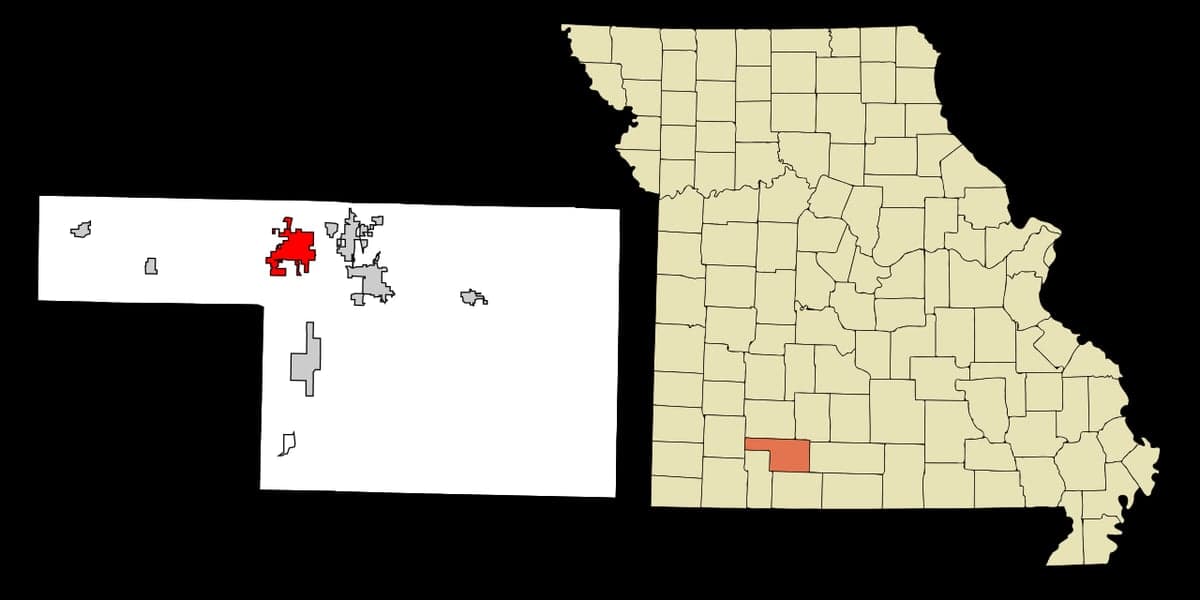
Photo: Wikipedia
Political ClimatePolitical Climate in Nixa, MO
District shown is the primary district for this city’s centroid. Cities may span multiple districts.
Local Political AnalysisPolitical Analysis of Nixa, MO
Nixa, Missouri, sits squarely in one of the most reliably conservative corners of the state, and that’s not changing anytime soon. The area carries a Cook Partisan Voting Index (PVI) of R+21, meaning Republican candidates routinely win by about 21 points more than the national average. If you’ve lived here a while, you’ve watched that number hold steady through wave elections and local cycles alike—Nixa isn’t trending purple or blue; it’s staying deep red, and most folks like it that way.
How it compares
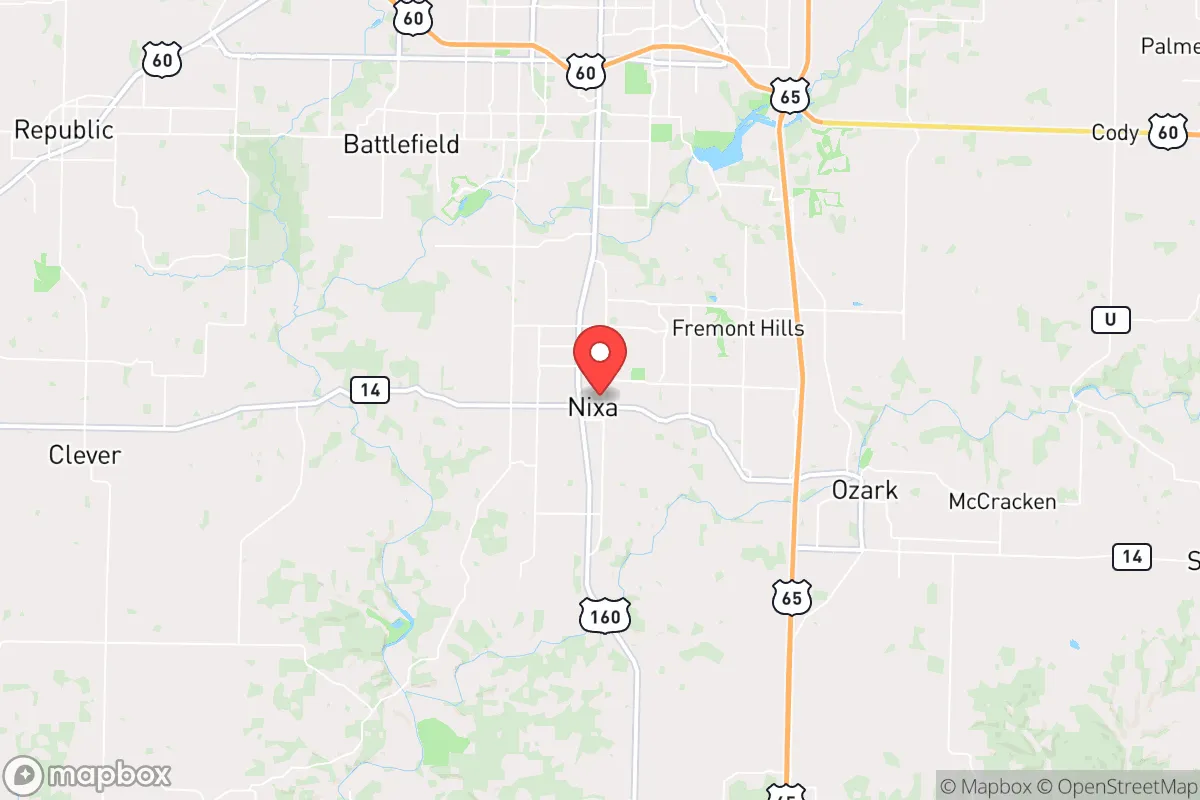
Drive ten minutes north into Springfield, and you’ll hit a different political atmosphere. Springfield leans Republican too, but it’s more of a R+12 to R+15 kind of place—still red, but with noticeable pockets of progressive influence around the university (Missouri State) and downtown arts districts. Nixa, by contrast, feels like the suburbs where people moved specifically to get away from that drift. Head south toward Branson, and you’re in similar R+20 territory, but Branson’s politics are more tied to tourism and entertainment money. Nixa’s conservatism is quieter, more family-and-church rooted. The real contrast is east to Ozark, which is slightly less conservative (R+18 or so) and has seen more development pressure from Springfield’s spillover. Nixa residents tend to see that as a warning: keep the growth managed, or you lose what makes the place feel safe and free.
What this means for residents
For someone living here, the R+21 lean translates into daily life that feels pretty hands-off from the government. Property taxes stay low—Christian County’s rate is around 0.7% of assessed value, one of the lowest in the state—and there’s no city income tax eating into your paycheck. Zoning is minimal compared to bigger cities; you can run a small business from your home without jumping through hoops, and building permits are straightforward. The school board and city council elections tend to be dominated by candidates who run on “keep government out of our lives” platforms, and they usually win. That said, there’s been a quiet push in recent years from a handful of residents wanting more “progressive” policies—like diversity initiatives in the schools or tighter environmental rules on new construction. So far, those efforts have fizzled quickly, but it’s something to keep an eye on. If that shift gains traction, it could mean more regulations, higher fees, and less personal freedom in how you use your property.
Cultural and policy distinctions
One thing that sets Nixa apart from even nearby conservative towns is its strong culture of self-reliance. You see it in the number of home-based contractors, the popularity of the local farmers’ market, and the general attitude that neighbors help neighbors before calling a government agency. The city has a “no mask mandate” ordinance still on the books from the COVID era—not because it’s enforced, but as a symbolic statement that local leaders trust residents to make their own health decisions. Gun rights are taken seriously here; open carry is common, and there’s no extra permitting beyond state law. The biggest policy distinction is probably the city’s approach to growth: Nixa has resisted annexation pushes from Springfield and kept its own planning department lean. That means fewer traffic lights, less red tape, and a slower pace of change. Long-term, the concern is whether that can hold as the population climbs—it’s already up about 15% since 2020. If the next wave of newcomers brings big-city expectations for government services and regulations, the political climate could shift. But for now, Nixa remains a place where the government stays small and the people stay free.

State Political ClimatePolitical Climate in Missouri
State Political AnalysisPolitical Environment in the State
Missouri has long been a bellwether state, but over the past 15 years it has shifted decisively from a classic purple swing state to a solidly red one, with Republicans holding supermajorities in both legislative chambers and every statewide office except the governorship (which flipped red in 2024). The state voted for Donald Trump by 18 points in 2024, a dramatic swing from the 2012 margin of just 9 points for Mitt Romney. This trajectory reflects a deep cultural and demographic realignment: the rural and exurban counties that once split tickets now vote straight-ticket Republican, while the state’s two major metros—St. Louis and Kansas City—have become increasingly isolated blue islands. For a conservative considering relocation, Missouri offers a policy environment that has aggressively expanded gun rights, cut taxes, and pushed back on federal mandates, but the political climate is not without its internal tensions, especially around education and local governance.
Urban vs. rural divide
The political map of Missouri is a study in stark contrasts. The St. Louis metro area, anchored by St. Louis City and St. Louis County, is the state’s largest Democratic stronghold, delivering margins of 60-70% for Democratic candidates in recent cycles. Kansas City, in Jackson County, is similarly blue, though its suburbs—like Lee’s Summit and Blue Springs—are more competitive and have trended rightward as families flee the urban core. Meanwhile, the rest of the state is overwhelmingly red. The rural counties of the Ozarks—such as Christian, Taney, and Stone—routinely vote 75-80% Republican, driven by a mix of evangelical Christianity, gun culture, and opposition to St. Louis’s progressive policies. The I-70 corridor, which connects St. Louis to Kansas City, is a political battleground: Boone County (home to Columbia and the University of Missouri) is a blue-leaning outlier, while the fast-growing exurbs of Wentzville and O’Fallon in St. Charles County have become reliably red. The most dramatic shift has been in the Bootheel region, where counties like Dunklin and Pemiscot, once Democratic-leaning due to agricultural ties, have flipped hard red over cultural issues and trade policy.
Policy environment
Missouri’s policy environment is among the most conservative in the Midwest, with a low-tax, low-regulation posture that appeals to many relocating families. The state has a flat income tax rate of 4.5% (down from 5.4% in 2022), with a trigger mechanism that could reduce it further if revenue targets are met. Property taxes are among the lowest in the nation, averaging just 0.85% of home value. The state is a “right-to-work” state (though the law was repealed by ballot initiative in 2018, the legislature has since passed a weaker version), and it has no state-level minimum wage above the federal floor. On education, Missouri has a robust charter school law in St. Louis and Kansas City, but the rest of the state relies on traditional public schools, with a school choice voucher program that was expanded in 2024 to cover low-income families. Healthcare policy is mixed: the state expanded Medicaid under the Affordable Care Act via a 2020 ballot initiative, but the Republican legislature has since imposed work requirements and frozen enrollment. Election laws have tightened: voter ID is required, absentee voting is restricted to specific excuses, and the state purged over 100,000 inactive voters in 2023. For conservatives, the policy environment is generally favorable, but the Medicaid expansion and the 2018 right-to-work repeal are reminders that ballot initiatives can override the legislature.
Trajectory & freedom
Missouri has been on a clear trajectory toward greater personal freedom in the conservative sense, particularly on gun rights and parental rights. In 2021, the legislature passed a “Second Amendment Preservation Act” (SAPA) that purports to nullify federal gun laws, though it has been partially blocked by federal courts. In 2023, the state enacted a “Parental Bill of Rights” that requires schools to notify parents of any medical or mental health services provided to their child and bans instruction on sexual orientation in grades K-3. The state also passed a law in 2024 prohibiting transgender athletes from competing in girls’ sports and banning gender-affirming care for minors. On taxation, the 2022 income tax cut was paired with a phase-out of the corporate franchise tax, and the legislature is debating a flat consumption tax. However, freedom has contracted in some areas: the state’s medical marijuana program, approved by voters in 2018, remains heavily regulated with a limited number of dispensaries, and recreational use is still illegal. Property rights have been strengthened by a 2023 law limiting eminent domain for private development, but local zoning ordinances in St. Louis County remain restrictive. Overall, the state is moving in a direction that aligns with conservative values, but the pace is uneven and subject to federal court challenges.
Civil unrest & political movements
Missouri has been a flashpoint for political movements on both sides. The 2014 Ferguson protests, sparked by the police shooting of Michael Brown, were a defining moment that galvanized the Black Lives Matter movement nationally and led to the creation of the Ferguson Commission, which recommended police reforms that were largely ignored by the legislature. In 2020, protests in St. Louis and Kansas City over the death of George Floyd turned violent, with looting and arson in the Delmar Loop and Westport districts. On the right, the “Patriot” movement is strong in rural areas, with groups like the Missouri Freedom Coalition organizing against vaccine mandates and school mask requirements. The state has seen a surge in “constitutional sheriff” activism, with sheriffs in counties like Christian and Stone refusing to enforce federal gun laws. Immigration politics are less heated than in border states, but St. Louis’s status as a “sanctuary city” (by ordinance, not state law) has been a recurring legislative target, with bills in 2023 and 2024 to ban such policies. Election integrity remains a live issue: the 2020 election saw Trump’s campaign challenge results in St. Louis County, and the legislature has since created a “Election Integrity Unit” within the Secretary of State’s office. A new resident would notice the political polarization most acutely in the suburbs of St. Louis and Kansas City, where yard signs and bumper stickers are a daily reminder of the divide.
Projection
Over the next 5-10 years, Missouri is likely to become even more conservative, driven by two demographic trends: the continued exodus of liberal-leaning residents from St. Louis City and Kansas City to other states, and the influx of conservative-leaning migrants from Illinois, California, and the Northeast into the fast-growing exurbs of St. Charles, Warren, and Lincoln counties. The state’s population is aging and becoming more rural, which favors Republican candidates. However, the blue islands of St. Louis and Kansas City will remain Democratic strongholds, and the University of Missouri’s Columbia campus will continue to be a progressive enclave. The biggest wildcard is the state’s ballot initiative process: if progressive groups can get measures on the ballot on issues like abortion rights (which are currently restricted to the first 8 weeks of pregnancy) or recreational marijuana, they could override the legislature’s agenda. The 2024 election saw a ballot initiative to restore abortion rights fail by a narrow margin, but the issue is not dead. For a conservative moving in now, the expectation should be that the state will continue to pass laws that protect gun rights, parental authority, and tax cuts, but that local battles in the suburbs and cities will remain heated. The state’s political future is bright for those who value limited government and traditional values, but it will require vigilance at the ballot box.
For a new resident, the bottom line is that Missouri offers a policy environment that is broadly aligned with conservative values, with low taxes, strong gun rights, and a legislature that is actively pushing back on federal overreach. The political climate is polarized, but the state’s trajectory is clearly toward greater freedom in the conservative sense. The key practical takeaway is to choose your location carefully: the rural and exurban areas offer a more homogeneous political culture, while the suburbs of St. Louis and Kansas City are battlegrounds where local elections matter. If you value a state that respects your rights and keeps government out of your life, Missouri is a solid bet—just be prepared for the occasional fight over the direction of your local school board or county commission.
* Values derived from national, state, county, city and local statistics and may differ in a specific area. Last updated: 2026-04-23T04:20:07.000Z
Narrative content on this page is AI-generated and may contain mistakes. Verify any details that matter before acting on them.
ReloMaps may earn a commission from affiliate links at no extra cost to you.

