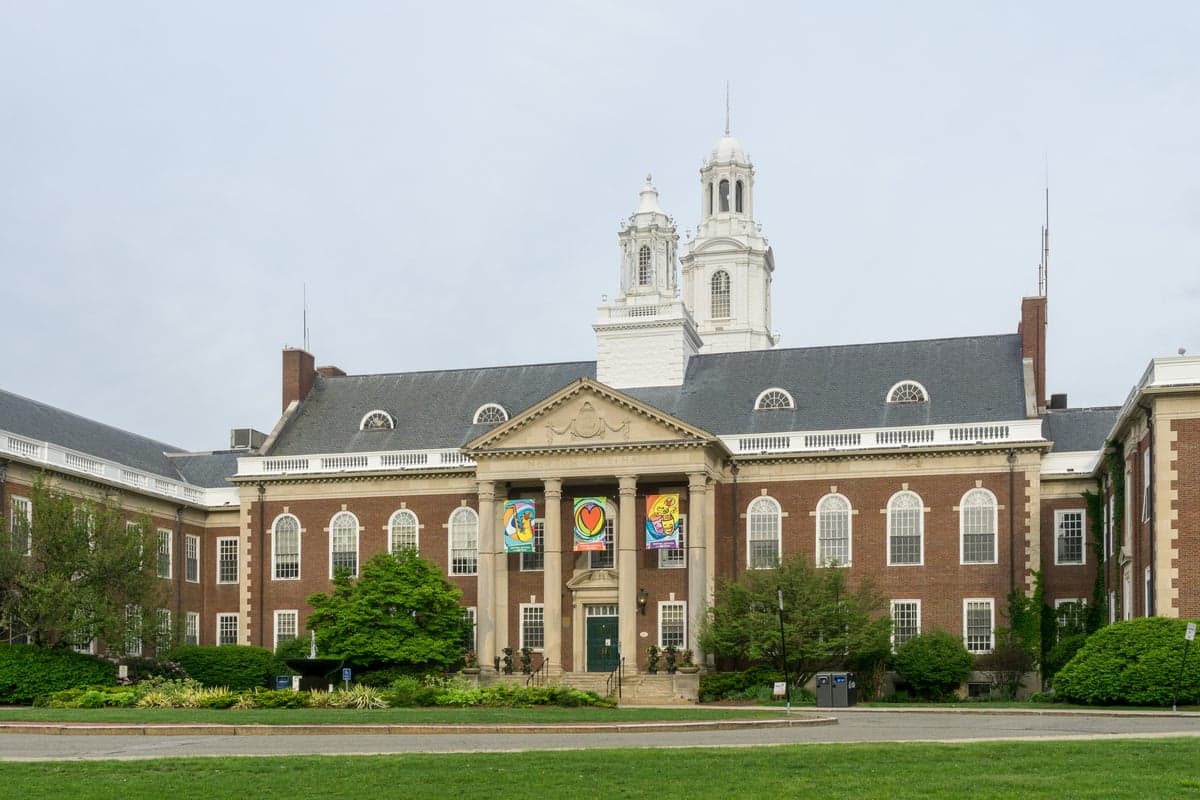
Photo: Wikipedia
Political ClimatePolitical Climate in Newton, MA
District shown is the primary district for this city’s centroid. Cities may span multiple districts.
Local Political AnalysisPolitical Analysis of Newton, MA
Newton, Massachusetts, is about as blue as it gets in the Boston suburbs, with a Cook PVI of D+11 that puts it in the top tier of liberal strongholds nationwide. I’ve lived here long enough to remember when it was a more moderate, live-and-let-live kind of place—fiscally responsible, socially tolerant, but not obsessed with ideological purity. Over the last decade, though, the political center has shifted hard left. Town meetings and school board elections are now dominated by progressive activists, and the old guard of sensible centrists has largely retired or been voted out. The trajectory is clear: Newton is becoming a laboratory for progressive policy experiments, and the pressure to conform to a single worldview is growing.
How it compares
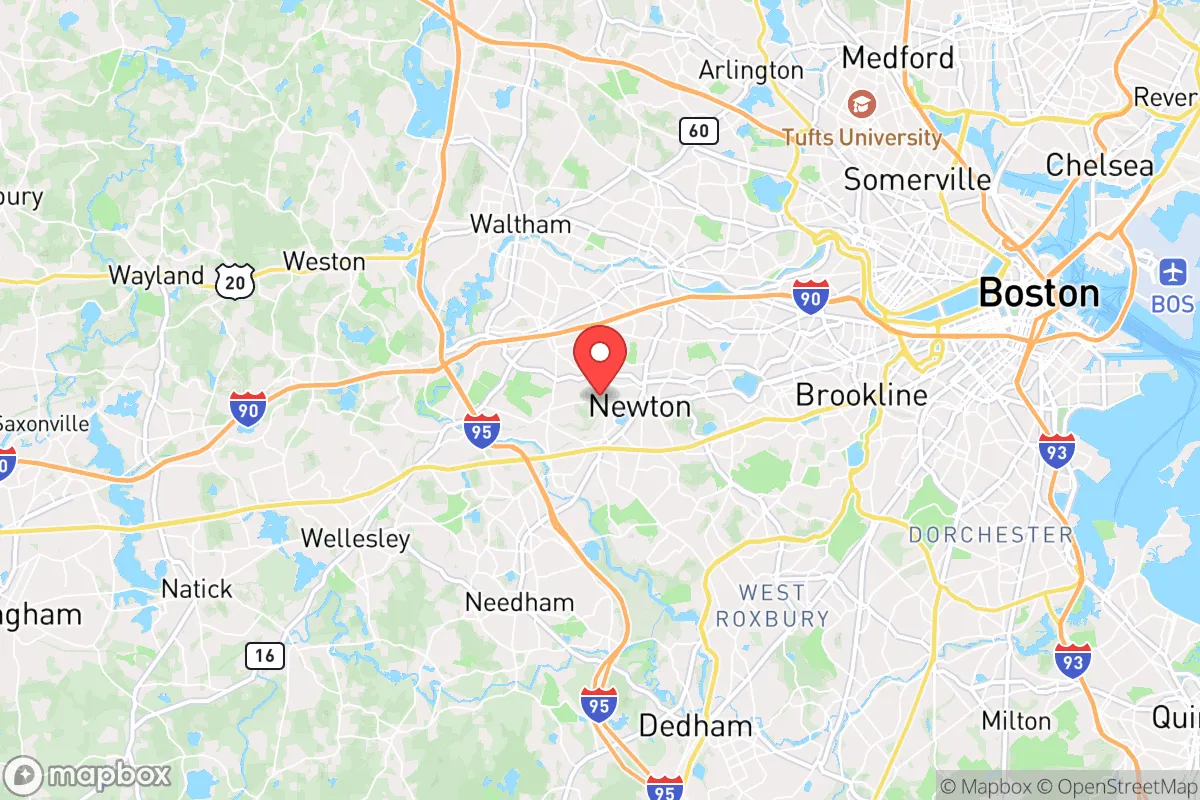
Drive 15 minutes west to Wellesley or Needham, and you’ll find towns that still vote Democratic but with a much lighter touch—more “let’s keep taxes reasonable” and less “let’s reimagine public safety.” Newton’s D+11 rating is significantly more left-leaning than neighboring Brookline (D+9) and far beyond the state average. Compare it to a place like Waltham, just over the border, which is more working-class and politically mixed; Newton feels like a different country. The contrast is starkest when you look at housing policy: while many suburbs are cautiously exploring modest zoning changes, Newton has embraced a full-throttle push for high-density development, overriding neighborhood concerns about traffic, character, and property rights. It’s a classic case of a well-intentioned elite class imposing top-down solutions on everyone else.
What this means for residents
If you value personal freedom—especially the freedom to live quietly without government meddling—Newton is becoming a challenging place. The town has aggressively expanded its regulatory reach into everything from what kind of heating system you can install to how many unrelated adults can share a house. The school system, once a point of pride, now spends as much time on social-emotional learning and equity audits as on math and reading. Property taxes are high and rising, and there’s a growing sense that your money is funding programs you didn’t vote for and may not agree with. For a conservative or even a moderate, daily life here means constantly navigating a culture that assumes everyone shares the same progressive values. It’s not hostile in an overt way, but it’s exhausting—like being the only person at a party who doesn’t want to sing along.
Looking ahead, I see Newton doubling down. The town’s political machinery is now fully controlled by activists who see compromise as a weakness. Expect more zoning overrides, more diversity mandates, and more policies that prioritize symbolic gestures over practical outcomes. The long-term risk is that Newton prices out or drives away the very families and small businesses that made it a great place to live. If you’re considering moving here, ask yourself honestly: are you ready to live in a place where your vote is almost always on the losing side, and where your personal choices about your home, your kids’ education, and your money are increasingly subject to collective approval? For some, that’s fine. For others, it’s a dealbreaker.

State Political ClimatePolitical Climate in Massachusetts
State Political AnalysisPolitical Environment in the State
Massachusetts is one of the most reliably Democratic states in the country, with a partisan lean of roughly D+15 in presidential elections and a state legislature where Democrats hold supermajorities in both chambers. Over the past 20 years, the state has shifted steadily leftward, driven by the Boston metro area’s explosive growth and the exodus of moderate Republicans from suburban districts. While the state was once home to prominent GOP governors like Mitt Romney and Charlie Baker, the legislature has consistently overridden their vetoes, and the current governor, Maura Healey, is a progressive Democrat who has accelerated the state’s leftward trajectory. For a conservative considering relocation, the political climate here is best described as a one-party state with limited institutional checks on government expansion.
Urban vs. rural divide
The political map of Massachusetts is a textbook case of urban dominance. Boston, Cambridge, Somerville, and Newton are the engine of the state’s progressive politics, routinely delivering 80-90% of the vote to Democratic candidates. The Boston metro area alone accounts for roughly half the state’s population, meaning statewide elections are effectively decided before the rest of Massachusetts votes. Western Massachusetts, including cities like Springfield and Pittsfield, also leans Democratic but with a more working-class, union-driven flavor. The true conservative strongholds are the small towns and rural areas of Central and Southeastern Massachusetts, such as Sturbridge, Oxford, and the Cape Cod towns of Sandwich and Bourne. However, these areas lack the population density to counterbalance Boston. A notable exception is the town of Wrentham, which has a vocal conservative minority, but even there, local school boards and town meetings are increasingly dominated by progressive activists. The divide is stark: drive 30 miles west of Boston and you’ll find Trump signs in yards; drive 10 miles east and you’re in a sea of Harris-Walz lawn placards.
Policy environment
The policy environment in Massachusetts is heavily interventionist. The state has a flat income tax rate of 5%, but a 2022 ballot question (the “millionaire’s tax”) added a 4% surtax on income over $1 million, pushing the top marginal rate to 9%. Property taxes are moderate by national standards but vary wildly by town—Boston’s rate is around $10.50 per $1,000 of assessed value, while rural towns like Ashfield can exceed $20. The regulatory posture is among the most burdensome in the nation, particularly for housing: the state’s zoning laws and the Massachusetts Environmental Policy Act (MEPA) make it nearly impossible to build new homes without years of litigation. Education policy is dominated by the teachers’ union, which successfully blocked charter school expansion in 2016 and has pushed for “equity” frameworks that de-emphasize standardized testing. Healthcare is a point of pride for the state—Massachusetts essentially created the model for the Affordable Care Act—but it comes with an individual mandate and a state-run health exchange that adds complexity for self-employed residents. Election laws are permissive: same-day voter registration, no-excuse mail-in voting, and automatic voter registration at the RMV are all in place. For a conservative, the policy environment feels like a slow, steady expansion of government into daily life, with little room for dissent.
Trajectory & freedom
Massachusetts is becoming less free by nearly any measure of personal liberty, especially for conservatives. The 2024 gun law package, signed by Governor Healey, banned the sale of “assault-style” rifles, required microstamping on new handguns, and created a state-level firearm license that effectively outlaws private transfers. This came on top of an already strict 1998 ban on certain firearms. Parental rights have eroded: the state’s 2022 “Parentage Act” allows a child to have three or more legal parents without a biological or marital connection, and the Department of Children and Families has been aggressive in investigating parents who refuse gender-affirming care for minors. Medical autonomy is constrained by the state’s vaccine mandates, which were among the strictest in the country during COVID-19 and remain in place for healthcare workers. Property rights are limited by the Community Preservation Act, which imposes a surcharge on property taxes to fund open space and affordable housing, and by rent control measures in Boston and Cambridge. On the positive side, Massachusetts has no state-level sales tax on groceries or clothing, and the state’s right-to-shelter law means no one is legally homeless—but that law has strained municipal budgets as the state has absorbed thousands of migrants since 2023. The trajectory is clear: more regulation, more mandates, and less room for individual choice.
Civil unrest & political movements
Civil unrest in Massachusetts is generally orderly but persistent. The most visible flashpoint in recent years has been the migrant crisis: in 2023, Governor Healey declared a state of emergency as the shelter system overflowed, leading to protests in towns like Lexington and Woburn where residents opposed the placement of temporary shelters. The “Parents’ Rights” movement has been active in school board meetings, particularly in suburbs like Needham and Wellesley, where parents have pushed back against critical race theory and gender ideology curricula. On the left, the Sunrise Movement and Extinction Rebellion have held regular protests in Boston, blocking traffic on Storrow Drive and demanding a Green New Deal. The state’s sanctuary policy, codified in 2017, limits cooperation between local police and ICE, and has been a source of tension in cities like Lowell and Lawrence, where immigrant populations have grown rapidly. Election integrity has been a low-grade controversy: the 2020 and 2022 elections saw widespread use of mail-in ballots, and while no major fraud was proven, the lack of voter ID requirements remains a concern for conservatives. The overall atmosphere is one of low-grade cultural war, with the state’s institutions firmly aligned with progressive orthodoxy.
Projection
Over the next 5-10 years, Massachusetts will likely become even more progressive. Demographic trends favor the left: the state’s population is aging, but the young, college-educated professionals moving into Boston and its suburbs are overwhelmingly liberal. The exodus of families to lower-tax states like New Hampshire and Florida is accelerating, and those who leave tend to be more moderate or conservative. The state’s housing crisis will continue to drive up costs, making it harder for working-class families to stay, and the legislature shows no appetite for meaningful zoning reform. The Republican Party in Massachusetts is in a death spiral—it holds no statewide offices and only a handful of legislative seats—and is unlikely to recover without a major national realignment. For a conservative moving in now, the expectation should be that the state will continue to expand its regulatory footprint, raise taxes, and prioritize progressive social policies. The best-case scenario is that a future Republican governor might slow the pace, but the legislature’s supermajority means any veto can be overridden.
For a new resident, the bottom line is that Massachusetts offers world-class education, healthcare, and infrastructure, but at the cost of living under a one-party government that is actively hostile to conservative values. If you value low taxes, gun rights, parental control over education, and limited government, this is not the state for you. If you can afford the high cost of living and are willing to keep your head down, you can find like-minded communities in the rural towns of Central and Western Massachusetts, but you will have no political power to change the state’s direction. The practical takeaway: come for the job or the school, but don’t expect the political climate to improve anytime soon.
* Values derived from national, state, county, city and local statistics and may differ in a specific area. Last updated: 2026-05-01T10:33:13.000Z
Narrative content on this page is AI-generated and may contain mistakes. Verify any details that matter before acting on them.
ReloMaps may earn a commission from affiliate links at no extra cost to you.

