Photo: Wikipedia
Political ClimatePolitical Climate in Kings County
Showing district-level results — no local-only data available.
Local Political AnalysisPolitical Analysis of Kings County
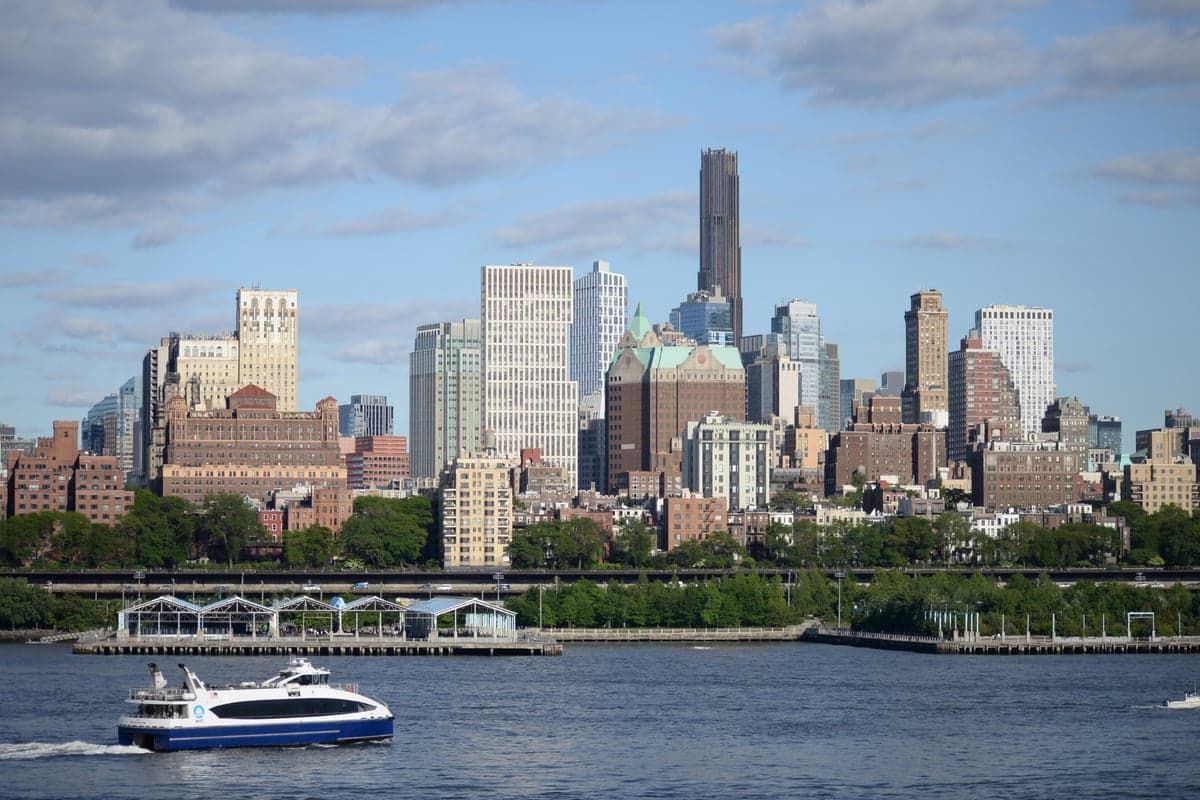
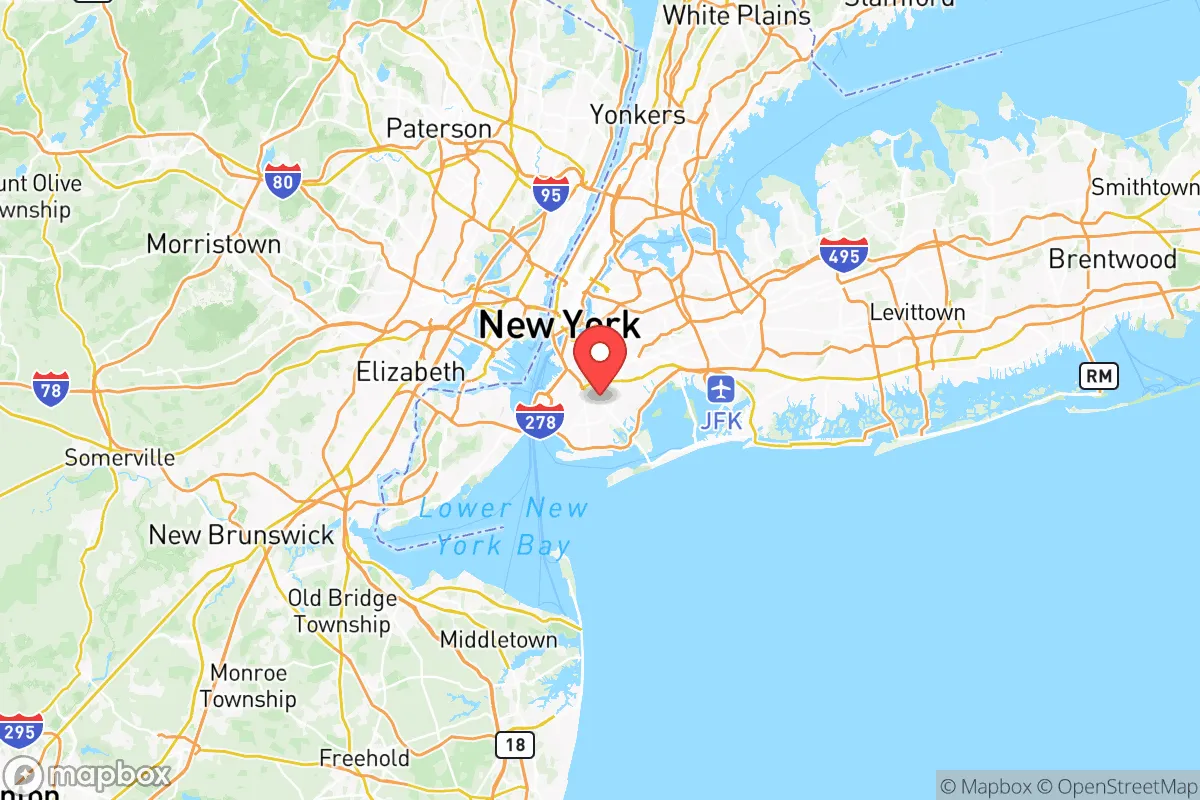
Kings County – Brooklyn – has been a Democratic stronghold for decades, but lately it feels like the pendulum has swung way past center and is picking up speed. The Cook PVI sits at D+22, which tells you the party machine is deeply entrenched, but that number doesn't capture the growing unease among longtime residents who remember when this borough had more balance. Back in the 90s, you could find solidly moderate precincts in places like Bay Ridge, Sheepshead Bay, and even parts of Bensonhurst where folks voted on local issues, not just party lines. Now, those same neighborhoods are being pulled leftward by the sheer demographic tide from Manhattan and the relentless push of progressive activism. If you're someone who values individual freedom over government directives, the direction here is genuinely concerning.
How it compares to New York, NY
Manhattan – officially New York, NY – doesn't have a Cook PVI listed, but anyone who's lived here knows it's even bluer, probably D+30 or worse. The difference is that Manhattan's politics are fueled by a transient, high-income, ideologically uniform base, while Kings County still has pockets of old-school conservatism and working-class skepticism. Compare the Upper East Side to, say, Marine Park or Gerritsen Beach: in those quiet corner neighborhoods, you'll find families who pay attention to property taxes, school choice, and police presence – issues that have been buried under identity politics in Manhattan. The contrast is stark: a voter in Williamsburg might cheer for defunding the police, while a resident of Dyker Heights worries about their sanitation worker neighbor losing his job because the city cut overtime. Manhattan sets the tone in city hall, but Brooklyn still has the bones of a place that used to fight for common sense.
What this means for residents
Living here under a D+22 blanket means you're constantly navigating a political environment that treats dissent as a moral failing. The city council and state assembly members from Kings County have pushed through rent control expansions, sanctuary city policies, and COVID-era mandates that felt less about public health and more about control. For instance, the Small Business Recovery Act sounded helpful but ended up as another layer of paperwork for local delis and auto shops. Neighborhoods like Midwood and Borough Park – with their large Orthodox Jewish and Russian communities – have been fighting zoning changes that limit religious gatherings and bypass traditional property rights. And don't get me started on the school board situation: Mayor Adams may talk tough, but the real power lies with progressive district leaders who've made it nearly impossible to get a kid into a specialized high school without a lottery. The long-term trajectory, if nothing changes, is more top-down mandates, fewer local voices, and a culture that punishes anyone who dares ask, "Is this really working?"
Culturally, the shift is most visible in what used to be casual conversations. Ten years ago, you could argue about taxes over a beer in a Greenpoint bar without losing friends. Now, even saying you're "fiscally conservative" gets you side-eyed. The policy differences are real, too: Kings County has stricter gun licensing than any upstate county, a massive public housing bureaucracy that chokes private development, and a homelessness crisis that the city addresses with vouchers instead of mental health beds. If you're considering moving here, the question isn't about which subway line to take – it's whether you're ready to live in a place where your vote barely registers, and where the government treats your personal choices as optional. I love Brooklyn, but I tell my friends the honest truth: this is not the borough of my childhood. It's a progressive project now, and you'd better be okay with that, or ready to fight for every inch of freedom you've got left.

State Political ClimatePolitical Climate in New York
State Political AnalysisPolitical Environment in the State
New York State has shifted from a competitive swing state to a solidly Democratic stronghold over the past 20 years, with Democrats now holding a supermajority in both legislative chambers and every statewide office. The state hasn't voted Republican in a presidential election since 1984, and the partisan lean has only deepened since the 2010s, driven by massive Democratic margins in New York City and its inner suburbs. For a conservative considering relocation, the state presents a stark reality: your vote will be heavily diluted by the five boroughs, and state policy increasingly reflects the priorities of Manhattan and Brooklyn, not the rural and suburban communities that make up the vast majority of the state's landmass.
Urban vs. rural divide
The political map of New York is a textbook example of the urban-rural divide, but with an intensity that surprises many outsiders. New York City alone accounts for roughly 40% of the state's vote, and it delivers margins of 70-80% for Democrats. The city's outer boroughs—Brooklyn, Queens, and the Bronx—are among the most reliably progressive voting blocs in the country. Upstate, the picture flips dramatically. Counties like Allegany, Wyoming, and Orleans routinely vote 65-70% Republican. The suburbs tell a more nuanced story: Nassau and Westchester counties on Long Island were once Republican strongholds but have trended blue since the 1990s, though they still elect some moderate Republicans locally. Staten Island remains the only NYC borough that regularly votes Republican in local races. The real battlegrounds are the "collar counties" like Dutchess, Orange, and Saratoga, where fast-growing exurbs have produced mixed results—Saratoga Springs itself leans left, but the surrounding county is purple. The divide isn't just geographic; it's cultural. Upstate residents often feel ignored by Albany, and the state's policy agenda is overwhelmingly shaped by downstate interests.
Policy environment
New York's policy environment is among the most progressive in the nation, and it's been accelerating since Democrats gained a supermajority in 2019. The state has the highest combined state and local tax burden in the country, with income tax rates that can exceed 10% for top earners and property taxes that are among the highest nationally. The regulatory posture is aggressive: New York has some of the strictest gun laws in the nation, including the SAFE Act of 2013 and the 2022 Concealed Carry Improvement Act, which effectively ended permitless carry and created "sensitive location" restrictions so broad they've been challenged in court. Education policy is dominated by the teachers' unions, and the state has some of the most restrictive charter school caps in the country. Healthcare is heavily regulated, with a state-run health exchange and a push toward single-payer (the New York Health Act) that has stalled but remains a goal. Election laws have been loosened significantly: no-excuse absentee voting, early voting, and automatic voter registration are now law. The state also passed the "John R. Lewis Voting Rights Act" in 2022, which requires federal preclearance for any local election changes in jurisdictions with a history of discrimination—a provision that critics say gives Albany veto power over local election decisions.
Trajectory & freedom
On the freedom index, New York has been moving decisively in one direction: less free. The 2019 bail reform law eliminated cash bail for most misdemeanors and non-violent felonies, leading to a surge in repeat offending that has since been partially rolled back, but the damage to public confidence was done. The 2022 Concealed Carry Improvement Act was a direct response to the Supreme Court's Bruen decision, and it effectively re-imposed many of the restrictions the Court had struck down—creating a legal gray area that has gun owners nervous. Parental rights have taken a hit: the state passed a law in 2022 that allows minors as young as 14 to consent to mental health treatment without parental notification, and the "Gender Expression Non-Discrimination Act" (GENDA) has been used to push gender ideology in schools. Medical autonomy was curtailed during COVID with some of the longest-lasting emergency mandates in the country, including a private-sector vaccine mandate that survived legal challenges. Property rights are under pressure from rent control expansions in New York City and the 2019 Housing Stability and Tenant Protection Act, which weakened eviction protections for landlords statewide. On the plus side for conservatives, the state has not passed a "red flag" law with the same teeth as some other blue states, and the Second Amendment sanctuary movement has gained traction in dozens of upstate counties, though these resolutions are symbolic.
Civil unrest & political movements
New York has been a flashpoint for political activism on both sides. The 2020 Black Lives Matter protests in New York City were among the largest and most destructive in the country, with widespread property damage and a subsequent push to defund the NYPD that resulted in a $1 billion budget cut (later partially restored). The state's sanctuary policies are among the strongest: the "Green Light Law" of 2019 allows undocumented immigrants to obtain driver's licenses and prohibits state agencies from cooperating with federal immigration enforcement, leading to ongoing legal battles with the Trump administration. Election integrity has been a persistent concern: New York was one of the last states to count absentee ballots in 2020, and the 2022 gubernatorial primary was marred by a massive ballot design error in New York City that disenfranchised tens of thousands of voters. On the right, the "New York State Rifle & Pistol Association" remains a powerful lobbying force, and the "Upstate New York" secession movement—while fringe—has gained enough traction to warrant a 2021 ballot question in some counties (it failed). The most visible flashpoint for a new resident would be the contrast between the heavily policed, orderly public spaces in upstate towns and the more chaotic, activist-driven atmosphere in the city.
Projection
Over the next 5-10 years, New York's trajectory is likely to continue leftward, but with potential for a modest correction. Demographic trends are working against conservatives: New York City continues to attract young, progressive transplants, while upstate counties are aging and losing population. However, the post-COVID exodus from the city to the suburbs and exurbs has shifted some votes in places like Ulster and Columbia counties, where new arrivals from the city have actually made those areas more liberal, not less. The state's fiscal situation is precarious—New York has the second-highest debt per capita in the nation—and a future economic downturn could force tax increases that accelerate out-migration. The 2024 election will be a key test: if Republicans can flip a few swing House seats in the Hudson Valley and on Long Island, it could slow the progressive agenda. But realistically, a conservative moving to New York should expect the state to remain a one-party Democratic state for the foreseeable future, with policy continuing to drift left on guns, taxes, and social issues.
For a conservative considering New York, the bottom line is this: you can find like-minded communities in upstate counties, on Staten Island, and in parts of the Hudson Valley, but you will be swimming against a strong state-level current. Your property taxes will be high, your gun rights will be limited, and your vote for president or Senate will be effectively meaningless. If you value low taxes, gun rights, and local control, New York is a tough sell. But if you have a high-income career that requires being near the city, or if you're willing to fight for your values at the local level, there are still pockets where conservative principles can thrive—just don't expect Albany to have your back.
* Values derived from national, state, county, city and local statistics and may differ in a specific area. Last updated: 2026-06-05T13:16:54.000Z
Narrative content on this page is AI-generated and may contain mistakes. Verify any details that matter before acting on them.
ReloMaps may earn a commission from affiliate links at no extra cost to you.

