
Photo: Wikipedia
Quality of Life in Lea County
A livable area that tracks near national norms for affordability, walkability, and neighborhood health.
What does Quality of Life tell us?
Quality of Life measures an area by evaluating factors like cost of living, nearby amenities, country club access, airport proximity, socioeconomic signals and neighborhood character. For large states, this is a general average — quality of life can vary dramatically between metro areas, suburbs, and rural communities within the same state.
What does this tell us?
Quality of Life measures an area by evaluating factors like cost of living, nearby amenities, country club access, airport proximity, socioeconomic signals and neighborhood character. For large states, this is a general average — quality of life can vary dramatically between metro areas, suburbs, and rural communities within the same state.
Cost of Living
17% below national average
137%
The Real Cost of Living in Lea County for 2026
| Tier | Individual | Family (4) |
|---|---|---|
| Survival | $18k | $34k |
| Comfortable | $34k | $50k |
| Luxury | $124k+ | $193k+ |
| Elite (Top 5%) | $152k+ | $236k+ |
Quality-of-Life Analysis
Lea County, New Mexico, offers a quality-of-life spectrum that ranges from the energy-industry hub of Hobbs to the quiet, unincorporated crossroads of Jal and the remote ranchlands surrounding Tatum. The county draws a mix of oilfield workers, long-time ranching families, and retirees seeking a low-cost, low-hassle lifestyle, with each community offering a distinctly different pace and set of amenities. With a cost-of-living index of 83 (well below the national average of 100), a median home value of $176,000, and a median rent of $1,119, the county provides significant financial breathing room, though the trade-off is a more limited range of urban conveniences and a longer average commute of roughly 25 minutes for those living outside the main towns.
Largest town(s) & population centers
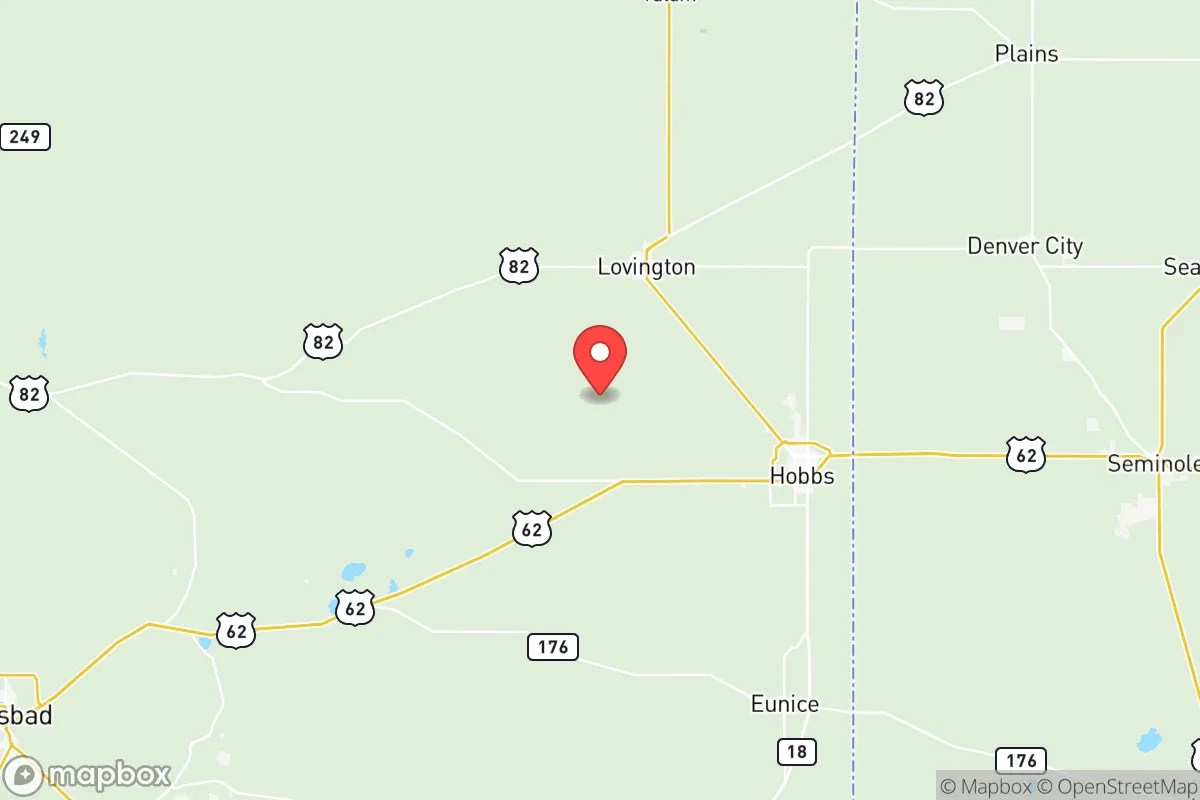
Hobbs is the county's undisputed economic and population center, home to roughly 40,000 residents and the anchor of Lea County's oil and gas economy. Daily life here revolves around the energy sector, with major employers like ConocoPhillips, XTO Energy, and the Hobbs Municipal Schools driving the local job market. The town offers the widest array of amenities in the county: a regional hospital (Lea Regional Medical Center), New Mexico Junior College, a Walmart Supercenter, and several chain restaurants and hotels along the main commercial corridor of North Lovington Highway. Housing is relatively affordable compared to other energy boomtowns, with a median home value of $176,000, though rents have risen with demand. The town has a working-class, transient feel, with many workers on rotational schedules, and the social scene is heavily oriented around sports, hunting, and the local casino. Lovington, the county seat about 20 miles north, is smaller (roughly 11,000 residents) and quieter, with a more established, family-oriented character. Its downtown retains a historic courthouse square, and the community is anchored by the Lea County Fairgrounds and the Lovington Municipal Schools. Life here is slower-paced than Hobbs, with fewer retail options but a stronger sense of local identity.
Smaller towns & rural pockets
Beyond the two main towns, Lea County's smaller communities offer a markedly different quality of life. Jal, located about 30 miles south of Hobbs near the Texas border, is a classic oilfield town with a population around 2,000. It has a single grocery store, a few local diners, and a strong sense of community centered on the Jal Public Schools and the local golf course. Housing is very affordable, with many older homes available for under $100,000, but amenities are minimal — residents often drive to Hobbs for medical appointments or major shopping. Tatum, in the county's western reaches, is even smaller (roughly 800 residents) and functions as a service center for surrounding ranches. It has a post office, a convenience store, and a small K-12 school, but no hospital or supermarket. Life here is deeply rural, with long commutes to Hobbs or even to Roswell (about 70 miles north) for most needs. Eunice, just south of Hobbs, is a community of about 3,000 that blends oilfield housing with older ranch homes, offering a quiet alternative to Hobbs with slightly lower home prices and a strong volunteer fire department and local church community.
Cost & lifestyle range
The cost-of-living spread across Lea County is relatively narrow, but the lifestyle differences are pronounced. At the low-cost, most rural end, Jal and Tatum offer the cheapest housing — often below $120,000 for a three-bedroom home — but require the longest commutes (30-40 minutes to Hobbs) and the most self-reliance for services. At the higher-cost, more amenity-rich end, Hobbs has the highest rents and home prices in the county, but also the only hospital, the most retail, and the only college. Lovington sits in the middle: home prices are slightly below Hobbs (median around $160,000), and the commute to Hobbs for work or shopping is about 20 minutes, but the town itself has a quieter, more family-oriented feel with good schools and a lower crime rate than Hobbs. Eunice offers a similar middle-ground, with slightly lower home prices than Lovington but fewer local amenities. Across the county, the average commute of 25 minutes reflects the fact that many workers live in smaller towns and drive to Hobbs or to oilfield sites scattered across the county.
This county works best for people who prioritize affordability and a slower, more self-sufficient lifestyle over urban convenience. Energy workers and their families will find the most job stability and social infrastructure in Hobbs, while ranchers, retirees, and those seeking true quiet will prefer the smaller communities like Jal or Tatum. The trade-off is clear: lower costs and more space come with fewer services, longer drives, and a climate that is hot, dry, and windy. For those comfortable with that equation, Lea County offers a quality of life that is both financially sustainable and deeply rooted in the rhythms of the New Mexico plains.

Crime in Lea County
Higher crime rates than 67% of comparable U.S. locations.
Violent CrimeViolent Crime Analysis
Property CrimeProperty Crime Analysis
Crime Analysis
Lea County, New Mexico, presents a mixed safety picture, with crime rates that significantly exceed both state and national averages. The county's violent crime rate stands at 603.2 incidents per 100,000 residents, while property crime reaches 2,191.9 per 100,000. These figures place Lea County among the higher-risk areas in New Mexico, driven largely by its oil-and-gas economy, transient population, and proximity to the Texas border. The county seat of Lovington and the larger city of Hobbs are the primary population centers where most reported incidents occur, while smaller communities like Tatum and Eunice generally experience lower crime volumes.
Crime in context
Lea County's violent crime rate of 603.2 per 100,000 is roughly 60% higher than the national average of about 380 per 100,000 and also exceeds New Mexico's statewide rate of approximately 780 per 100,000. Property crime at 2,191.9 per 100,000 is similarly elevated, running about 30% above the national property crime rate of roughly 1,950 per 100,000. The county's crime profile is heavily influenced by the boom-and-bust cycles of the Permian Basin oil fields, which bring a large, often transient workforce to Hobbs and Lovington. This economic activity correlates with spikes in theft, burglary, and assault, particularly in areas near motels, man camps, and industrial zones. By contrast, the smaller, more stable communities of Jal and Tatum report far fewer incidents, though their populations are too small to significantly alter county-wide averages.
What residents experience
Residents of Lea County most frequently encounter property crimes such as vehicle theft, burglary, and larceny, which together account for the bulk of reported incidents. Violent crime, while less common, is concentrated in specific areas: Hobbs, the county's largest city with roughly 40,000 residents, sees the highest number of aggravated assaults and robberies, often linked to disputes in bars, parking lots, or transient housing. Lovington, with about 11,000 residents, reports a similar pattern but at a lower volume. The county's judicial system, overseen by the 5th Judicial District Attorney's Office, has faced criticism for progressive sentencing policies that some residents argue prioritize rehabilitation over incarceration. Critics point to repeat offenders cycling through the system in Hobbs and Lovington, where liberal-leaning judges have been known to impose lighter sentences for drug-related thefts and non-violent felonies, contributing to a perception that crime carries few consequences. This approach, while intended to reduce recidivism, has frustrated victims and business owners who see the same individuals committing multiple offenses.
Neighborhood-level variation is significant within Lea County. In Hobbs, areas near the intersection of North Grimes Street and West Sanger Street, as well as the corridor along U.S. 62/180, report higher concentrations of property crime and drug-related incidents. Conversely, the newer subdivisions on the south and west sides of Hobbs, such as those near Del Norte High School, tend to be quieter. Lovington's historic downtown and the neighborhoods around Lea County Courthouse are generally safer, while the eastern industrial edge near the airport sees more theft and vandalism. For those considering relocation, the safest residential options are typically found in the smaller communities of Eunice and Tatum, where crime rates are a fraction of Hobbs's, though amenities and employment opportunities are more limited. Prospective residents should also note that progressive judicial policies in the 5th Judicial District have been linked to higher recidivism rates, a factor that directly impacts daily life and property values across the county.
* Values derived from national, state, county, city and local statistics and may differ in a specific area. Last updated: 2026-06-12T19:35:15.000Z
Narrative content on this page is AI-generated and may contain mistakes. Verify any details that matter before acting on them.
ReloMaps may earn a commission from affiliate links at no extra cost to you.

