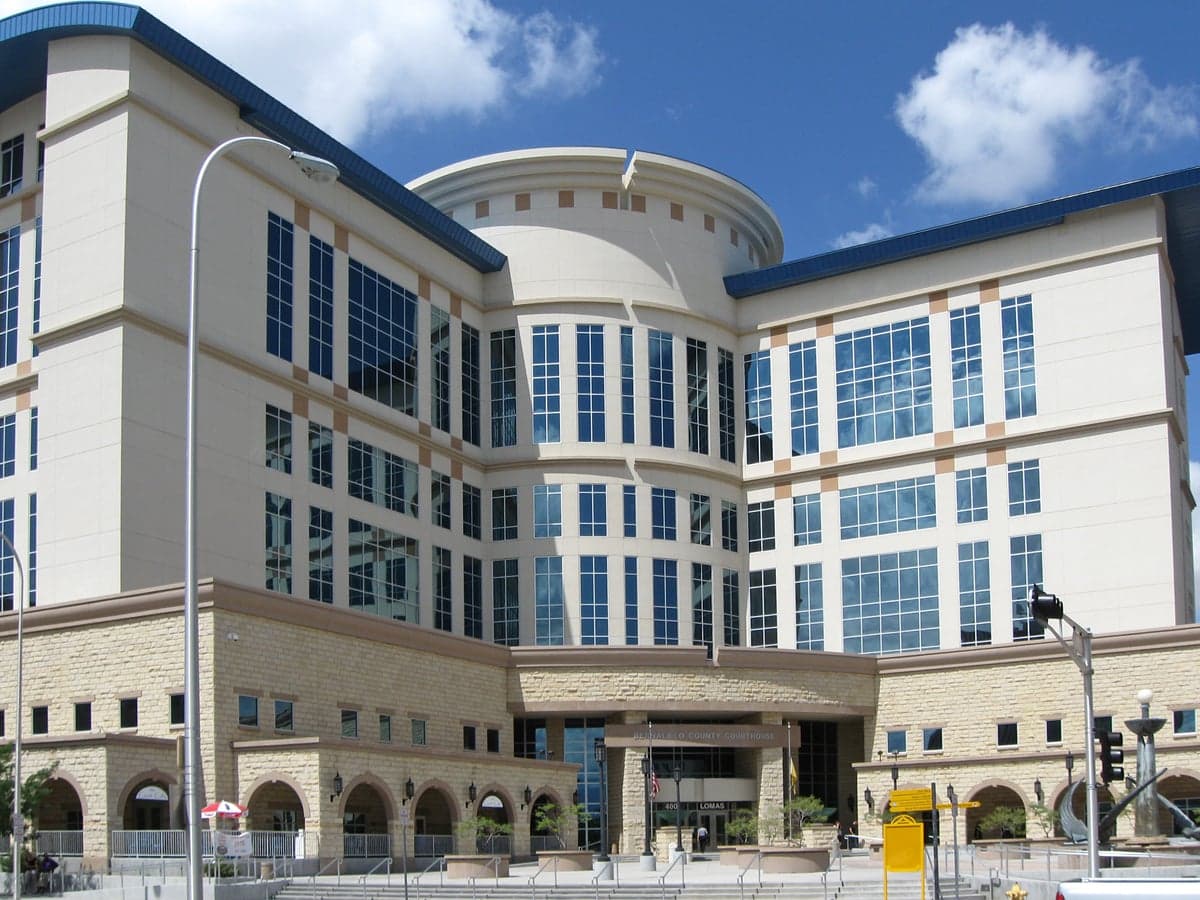
Photo: Wikipedia
Demographics of Bernalillo County
Affluence Level in Bernalillo County
A middle-class area roughly in line with national averages across income, home values, education, and employment.
People of Bernalillo County
The people of Bernalillo County today form a majority-Hispanic population of 674,357, concentrated in the Albuquerque metro area, where a distinctive blend of centuries-old Nuevomexicano roots and recent domestic in-migration creates a culturally complex, politically moderate region. The county is 48.9% Hispanic (overwhelmingly of Spanish colonial and Mexican descent), 37.8% non-Hispanic white, 2.6% Black, 2.2% East/Southeast Asian, and 0.5% Indian subcontinent, with a foreign-born share of just 5.2% — well below the national average. This is not a gateway immigrant hub but a deeply rooted place where Native American pueblos, Spanish land grants, and 20th-century federal investment have layered distinct communities across the Rio Grande valley and the Sandia foothills.
Settlement & growth (pre-1960)
Human habitation in what is now Bernalillo County stretches back over 10,000 years, with Tiwa-speaking Pueblo peoples establishing permanent agricultural villages along the Rio Grande. The Tiwa pueblos of Sandia and Isleta — both still active sovereign nations today — were already centuries old when Spanish colonists arrived in 1598 under Juan de Oñate. Spanish settlement concentrated along the river, with the villa of Albuquerque founded in 1706 as a farming and trading outpost on the Camino Real. The Spanish crown issued large land grants to settlers, creating a class of rancheros whose descendants still form the core of the county's Hispanic population. Unlike Anglo-dominated regions of Texas or California, New Mexico's Spanish/Mexican population never lost demographic dominance; the 1850 U.S. Census, taken just four years after the Mexican-American War, recorded Bernalillo County as overwhelmingly Hispanic.
After the U.S. takeover in 1846, Anglo-American migration arrived slowly and in modest numbers. The Atchison, Topeka and Santa Fe Railway reached Albuquerque in 1880, transforming the small farming village into a railroad division point and commercial hub. Anglo merchants, lawyers, and federal officials settled in the new "New Town" east of the railroad tracks, while the original Hispanic settlement west of the tracks became known as Old Town. The railroad also brought a small wave of European immigrants — Italian, German, and Greek laborers and shopkeepers — who clustered in the Barelas and South Broadway neighborhoods of Albuquerque. By 1900, the county's population had reached roughly 28,000, still about two-thirds Hispanic.
The 20th century brought two transformative federal projects. Kirtland Air Force Base, established in 1941, and Sandia National Laboratories, founded in 1949, turned Albuquerque into a Cold War science and defense center. These facilities drew a wave of well-educated, mostly white professionals from across the country — engineers, physicists, and administrators — who settled in the Northeast Heights and Sandia Park areas. The University of New Mexico, founded in 1889, expanded rapidly after World War II, attracting faculty and students from outside the state. This federal-scientific influx created a sharp internal divide: the older Hispanic and Native communities of the South Valley and West Side versus the newer, whiter, more affluent East Side and foothills. By 1960, the county's population had grown to 262,000, with the non-Hispanic white share rising to roughly 55% — the highest it would ever reach.
Modern era (post-1965)
The 1965 Hart-Cellar Act had a muted effect on Bernalillo County compared to coastal regions. The foreign-born share remains low at 5.2%, and most immigration has been from Latin America, particularly Mexico and Central America. These newer immigrants have tended to settle in the South Valley and International District (formerly the War Zone) of southeast Albuquerque, areas with existing Hispanic populations and lower housing costs. A smaller but visible community of Vietnamese refugees arrived after 1975, concentrated in the Northeast Heights and around the San Mateo corridor, where several Vietnamese restaurants and markets operate. The East/Southeast Asian population now stands at 2.2%, with Chinese and Filipino communities the largest subgroups.
The most significant demographic shift since 1965 has been the rebounding Hispanic share. After declining to a low of roughly 50% in the 1970s, the Hispanic proportion has climbed back to 48.9% — a figure that undercounts many mixed-race individuals who identify as white on the census. This growth comes from higher birth rates among Hispanic families and continued domestic in-migration from other parts of New Mexico and the Southwest, rather than from international immigration. Meanwhile, the non-Hispanic white share has fallen from its 1960 peak to 37.8%, driven by lower birth rates and some out-migration of retirees and professionals to other Sun Belt states.
Suburbanization has reshaped settlement patterns dramatically. The West Side of Albuquerque — areas like Rio Rancho (technically in Sandoval County but functionally part of the metro) and the unincorporated communities of Paradise Hills and Taylor Ranch — exploded after 1990, drawing both Hispanic and white families seeking newer, larger homes. The East Mountains communities of Tijeras, Cedar Crest, and Sandia Park attracted a more rural, libertarian-leaning population of retirees and commuters. The historic Hispanic villages of the South Valley (Pajarito, Los Padillas, Atrisco) have seen infill development but remain culturally distinct, with deep land-grant traditions and a strong agricultural identity. The Black population, at 2.6%, is small but concentrated in the International District and around Kirtland Air Force Base, reflecting military and federal employment patterns.
The future
Bernalillo County is projected to become more Hispanic and more diverse over the next two decades. The Hispanic share is expected to approach 55-60% by 2040, driven by natural increase and continued domestic migration from other parts of New Mexico and the Southwest. The non-Hispanic white share will continue to decline, though the county will retain a substantial white minority. The East/Southeast Asian and Indian subcontinent populations, while small, are growing steadily — the Indian community (0.5%) has doubled since 2010, concentrated in the Northeast Heights and around the University of New Mexico. The Black population is growing slowly, primarily through military and federal transfers.
Geographically, growth is pushing outward. The West Side will continue to absorb most new housing development, with the unincorporated areas of Atrisco and the Rio Puerco valley seeing the fastest expansion. The East Mountains are constrained by water and wildfire risk, limiting growth. The South Valley is likely to remain predominantly Hispanic and lower-income, with pressure from gentrification as Albuquerque's housing costs rise. The International District is slowly diversifying as younger, more educated residents move in, but it remains the county's most economically distressed area.
Culturally, the county is becoming more polarized between the liberal, college-educated population of the Northeast Heights and University area (37.4% of adults hold a bachelor's degree or higher) and the more conservative, working-class Hispanic and white populations of the South Valley and West Side. The Native American population, while small (roughly 4% countywide), remains concentrated at Sandia Pueblo and Isleta Pueblo, both of which are asserting greater economic and political autonomy through casino development and tribal courts.
For someone moving to Bernalillo County today, the region offers a rare combination: a deep, continuous Hispanic cultural foundation that predates the United States, layered with a mid-century federal science economy and a growing, diversifying suburban fringe. The county is not becoming a melting pot in the coastal sense — its foreign-born share is low, and its identity remains rooted in the Nuevomexicano heritage of the Rio Grande valley. But it is becoming more varied within that framework, with new communities of Asians, Indians, and younger Anglos reshaping the suburbs while the historic villages and pueblos maintain their centuries-old character. The bottom line: Bernalillo County is a place where the past is still very much present, and where the future looks increasingly Hispanic, increasingly suburban, and increasingly divided between the old river settlements and the new desert subdivisions.

* Values derived from national, state, county, city and local statistics and may differ in a specific area. Last updated: 2026-08-24T19:26:37.000Z
Narrative content on this page is AI-generated and may contain mistakes. Verify any details that matter before acting on them.
ReloMaps may earn a commission from affiliate links at no extra cost to you.

