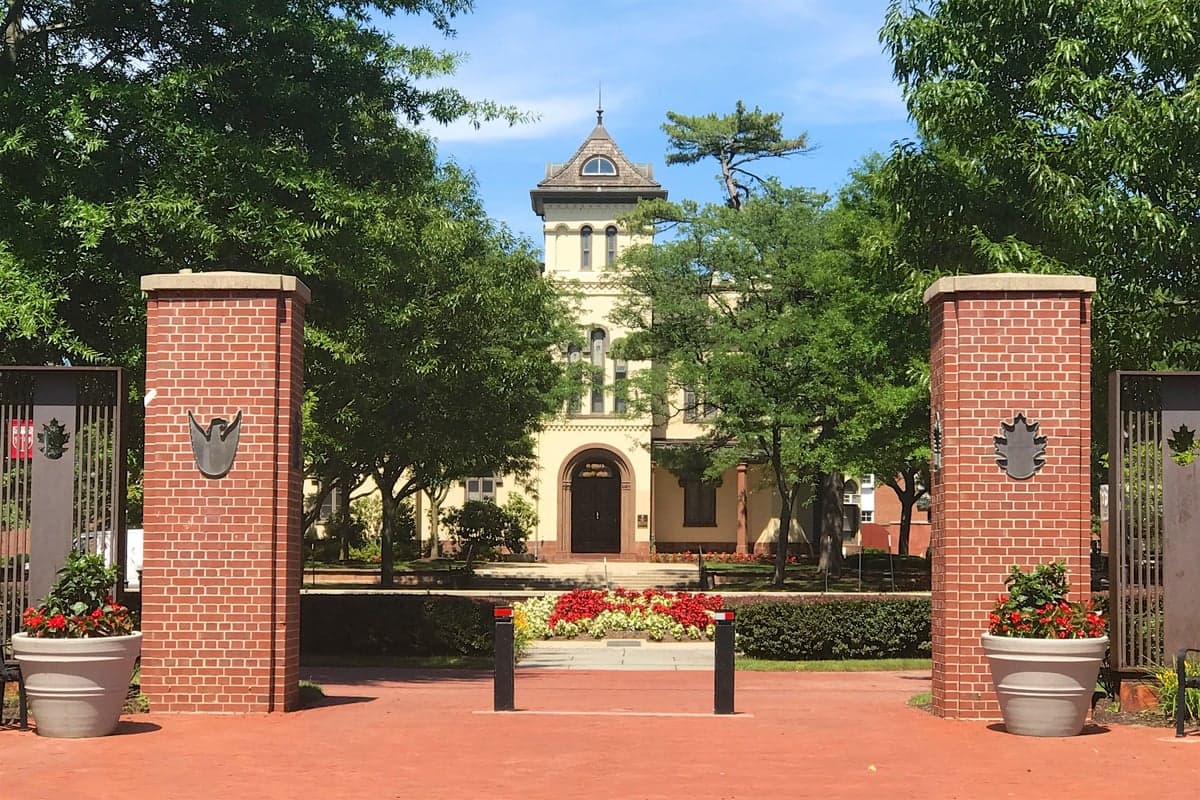
Photo: Wikipedia
Personal Sovereignty in Middlesex County
Viable for self-reliance. Generally workable, though some barriers may limit total independence.
What does Personal Sovereignty tell us?
Personal Sovereignty measures your capacity for self-reliance and independence with minimal government friction. Higher scores mean fewer barriers between you and the way you want to live... but it assumes you have the space you need and good neighbors.
What does this tell us?
Personal Sovereignty measures your capacity for self-reliance and independence with minimal government friction. Higher scores mean fewer barriers between you and the way you want to live... but it assumes you have the space you need and good neighbors.
State Policy
Energy independence: Importer (8% of energy produced in-state)
Personal Liberty
Homesteading

Personal Liberty Analysis
For individuals and families prioritizing personal sovereignty, Middlesex County, New Jersey presents a complex and often contradictory environment. While the state’s overall regulatory and tax posture is among the most restrictive in the nation, the county’s specific municipalities offer varying degrees of autonomy, particularly in areas like self-defense, property rights, and daily life. A strategic relocation here requires a clear-eyed understanding that New Jersey’s centralized power structure—from Trenton’s gun laws to its property tax system—directly challenges the kind of self-reliance many conservative-leaning preppers and survivalists seek. The trade-off is proximity to dense economic opportunity and infrastructure, but the price is constant vigilance against government overreach into personal freedoms.
Tax burden and regulatory posture: What you pay for limited freedom
Middlesex County’s tax burden is a primary constraint on personal sovereignty. The average effective property tax rate hovers around 2.3% of assessed home value, one of the highest in the nation, meaning a $400,000 home carries roughly $9,200 in annual property taxes. This is not a fee for services you control; it’s a compulsory transfer to a state government that consistently expands its regulatory reach. Towns like Edison and Woodbridge have some of the highest tax rates in the county, while more rural pockets like Monroe Township or South Brunswick offer slightly lower rates but still far exceed national averages. The state income tax is progressive, topping out at 10.75% for high earners, and sales tax is 6.625%. For a prepper mindset, this means every dollar earned is heavily taxed before you can allocate it to supplies, land, or emergency funds. Regulatory burdens extend to everything from building permits (often requiring months of approvals in towns like New Brunswick) to environmental restrictions that limit what you can do on your own property. The state’s COAH (Council on Affordable Housing) mandates also force municipalities to zone for high-density development, reducing opportunities for large-lot, self-sufficient living.
Self-defense and gun law specifics: Navigating a restrictive regime
New Jersey’s gun laws are among the most restrictive in the country, and Middlesex County is no exception. The state requires a Firearms Purchaser Identification Card (FPID) for handguns and long guns, a process that involves background checks, fingerprinting, and references—often taking months. Concealed carry permits are issued on a “justifiable need” basis, though the 2022 Supreme Court ruling in NYSRPA v. Bruen forced the state to loosen its “may-issue” standard. In practice, however, local police chiefs in towns like Perth Amboy and Piscataway still exercise significant discretion, and applications are frequently denied or delayed. Magazine capacity is capped at 10 rounds, and “assault weapons” bans cover many common semi-automatic rifles. For a survivalist, this means building a meaningful self-defense arsenal is legally arduous and expensive. The county’s sheriff’s office in Middlesex Borough does offer some training and community programs, but the overall environment is one of state-imposed vulnerability. If you value the right to defend your home and family without government permission, this is a major red flag. Compare this to more gun-friendly counties in Pennsylvania or upstate New York, where restrictions are far lighter.
Self-reliance and homesteading viability: Lot sizes, zoning, and off-grid feasibility
True homesteading in Middlesex County is a challenge due to dense suburban zoning and strict environmental regulations. Most residential lots in towns like East Brunswick and Old Bridge are under half an acre, with homeowners’ associations (HOAs) often banning chickens, goats, or large gardens. Even in more rural areas like Monroe Township or South Brunswick, where some lots reach 1-2 acres, zoning codes prohibit permanent off-grid systems like composting toilets, rainwater collection for potable use, or solar panels without grid tie-in. The state’s DEP (Department of Environmental Protection) enforces strict wetland and stream buffer rules that can prevent clearing land for food production. For a prepper, this means you cannot truly “live off the land” here—you remain dependent on municipal water, sewer, and power grids. The county’s Office of Emergency Management does run preparedness workshops, but these are focused on short-term emergencies (storms, floods) rather than long-term self-sufficiency. If you want to raise livestock, grow a year’s worth of food, or generate your own power, look to more rural counties in western New Jersey or neighboring Pennsylvania. Middlesex is best viewed as a place to build financial resources and networks, not as a permanent homestead.
Personal liberties: Parental rights, medical autonomy, speech, and property
On paper, New Jersey protects free speech and religious exercise, but in practice, local governments in Middlesex County often prioritize progressive social agendas over individual rights. Parental rights in education have been a flashpoint: towns like Edison and Woodbridge have school boards that have adopted policies on gender identity and curriculum that some parents view as undermining their authority. The state’s “New Jersey Student Learning Standards” mandate certain content, and opting your child out is difficult. Medical autonomy is also constrained—New Jersey has strict vaccine mandates for school attendance, and during the COVID-19 pandemic, the state imposed some of the longest-lasting mask and vaccine mandates in the country. Property rights are limited by the state’s “Mount Laurel” doctrine, which forces municipalities to zone for affordable housing, often overriding local zoning decisions. For a conservative-leaning individual, this means your ability to control what happens on your property, in your child’s classroom, or in your own body is constantly subject to state override. The county’s political climate is reliably Democratic, with New Brunswick and Perth Amboy being strongholds, while Monroe Township and South Brunswick lean more moderate but still vote blue in most elections.
Overall, Middlesex County offers a low level of personal sovereignty compared to other regions in the Northeast and much of the country. The tax burden, restrictive gun laws, dense zoning, and progressive governance create an environment where self-reliance is difficult and government overreach is the norm. For a survivalist or prepper, this county is best approached as a temporary base for building capital and connections, not as a long-term sanctuary. If you must be here for work or family, focus on towns like Monroe Township or South Brunswick for slightly larger lots and more moderate local politics, but be prepared to fight for every inch of freedom. For those who prioritize autonomy above all else, the smarter move is to look west to Pennsylvania or south to states like Virginia or Tennessee, where the balance of power tilts far more toward the individual.

* Values derived from national, state, county, city and local statistics and may differ in a specific area. Last updated: 2026-05-16T08:26:09.000Z
Narrative content on this page is AI-generated and may contain mistakes. Verify any details that matter before acting on them.
ReloMaps may earn a commission from affiliate links at no extra cost to you.

