
Photo: Wikipedia
Strategic Assessment of Atlantic County
Multiple tactical vulnerabilities. Population density, target proximity, or disaster risk are likely compounding. A retreat property and exit planning is required.
What does the Strategic Assessment tell us?
Our Strategic Assessment grades tactical survivability of an area. Major population centers, military targets, fallout zones, natural disasters, and border exposure all drive risk — lower exposure means a more defensible position in a crisis.
This is heavily inspired by Joel Skousen's Strategic Relocation book. Highly recommended you checkout the book ($)What does this tell us?
Our Strategic Assessment grades tactical survivability of an area. Major population centers, military targets, fallout zones, natural disasters, and border exposure all drive risk — lower exposure means a more defensible position in a crisis.
This is heavily inspired by Joel Skousen's Strategic Relocation book. Highly recommended you checkout the book ($)Strategic Pillars

Key Distances
Strategic Assessment Analysis
Atlantic County, New Jersey, presents a complex strategic picture for a relocator with a conservative, preparedness-minded outlook. Its position on the mainland, buffered from the immediate Atlantic coastline by barrier islands like Absecon Island and Brigantine, offers a mix of advantages and serious liabilities. While the county’s location provides access to significant natural resources and a degree of geographic insulation from some coastal threats, its proximity to major population centers, critical infrastructure, and high-risk targets demands a sober, calculated assessment. For the individual or family prioritizing resilience, self-sufficiency, and a lower profile, Atlantic County is not a straightforward recommendation—it requires careful site selection within its borders to mitigate inherent risks.
Geographic position and natural advantages for long-term stability
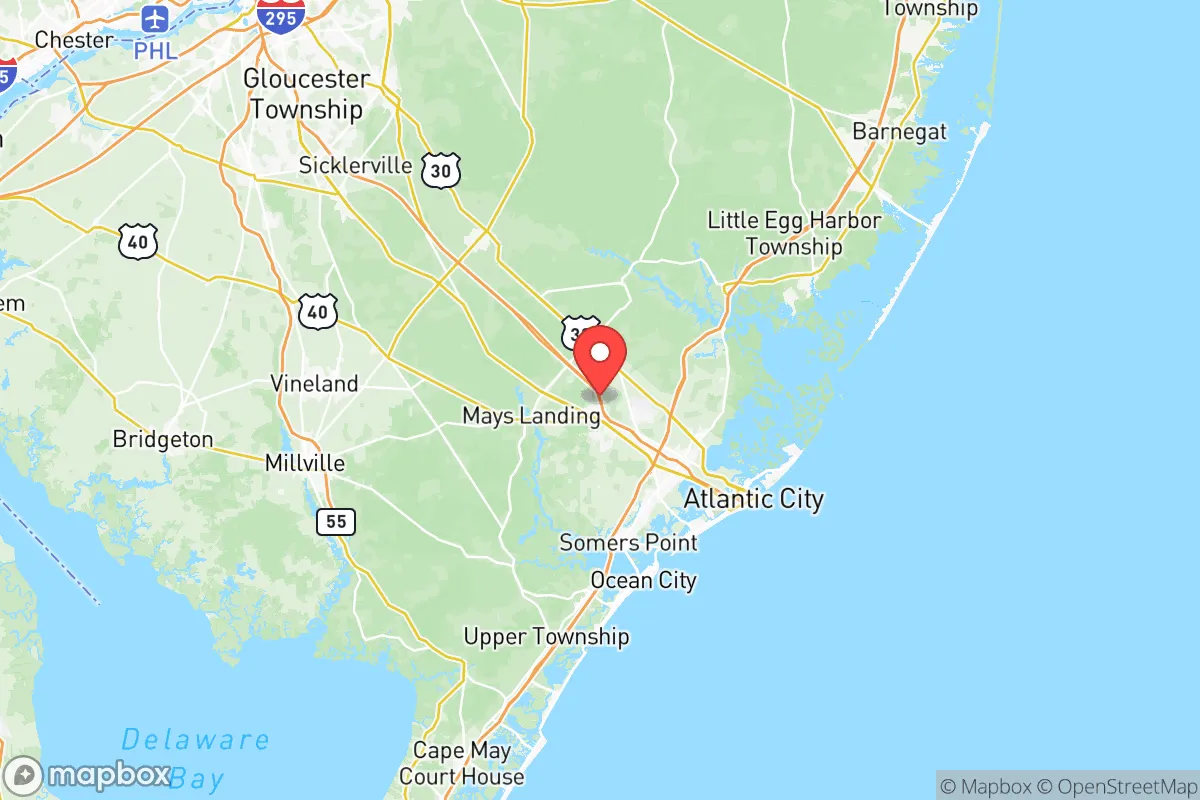
Atlantic County’s geography is defined by its position between the Atlantic Ocean and the Pine Barrens, a vast, sparsely populated forested region that offers significant strategic value. The mainland portion, including towns like Hammonton, Buena, and Folsom, sits atop the Kirkwood-Cohansey aquifer, one of the most productive freshwater sources on the East Coast. This means a relocator here has access to reliable groundwater, a critical asset for long-term self-sufficiency. The Pine Barrens themselves provide a natural buffer—dense, difficult-to-traverse terrain that can slow movement and offer concealment. The county’s agricultural zone, particularly around Hammonton—known as the “Blueberry Capital of the World”—supports local food production, reducing dependence on fragile supply chains. For a prepper, the ability to tap into local farms, establish a well, and leverage the forest for resources is a tangible advantage. The area’s relatively low population density outside the coastal strip also means fewer eyes and less competition for resources in a crisis scenario.
Risks, exposures, and proximity to high-value targets
The most significant downside to Atlantic County is its proximity to multiple high-consequence targets. The county is home to the Atlantic City International Airport and the FAA William J. Hughes Technical Center, both of which are potential targets for aerial or cyber attack. The entire coastal strip, including Atlantic City and Ventnor, is a dense urban corridor that would be a primary evacuation zone in any major event—meaning a relocator on the mainland could face massive refugee flows from the east. Additionally, the county lies within 50 miles of the Philadelphia Naval Shipyard and the Delaware River refinery corridor (including the Paulsboro and Marcus Hook refineries), which are high-value industrial targets. A strike or accident at any of these could produce toxic plumes or disrupt regional power and fuel supplies. The Garden State Parkway and Atlantic City Expressway run through the county, creating chokepoints that could be blocked or contested. For a conservative relocator concerned with civil unrest, the county’s proximity to Philadelphia and New York City (both within 100 miles) means that any urban collapse could spill over into Atlantic County within days. The presence of the Atlantic County Government Complex in Mays Landing also makes it a potential focal point for state-directed response or unrest.
Practical resilience for a relocator: food, water, energy, and defensibility
On the practical side, Atlantic County offers a mixed bag. Water is a major plus: the aquifer is deep and clean, and many rural properties can support a private well. Rainwater collection is also viable given the region’s average 40+ inches of annual precipitation. Food resilience is moderate—local farms are abundant, but they are commercial operations, not smallholdings. A relocator would need to secure land with agricultural zoning or existing garden space. Hammonton and the surrounding area have a strong farming community, which could be leveraged for barter or cooperative arrangements. Energy is a weak point. The grid is aging and heavily dependent on natural gas and nuclear power from the Hope Creek and Salem nuclear plants across the Delaware Bay. A major event at either plant could render large portions of the county uninhabitable for weeks. Solar is viable, but the region’s frequent cloud cover and nor’easters reduce efficiency. Defensibility varies sharply by location. The Pine Barrens offer natural cover and isolation, but the flat terrain means that a determined group could approach from multiple directions. Properties near the Mullica River or Great Egg Harbor River offer water access but also create avenues for intrusion. The best defensive posture would be a rural property with a well, solar backup, and a clear line of sight to approach roads—something achievable in the western part of the county, near Buena or Folsom, but not in the suburban sprawl around Egg Harbor Township.
The overall strategic picture for Atlantic County is one of conditional viability. It is not a safe haven—it is a buffer zone with significant exposure to coastal and industrial threats. For a relocator willing to invest in off-grid infrastructure, secure a defensible property in the Pine Barrens, and maintain a low profile, the county offers genuine advantages in water and food access. However, the risks from nearby high-value targets, the potential for refugee flows from the coast, and the vulnerability of the regional grid mean that this is a location for the prepared, not the casual prepper. If you are looking for a place to ride out a localized crisis with a strong community and natural resources, Atlantic County can work—but only if you choose your exact location with care and have a plan for evacuation if the situation escalates. For those prioritizing absolute isolation and minimal risk, the interior of the Pine Barrens or further west into Pennsylvania may be a better bet.

* Values derived from national, state, county, city and local statistics and may differ in a specific area. Last updated: 2026-05-21T09:11:36.000Z
Narrative content on this page is AI-generated and may contain mistakes. Verify any details that matter before acting on them.
ReloMaps may earn a commission from affiliate links at no extra cost to you.

