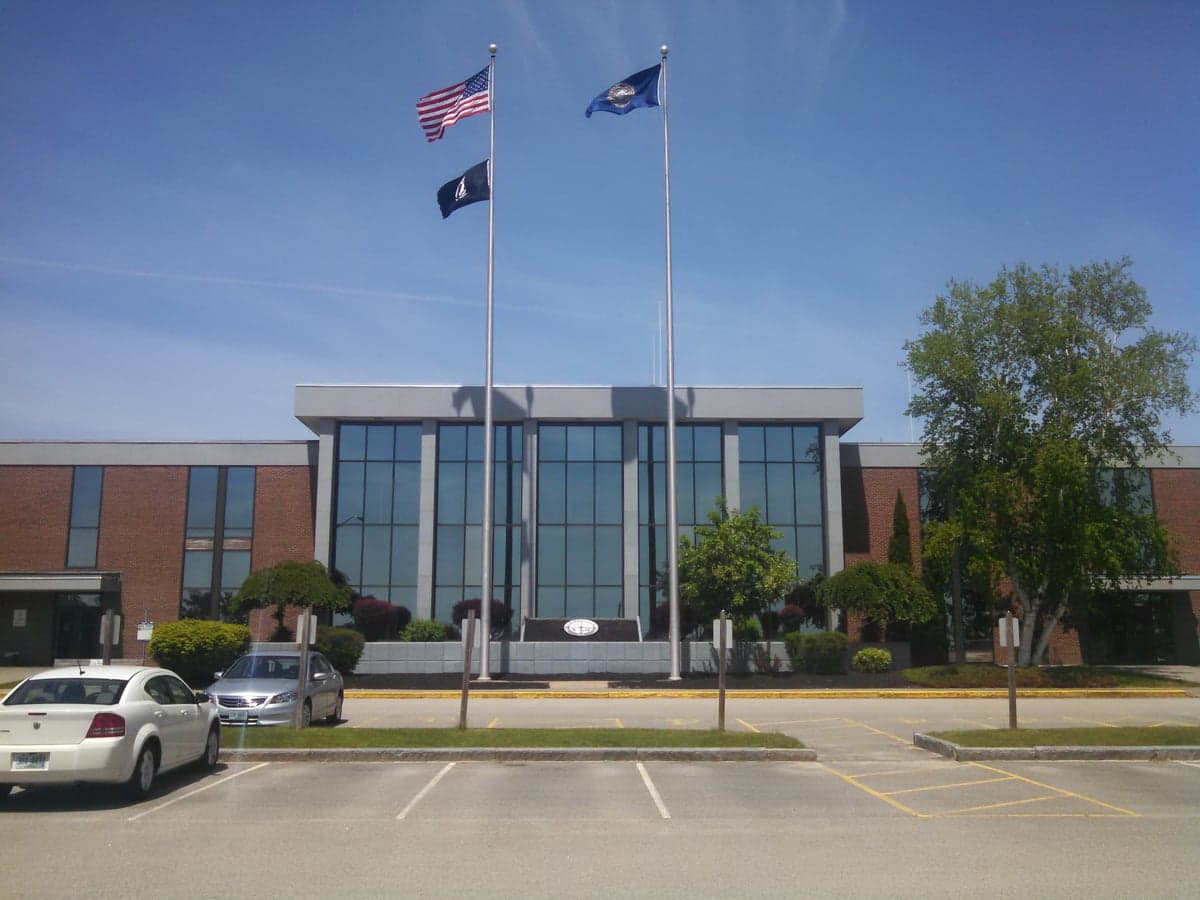
Photo: Wikipedia
Personal Sovereignty in Strafford County
Viable for self-reliance. Generally workable, though some barriers may limit total independence.
What does Personal Sovereignty tell us?
Personal Sovereignty measures your capacity for self-reliance and independence with minimal government friction. Higher scores mean fewer barriers between you and the way you want to live... but it assumes you have the space you need and good neighbors.
What does this tell us?
Personal Sovereignty measures your capacity for self-reliance and independence with minimal government friction. Higher scores mean fewer barriers between you and the way you want to live... but it assumes you have the space you need and good neighbors.
State Policy
Energy independence: Importer (10% of energy produced in-state)
Personal Liberty
Homesteading

Personal Liberty Analysis
Strafford County, New Hampshire, offers a notably high degree of personal sovereignty relative to much of the Northeast, anchored by New Hampshire’s "Live Free or Die" ethos and a state-level legal framework that consistently prioritizes individual autonomy. The county’s environment is defined by a light regulatory touch on firearms, no state income or sales tax, and a strong tradition of local governance, though the degree of personal freedom varies significantly between its urbanizing southern towns and its more rural northern communities. For a relocation-minded individual or family seeking to maximize self-reliance, Strafford County presents a compelling balance of low tax burden and permissive self-defense laws, but the feasibility of off-grid living and the intensity of local zoning enforcement depend heavily on which specific town you choose.
Tax burden and regulatory posture in Strafford County
New Hampshire’s absence of a state income tax and a state sales tax is the cornerstone of its low-tax appeal, and Strafford County residents benefit directly from this framework. The primary revenue source for local services is the property tax, which in Strafford County averages roughly 1.8% to 2.2% of assessed value, depending on the municipality. Rochester and Somersworth tend to have slightly higher mill rates due to more developed municipal infrastructure, while Middleton and Farmington often see lower effective rates due to less dense service demands. The regulatory posture at the county level is minimal; most land-use and building regulations are set by individual towns. The state’s "right-to-work" status and lack of a broad-based business tax further reduce the bureaucratic overhead for self-employed individuals and small homesteaders. However, towns like Durham, home to the University of New Hampshire, have more active planning boards and stricter zoning ordinances than rural Strafford or New Durham, where a lighter regulatory touch prevails.
Self-defense and gun law specifics in Strafford County
New Hampshire is a constitutional carry state, meaning no permit is required to carry a concealed firearm for any law-abiding adult 18 or older, and Strafford County fully reflects this permissive environment. The state also preempts local firearm ordinances, so towns like Dover or Rochester cannot enact their own restrictions beyond state law. There is no state-level firearm registry, no waiting period for purchases, and no permit requirement for purchasing a handgun. Stand-your-ground and castle doctrine principles are codified in state law, providing strong legal protection for defensive use of force. The county has a robust culture of shooting sports, with several private ranges and public access areas for target practice, particularly in the more rural towns like Middleton and New Durham. For a reader prioritizing self-defense autonomy, Strafford County offers one of the most firearm-friendly legal environments in New England, with no meaningful local barriers to ownership or carry.
Self-reliance and homesteading viability across Strafford County
The viability of a self-reliant, homesteading lifestyle in Strafford County is highly location-dependent. The northern and western towns—Middleton, Farmington, New Durham, and Strafford—offer the most favorable conditions, with larger lot sizes (often 2+ acres minimum in rural zoning districts), lower land prices, and more permissive agricultural zoning. These areas generally allow for keeping livestock, building outbuildings, and installing alternative energy systems like solar panels or small wind turbines without extensive permitting. Off-grid living is legally feasible in these towns, though a well and septic system are required for any dwelling. In contrast, the more densely populated southern towns—Dover, Somersworth, and Rochester—have stricter subdivision regulations, smaller lot minimums (often under one acre), and more active code enforcement, making large-scale homesteading impractical. The county’s soil quality varies, with rocky, glacial till prevalent in many areas, but experienced homesteaders find productive garden plots and small orchards viable with proper soil amendment. Water rights are generally tied to property ownership, and rainwater collection is unrestricted at the state level.
Personal liberties in Strafford County: parental rights, medical autonomy, speech, and property
New Hampshire law provides strong protections for parental rights in education and healthcare decisions, including a robust school choice system with charter schools, open enrollment, and a relatively permissive homeschool environment that requires only a simple notification to the local school district. Medical autonomy is supported by the state’s broad scope of practice for naturopathic doctors and a legal framework that allows for direct primary care arrangements, though vaccine mandates for school attendance remain in place. Free speech protections are robust, with no state-level hate speech laws that would criminalize expression, and property rights are strongly defended through the state’s eminent domain statutes, which require a high public purpose threshold. The county’s towns vary in their enforcement of noise and nuisance ordinances, with rural areas like New Durham and Middleton being far more tolerant of activities like target shooting, chainsaw use, or farm equipment operation at reasonable hours than suburban Dover or Durham. For a reader who values minimal government intrusion into family and personal decisions, Strafford County’s legal environment is among the most favorable in the Northeast.
Overall, Strafford County represents a strong sovereignty proposition for those seeking to live with a high degree of personal freedom, particularly when compared to neighboring Massachusetts or coastal Maine. The combination of no income or sales tax, constitutional carry, and permissive rural zoning in towns like Middleton, Farmington, and New Durham creates an environment where self-reliance is not just tolerated but structurally supported. The trade-off is that the more urbanized towns—Dover, Somersworth, and Rochester—offer less regulatory breathing room, making it essential for a relocation-minded individual to match their specific autonomy priorities with the right municipality. For a conservative-leaning family or individual who prioritizes personal sovereignty above all else, the northern and western reaches of Strafford County deliver an environment that is rare in the region.

* Values derived from national, state, county, city and local statistics and may differ in a specific area. Last updated: 2026-08-08T16:08:10.000Z
Narrative content on this page is AI-generated and may contain mistakes. Verify any details that matter before acting on them.
ReloMaps may earn a commission from affiliate links at no extra cost to you.

