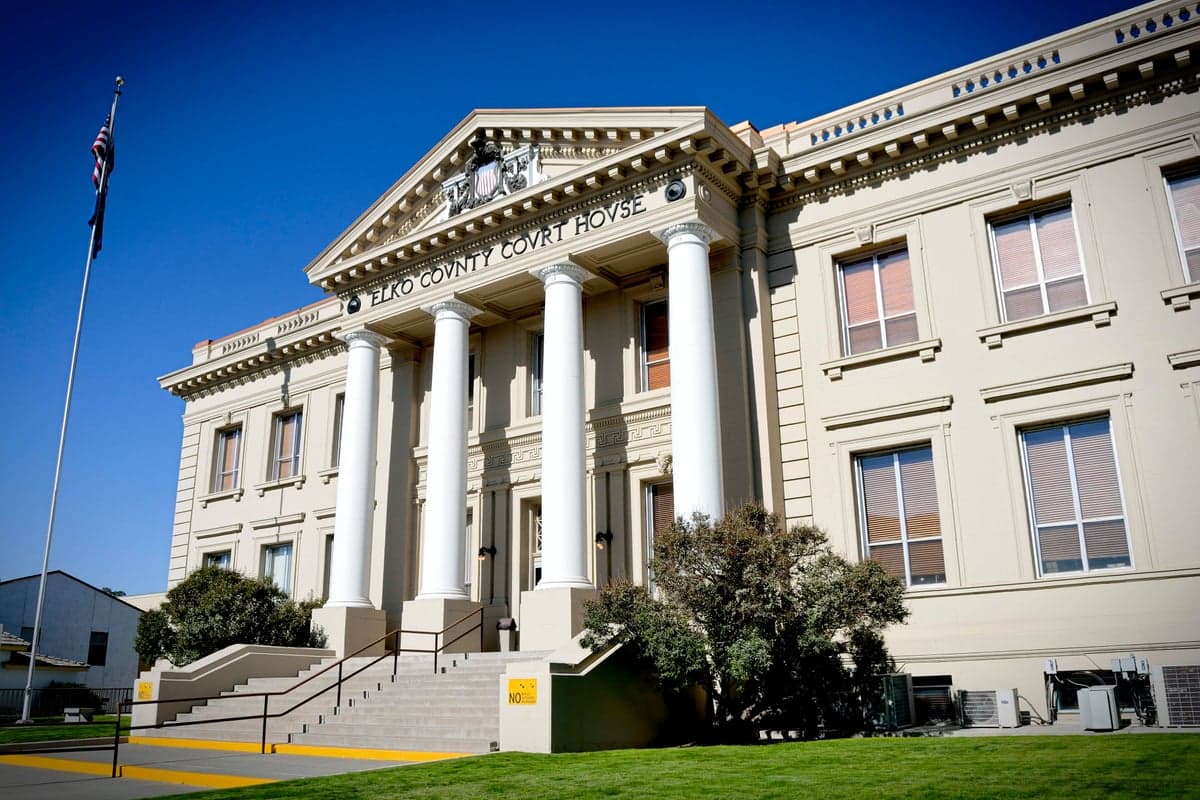
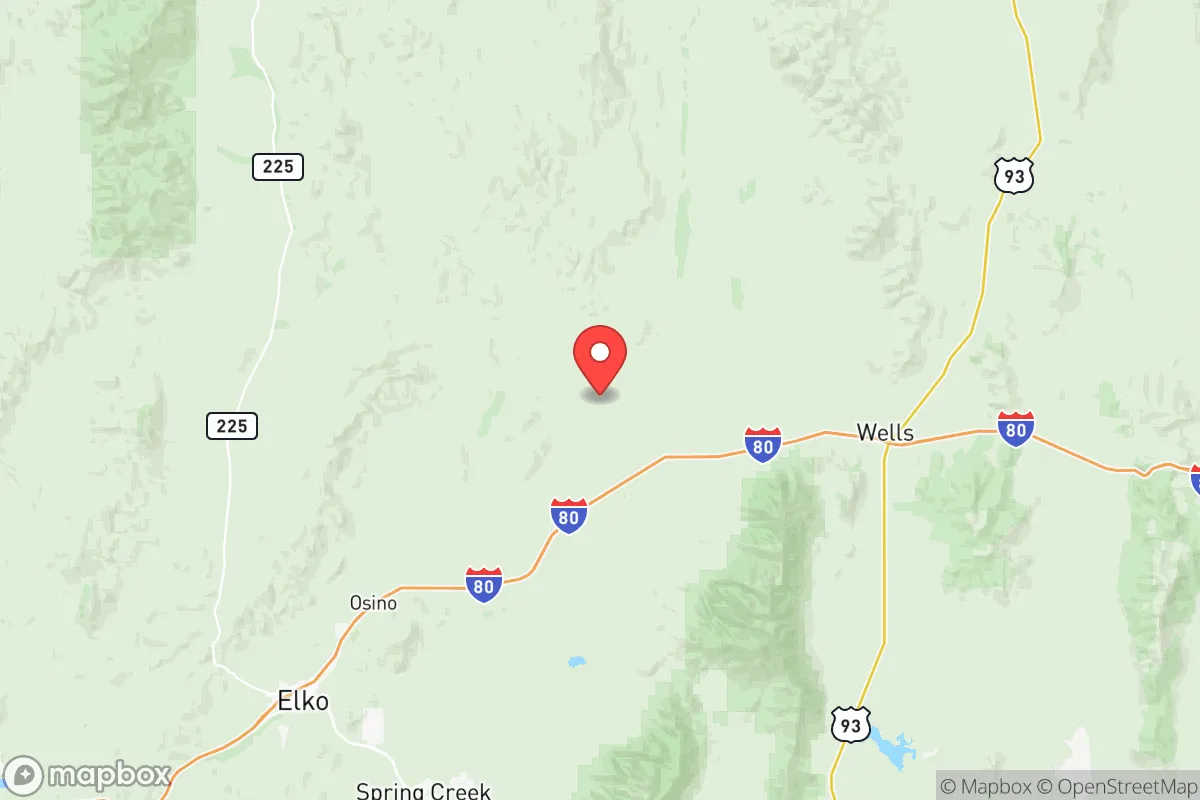
Photo: Wikipedia
Demographics of Elko County
Affluence Level in Elko County
A middle-class area roughly in line with national averages across income, home values, education, and employment.
People of Elko County
Elko County, Nevada, is home to 53,852 residents, a population shaped by a distinctive blend of Native American heritage, Basque ranching traditions, and a growing Hispanic workforce. The county’s people are spread across a vast, arid landscape, with the city of Elko serving as the economic and cultural hub, while smaller communities like Spring Creek, Carlin, and Wells anchor rural life. The population is notably less diverse than the national average, with a 62.7% white majority and a 25.7% Hispanic population, but it is younger and more male-skewed than the U.S. as a whole, reflecting the enduring pull of mining and ranching industries. Only 17.5% of adults hold a college degree, a figure that underscores the county’s blue-collar, resource-extraction character.
Settlement & growth (pre-1960)
The original inhabitants of Elko County were the Shoshone and Northern Paiute peoples, who lived in small, mobile bands across the Great Basin for thousands of years, following seasonal game and harvesting pinyon nuts. Their presence was largely undisturbed by European contact until the mid-19th century, when fur trappers and explorers—including John C. Frémont in the 1840s—passed through the region. The California Trail and the Humboldt River corridor brought the first significant wave of American settlers, mostly Anglo-American farmers and ranchers, who began establishing homesteads in the 1850s and 1860s. The completion of the Transcontinental Railroad in 1869, which ran directly through Elko County, transformed the area: the town of Elko was founded as a railroad division point, and Carlin and Wells grew as water and maintenance stops along the line.
The most distinctive immigrant group to arrive in this period were the Basques, who began coming from the Pyrenees mountains of Spain and France in the 1880s and 1890s. They were drawn by the open-range sheepherding opportunities that the vast, unfenced rangelands of northeastern Nevada offered. Basque men worked as herders for Anglo-owned ranches, often living in isolated camps for months at a time, and many eventually saved enough to buy their own flocks and land. The Basque presence became so concentrated that Elko is still considered the unofficial Basque capital of the United States, hosting the annual National Basque Festival and featuring Basque boarding houses, restaurants, and a distinctive cultural imprint. Smaller Basque communities also formed in Lamolle and Jiggs, where sheep camps and family ranches dotted the landscape.
Mining booms brought additional waves of settlers. The discovery of gold and silver in the 1870s and 1880s drew Cornish miners (known as "Cousin Jacks"), Irish laborers, and Chinese railroad workers who stayed on after the tracks were laid. The town of Mountain City boomed briefly as a mining camp, while Deeth and Halleck served as ranching and railroad supply points. The Dust Bowl of the 1930s pushed a small number of displaced farmers from Oklahoma and Texas into the county, but the population remained sparse—fewer than 10,000 residents until the 1950s. The post-World War II era saw a modest expansion of the ranching economy and the beginning of large-scale open-pit gold mining, which would later explode in the 1980s. By 1960, the county’s population had reached just over 12,000, still overwhelmingly white and native-born, with Basques as the largest ethnic minority.
Modern era (post-1965)
The 1965 Hart-Cellar Act had little direct effect on Elko County, as the region did not attract the large-scale immigration seen in coastal cities. However, the 1970s and 1980s brought a transformative economic event: the discovery of the Carlin Trend gold deposit, one of the richest gold-mining districts in the world. This triggered a mining boom that drew workers from across the United States and, increasingly, from Latin America. The Hispanic population, which was negligible in 1970, began to grow steadily as Mexican and Central American laborers arrived to work in the mines, on ranches, and in construction. By 2020, Hispanics made up 25.7% of the county’s population, concentrated in Elko and Spring Creek, where they form a visible and growing community with Spanish-language churches, markets, and social networks.
The domestic migration pattern shifted as well. The mining boom attracted workers from other Western states—especially Utah, Idaho, and Colorado—who were drawn by high wages in the gold mines. This in-migration was predominantly white and male, reinforcing the county’s existing demographic character. The town of Spring Creek, a planned community built in the 1970s, grew rapidly as a bedroom suburb for Elko’s mining workforce, offering larger lots and a more suburban lifestyle than the city itself. Meanwhile, Wells and Carlin remained smaller, more traditional railroad and ranching towns, with older housing stock and a slower pace of change.
The foreign-born population remains low at 4.4%, and the non-Hispanic white share has declined from over 90% in 1980 to 62.7% today, driven almost entirely by Hispanic growth. The East/Southeast Asian population is tiny at 1.3%, mostly Filipino and Vietnamese families who came for mining or healthcare jobs. The Black population is 0.8%, and the Indian subcontinent population is 0.1%. There is no significant Arab population. The county has not experienced the suburban sprawl or coastal flight seen in Nevada’s urban centers like Las Vegas or Reno; instead, growth has been concentrated in and around Elko, which now holds roughly 60% of the county’s population.
The future
Elko County’s population is projected to grow slowly but steadily, driven by continued demand for gold and the expansion of the mining industry. The Hispanic share is likely to increase, as younger Hispanic families have higher birth rates and continued in-migration from Mexico and Central America. However, the county is not tribalizing into distinct ethnic enclaves; rather, the Hispanic community is integrating into the broader working-class culture, with many second-generation Hispanics speaking English as a first language and working in the same mining and service jobs as their white neighbors. The white population is aging, and without significant domestic in-migration from outside the region, the county will become more Hispanic over time.
The cultural identity of Elko County is likely to remain rooted in its ranching and mining heritage, with the Basque tradition serving as a unique and celebrated ethnic marker. The county is not homogenizing in the sense of losing its distinctiveness—it remains one of the most rural, conservative, and resource-dependent areas in the West. But it is slowly becoming more diverse, with the Hispanic community adding a new layer to the existing cultural fabric. The next 10-20 years will likely see a gradual shift toward a majority-minority population, but one that is culturally conservative and economically tied to the same industries that have defined the region for over a century.
For someone moving in now, Elko County offers a stable, low-cost, and safe environment with a strong sense of community and a clear economic anchor in gold mining. The population is becoming more Hispanic, but the cultural identity remains deeply Western and traditional, with little of the political or social polarization seen in urban areas. It is a place where the past—Native, Basque, ranching, and railroad—is still visible in the present, and where the future looks much like the present, only slightly browner and slightly older.

* Values derived from national, state, county, city and local statistics and may differ in a specific area. Last updated: 2026-05-12T09:34:01.000Z
Narrative content on this page is AI-generated and may contain mistakes. Verify any details that matter before acting on them.
ReloMaps may earn a commission from affiliate links at no extra cost to you.

