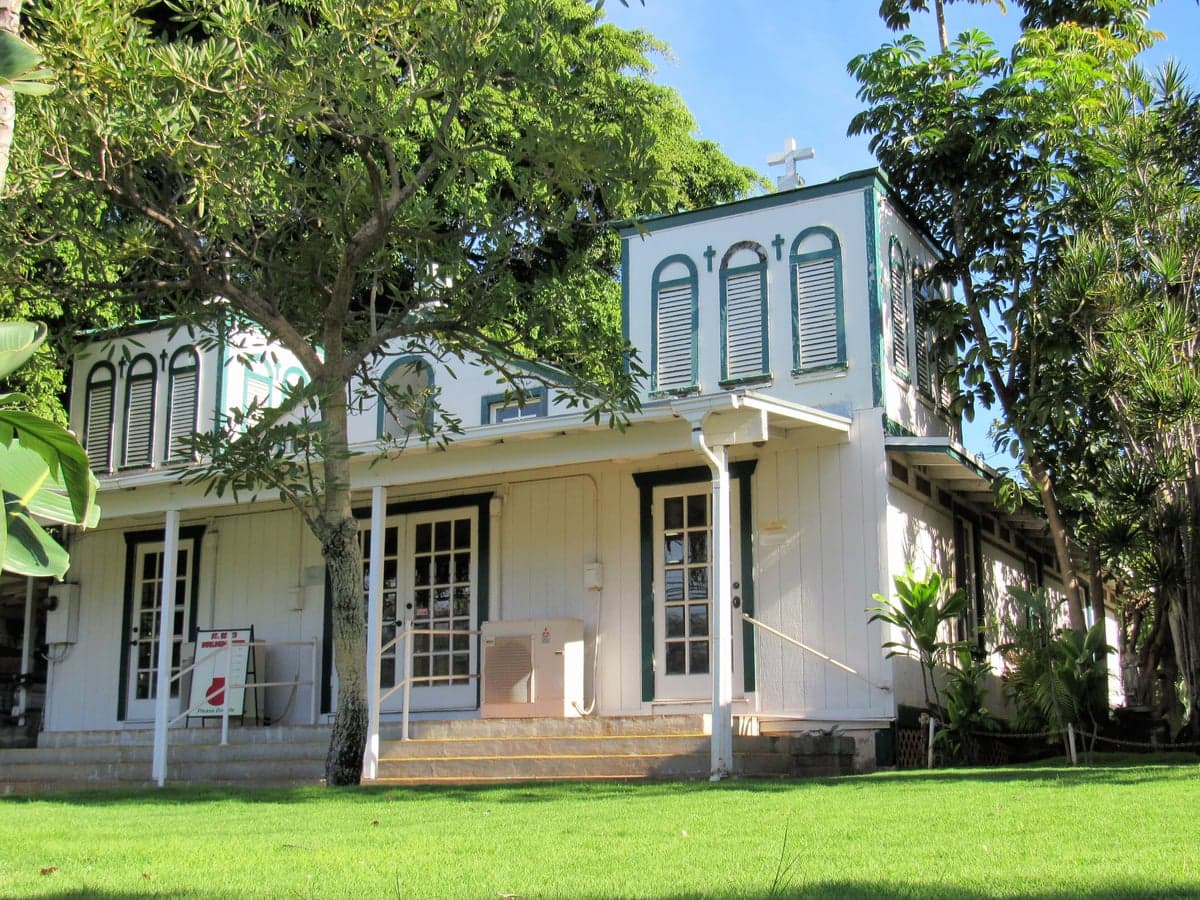
Photo: Wikipedia
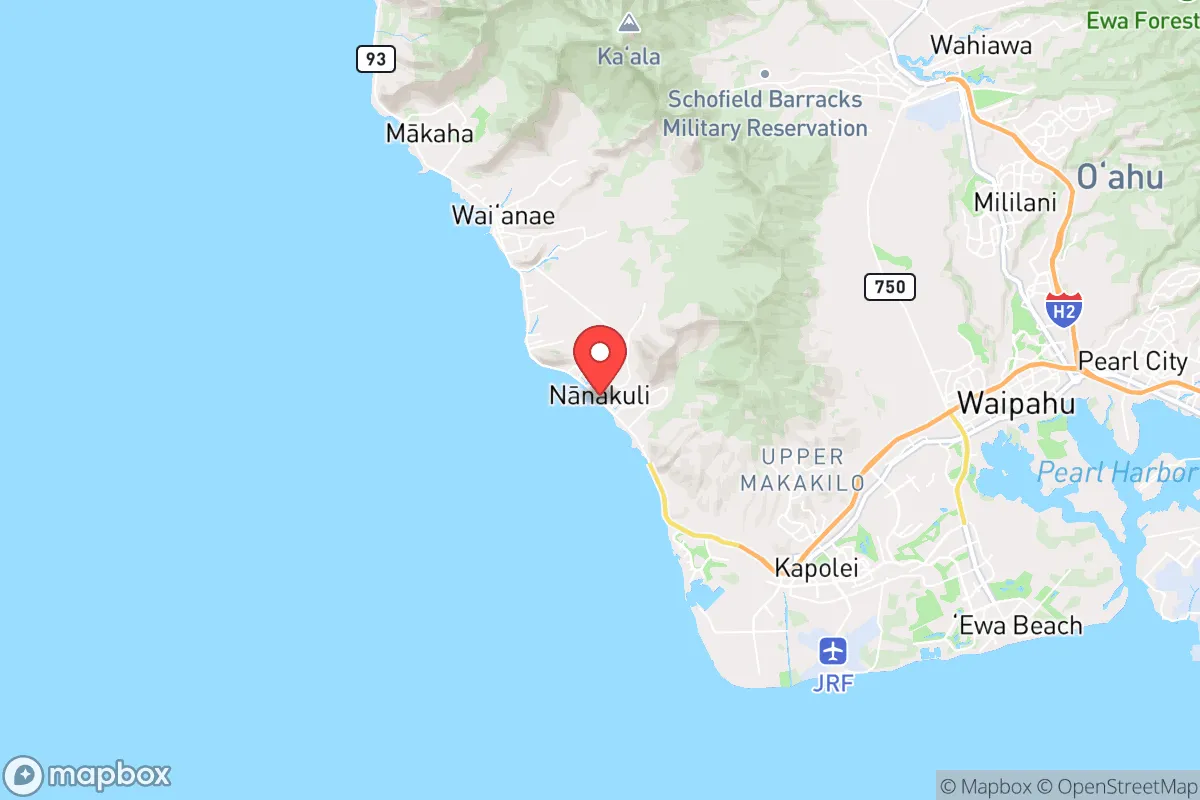
Personal Sovereignty in Nanakuli, HI
Moderate friction. Expect trade-offs in some aspect of personal liberty and independence.
What does Personal Sovereignty tell us?
Personal Sovereignty measures your capacity for self-reliance and independence with minimal government friction. Higher scores mean fewer barriers between you and the way you want to live... but it assumes you have the space you need and good neighbors.
What does this tell us?
Personal Sovereignty measures your capacity for self-reliance and independence with minimal government friction. Higher scores mean fewer barriers between you and the way you want to live... but it assumes you have the space you need and good neighbors.
State Policy
Energy independence: Importer (2% of energy produced in-state)
Personal Liberty
Homesteading

Personal Liberty Analysis
Nanakuli, on Oahu’s leeward coast, presents a deeply conflicted environment for personal sovereignty. While its rural character and tight-knit community offer a degree of autonomy rare in urban Hawaii, the iron grip of state-level mandates—from forced vaccine passports to some of the nation’s strictest gun laws—means your freedom is constantly negotiated with Honolulu. For the survivalist or prepper, Nanakuli is less a sanctuary and more a strategic outpost: you can carve out a self-reliant niche, but you’ll be doing it under the watchful eye of a government that views personal independence as a problem to be managed.
Tax burden and regulatory posture: how much the state takes and controls
Hawaii’s tax climate is punishing for anyone seeking to keep more of what they earn. The state levies a progressive income tax topping out at 11% on income over $200,000 for single filers, and the general excise tax (GET) of 4% applies to nearly every transaction, including services—meaning you pay tax on rent, groceries, and even your prepper supply orders. Property taxes in Nanakuli are relatively low compared to the mainland, with effective rates around 0.3–0.5% of assessed value, but that’s cold comfort when the median home price hovers near $700,000. The regulatory posture is equally heavy: building permits can take months, and the state’s land use commission controls zoning even in rural areas, making it difficult to add a workshop, guest house, or off-grid infrastructure without bureaucratic approval. For the prepper, this means every modification to your property—from a rainwater catchment system to a root cellar—requires navigating a permitting maze designed to discourage self-sufficiency.
Self-defense and gun law specifics: what you can and cannot do
Hawaii’s gun laws are among the most restrictive in the United States, and Nanakuli offers no local exemption. The state requires a permit to acquire any firearm, a 14-day waiting period, and registration of all handguns. Open carry is effectively banned, and concealed carry permits are issued only on a “may-issue” basis—meaning the county police chief has near-total discretion, and in practice, permits are rarely granted to ordinary citizens. Magazine capacity is capped at 10 rounds, and assault weapons are prohibited. For the survivalist, this is a deal-breaker: you cannot legally keep a standard-capacity rifle for home defense or SHTF scenarios. The only workaround is to rely on bolt-action rifles, shotguns, or lever-actions, which are less restricted but still require permits and registration. Self-defense with a firearm in public is essentially impossible under the law. If personal protection is a priority, Nanakuli—and Hawaii as a whole—forces you to rely on less-lethal options, perimeter security, and community vigilance rather than firepower.
Self-reliance and homesteading viability: lot sizes, zoning, and off-grid feasibility
Nanakuli’s residential lots are larger than typical Oahu subdivisions—many are a quarter-acre to half-acre, with some older homesteads on full acre parcels. This gives you room for a substantial garden, small livestock (chickens, goats, rabbits), and rainwater catchment. The climate is forgiving: year-round growing seasons mean you can produce a significant portion of your own food. However, zoning is strictly residential in most of Nanakuli, and the city’s Department of Planning and Permitting limits the number of animals and prohibits pigs or cattle on standard lots. Off-grid feasibility is mixed: solar panels are common and net metering is available, but the state requires grid interconnection for new solar installations, and battery storage is expensive. Rainwater catchment is legal and widely used, but you must still maintain a connection to the county water system for backup. Completely disconnecting from the grid is not permitted—the state mandates utility access for health and safety reasons. For the serious prepper, Nanakuli offers a partial homesteading lifestyle, but you’ll always have one foot in the system.
Personal liberties: parental rights, medical autonomy, speech, and property
Hawaii’s government has a track record of overriding personal liberties in the name of public health and safety. During the pandemic, the state imposed some of the longest-lasting mandates in the country, including vaccine requirements for public workers and indoor dining, and a “Safe Travels” program that tracked visitors. Parental rights are limited: the state mandates comprehensive sex education in public schools without an opt-out for conservative families, and the Department of Education can override parental decisions on curriculum and health services. Medical autonomy is constrained by strict licensing laws—you cannot legally treat yourself with certain alternative therapies without a doctor’s oversight, and importing medications for personal use is risky. Speech is protected under the First Amendment, but the state has a history of aggressive enforcement of “false statements” laws and campaign finance rules that can chill political expression. Property rights are the weakest link: the state’s eminent domain authority is broad, and the Hawaii Community Development Authority can impose land-use restrictions that limit what you can do with your own land. For the conservative individualist, Nanakuli feels like a place where freedom is conditional—granted by the state and revocable at any time.
Overall, Nanakuli offers a lower sovereignty score than most mainland rural areas. The combination of high taxes, restrictive gun laws, limited off-grid feasibility, and aggressive state intervention in personal and medical choices makes it a challenging environment for the survivalist or prepper. Compared to, say, rural Texas or Idaho, where you can own a 30-round magazine, build a cabin without permits, and homeschool without interference, Nanakuli is a place where you must constantly negotiate with the government for the right to live independently. Its only saving grace is the strong community and the ability to grow food year-round—but for those who prioritize personal sovereignty above all else, this is a location to approach with eyes wide open, not a refuge.

* Values derived from national, state, county, city and local statistics and may differ in a specific area. Last updated: 2026-05-01T11:40:00.000Z
Narrative content on this page is AI-generated and may contain mistakes. Verify any details that matter before acting on them.
ReloMaps may earn a commission from affiliate links at no extra cost to you.

