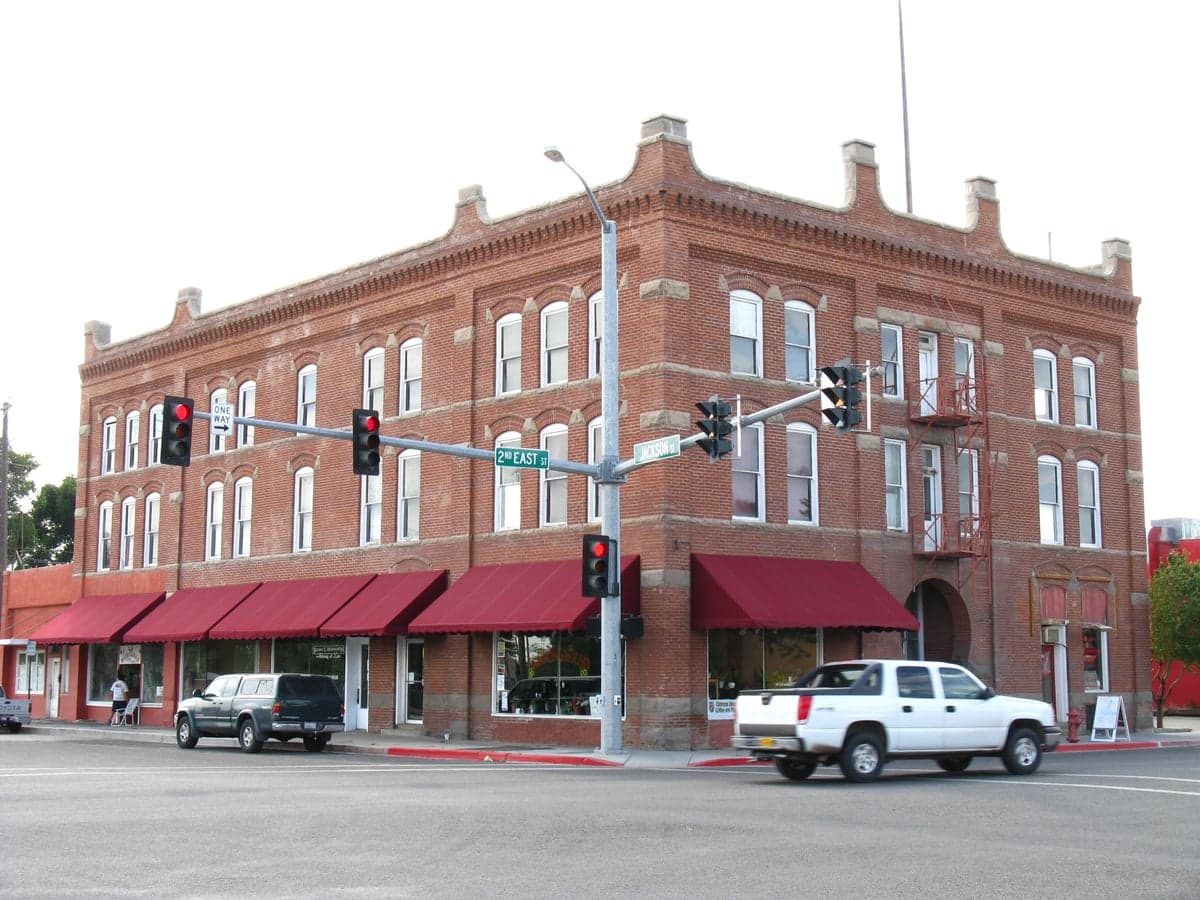
Photo: Wikipedia
Strategic Assessment of Mountain Home, ID
Workable tactical position. Some exposure to population density or targets, but generally defensible in a crisis.
What does the Strategic Assessment tell us?
Our Strategic Assessment grades tactical survivability of an area. Major population centers, military targets, fallout zones, natural disasters, and border exposure all drive risk — lower exposure means a more defensible position in a crisis.
This is heavily inspired by Joel Skousen's Strategic Relocation book. Highly recommended you checkout the book ($)What does this tell us?
Our Strategic Assessment grades tactical survivability of an area. Major population centers, military targets, fallout zones, natural disasters, and border exposure all drive risk — lower exposure means a more defensible position in a crisis.
This is heavily inspired by Joel Skousen's Strategic Relocation book. Highly recommended you checkout the book ($)Strategic Pillars

Key Distances
Regional Safe Places
Below is our recommended "safe zones" in Idaho and the surrounding area based on our strategic heuristics. For most people, it's unrealistic to live in a “safe zone” full-time due to work, family or other personal reasons. They tend to be more rural. However, many of these areas are perfect for second homes and retreat properties that double as a vacation home or even a short-term rental.
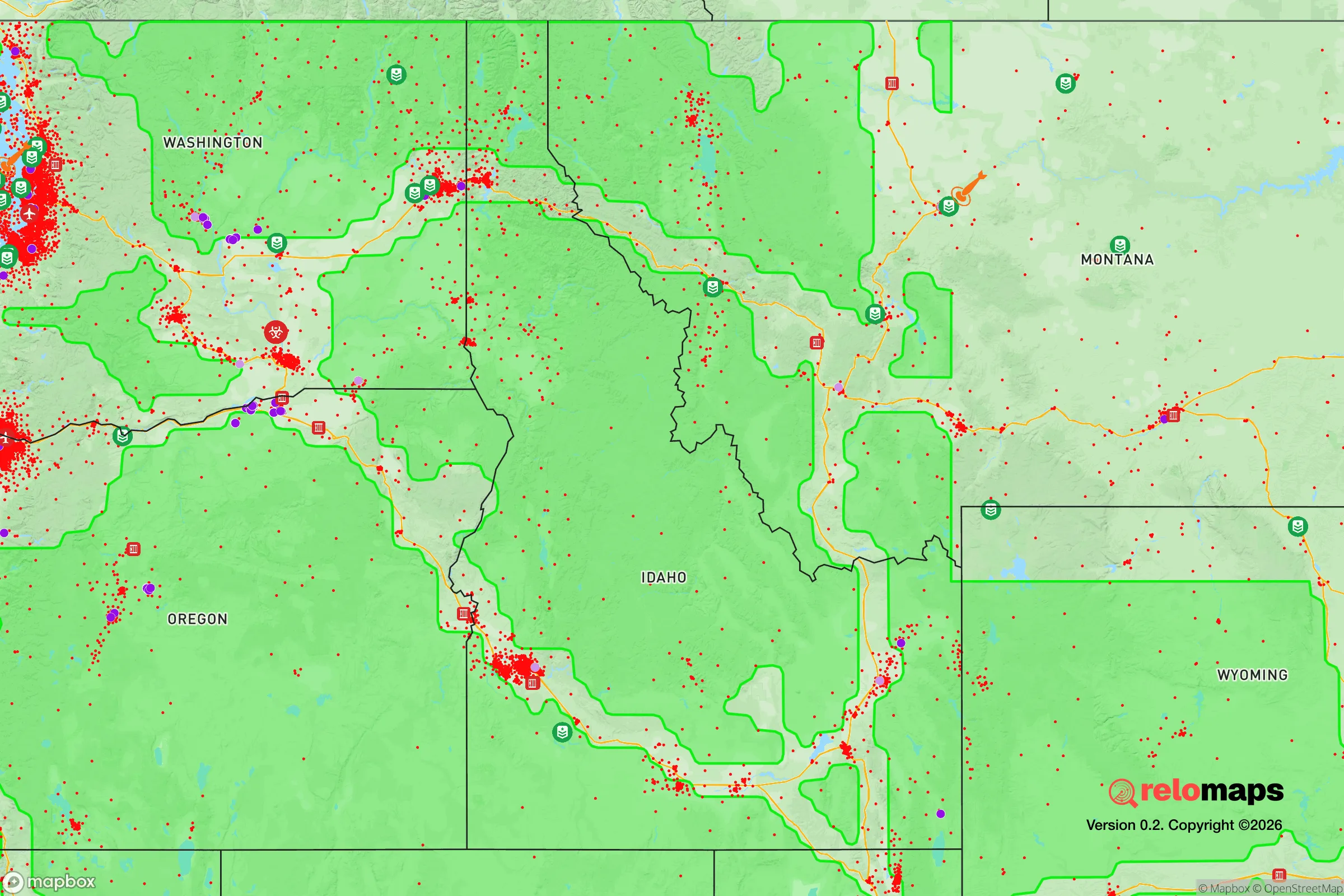
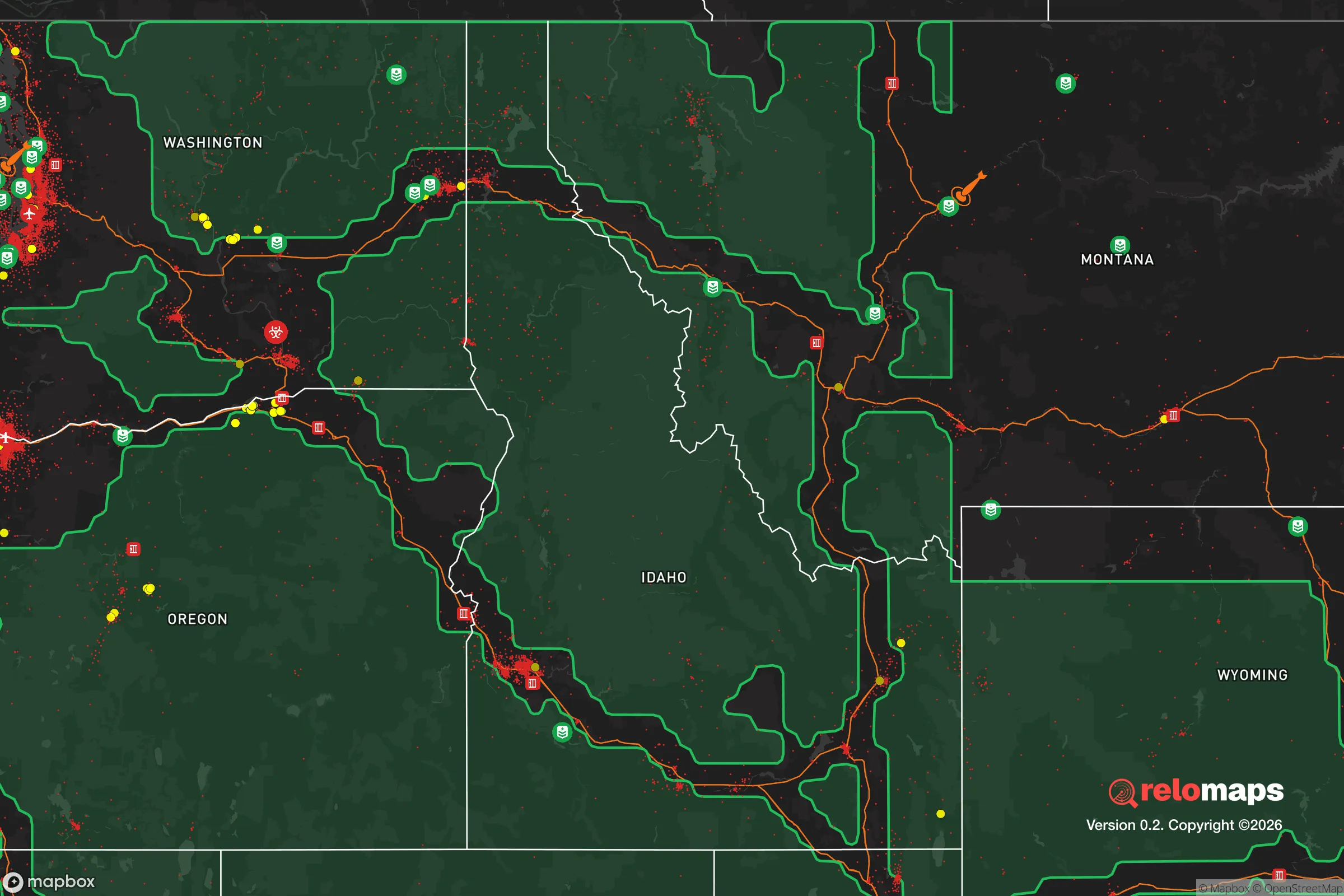


Important Note: For informational purposes only. This does not mean nothing bad ever happens in the green zones. Please use common sense. This is based on public data and modeled with AI. We tried to take a conservative approach but mistakes happen. We update this regularly as new information becomes available.
Solar Generator Recommendations
Backup power matters more here than in safer locations. We've picked three solar generators across budgets and capacity tiers — start with the budget unit if you only need a few essentials, or step up if you want to run a fridge and HVAC for days at a time.

Jackery Portable Power Station Explorer 300
Budget OptionPower on the Go: Weighing only 11 lbs, it's convenient to set up and store with book-sized foldable solar panels

BLUETTI Portable Power Station AC180
Designed for both indoor and outdoor scenarios, AC180 is highly capable as it has a robost capacity and continuous output power.

EF ECOFLOW DELTA Pro Ultra Power Station
Upgraded PickEcoFlow DELTA Pro Ultra is a whole-home energy system designed to grow with your family. Integrated with the Smart Home Panel 2, it scales to meet your evolving energy needs — keeping your home powered, intelligent, and secure through every stage of life.
We earn a commission, at no additional cost to you.
Strategic Assessment Analysis
Mountain Home, Idaho, sits in a strategic sweet spot that resilience-minded relocators should take seriously: far enough from the chaos of major metros to offer genuine buffer, yet close enough to essential infrastructure to avoid the isolation trap that breaks so many prepper plans. This Elmore County hub of roughly 16,000 people anchors a region defined by high desert terrain, low population density, and a political culture that leans heavily toward self-reliance. For someone weighing relocation against the backdrop of increasing civic instability, resource scarcity, and the potential for mass casualty events, Mountain Home presents a defensible base of operations—provided you understand both its natural advantages and its real exposures.
Geographic position and natural buffers: why this location works for preppers
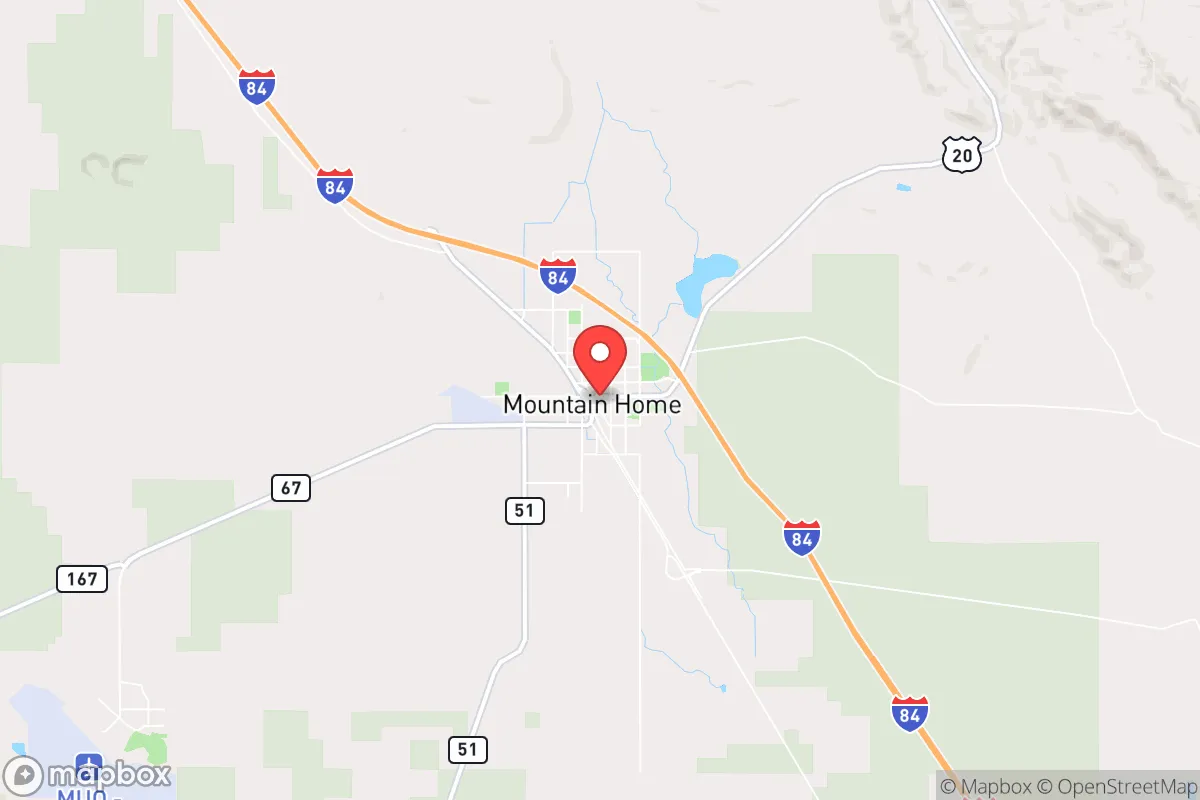
Mountain Home’s location along I-84 gives it a critical advantage: you can move east to the Mountain West’s interior or west toward the Pacific Northwest without being trapped in a single corridor. The surrounding landscape is open sagebrush steppe and rolling hills, offering long sightlines and limited cover for unwanted movement. The area sits at roughly 3,100 feet elevation, which moderates summer heat and provides a genuine winter season without the extreme cold of northern Idaho. The Snake River Plain to the south and the Boise National Forest to the north create natural barriers that funnel travel through predictable chokepoints—useful for anyone thinking about perimeter awareness. Mountain Home is roughly 45 minutes southeast of Boise, which is close enough to access medical facilities, supply runs, and federal resources if needed, but far enough that a Boise-centric disaster (civil unrest, infrastructure failure, or a major event at the state capital) won’t automatically cascade into your front yard. The Mountain Home Air Force Base, located just southwest of town, adds a layer of federal presence that could be either a stabilizing force or a target, depending on the scenario—more on that below.
Risks, exposures, and proximity to fallout-relevant landmarks
No location is a fortress, and Mountain Home has specific vulnerabilities that a serious relocator must account for. The most obvious is Mountain Home Air Force Base itself. While the base provides economic stability and a military population that tends to be order-friendly, it also makes the area a potential secondary target in any conflict involving U.S. strategic assets. The base hosts the 366th Fighter Wing and supports training missions; in a major power confrontation, that could draw attention. Additionally, the base’s proximity means a higher-than-average transient population and periodic security lockdowns that could affect civilian movement. Further out, the Idaho National Laboratory near Idaho Falls (about 200 miles east) is a nuclear research facility that, while not a reactor site in the traditional sense, handles radioactive materials. A worst-case event there could send fallout across the eastern half of the state, though prevailing winds typically carry eastward, away from Mountain Home. The bigger day-to-day risk is natural: the area sits in a seismically active region, and the nearby fault lines along the Snake River Plain could produce a quake that disrupts water, power, and road access. Wildfire risk is moderate but real, especially in dry summers, and the high desert environment means water scarcity is a constant factor—not a panic button, but a planning constraint.
Practical resilience for a relocator: food, water, energy, and defensibility
For someone serious about self-sufficiency, Mountain Home offers a workable foundation with clear limits. Water is the first concern: the area averages only about 10 inches of precipitation annually, so you cannot rely on rainfall for gardening or livestock. The Snake River is about 20 miles south, and the Mountain Home area has access to groundwater via the Eastern Snake Plain Aquifer, but well drilling is expensive and permits are regulated. A serious prepper should plan for rainwater catchment (though yields will be low) and a deep well if the property allows. The growing season is short—roughly 120 frost-free days—so cold-hardy crops and greenhouse infrastructure are essential for any food production beyond basic storage. On the energy side, solar is viable: the region gets over 200 sunny days per year, and net metering policies in Idaho are favorable compared to coastal states. Wind is also a consistent resource, especially on the open plains south of town. Defensibility is where Mountain Home shines. The terrain is open enough that you can see threats coming from a distance, and the low population density means fewer people competing for resources in a collapse scenario. The local culture is heavily armed and oriented toward hunting and outdoor skills; you won’t stand out for owning firearms or storing supplies. The downside is that the town itself has a limited economic base—agriculture, the base, and some light manufacturing—so if you’re not bringing remote work or a portable skill set, your options are thin. The nearest major hospital is in Boise, which is a 45-minute drive under normal conditions and potentially longer if roads are compromised.
The overall strategic picture for Mountain Home is one of calculated trade-offs. It’s not a remote bunker in the wilderness—it’s a working-class town with a military anchor, a conservative ethos, and enough distance from the coast and major population centers to buy you time in a crisis. The water limitations and seismic risk are real but manageable with planning. The proximity to Boise and the air base is a double-edged sword: it gives you access to resources and a stabilizing population, but it also ties your fate to events you can’t control. For the relocator who wants a base that balances isolation with access, and who is willing to invest in water infrastructure and a solid OPSEC mindset, Mountain Home is a legitimate contender. It won’t save you from a direct nuclear exchange or a nationwide grid collapse, but it will put you in a position to ride out the first wave of chaos while others are still trying to get out of the cities. That alone makes it worth a hard look.

* Values derived from national, state, county, city and local statistics and may differ in a specific area. Last updated: 2026-04-19T06:36:43.000Z
Narrative content on this page is AI-generated and may contain mistakes. Verify any details that matter before acting on them.
ReloMaps may earn a commission from affiliate links at no extra cost to you.

