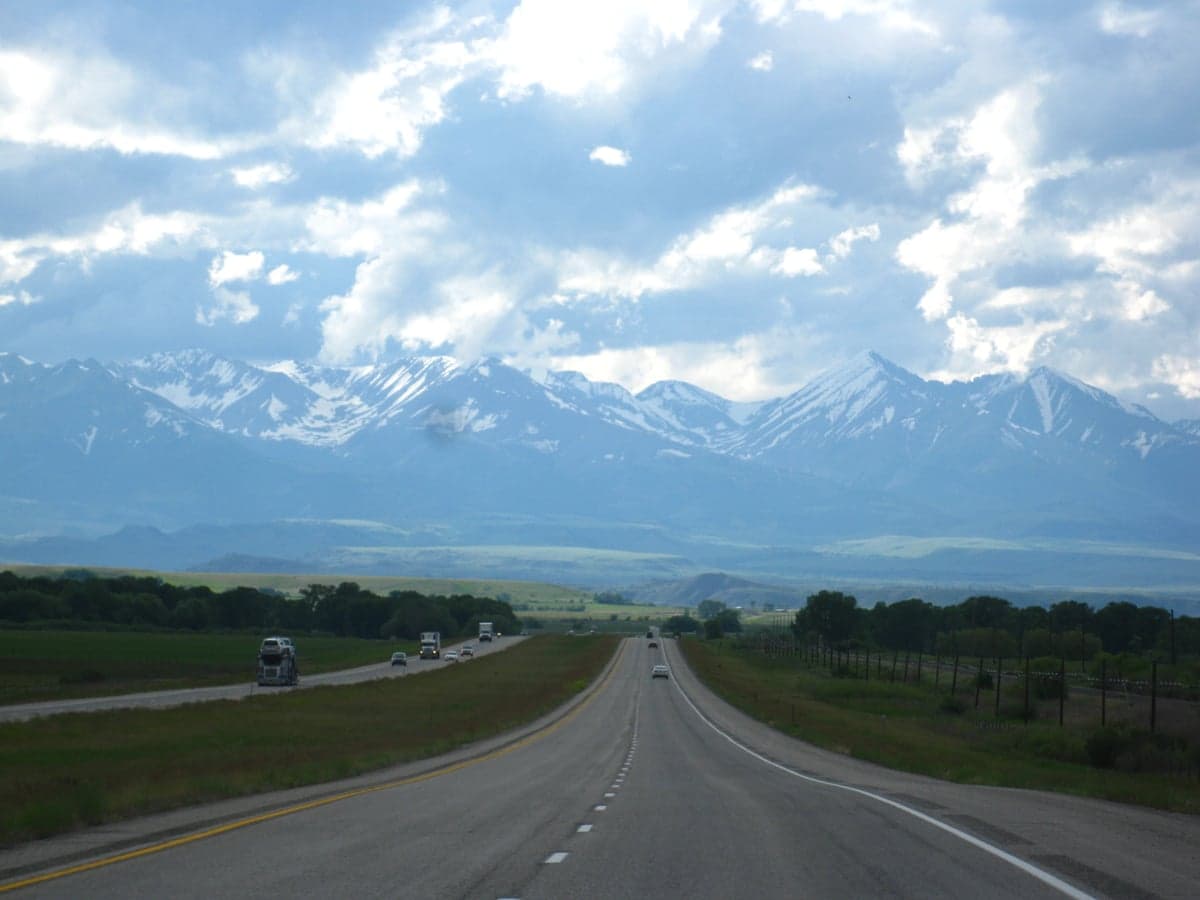
Photo: Wikipedia
Demographics of Stillwater County
Affluence Level in Stillwater County
A middle-class area roughly in line with national averages across income, home values, education, and employment.
People of Stillwater County
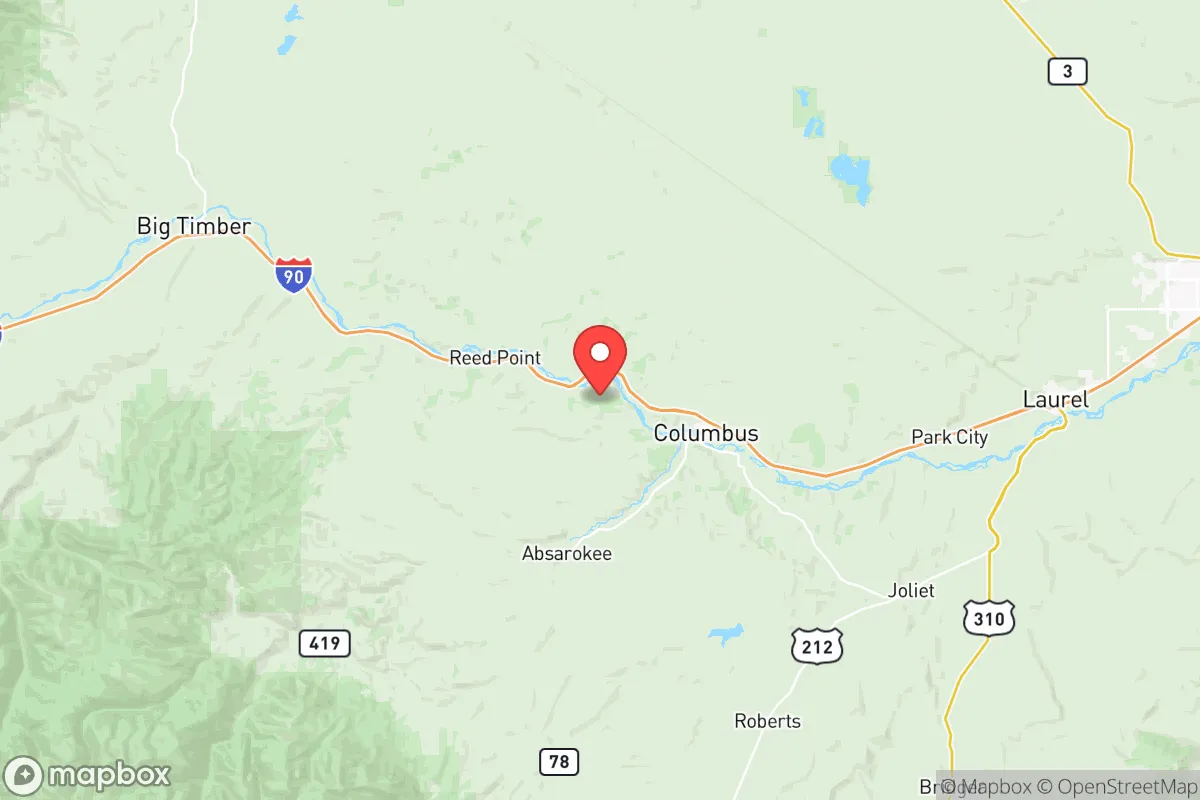
Stillwater County, Montana, is home to 9,052 residents who form one of the most ethnically homogeneous populations in the state, with 92.3% identifying as white and a foreign-born share of just 0.2%. The county's people are overwhelmingly native-born, rural, and rooted in a ranching and mining heritage that stretches back to the late 19th century. With 29.8% holding a college degree, the population is slightly less educated than the state average, reflecting a workforce still tied to agriculture, energy, and outdoor recreation. The county's identity is defined by its small towns—Columbus, Absarokee, Reed Point, and Park City—where family names trace back to the original homesteaders and where community life revolves around the Yellowstone River valley and the Beartooth foothills.
Settlement & growth (pre-1960)
Before Euro-American settlement, the area that is now Stillwater County was part of the traditional territory of the Crow Nation (Apsáalooke), who used the Yellowstone River valley for hunting bison and seasonal camps. The Crow ceded the region to the United States through the 1868 Treaty of Fort Laramie, opening the door for miners, ranchers, and homesteaders. The first permanent non-Native settlers arrived in the 1870s and 1880s, drawn by placer gold discoveries along the Stillwater River and the promise of open range for cattle. The town of Columbus, founded in 1876 as a trading post and stage stop, became the county seat when Stillwater County was created in 1913 from parts of Sweet Grass, Carbon, and Yellowstone counties.
The major population wave came between 1880 and 1920, driven by the expansion of the Northern Pacific Railway, which laid tracks through the Yellowstone Valley and established depots at Park City (1882), Reed Point (1883), and Absarokee (1894). These rail stops attracted homesteaders from the Upper Midwest—primarily of German, Scandinavian, and British Isles stock—who filed claims under the Homestead Act of 1862. The dryland farming of wheat and barley, combined with cattle ranching on the benchlands, formed the economic backbone. A secondary wave of miners and smelter workers arrived in the 1910s and 1920s to work the chrome and copper deposits near Nye and the Mouat Mine, though these operations were small compared to Butte's.
The Dust Bowl and Great Depression of the 1930s hit Stillwater County hard, causing a net outmigration as failed homesteaders left for California or larger Montana cities. The population, which had peaked near 8,000 in the 1920s, stagnated through the 1940s and 1950s. The post-World War II era brought modest growth from returning veterans who took up ranching or found work at the newly expanded Columbus sugar beet processing plant and the Stillwater Mining Company's platinum and palladium operations, which began development in the 1960s. By 1960, the county's population stood at roughly 6,000, still overwhelmingly white, native-born, and rural.
Modern era (post-1965)
The 1965 Hart-Cellar Act, which transformed U.S. immigration by lifting national-origin quotas, had virtually no effect on Stillwater County. The foreign-born population today is 0.2%—essentially zero—and the county has not experienced the waves of immigration from Latin America, Asia, or Africa that reshaped much of the United States. The Hispanic population, at 3.4%, is the largest minority group, but it is composed almost entirely of long-established families of Mexican-American heritage who came to work in agriculture and ranching in the mid-20th century, not recent immigrants. These families are concentrated in Columbus and Absarokee, where they are integrated into the broader community rather than forming distinct enclaves.
Domestic migration has been the primary demographic force since 1965, but it has been modest compared to Montana's faster-growing counties. Stillwater County has attracted a steady trickle of out-of-state transplants—mostly from California, Colorado, and the Pacific Northwest—seeking lower housing costs, wide-open spaces, and a conservative, rural lifestyle. These newcomers tend to settle in Columbus and along the Yellowstone River corridor, where acreage properties are available. The county's population grew from 6,423 in 1970 to 9,052 in 2024, a slow but consistent increase driven by natural increase (births minus deaths) and a small net in-migration of retirees and remote workers. The Stillwater Mining Company's expansion in the 1980s and 1990s brought a temporary influx of skilled miners and engineers, but most were white and native-born, reinforcing the county's existing demographic profile.
Suburbanization has been minimal. There are no large subdivisions or master-planned communities; the county's built environment remains a collection of small towns and scattered ranchsteads. The East/Southeast Asian population is 0.4%, and the Black population is 0.1%, reflecting the county's lack of economic pull for diverse labor markets. The Indian subcontinent population is 0.0%. Stillwater County remains one of the least diverse counties in Montana, a status that has changed little since the 1960s.
The future
Stillwater County's population is projected to grow slowly, reaching roughly 10,000 by 2040, driven by continued domestic migration of retirees, remote workers, and lifestyle migrants from more expensive Western states. The county is not becoming more diverse in any meaningful sense. The Hispanic share may edge up to 4-5% through natural increase, but the white share will remain above 90%. The foreign-born population will likely stay below 1%, as there are no industries—meatpacking, construction, hospitality—that typically attract immigrant labor in significant numbers.
New residents are concentrating in Columbus, which offers the best services, schools, and highway access (Interstate 90), and in the Absarokee area, which appeals to those seeking proximity to the Beartooth Mountains and the Stillwater River for fly-fishing and hiking. Park City and Reed Point are seeing slower growth, as they lack the amenities and scenic draw of the western part of the county. The county's cultural identity is evolving from a purely agricultural and mining community toward a more recreation-oriented one, but the conservative, self-reliant character remains deeply entrenched. Newcomers tend to be politically and culturally aligned with the existing population, so no significant cultural friction is expected.
For someone moving in now, Stillwater County offers a stable, safe, and overwhelmingly white rural environment where community ties are strong and the pace of life is slow. The population is aging slightly—the median age is 44, above the national average—but young families are still present, supported by the Columbus school system and the outdoor lifestyle. The county is not becoming a diverse melting pot or a booming exurb; it is becoming a quieter, more retirement-oriented version of its historical self, with a steady but selective influx of people who already fit the cultural mold.

* Values derived from national, state, county, city and local statistics and may differ in a specific area. Last updated: 2026-08-08T16:45:46.000Z
Narrative content on this page is AI-generated and may contain mistakes. Verify any details that matter before acting on them.
ReloMaps may earn a commission from affiliate links at no extra cost to you.

