Photo: Wikipedia
Strategic Assessment of Mitchell, SD
Strong survivability profile. Good buffer from population centers, with manageable environmental and tactical risks.
What does the Strategic Assessment tell us?
Our Strategic Assessment grades tactical survivability of an area. Major population centers, military targets, fallout zones, natural disasters, and border exposure all drive risk — lower exposure means a more defensible position in a crisis.
This is heavily inspired by Joel Skousen's Strategic Relocation book. Highly recommended you checkout the book ($)What does this tell us?
Our Strategic Assessment grades tactical survivability of an area. Major population centers, military targets, fallout zones, natural disasters, and border exposure all drive risk — lower exposure means a more defensible position in a crisis.
This is heavily inspired by Joel Skousen's Strategic Relocation book. Highly recommended you checkout the book ($)Strategic Pillars

Key Distances
Regional Safe Places
Below is our recommended "safe zones" in South Dakota and the surrounding area based on our strategic heuristics. For most people, it's unrealistic to live in a “safe zone” full-time due to work, family or other personal reasons. They tend to be more rural. However, many of these areas are perfect for second homes and retreat properties that double as a vacation home or even a short-term rental.
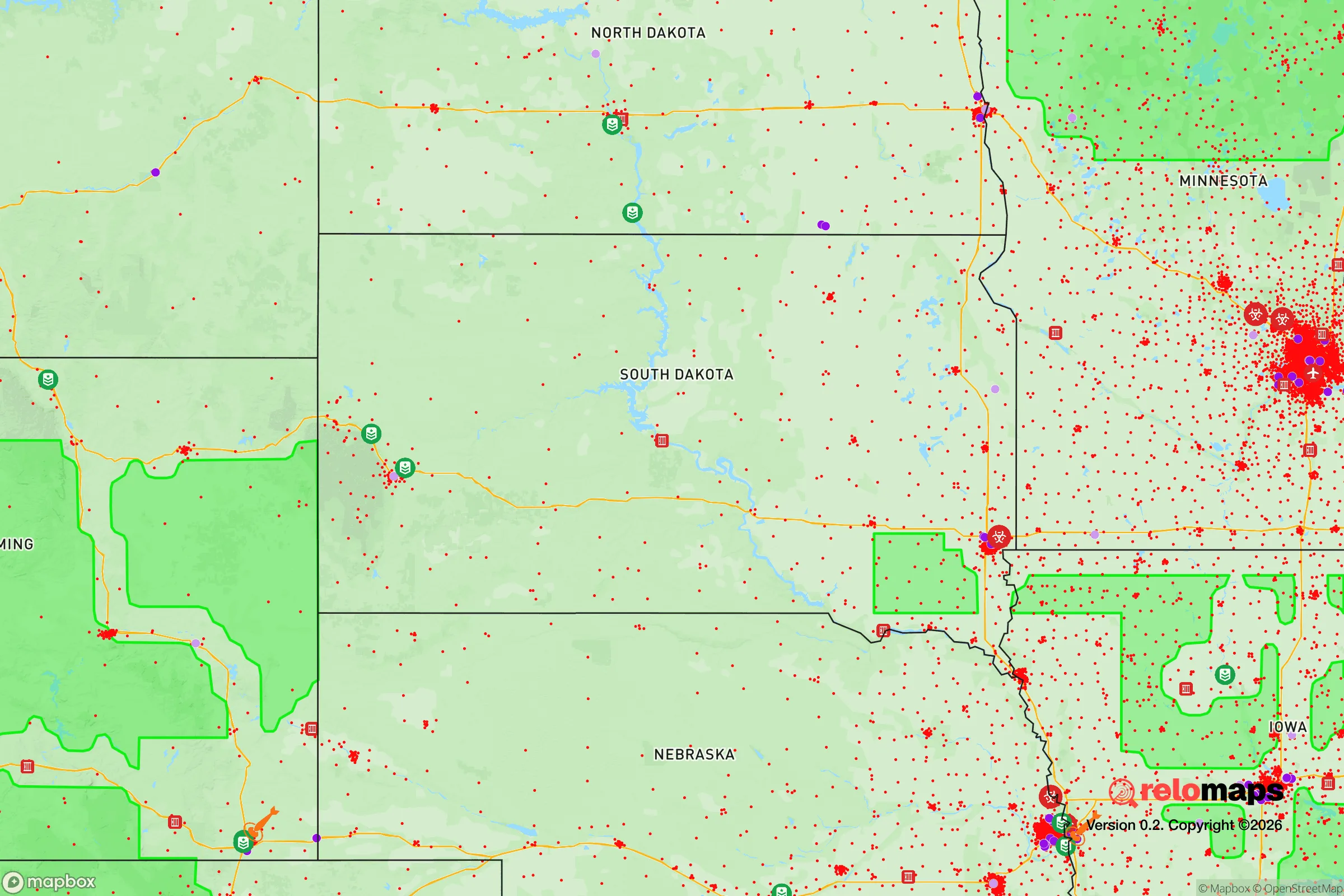


Important Note: For informational purposes only. This does not mean nothing bad ever happens in the green zones. Please use common sense. This is based on public data and modeled with AI. We tried to take a conservative approach but mistakes happen. We update this regularly as new information becomes available.
Solar Generator Recommendations
Backup power matters more here than in safer locations. We've picked three solar generators across budgets and capacity tiers — start with the budget unit if you only need a few essentials, or step up if you want to run a fridge and HVAC for days at a time.

Jackery Portable Power Station Explorer 300
Budget OptionPower on the Go: Weighing only 11 lbs, it's convenient to set up and store with book-sized foldable solar panels

BLUETTI Portable Power Station AC180
Designed for both indoor and outdoor scenarios, AC180 is highly capable as it has a robost capacity and continuous output power.

EF ECOFLOW DELTA Pro Ultra Power Station
Upgraded PickEcoFlow DELTA Pro Ultra is a whole-home energy system designed to grow with your family. Integrated with the Smart Home Panel 2, it scales to meet your evolving energy needs — keeping your home powered, intelligent, and secure through every stage of life.
We earn a commission, at no additional cost to you.
Strategic Assessment Analysis
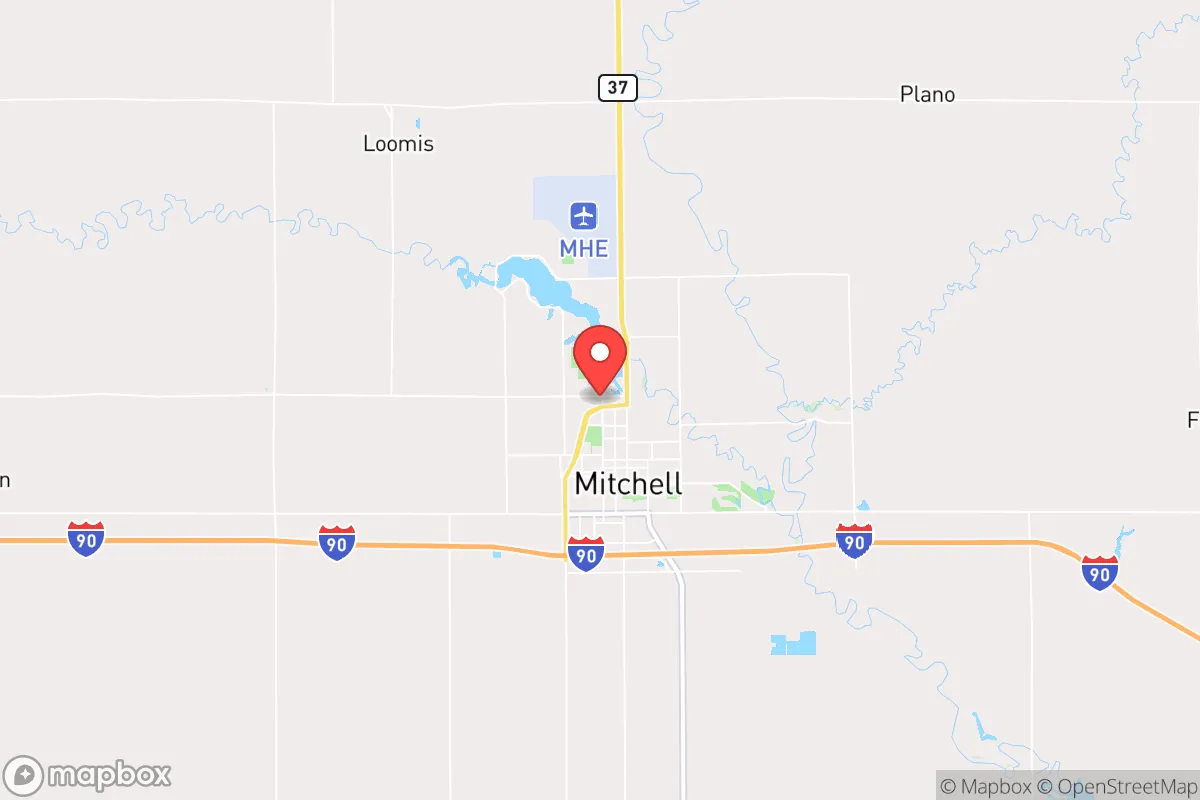
Mitchell, South Dakota, offers a strategic combination of geographic isolation, agricultural self-sufficiency, and low population density that makes it a serious contender for anyone prioritizing long-term resilience and preparedness. Located roughly 70 miles west of Sioux Falls and 130 miles east of the Badlands, the city sits in a sweet spot—close enough to a regional hub for supplies and medical care, but far enough to avoid the immediate fallout of a major urban crisis. The area’s flat, fertile plains and access to the James River provide natural advantages for food production and water security, while its position along Interstate 90 ensures a viable evacuation route if needed. For a conservative-leaning relocator concerned with civic unrest, supply chain disruptions, or larger-scale disasters, Mitchell presents a defensible, low-profile base of operations.
Geographic position and natural advantages for long-term security
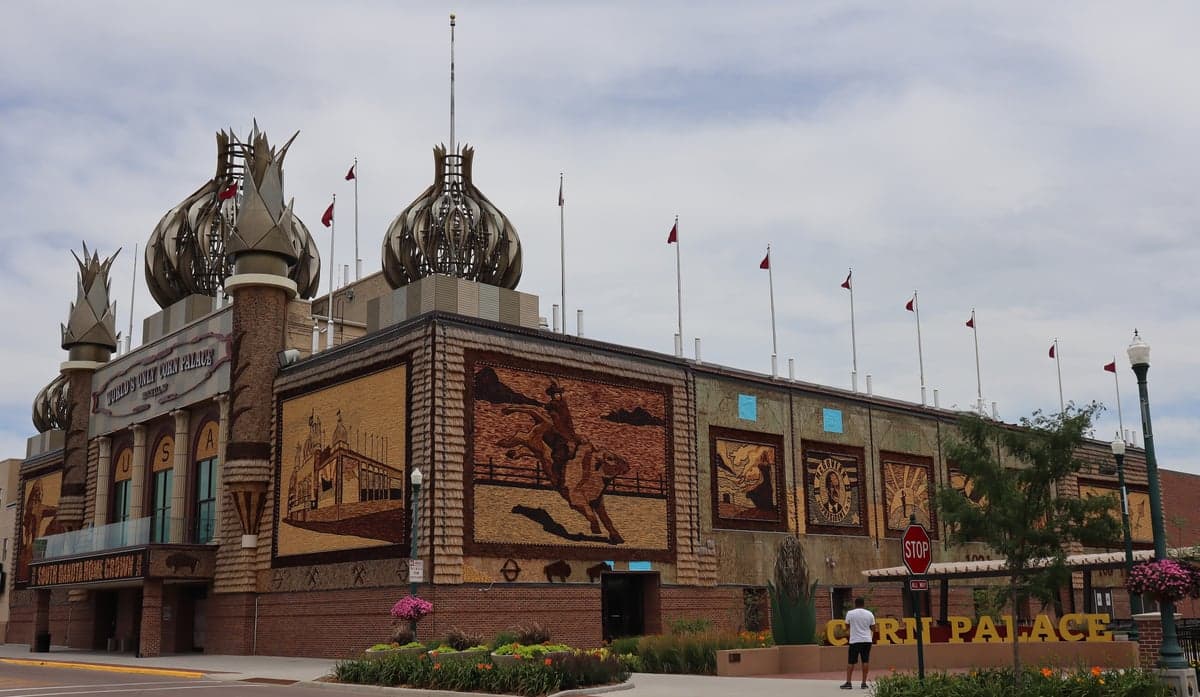
Mitchell’s location in eastern South Dakota places it squarely in the heart of the nation’s breadbasket, which is a major asset for anyone thinking about food security. The surrounding farmland is some of the most productive in the country, and the city itself is home to the Corn Palace, a symbol of the region’s agricultural backbone. The James River runs through the area, providing a reliable surface water source that can supplement well water for those who plan ahead. The climate is continental, with cold winters and hot summers, but the lack of major mountain ranges or coastal exposure means the area is largely insulated from hurricanes, earthquakes, and wildfires—three of the most common natural disaster threats elsewhere. The flat terrain also makes it easy to establish a defensible perimeter around a rural property, and the low population density (roughly 15,000 in the city proper, with fewer than 20,000 in the county) means you’re not competing with millions of others for resources during a crisis. For a survivalist mindset, the ability to grow your own food, access clean water, and maintain a low profile is hard to beat.
Risks, exposures, and proximity to fallout-relevant landmarks
No location is perfect, and Mitchell has its share of vulnerabilities that a strategic relocator must weigh. The most immediate concern is its proximity to Ellsworth Air Force Base, located about 130 miles west near Rapid City. Ellsworth is home to the 28th Bomb Wing and operates B-1B Lancer bombers, making it a high-value target in any major conflict scenario. While 130 miles is far enough to avoid the blast zone of a direct strike, fallout patterns could still affect Mitchell depending on wind direction and yield. Similarly, the Minuteman III missile silos scattered across western South Dakota and into North Dakota represent another potential flashpoint. The risk is moderate but real—Mitchell sits east of the main missile field, which offers some buffer, but it’s not completely out of the danger zone. On the civic unrest front, the city’s small size and homogeneous population (over 90% white, with a strong conservative tilt) reduce the likelihood of localized riots or political violence, but the interstate connection to Sioux Falls means that any unrest in that larger city could spill over via transient traffic. The Dakota Access Pipeline runs through the region, and while protests have been minimal in recent years, it remains a potential target for activists or saboteurs. Overall, Mitchell’s risks are manageable if you plan for them—stockpiling potassium iodide, maintaining a fallout shelter, and keeping a low profile are all reasonable steps.
Practical resilience for a relocator: food, water, energy, and defensibility
For the prepper-minded individual or family, Mitchell offers a strong foundation for self-sufficiency. Food security is the standout advantage: the region’s agricultural output means you can source bulk grains, livestock, and produce directly from local farms, often at wholesale prices. The city has a thriving farmers’ market and multiple feed stores for those looking to raise chickens, goats, or even cattle on a small acreage. Water access is solid—the James River provides a surface source, and the Ogallala Aquifer extends into the area, though it’s deeper here than in Nebraska. A well-drilling permit is straightforward to obtain, and many rural properties already have one. Energy resilience is a mixed bag: the grid is reliable in normal times, but winter storms can knock out power for days. Solar panels are viable, given the region’s 200+ sunny days per year, and wind turbines are common on farms. A backup generator with a propane or diesel tank is a wise investment. Defensibility is excellent if you choose the right property. The flat terrain means clear sightlines for miles, and the low crime rate (violent crime is well below national averages) means you’re unlikely to face organized threats. However, the lack of natural cover (no forests, few hills) means you’ll need to rely on man-made barriers like fences, gates, and reinforced structures. The local gun culture is strong, with multiple shooting ranges and gun shops, so training and supplies are easy to come by. For a single individual or a family, Mitchell allows you to build a resilient lifestyle without the extreme isolation of, say, the Montana wilderness—you’re still within an hour of a major hospital (Sioux Falls) and have access to modern amenities, but you’re not dependent on them for survival.
The overall strategic picture for Mitchell is one of balanced preparedness. It’s not a bunker community or a remote survivalist enclave, but it offers a realistic middle ground for someone who wants to be ready for civic unrest, economic collapse, or localized disasters without abandoning modern life entirely. The city’s conservative ethos, strong agricultural base, and low population density align well with a prepper mindset, while its distance from major military targets and urban centers reduces the most catastrophic risks. The main trade-offs are the cold winters (which require serious heating and insulation planning) and the moderate fallout risk from Ellsworth and the missile fields—both of which can be mitigated with proper preparation. For a relocator who values self-reliance, community cohesion, and a low-key existence, Mitchell deserves a serious look. It’s not the end of the world, but it’s a solid place to be if the world starts to unravel.

* Values derived from national, state, county, city and local statistics and may differ in a specific area. Last updated: 2026-05-02T05:34:42.000Z
Narrative content on this page is AI-generated and may contain mistakes. Verify any details that matter before acting on them.
ReloMaps may earn a commission from affiliate links at no extra cost to you.

