Political ClimatePolitical Climate in Millville, DE
District shown is the primary district for this city’s centroid. Cities may span multiple districts.
Inherited from parent state — no local data available.
Local Political AnalysisPolitical Analysis of Millville, DE
Millville, Delaware, leans solidly to the left, with a Cook PVI of D+8 that puts it firmly in the blue column, a shift that’s been accelerating over the last decade. If you’d asked me fifteen years ago, this was a quiet, conservative corner of Sussex County where folks mostly kept to themselves and the biggest political debate was about the speed limit on Route 26. Now, the voting patterns tell a different story—the area has been trending bluer with every election cycle, driven largely by an influx of out-of-state transplants from places like New York and New Jersey who bring their voting habits with them. It’s not that the old-timers have changed their minds; it’s that the new neighbors outnumber them.
How it compares
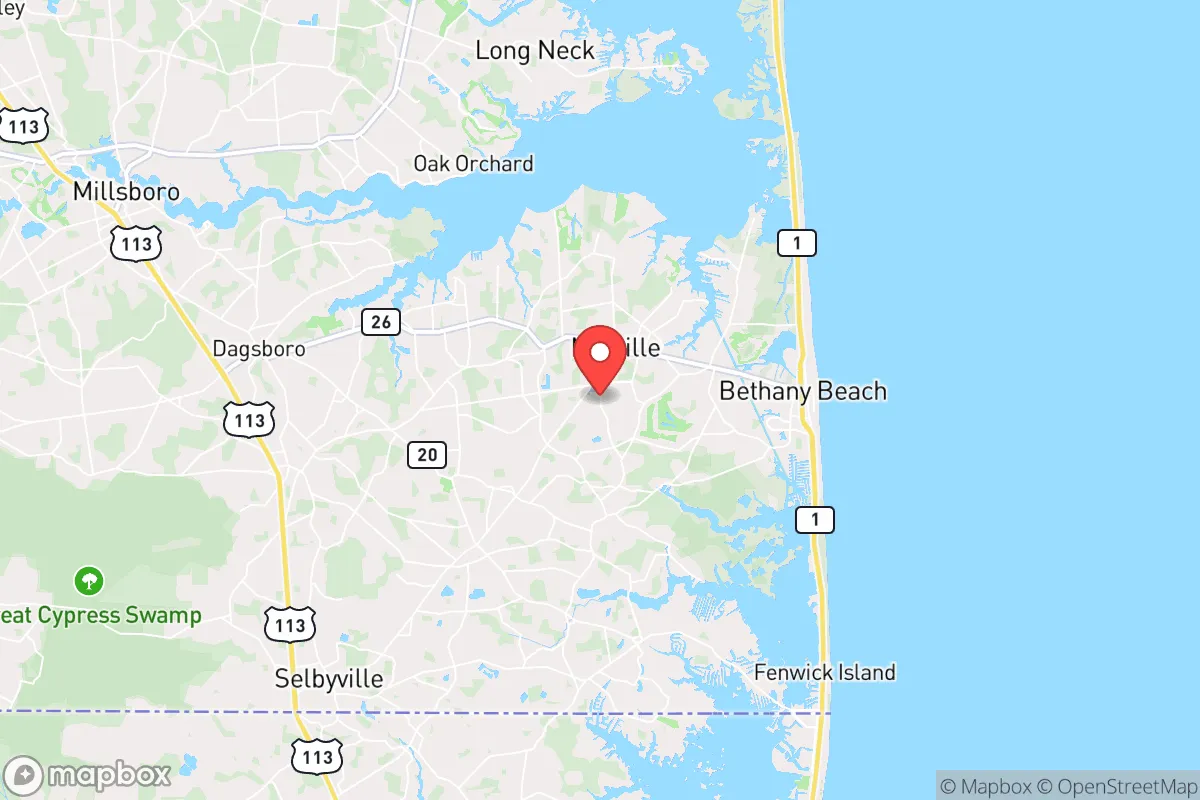
To really understand Millville’s politics, you have to look at the towns around it. Head a few miles west to Dagsboro or Frankford, and you’ll find communities that still vote reliably red, with a more traditional, live-and-let-live attitude toward government. Up the road in Lewes, you get a similar progressive tilt to Millville, but it’s more of a college-town vibe. The real contrast is with Bethany Beach just to the east, which is a bit of a mixed bag—more libertarian-leaning in its summer crowd, but still less government-heavy than what we’re seeing in Millville proper. The county as a whole, Sussex, is still a red dot in a blue state, but Millville is becoming an outlier, a place where the local elections are starting to feel like they’re decided by people who haven’t lived through a Delaware winter.
What this means for residents
For those of us who’ve been here a while, the biggest concern is how this political shift translates into real-life overreach. You’re starting to see it in local zoning battles—more restrictions on what you can do with your own property, tighter leash laws, and a general push toward the kind of regulations that make you feel like you need a permit to breathe. The school board is another flashpoint; there’s been a quiet but persistent effort to bring in curriculum changes that prioritize ideology over fundamentals, and it’s happening without a lot of public debate. If you value your Second Amendment rights or just want to be left alone to run your small business without a stack of new compliance forms, Millville’s trajectory is something to watch closely. The long-term trend suggests more of the same: higher taxes to fund programs you might not agree with, and a local government that’s increasingly comfortable telling you how to live.
Culturally, Millville is still a nice place to live—the beaches are close, the people are friendly, and the pace is slow. But there’s a growing divide between the old guard and the new arrivals that shows up in everything from town hall meetings to the local Facebook groups. The policy distinctions are subtle now, but they’re there: a push for more public transit, a bike lane initiative that eats up road space, and a quiet acceptance of state-level mandates that would have been laughed out of a meeting ten years ago. If you’re thinking of moving here, just know that the political climate is changing faster than the weather, and it’s not heading in a direction that favors personal freedom. Keep an eye on the local elections—that’s where the real fight is happening.

State Political ClimatePolitical Climate in Delaware
State Political AnalysisPolitical Environment in the State
Delaware, despite its small size, has a surprisingly complex political climate that leans reliably Democratic at the state level, but with a strong conservative undercurrent in its rural and coastal areas. Over the past 20 years, the state has shifted from a competitive purple state to a solid blue one, driven largely by the explosive growth of New Castle County and the influx of out-of-state transplants from the Northeast. While the state still elects a moderate Republican governor occasionally, the legislature has become increasingly progressive, and the overall trajectory is one of expanding government control, which is a real concern for anyone who values personal freedom.
Urban vs. rural divide
The political map of Delaware is a textbook case of the urban-rural split. The northern third of the state, dominated by New Castle County and the city of Wilmington, is the engine of Democratic power. Wilmington itself is a deep blue urban core, and the surrounding suburbs—places like Newark, home to the University of Delaware, and Hockessin—vote overwhelmingly Democratic. This region alone delivers enough votes to carry statewide elections for Democrats. In contrast, the central and southern parts of the state—Kent County and Sussex County—are where conservative voters hold sway. Dover, the capital, is a bit of a purple island, but the rural areas around it, like Milford and Harrington, are reliably red. The real conservative stronghold is Sussex County, particularly the beach towns like Bethany Beach and Lewes, where retirees and second-home owners from more conservative states have settled. However, even Sussex County is seeing a slow blue shift as more people move in from the Northeast, diluting the traditional conservative vote.
Policy environment
Delaware’s policy environment is a mixed bag that leans heavily toward government intervention. The state has no sales tax, which sounds great, but it makes up for it with high property taxes in New Castle County and high personal income taxes that can hit 6.6% at the top bracket. The regulatory posture is business-friendly in name—Delaware is the corporate home of over a million businesses thanks to its Court of Chancery—but for actual residents, the state is increasingly intrusive. Education policy is a flashpoint: the state has a powerful teachers’ union that has fought school choice and charter school expansion, and the public school system in Wilmington is notoriously troubled, with low graduation rates and persistent achievement gaps. Healthcare is heavily regulated, and the state expanded Medicaid under Obamacare, which has driven up costs. On election laws, Delaware is one of the easiest states to vote in, with no-excuse absentee voting and same-day registration, which critics argue opens the door to fraud. The state also has a strict gun control regime, including a ban on "assault weapons" and high-capacity magazines, passed in 2022.
Trajectory & freedom
Delaware is moving in a direction that should alarm anyone who values personal liberty. The most concerning recent trend is the steady erosion of Second Amendment rights. In 2022, the legislature passed a sweeping gun control package that included a ban on the sale of many semi-automatic rifles and a limit on magazine capacity to 17 rounds. This was followed in 2023 by a law requiring a permit to purchase a handgun, effectively creating a two-tier system for gun ownership. On the parental rights front, the state has moved in the opposite direction of places like Florida: in 2021, Delaware passed a law that prohibits schools from notifying parents if a child changes their gender identity or pronouns, a clear violation of parental authority. Medical freedom also took a hit with the state’s strict COVID-19 mandates, which included vaccine requirements for state employees and school workers. Property rights are under pressure from aggressive zoning and environmental regulations, particularly in Sussex County, where new development is often blocked or delayed. The tax burden continues to rise, with no serious push for relief from the Democratic supermajority.
Civil unrest & political movements
Delaware is not a hotbed of civil unrest, but there have been visible flashpoints. The Black Lives Matter protests in Wilmington in 2020 were large and occasionally violent, leading to property damage and a heavy police response. The state has a strong progressive activist network, particularly around environmental issues and social justice, which has successfully pushed for things like the "Clean Water for Delaware" act and the aforementioned parental notification law. On the right, there is a growing but still small grassroots movement focused on gun rights and school choice, with groups like the Delaware State Sportsmen’s Association and the Delaware Family Policy Council. Immigration politics are relatively quiet, but the state has a "sanctuary" policy in Wilmington that limits cooperation with federal immigration authorities, which has caused tension with more conservative rural counties. Election integrity is a simmering issue: the 2020 election saw widespread use of mail-in ballots, and while no major fraud was proven, many conservatives remain skeptical of the state’s voting system. The most visible political movement is the slow but steady growth of the "Delaware Way" resistance—a loose coalition of conservatives and libertarians who are fighting back against the progressive agenda, but they are outspent and outnumbered.
Projection
Looking ahead 5-10 years, the trend is clear: Delaware will continue to move left. The demographic shift is relentless—New Castle County is growing, and the new arrivals are overwhelmingly from blue states like New York and New Jersey, bringing their progressive politics with them. Sussex County is also seeing an influx of retirees who, while more conservative than the average transplant, are still less conservative than the native population they replace. The state’s Republican Party is weak and fractured, unable to mount a serious challenge to the Democratic machine. Expect more gun control, higher taxes, and further erosion of parental rights. The only wildcard is a potential backlash if the state’s economy suffers from its regulatory overreach, but for now, the path is set. Someone moving in now should expect to live in a state that is increasingly run by the same progressive playbook as its neighbors to the north.
For a new resident, the bottom line is this: Delaware offers a low-key lifestyle with no sales tax and easy access to beaches and cities, but you will pay for it with high income taxes, a growing regulatory burden, and a political climate that is hostile to conservative values. If you value personal freedom, especially on guns and education, you will find yourself fighting an uphill battle. The state is not a lost cause, but it is trending in the wrong direction, and you should be prepared to engage politically if you want to preserve what’s left of your liberty.
* Values derived from national, state, county, city and local statistics and may differ in a specific area. Last updated: 2026-04-29T20:04:57.000Z
Narrative content on this page is AI-generated and may contain mistakes. Verify any details that matter before acting on them.
ReloMaps may earn a commission from affiliate links at no extra cost to you.

