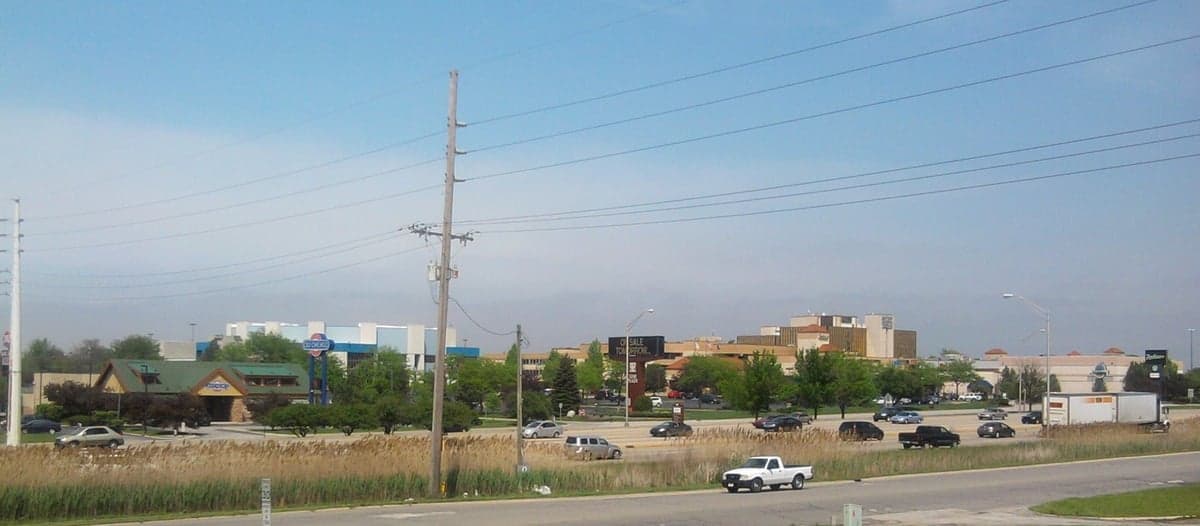
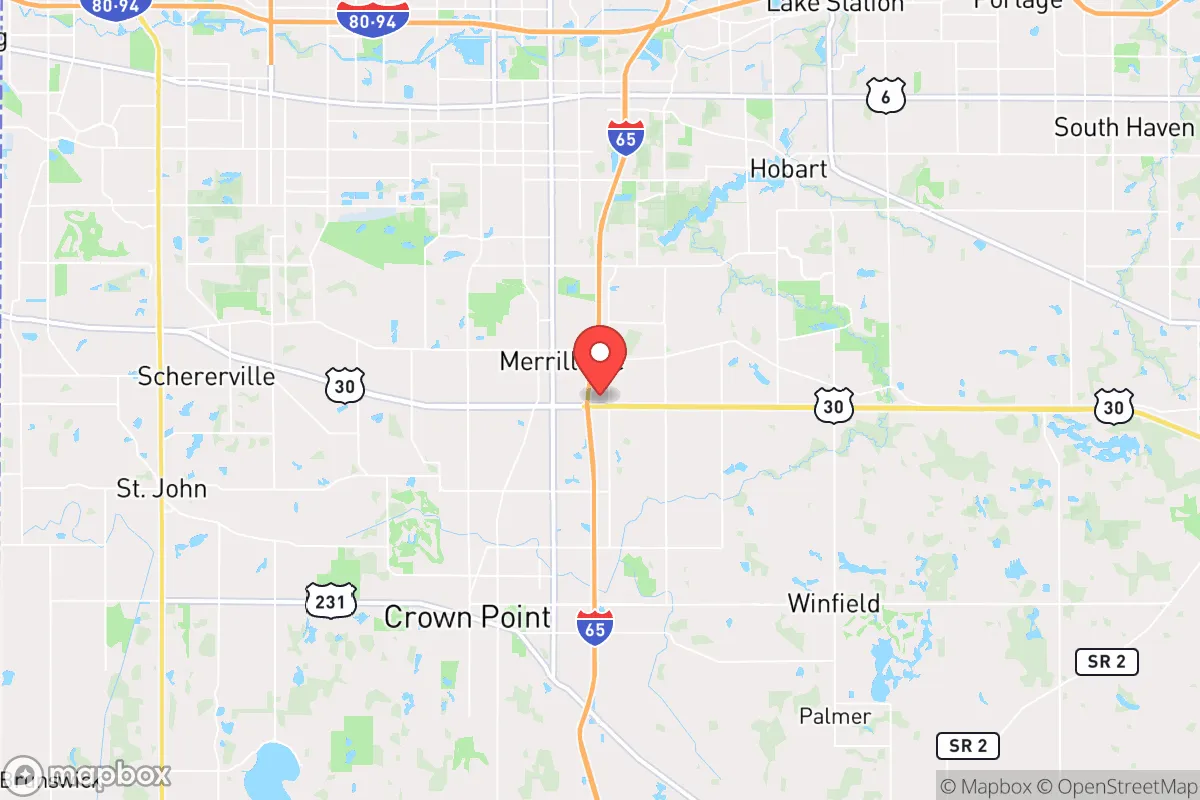
Photo: Wikipedia
Demographics of Merrillville, IN
Affluence Level in Merrillville, IN
A middle-class area roughly in line with national averages across income, home values, education, and employment.
People of Merrillville, IN
Merrillville, Indiana, is a majority-Black, middle-class suburb of 36,343 residents that serves as the commercial and civic hub of southern Lake County. Its population is notably diverse for Northwest Indiana, with a 44.6% Black majority, a 34.3% white minority, and a 15.6% Hispanic presence, yet it remains less ethnically varied than neighboring Gary or Hammond. The city’s character is defined by its role as a stable, family-oriented alternative to post-industrial Gary, with a strong sense of local identity centered on its school system and the sprawling Southlake Mall corridor. Merrillville’s people are overwhelmingly U.S.-born (97.1% native-born), and its demographic story is one of sequential domestic migrations rather than international immigration.
How the city was settled and grew
Merrillville’s original population was a mix of Yankee settlers and German farmers who arrived in the 1830s and 1840s, drawn by the fertile black soil of the Calumet Region. The village was platted in 1850 around the intersection of what is now U.S. 30 and Broadway, named after early settler John Merrill. For nearly a century, it remained a tiny agricultural hamlet—the 1940 census counted just 1,200 residents—with a population that was almost entirely white and Protestant. The first major demographic shift came during the World War II era, when the nearby Gary steel mills and the newly built U.S. 30 highway drew white Appalachian migrants from Kentucky and Tennessee. These families settled in what is now the Broadway Historic District and along the old Lincoln Highway corridor, building modest frame houses and establishing the town’s first small businesses. By 1950, Merrillville had grown to 3,000, still overwhelmingly white but now including a small Catholic minority from the Appalachian wave.
Modern era (post-1965)
The post-1965 transformation of Merrillville was driven not by immigration reform but by the collapse of Gary’s industrial base and the subsequent suburbanization of its Black middle class. Between 1970 and 1990, Gary lost nearly 40% of its population, and thousands of Black families—many employed in steel, government, or education—moved south into unincorporated Ross Township, which later incorporated as Merrillville in 1971. This wave settled primarily in the West 61st Avenue and Broadway south of U.S. 30 neighborhoods, areas characterized by ranch-style homes on larger lots and proximity to the new Southlake Mall (opened 1974). By 1990, Merrillville’s Black population had risen to 38%, and the white population had declined to 55%, as many white families moved further south to Crown Point and Valparaiso. The Hispanic population began growing in the 1990s, driven by Mexican and Puerto Rican families seeking affordable housing and service-sector jobs at the mall and along U.S. 30. These families concentrated in the East 73rd Avenue corridor and the Merrillville Gardens apartment complex area. The East/Southeast Asian community (0.6%) and Indian-subcontinent community (0.5%) are very small, with most families living in the newer subdivisions near 93rd Avenue and Taft Street, drawn by the school system and proximity to Chicago commuter routes.
The future
Merrillville’s population is slowly aging and plateauing—the city grew only 2% between 2010 and 2020—and its demographic trajectory points toward continued Black majority status with a growing Hispanic minority. The white population, now 34.3%, is declining as older residents age in place and younger white families continue to move to more distant suburbs. The Hispanic share (15.6%) is the fastest-growing segment, driven by natural increase and modest domestic in-migration from Chicago’s Little Village and Pilsen neighborhoods. The Black population is stable but not growing, as younger Black families increasingly choose newer suburbs like St. John or Schererville. The foreign-born share (2.9%) is low and unlikely to rise significantly, as Merrillville lacks the entry-level jobs and ethnic infrastructure that attract immigrants. The city is not tribalizing into distinct enclaves—most neighborhoods are integrated by income and race—but the Broadway corridor is becoming more Hispanic, while the southwest subdivisions remain predominantly Black and middle-class. The next decade will likely see Merrillville become a majority-minority suburb with a Black plurality and a Hispanic minority, but without the international diversity of Lake County’s lakefront communities.
For a conservative-leaning mover, Merrillville offers a stable, family-oriented environment with a strong school system and low crime compared to Gary, but with limited ethnic diversity and a population that is increasingly Black and Hispanic. The city is not a destination for immigrants or young professionals, but rather a settled, middle-class suburb where most residents have deep roots in the region. Someone moving in now should expect a community that values homeownership, local schools, and proximity to Chicago, but that is unlikely to see dramatic demographic change in the coming decade.

* Values derived from national, state, county, city and local statistics and may differ in a specific area. Last updated: 2026-04-22T09:49:01.000Z
Narrative content on this page is AI-generated and may contain mistakes. Verify any details that matter before acting on them.
ReloMaps may earn a commission from affiliate links at no extra cost to you.

