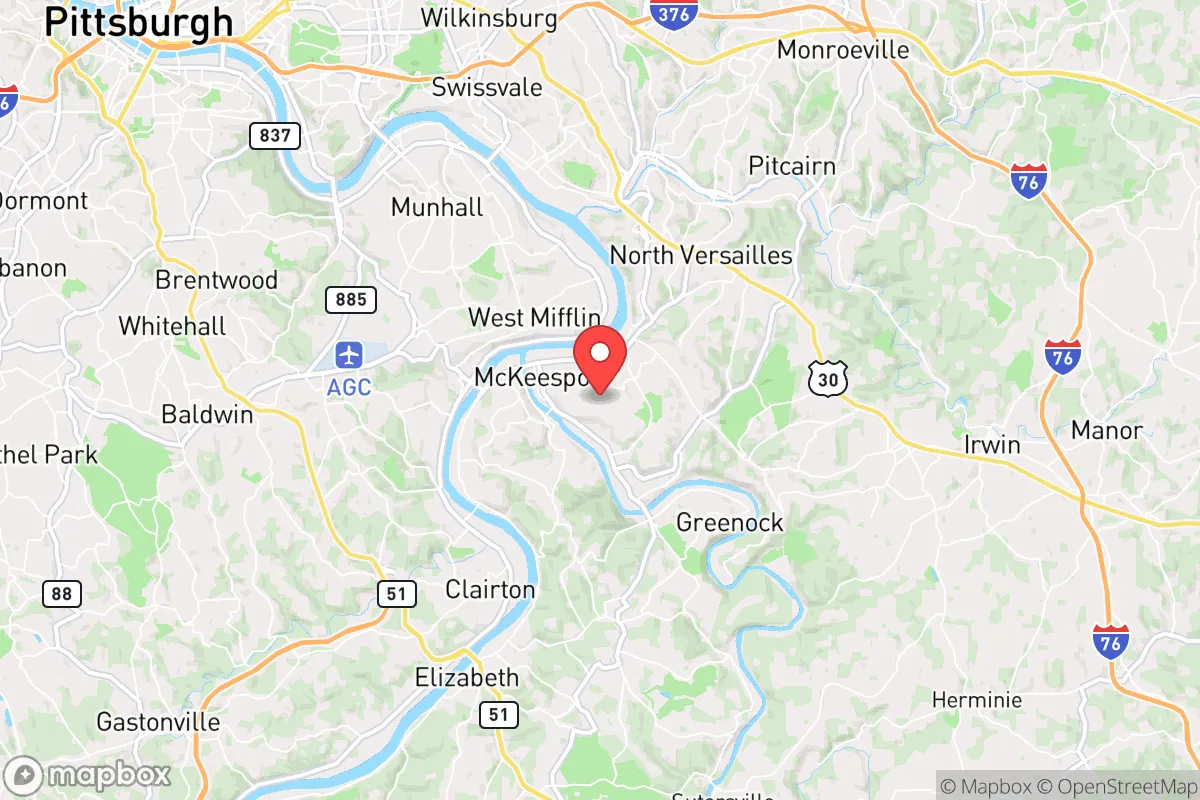
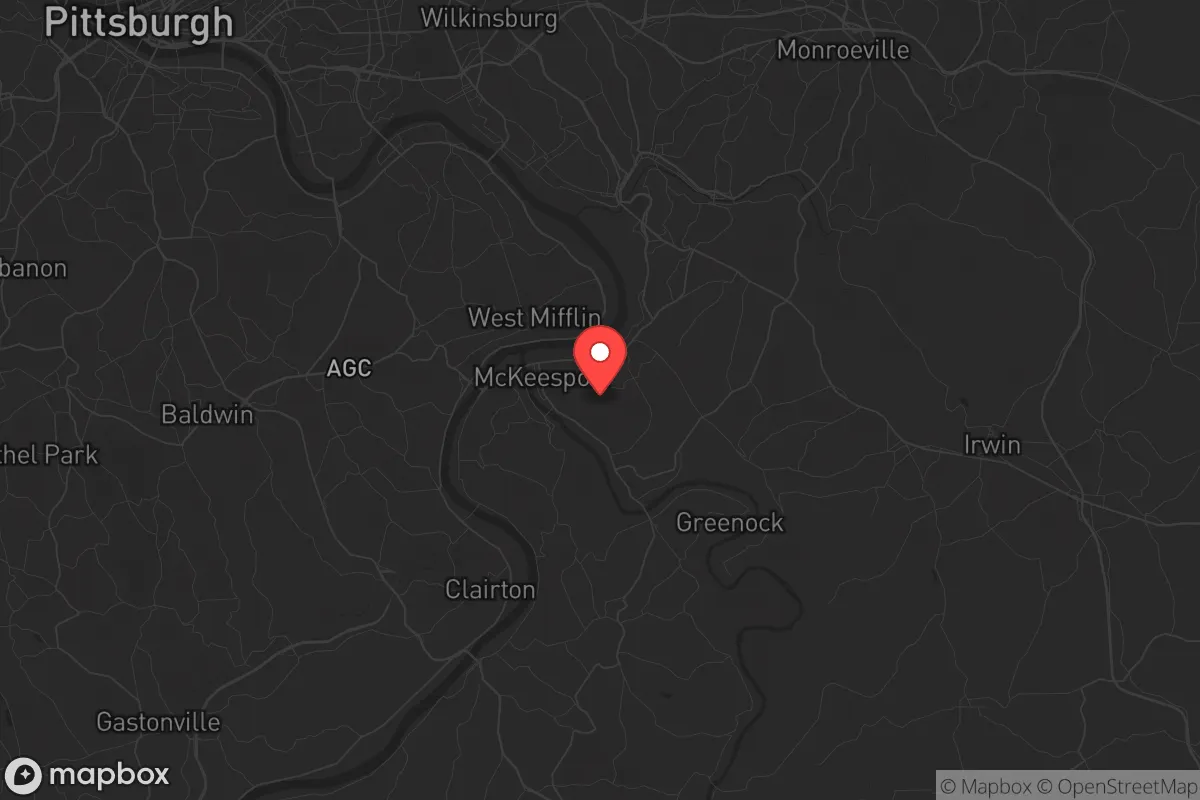
Personal Sovereignty in Mckeesport, PA
Strong independent fundamentals that actively favor personal liberty and low regulation.
What does Personal Sovereignty tell us?
Personal Sovereignty measures your capacity for self-reliance and independence with minimal government friction. Higher scores mean fewer barriers between you and the way you want to live... but it assumes you have the space you need and good neighbors.
What does this tell us?
Personal Sovereignty measures your capacity for self-reliance and independence with minimal government friction. Higher scores mean fewer barriers between you and the way you want to live... but it assumes you have the space you need and good neighbors.
State Policy
Energy independence: Net exporter (150% of energy produced in-state)
Personal Liberty
Homesteading

Personal Liberty Analysis
For the individual or family prioritizing personal sovereignty, McKeesport, Pennsylvania presents a mixed picture that demands careful scrutiny. Located in Allegheny County just southeast of Pittsburgh, this post-industrial city offers lower housing costs and a degree of physical separation from urban centers, but it operates under Pennsylvania’s increasingly centralized state-level framework—one that has steadily chipped away at local autonomy in recent years. The real question for the survivalist-minded relocator is whether McKeesport’s affordability and relative obscurity provide enough buffer against the creeping regulatory and tax burdens that define much of the Northeast corridor. The short answer: it’s a calculated trade-off, not a sanctuary, but for those willing to navigate the constraints, there are genuine opportunities for self-reliance.
Tax burden and regulatory posture: what the state and county take from your pocket
Pennsylvania’s tax structure is a double-edged sword for those seeking to keep more of what they earn. The state levies a flat 3.07% personal income tax—one of the lowest flat rates in the nation—which is a clear advantage over neighboring Ohio or New York. There is no tax on retirement income, including Social Security, pensions, and 401(k) withdrawals, making it a legitimate haven for preppers looking to stretch fixed resources. However, Allegheny County adds its own layer: a county sales tax of 7% (state base of 6% plus 1% county) and property taxes that are among the highest in the state. McKeesport’s combined millage rate—city, school district, and county—typically lands between 25 and 30 mills, meaning a $100,000 home carries an annual property tax bill of $2,500 to $3,000. That’s a significant bite for a city where median home values hover around $60,000. Regulatory posture is more concerning: Pennsylvania has no statewide preemption on local gun ordinances (more on that below), and Allegheny County has a history of adopting stricter building codes and environmental regulations that can complicate off-grid projects. For the autonomy-minded, the tax burden is manageable if you’re retired or earning modestly, but the regulatory creep from Pittsburgh’s influence is a persistent irritant.
Self-defense and gun law specifics: what you can and cannot do in McKeesport
Pennsylvania is generally considered a “shall-issue” state for concealed carry, and that holds true in McKeesport. The state preempts most local firearm restrictions, meaning the city cannot ban carry in parks or impose its own waiting periods. However, there are critical nuances. Open carry is legal without a permit except in Philadelphia, but McKeesport’s proximity to Pittsburgh means you’ll want a License to Carry Firearms (LCF) to avoid confusion in the city proper. The LCF process is straightforward: apply at the Allegheny County Sheriff’s Office, pay a $20 fee, and receive approval within 45 days if no disqualifying record exists. Stand-your-ground laws are not codified in Pennsylvania statute; instead, the state uses a “castle doctrine” for home defense and a “duty to retreat” in public spaces if safely possible. This is a significant limitation for the survivalist mindset—you cannot simply hold your ground on the street. Magazine capacity is unrestricted, and there is no state-level assault weapons ban, but Allegheny County has seen local pushes for “safe storage” ordinances that, while not yet law, signal a hostile political climate. For the prepper, McKeesport offers a baseline of gun rights that is better than New York or New Jersey but worse than Ohio or West Virginia. The real risk is the political drift of Allegheny County, which could tighten restrictions in the future.
Self-reliance and homesteading viability: lot sizes, zoning, and off-grid feasibility
McKeesport’s industrial decline has left a legacy of larger residential lots and vacant parcels that can be acquired cheaply—often for $5,000 to $15,000 at county tax sales. Typical lot sizes in the city’s older neighborhoods range from 0.1 to 0.25 acres, which is tight for serious homesteading but workable for intensive gardening, small livestock (chickens, rabbits), and rainwater catchment. Zoning is a mixed bag: the city’s code allows “accessory uses” like backyard chickens and small greenhouses in residential zones, but pigs, goats, and larger livestock are prohibited within city limits. For off-grid systems, Pennsylvania’s Uniform Construction Code (UCC) applies, meaning any permanent structure requires permits and inspections. Solar panels are allowed, but grid-tied systems are the norm; going fully off-grid with battery storage is legal but will trigger electrical inspections that can be costly. Water rights are a bright spot: Pennsylvania follows the “reasonable use” doctrine for groundwater, so drilling a well on your property is generally permitted, though Allegheny County’s health department requires testing and permits. Composting toilets and greywater systems are legal but must meet UCC standards, which adds bureaucratic friction. For the serious homesteader, the better play is to buy a cheap lot in McKeesport as a base and acquire a separate rural parcel in Westmoreland or Fayette County for unrestricted operations. Within city limits, you can achieve meaningful self-reliance, but it will be a suburban-scale effort, not a frontier homestead.
Personal liberties: parental rights, medical autonomy, speech, and property
Pennsylvania’s record on parental rights is a mixed bag that should give conservative families pause. The state has a robust “opt-out” provision for sex education in public schools, but McKeesport Area School District has adopted comprehensive health curricula that some parents find intrusive. Homeschooling is legal and relatively straightforward: file a notarized affidavit annually, maintain a portfolio, and have your child tested in grades 3, 5, and 8. No state approval or teacher certification is required, which is a win for educational sovereignty. Medical autonomy is more concerning: Pennsylvania has broad vaccine mandates for school attendance, with only medical exemptions recognized (no religious or philosophical exemptions). This is a red flag for families prioritizing medical choice. On speech and property rights, the state has no specific “right-to-farm” law that protects small-scale urban agriculture from nuisance complaints, and Allegheny County’s noise and odor ordinances can be weaponized against homesteaders. Property rights are generally respected, but the city’s blight remediation programs give the government broad authority to condemn and seize vacant properties—a tool that has been used aggressively in McKeesport, sometimes against owners who are simply slow to renovate. For the prepper, this means you cannot buy a cheap lot and let it sit as a bug-out cache; you must actively maintain it or risk losing it to eminent domain-like proceedings.
In the broader landscape of personal sovereignty, McKeesport sits in a precarious middle ground. It offers genuine advantages—low state income tax, no tax on retirement income, cheap land, and a shall-issue carry system—that make it a viable option for the budget-conscious prepper or family seeking to escape high-cost coastal states. But the trade-offs are real: Allegheny County’s regulatory appetite, the lack of a strong stand-your-ground law, and the erosion of medical and educational autonomy through state mandates create a ceiling on how much freedom you can actually secure here. Compared to rural Pennsylvania counties like Potter or Tioga, McKeesport feels more constrained; compared to Pittsburgh proper or Philadelphia, it feels like a breath of fresh air. For the strategic relocator, the smart play is to use McKeesport as a staging ground—a low-cost base with decent infrastructure—while keeping one eye on the exit to freer counties to the north and west. It is not a fortress of liberty, but it is a place where a determined individual can carve out a meaningful degree of self-reliance without breaking the bank.

* Values derived from national, state, county, city and local statistics and may differ in a specific area. Last updated: 2026-05-04T02:23:50.000Z
Narrative content on this page is AI-generated and may contain mistakes. Verify any details that matter before acting on them.
ReloMaps may earn a commission from affiliate links at no extra cost to you.

