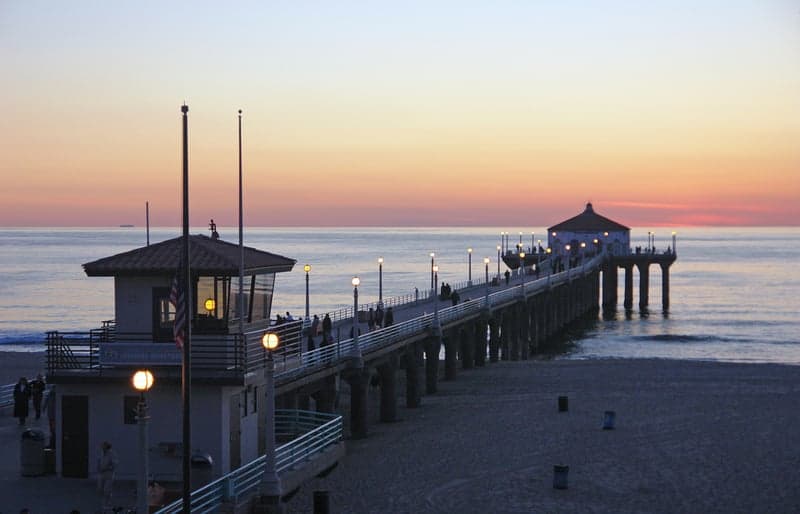
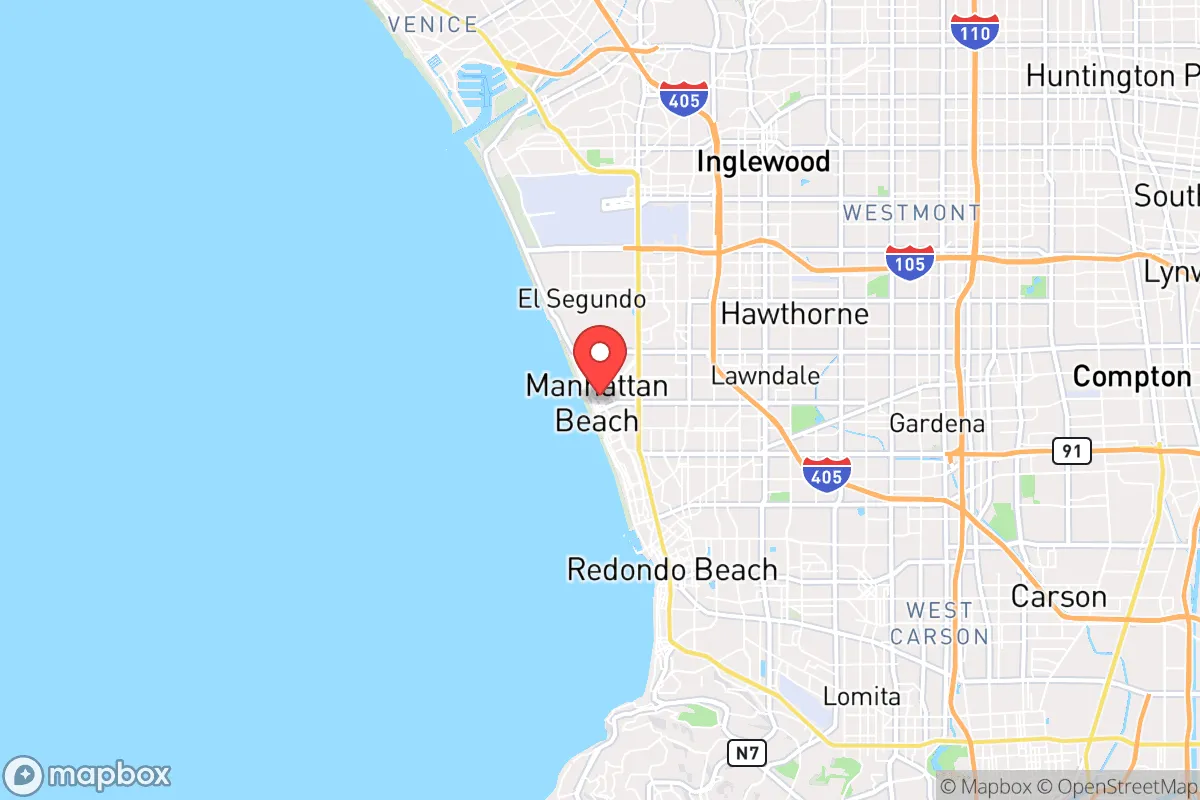
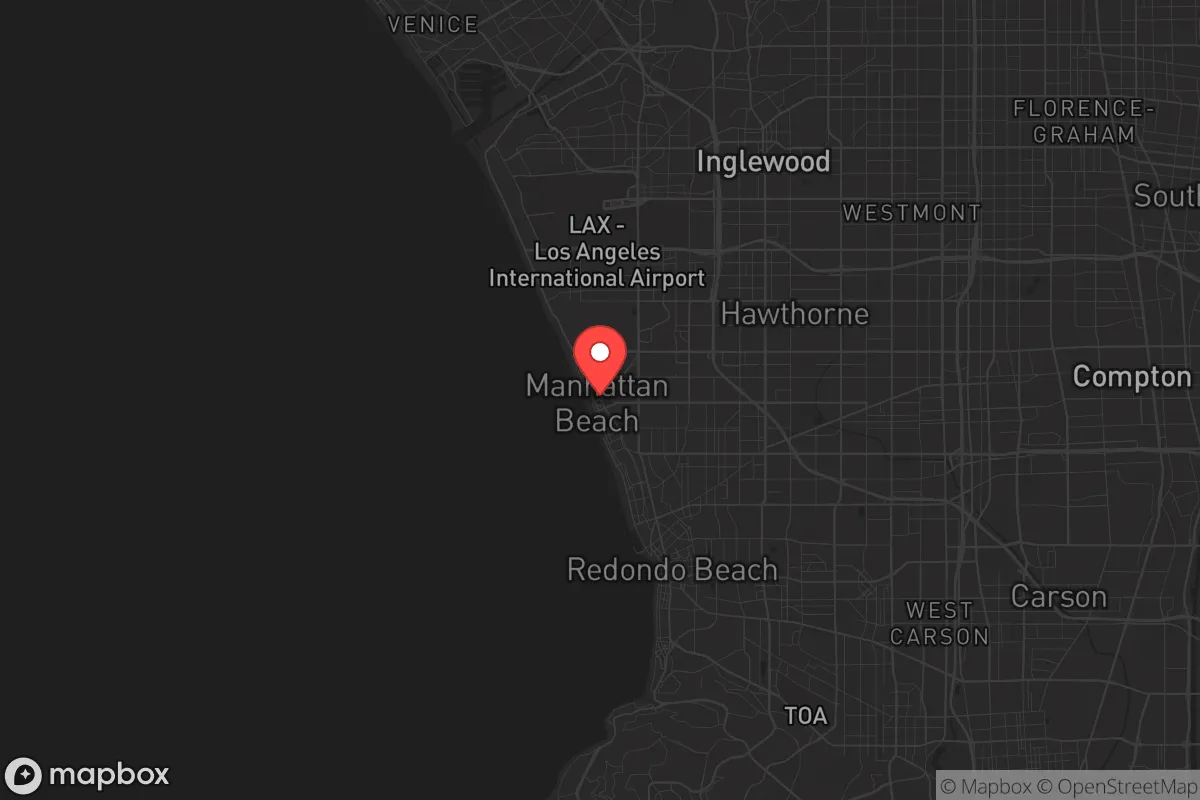
Photo: Wikipedia
Personal Sovereignty in Manhattan Beach, CA
Moderate friction. Expect trade-offs in some aspect of personal liberty and independence.
What does Personal Sovereignty tell us?
Personal Sovereignty measures your capacity for self-reliance and independence with minimal government friction. Higher scores mean fewer barriers between you and the way you want to live... but it assumes you have the space you need and good neighbors.
What does this tell us?
Personal Sovereignty measures your capacity for self-reliance and independence with minimal government friction. Higher scores mean fewer barriers between you and the way you want to live... but it assumes you have the space you need and good neighbors.
State Policy
Energy independence: Importer (33% of energy produced in-state)
Personal Liberty
Homesteading

Personal Liberty Analysis
Manhattan Beach, California, presents a paradox for the liberty-minded individual: a high-trust, low-crime enclave with world-class amenities, but one that sits squarely within a state that has aggressively centralized power, restricted personal choice, and imposed a top-down regulatory regime. For the strategic relocator who values personal sovereignty—the ability to live, defend, and provide for oneself without government interference—this beachside city offers a distinctly mixed picture. The local environment is one of relative order and affluence, but the state-level framework governing taxes, self-defense, property rights, and family autonomy is among the most restrictive in the nation. Understanding this tension is critical before making a move.
Tax burden and regulatory posture: the cost of coastal governance
California’s tax posture is a primary sovereignty concern. The state’s progressive income tax tops out at 13.3% on high earners, and Manhattan Beach’s median household income exceeds $150,000, meaning most residents face the highest marginal rates. Sales tax in Los Angeles County adds roughly 10.25%, and property taxes, while capped at 1% of assessed value under Proposition 13, are based on purchase price—so a new buyer in a $2 million home faces an annual bill near $20,000 before any local assessments. The regulatory environment is equally dense. California’s California Environmental Quality Act (CEQA) can be weaponized to delay or kill any construction project, and the state’s coastal commission exerts direct control over development within five miles of the shoreline, which includes most of Manhattan Beach. For a prepper or survivalist, this means that building a workshop, adding a secondary dwelling, or even significantly modifying a property requires permits, fees, and often public hearings. The state’s energy policies—mandating a shift to electric vehicles and all-electric new construction—further reduce individual choice. You are not free to install a gas generator or a wood stove without navigating a thicket of air quality and building codes. The net effect is a system that prioritizes collective environmental goals over individual autonomy, and the cost of that system is borne directly by residents in both taxes and lost freedom to modify your own land.
Self-defense and gun law specifics: what you can and cannot do
For the individual who believes the right to keep and bear arms is foundational to personal sovereignty, Manhattan Beach is a hostile jurisdiction. California has some of the strictest gun laws in the nation, and local enforcement in Los Angeles County is aggressive. Carrying a concealed firearm in public is effectively impossible for most residents—the state’s “may-issue” regime was replaced by a “shall-issue” framework after the Bruen decision, but Los Angeles County’s sheriff has imposed onerous training and good-cause requirements that still deter applicants. Open carry is banned entirely. The state’s roster of approved handguns limits what you can buy, and magazines are capped at 10 rounds. Assault weapons—broadly defined to include many common semi-automatic rifles—are banned. Ammunition purchases require a background check and a $1 fee per transaction. For a survivalist, this means that your ability to defend your home with a standard-capacity rifle or to carry a sidearm for personal protection is severely curtailed. The state’s red flag laws allow for temporary confiscation of firearms based on a complaint, with minimal due process. While Manhattan Beach itself has a low violent crime rate—roughly 1.5 incidents per 1,000 residents—the legal environment means that if the broader societal order degrades, your options for self-defense are legally limited. You can own a bolt-action hunting rifle or a shotgun, but the tools of a prepared citizen are heavily restricted.
Self-reliance and homesteading viability: lot sizes, zoning, and off-grid feasibility
Manhattan Beach’s urban density and zoning laws make traditional homesteading or off-grid living a non-starter. The typical lot size is between 5,000 and 7,000 square feet, with many homes built to the property lines. Backyard chickens are permitted with a permit and strict coop regulations, but goats, pigs, or any livestock are prohibited. Rainwater harvesting is legal but regulated—the state allows it for outdoor use only, and you must comply with local building codes for cisterns. Solar panels are encouraged, but net metering policies have been cut back, reducing the financial incentive. Going fully off-grid—disconnecting from the electrical grid or municipal water—is not legally feasible. California law requires all habitable structures to be connected to an approved water and sewer system, and the city’s building code mandates grid-tied electrical service. For a prepper who wants to stockpile supplies, the city’s fire codes limit the amount of flammable materials (gasoline, propane) you can store on a residential lot. The coastal climate is mild, reducing the need for heating or cooling, but that same climate makes the area a high-risk zone for wildfires and earthquakes, meaning that any self-reliance plan must account for evacuation rather than sheltering in place. The bottom line: Manhattan Beach is a place to live comfortably within the system, not to build a self-sufficient compound. Your sovereignty here is exercised through financial resilience and community networks, not through land independence.
Personal liberties: parental rights, medical autonomy, speech, and property
On the spectrum of personal liberties, California leans heavily toward state authority over individual or parental choice. Parental rights in education are significantly weaker than in many other states. California law prohibits schools from notifying parents if a child requests a change in gender identity or pronouns, and the state’s curriculum mandates comprehensive sexual education starting in elementary school. For parents who want to opt out, the process is cumbersome and often requires a formal written request that may be denied. Medical autonomy is similarly constrained: the state has mandated COVID-19 and other childhood vaccines for school attendance, with narrow medical exemptions and no religious or philosophical exemptions. The state’s public health orders during the pandemic were among the longest-lasting in the nation, and local officials in Los Angeles County enforced mask mandates and business closures aggressively. On property rights, California’s rent control laws (the Costa-Hawkins Act allows local rent control on older buildings) and tenant-friendly eviction rules mean that if you own rental property, your control over it is limited. Free speech is protected under the First Amendment, but California’s “hate speech” laws and workplace harassment statutes create a legal environment where expressing certain political or social views can lead to professional or legal consequences. For a conservative-leaning individual, the cumulative effect is a system that prioritizes state-defined equity and safety over parental authority, medical choice, and property control.
In the broader landscape of American personal sovereignty, Manhattan Beach offers a trade-off: high local safety and affluence in exchange for accepting a powerful state apparatus that restricts your choices on taxes, self-defense, homesteading, and family autonomy. Compared to a place like Texas or Florida, where gun laws are permissive, taxes are lower, and parental rights are stronger, this city is a poor fit for the survivalist or prepper who prioritizes independence above all else. However, for those who can afford the financial and regulatory overhead, and who value the stability and low crime of a wealthy coastal enclave, Manhattan Beach provides a controlled environment where personal sovereignty is exercised through financial planning and legal compliance, not through rugged self-reliance. It is a place to thrive within the system, not to escape it.

* Values derived from national, state, county, city and local statistics and may differ in a specific area. Last updated: 2026-04-15T23:34:19.000Z
Narrative content on this page is AI-generated and may contain mistakes. Verify any details that matter before acting on them.
ReloMaps may earn a commission from affiliate links at no extra cost to you.

