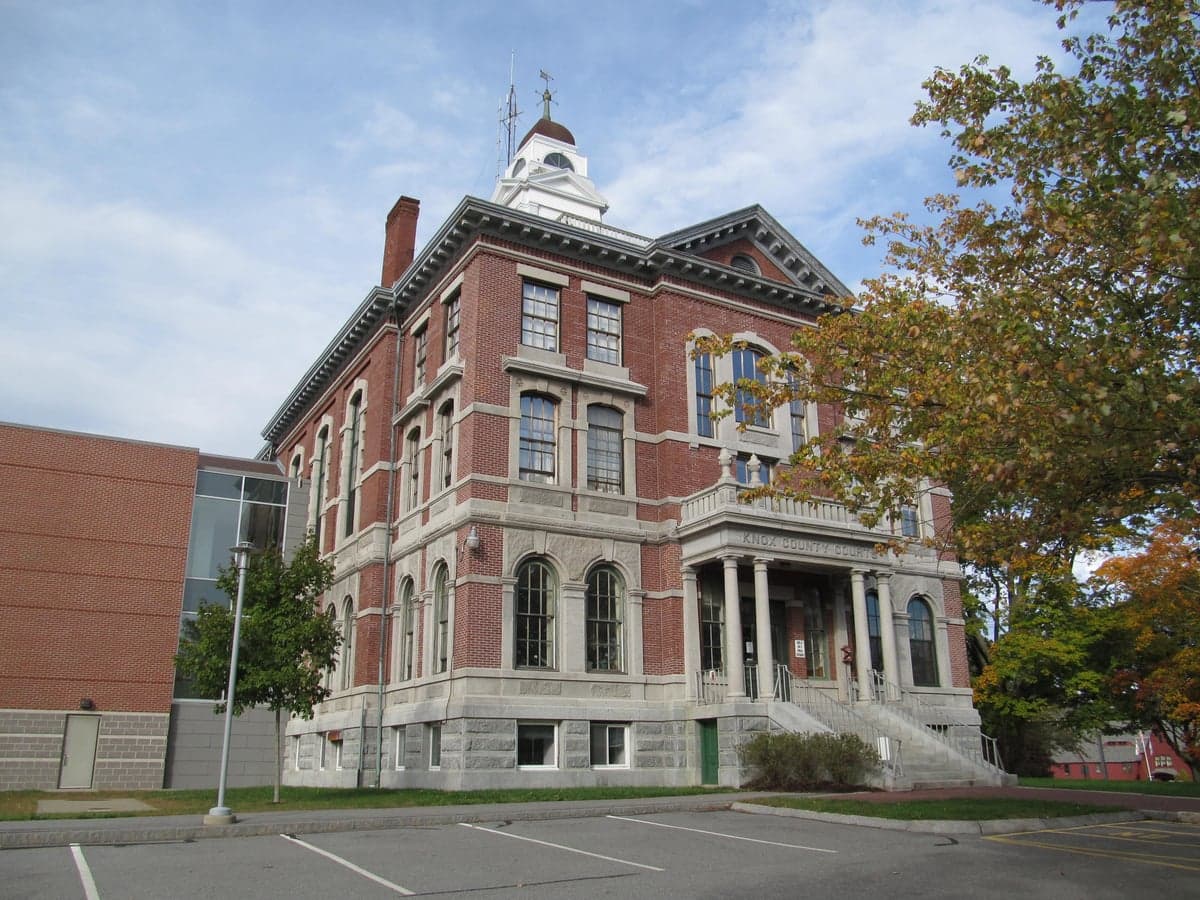
Photo: Wikipedia
Personal Sovereignty in Knox County
Viable for self-reliance. Generally workable, though some barriers may limit total independence.
What does Personal Sovereignty tell us?
Personal Sovereignty measures your capacity for self-reliance and independence with minimal government friction. Higher scores mean fewer barriers between you and the way you want to live... but it assumes you have the space you need and good neighbors.
What does this tell us?
Personal Sovereignty measures your capacity for self-reliance and independence with minimal government friction. Higher scores mean fewer barriers between you and the way you want to live... but it assumes you have the space you need and good neighbors.
State Policy
Energy independence: Importer (30% of energy produced in-state)
Personal Liberty
Homesteading

Personal Liberty Analysis
Knox County, Maine, offers a notably high degree of personal sovereignty, particularly for those seeking to live with minimal government interference in daily life. The county’s regulatory environment is generally light-touch compared to southern New England or the Portland metro area, with local ordinances in towns like Rockland and Camden being more structured than in rural communities such as Union or Washington. For a relocation audience valuing autonomy, the key trade-off is between the convenience of coastal services and the deeper independence found inland, where zoning is minimal and self-reliance is the norm.
Tax burden and regulatory posture: How Knox County compares to coastal Maine
Maine’s state-level tax burden is moderate, with a flat income tax rate of 5.8% and a state sales tax of 5.5% (8% in some service categories). Knox County’s property tax rates vary significantly by municipality. Rockland and Camden have higher mill rates (around 18-20 mills) due to coastal property values and municipal services, while inland towns like Warren and Union often see rates closer to 14-16 mills. The regulatory posture is generally permissive: there is no county-level zoning, and most towns have minimal building codes beyond state-mandated septic and electrical standards. However, shoreland zoning (administered by the Maine Department of Environmental Protection) applies to properties within 250 feet of any water body, which affects many coastal parcels. For those prioritizing low taxes and light regulation, inland towns like Appleton or Hope offer a more hands-off environment than the tourist-heavy coastal villages.
Self-defense and gun law specifics: What Maine’s constitutional carry means for Knox County
Maine is a strong Second Amendment state, and Knox County reflects that culture. The state has permitless (constitutional) carry for both open and concealed firearms for anyone 21 or older who can legally possess a firearm. No state permit is required to purchase a handgun, and there is no waiting period or firearm registration. Knox County’s sheriff’s office, led by Sheriff Tim Carroll, is known for a pro-Second Amendment stance; the department issues concealed carry permits (still useful for reciprocity in other states) with minimal delay. Local gun culture is robust, with shooting ranges in Rockport and Union, and several gun shops and sporting goods stores in Rockland and Camden. There are no county-level restrictions beyond state law, and local law enforcement generally does not enforce federal regulations that conflict with state law. For self-defense-minded relocators, Knox County offers a legal environment where carrying a firearm is straightforward and socially accepted.
Self-reliance and homesteading viability: Lot sizes, zoning, and off-grid feasibility across Knox County
Homesteading and off-grid living are highly viable in Knox County, especially outside the coastal villages. Minimum lot sizes vary: Rockland and Camden require 1-2 acres for new construction, while rural towns like Washington and Union have no minimum lot size in unzoned areas, allowing for smaller parcels if septic and well requirements are met. Off-grid feasibility is strong: solar panels are common, and net metering is available through Central Maine Power. Rainwater collection is legal for non-potable uses, and composting toilets are permitted with state approval. Zoning is minimal in unorganized territories and many rural towns, but shoreland zoning restricts building within 250 feet of water bodies, which can limit off-grid cabins on lakeside lots. Appleton and Hope are particularly attractive for homesteaders due to large tracts of undeveloped land, low property taxes, and a culture of self-sufficiency. The county’s agricultural extension office in Waldoboro offers resources for small-scale farming, and local farmers’ markets in Rockland and Camden support direct sales. For those seeking true independence, Knox County’s inland areas provide a regulatory environment that encourages self-reliance without excessive bureaucratic hurdles.
Personal liberties: Parental rights, medical autonomy, speech, and property rights in Knox County
Maine law generally supports parental rights in education, with a robust school choice system including charter schools, homeschooling, and private schools. Knox County has several homeschooling co-ops, particularly in Union and Washington, and the state’s notification requirements are minimal (annual letter of intent and standardized testing every few years). Medical autonomy is a mixed picture: Maine has legalized recreational marijuana, and Knox County has several dispensaries in Rockland and Camden. However, vaccine mandates for school attendance and healthcare workers are enforced at the state level, which may concern some relocators. Free speech is protected, and the county has a tradition of robust public discourse, with town meetings in communities like Warren and Union serving as forums for direct democracy. Property rights are strong: there is no county-level rent control, and land use regulations are primarily local. The Maine Right to Farm law protects agricultural operations from nuisance lawsuits, which is beneficial for homesteaders. Overall, Knox County offers a balance of personal liberties with some state-level constraints, particularly in healthcare mandates, but the local culture in inland towns leans heavily toward individual choice and minimal government overreach.
Compared to other regions in New England, Knox County stands out as a high-sovereignty area, especially for those willing to live outside the coastal tourist hubs. The tax burden is moderate, gun laws are among the most permissive in the Northeast, and homesteading is practical and legally supported. The primary trade-off is between the convenience of coastal towns like Rockland and Camden (which have more regulations and higher costs) and the deeper autonomy of inland communities like Union, Washington, and Appleton. For a relocation audience prioritizing personal freedom, Knox County offers a viable path to self-reliance without the extreme isolation of northern Maine, making it a strategic choice for those seeking a balance of liberty and community.

* Values derived from national, state, county, city and local statistics and may differ in a specific area. Last updated: 2026-08-18T17:54:33.000Z
Narrative content on this page is AI-generated and may contain mistakes. Verify any details that matter before acting on them.
ReloMaps may earn a commission from affiliate links at no extra cost to you.

