Photo: Wikipedia
Demographics of Madison, AL
Affluence Level in Madison, AL
An upper-middle-class area. Household wealth, education levels, and homeownership run ahead of national benchmarks.
People of Madison, AL
Madison, Alabama, today is a fast-growing, highly educated city of 58,335 residents where 65.9% of adults hold a college degree—a figure that rivals top-tier university towns. The city is predominantly white (67.3%) but has developed a notable and growing Black (12.7%), Hispanic (7.8%), and East/Southeast Asian (5.7%) presence, along with a distinct Indian-subcontinent community (2.0%) and a small foreign-born share of 4.6%. Its character is defined by aerospace and defense employment, family-oriented subdivisions, and a political culture that leans conservative, attracting professionals who prioritize schools, safety, and space.
How the city was settled and grew
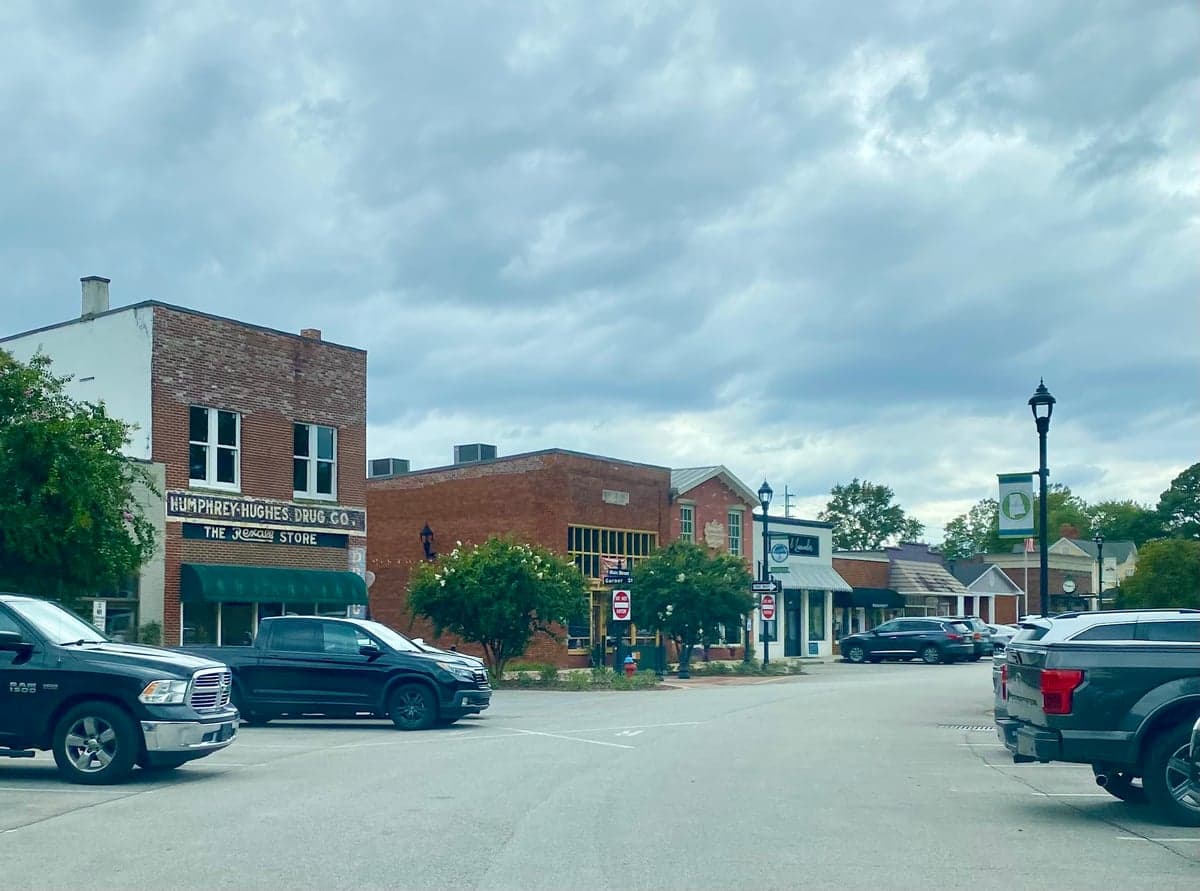
Madison was originally a railroad stop founded in the 1850s along the Memphis and Charleston Railroad, but it remained a small agricultural hamlet for over a century. The original white settlers were Scots-Irish and English farmers who built the historic downtown core around Main Street and Church Street, where a handful of antebellum homes still stand. The city’s first major growth wave came after World War II, when the nearby Redstone Arsenal (established 1941) began drawing engineers, technicians, and military personnel. These early defense workers settled in modest post-war neighborhoods like Old Madison Pike and the Westside area near the railroad tracks, laying the foundation for a white-collar, government-dependent community. Madison remained overwhelmingly white and native-born through the 1960s, with a tiny Black population concentrated in a few rural pockets outside the city limits.
Modern era (post-1965)
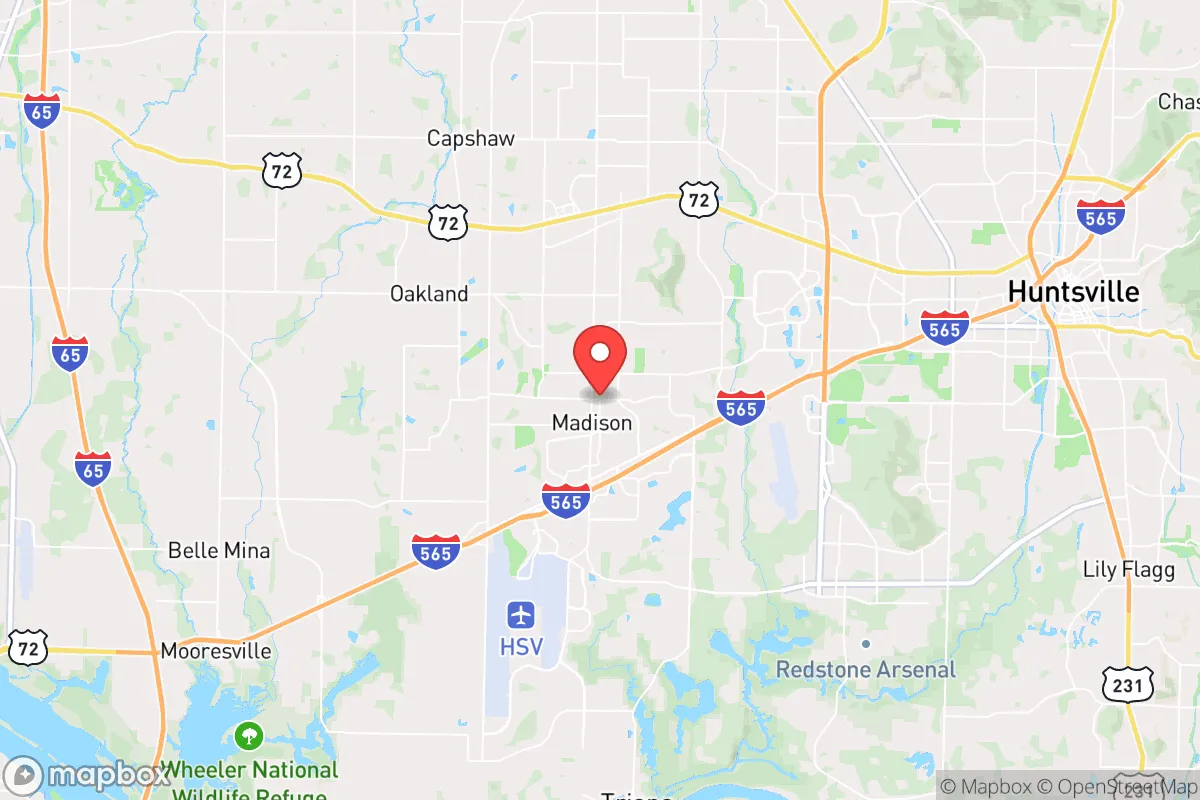
The 1965 Hart-Cellar Act and the subsequent expansion of Redstone Arsenal and Cummings Research Park in neighboring Huntsville triggered Madison’s transformation. The city began absorbing domestic in-migrants—mostly white engineers and managers from the Midwest and Northeast—who were drawn by high-paying defense contracts at Boeing, Northrop Grumman, and the U.S. Army Space and Missile Defense Command. These newcomers filled sprawling subdivisions built from the 1980s onward: Grayson (large lots, established families), Belforest (mid-range homes near schools), and Clift Farm (a newer, master-planned community with a traditional neighborhood design). The Black population grew from near-zero to 12.7% as African American professionals, many also employed in defense or education, moved into neighborhoods like Hughes Farm and Palmer Estates, which offer newer construction and strong school zones. The Hispanic share (7.8%) is largely a post-2000 phenomenon, driven by construction and service jobs; these families tend to settle in more affordable areas near Highway 72 and the western edge of town, including parts of Madison Crossroads. East/Southeast Asian residents (5.7%)—primarily Chinese, Korean, and Vietnamese—arrived via tech and engineering recruitment, clustering in higher-end subdivisions like Belforest and Clift Farm. The Indian-subcontinent community (2.0%) is a separate, smaller wave of IT and medical professionals, often found in the same neighborhoods as their East Asian counterparts.
The future
Madison’s population is projected to continue growing at a steady clip, driven by ongoing defense spending and the expansion of the FBI’s Huntsville operations. The city is not homogenizing into a single demographic block; instead, it is tribalizing into distinct enclaves by income and ethnicity. Newer, pricier subdivisions like Clift Farm and Belforest are becoming whiter and more Asian, while older, more affordable areas like Westside and Madison Crossroads are seeing rising Hispanic and Black shares. The foreign-born share (4.6%) is plateauing, as most growth now comes from domestic migration rather than immigration. The Indian-subcontinent community, while small, is likely to grow modestly as tech firms recruit from that region, but it will remain a distinct group rather than merging into the broader Asian category. Over the next 10–20 years, Madison will likely become more polarized by neighborhood: affluent, highly educated enclaves on the east and south sides, and more diverse, middle-income areas on the west and north.
For a conservative-leaning individual or family moving in now, Madison offers a stable, safe environment with top-rated schools and a strong job market, but the choice of neighborhood will increasingly determine the social and demographic experience. The city is becoming a collection of distinct communities rather than a single melting pot, and newcomers should expect to find their niche based on budget, school preferences, and cultural comfort.

* Values derived from national, state, county, city and local statistics and may differ in a specific area. Last updated: 2026-04-19T18:56:38.000Z
Narrative content on this page is AI-generated and may contain mistakes. Verify any details that matter before acting on them.
ReloMaps may earn a commission from affiliate links at no extra cost to you.

